Malaysia is one of the most underrated and rewarding countries for solo female travelers. If you are wondering whether it is safe enough or friendly enough for your first or second solo trip, the answer is yes. The Southeast Asian country gives you modern comfort, multicultural warmth, incredible food, and just the right level of challenge to help you grow as a traveler.
I felt this on my very first morning in Penang. I was sitting alone at a hawker stall, staring at a menu I barely understood, when an elderly Chinese uncle noticed my confusion and gently explained how to order. Within minutes I had a bowl of steaming laksa in front of me and three strangers sharing their table with me while insisting I try their favorite dishes. That moment captured Malaysia perfectly. Warm. Curious. Supportive. A country that welcomes solo travelers without smothering them.
My guide exists so you can feel the same ease and confidence throughout your trip. This is a country where you learn you are capable, and the world opens up in the most generous way.
Why Malaysia Should Be Your Next Solo Destination
This is Southeast Asia’s perfect balance of accessibility and authentic culture. Muslim, Chinese, and Indian traditions create a vibrant tapestry, and your budget stretches further than you thought possibl
1. Exceptional Value for Money
Malaysia is one of the most affordable destinations in Southeast Asia. Your money goes remarkably far here. Budget accommodation, incredible street food, and affordable transportation mean you can travel comfortably without constant financial stress.
Even splurge experiences like jungle trekking, island hopping, and cultural tours will fit most of your budgets.
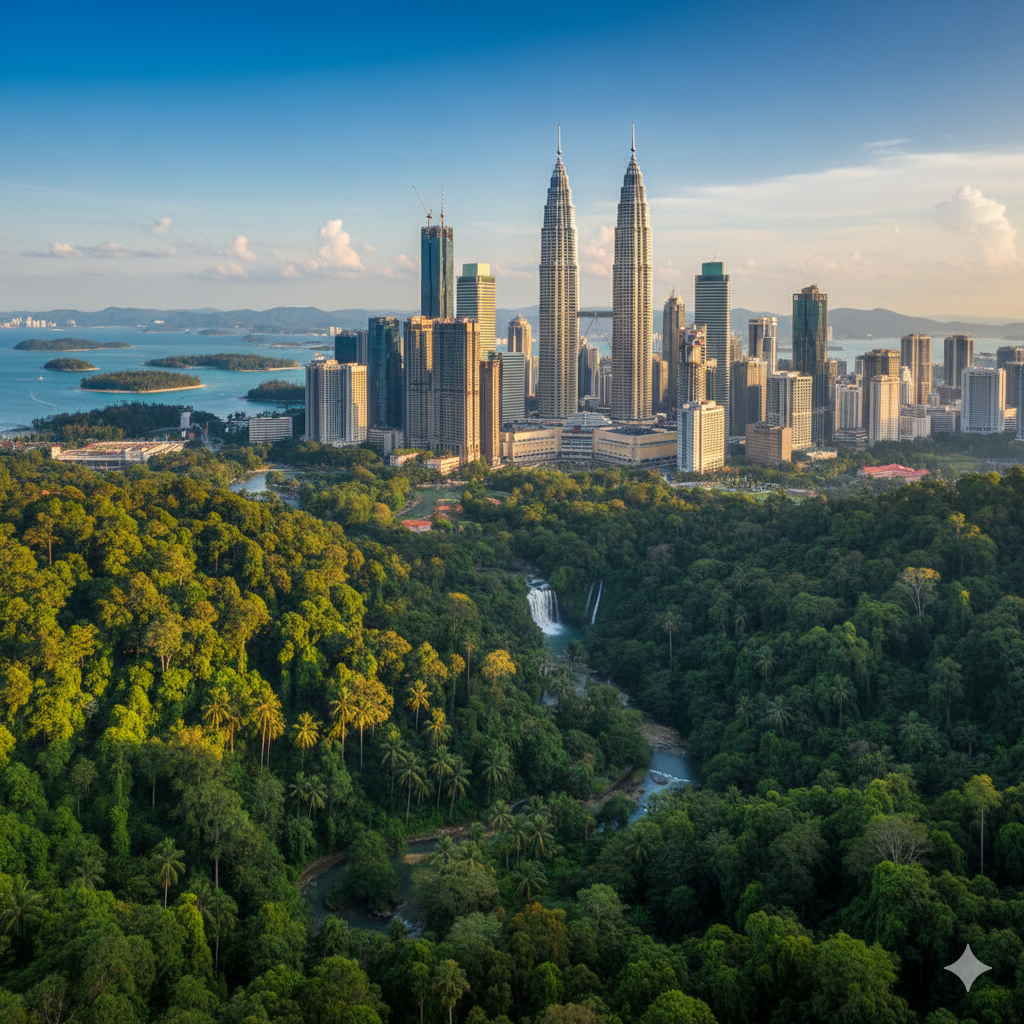
Malaysia landscapes showing Kuala Lumpur skyline, rainforest, and tropical islands
2. Diverse Landscapes in One Country
Commonly referred to as ‘Truly Asia,’ the country packs extraordinary variety into a relatively compact space. Peninsular Malaysia offers bustling cities, colonial architecture, pristine beaches, and highland tea plantations. Malaysian Borneo delivers ancient rainforests, world-class diving, orangutan sanctuaries, and remote longhouses.
You can explore Kuala Lumpur’s glittering skyline one day, trek through Taman Negara rainforest the next, then relax on Perhentian Islands’ white sand beaches the day after. Few countries offer this much diversity without requiring constant long-distance travel.
3. Multicultural Fusion
Its population blends Malay, Chinese, Indian, and indigenous cultures into something uniquely Malaysian. This diversity creates one of the world’s most exciting food scenes and gives you multiple cultural experiences within one country.
Walk through George Town’s streets and you will pass Chinese temples, Indian mosques, Malay kampung houses, and British colonial buildings within minutes. This cultural richness means constant discovery and endless learning opportunities.
4. English Is Widely Spoken
While Bahasa Malaysia is the official language, English is widely spoken, especially in cities and tourist areas. Most signs include English translations, and younger Malaysians often speak excellent English.
Language accessibility makes Malaysia particularly welcoming for first-time solo travelers to Southeast Asia. You can handle practical matters, ask for help, and have genuine conversations without major language barriers.
5. Growing Solo Travel Infrastructure
Malaysia’s tourism industry increasingly caters to solo travelers. Hostels throughout the country create community through organized activities, common areas, and social events. Tours regularly accommodate solo joiners, and many attractions offer single-entry pricing.
As you explore, you’ll find a strong digital nomad and expat communities, particularly in Kuala Lumpur and Penang.
Why Malaysia Works for Solo Female Travelers
‘The Land of the Malay World’ rewrites common solo travel fears. It proves you can explore independently in a Muslim-majority country, navigate unfamiliar transportation systems, and find genuine connections across cultural differences.
Comfortable Challenge
Malaysia offers what I call a comfortable challenge: Malaysia’s Greatest Gift. It stretches you just enough to grow, yet always gives you a safety net.
- Transportation might confuse you, but locals step in to help.
- Spice levels might surprise you, but every stall understands “not too spicy.”
- Cultural differences may feel new, but the country’s diversity makes most people open and curious.
This balance builds your confidence in ways Singapore cannot and prepares you for more demanding destinations like Indonesia, India or Vietnam.
Muhibah: Malaysia’s Secret Ingredient
Muhibah is a cultural value centered on harmony, friendliness and hospitality. It shows up everywhere. People share tables with you at hawker centers. They stop to give directions. They ask where you are from and genuinely want to know if you are enjoying their country. Solo travelers rarely feel alone for long.
A Natural Step After Singapore
If you have already visited Singapore, Malaysia feels like the perfect next destination. You will recognize some similarities yet experience more cultural contrast, more spontaneity and much lower prices. Safety remains high and the learning curve remains gentle.
Safety and Security in Malaysia
First, a Reassurance
This is one of Southeast Asia’s safest countries for solo female travelers. You will still use common sense, but the systems in place make it easier to move around confidently.
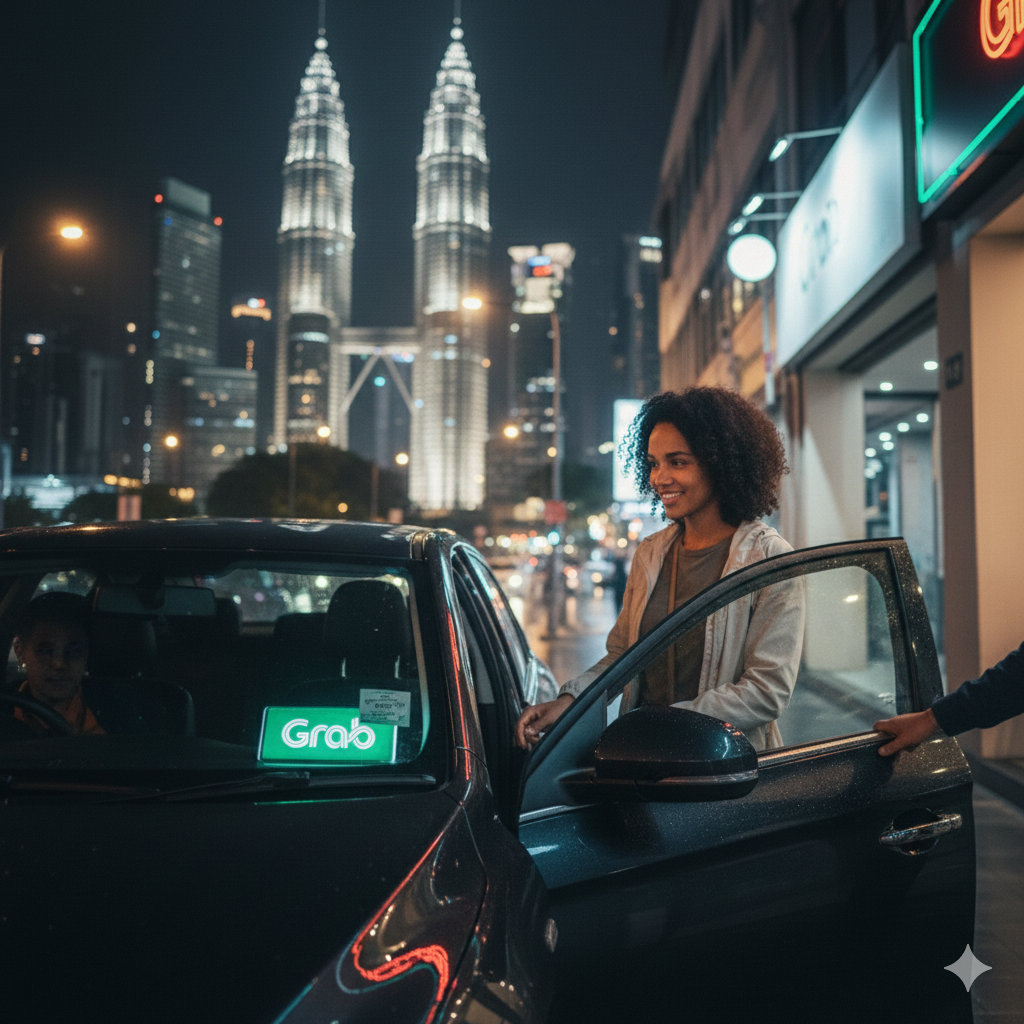
A Female traveler using GrabCar at night in Kuala Lumpur
Your Number One Safety Tool: Grab
Grab is the single most important resource for solo women in Malaysia. It offers transparent prices, GPS-tracked rides, driver ratings and a simple way to share your trip details with someone you trust. Use it for all late-night movement and whenever something feels off.
General Safety Overview
Urban Safety: Kuala Lumpur, Penang, and Melaka feel safe during daylight hours. Stick to well-lit, populated areas after dark. Petty theft occurs in crowded tourist areas, so keep valuables secure.
Walking at Night: Exercise more caution than in Singapore. Avoid empty streets, keep to main roads, and use Grab for late-night transportation. Well-populated areas like Bukit Bintang or Penang’s Georgetown remain relatively safe until late.
Public Transport Safety: The LRT, MRT, and KTM Komuter in Kuala Lumpur are generally safe. Keep bags zipped and phones secure during rush hour. Long-distance buses are safe but basic; choose reputable companies.
Taxis and Ride Sharing: Always use Grab rather than street taxis. Grab provides transparent pricing, driver ratings, and trip tracking. Save emergency contacts in your phone before needing them.
Petty Theft: Watch for bag slashing and pickpocketing in crowded markets, tourist areas, and on public transport. Wear crossbody bags with zippers facing inward. Keep only daily spending money accessible.
Women-Specific Safety Considerations
Dress Modestly: Malaysia is a Muslim-majority country where modest dress shows respect and reduces unwanted attention. Cover shoulders and knees in most situations. In major cities, tourists have more flexibility, but rural areas expect more conservative dress.
At Beaches: Local women typically swim fully clothed. While bikinis are acceptable at resort beaches and islands, modest swimwear attracts less attention elsewhere.
Harassment Reality Check: Street harassment is less common than in many countries but still happens, particularly in tourist areas. Catcalling, staring, and unwanted photos occasionally occur. Malaysian women often ignore harassers completely, walking past without acknowledgment.
Mosques and Religious Sites: Cover your hair with a scarf when visiting mosques (many provide loaners). Always remove shoes. Dress modestly with long sleeves and pants or long skirts. Ask permission before photographing people praying.
Alcohol Considerations: Alcohol is legal but less visible than in non-Muslim countries. Drinking alone as a woman at local bars might attract attention. Stick to hotels, international restaurants, or tourist areas if drinking.
Essential Safety Tips
Trust Your Instincts: If something feels wrong, it probably is. Leave situations that make you uncomfortable.
Stay Connected: Buy a local SIM card immediately, then share your location with trusted contacts, and check in regularly.
Secure Your Valuables: Use hostel lockers and carry only essentials when exploring. Also, keep copies of important documents separately from originals.
Learn Key Language Phrases: “Tolong” (help), “Tidak” (no), and “Pergi” (go away). They prove useful if needed.
Avoid Isolated Areas: Stick to populated routes, especially after dark, It’s good for you to know that beach areas can be isolated at night.
Be Alcohol Aware: If drinking, watch your drink constantly. Never accept drinks from strangers.
Essential Malaysia Laws You Must Know
Drug Laws: Malaysia maintains an absolute zero-tolerance drug policy. Possession of certain quantities carries mandatory death sentences. Never joke about drugs or carry anything for strangers.
LGBT Laws: Homosexuality is technically illegal under federal and Sharia law, though prosecutions are rare. Public displays of affection between same-sex couples risk negative attention or legal issues.
Alcohol Laws: Public drunkenness is frowned upon, and Muslims are prohibited from purchasing or consuming alcohol, but non-Muslims can buy alcohol at licensed establishments.
Gambling: Illegal for Muslims, though non-Muslims can gamble at licensed casinos.
Religious Sensitivity: Show respect for religious practices and symbols, actually, insulting Islam or the royal family can result in arrest.
Emergency Contacts
Save these before you land:
- Police (Emergency): 999
- Ambulance: 999
- Tourist Police Hotline: 03-2149 6590
- Women’s Aid Organization: 03-7956 3488
Is Malaysia the Right Destination for You?
Malaysia is extraordinary, but like every destination, it suits some travelers better than others.
Consider elsewhere if you want:
- Extreme budget backpacking: While affordable, Malaysia costs slightly more than Thailand or Vietnam
- Completely secular environment: Islam influences daily life, from mosque calls to prayer to alcohol availability
- Non-stop party scenes: Malaysia’s nightlife is tamer than Thailand or Bali
- Pure wilderness without human infrastructure: Even “remote” areas have some development
- Easy beach party culture: Beach scenes are more family-oriented than in Thailand
Consider Malaysia as your destination if:
- You want authentic cultural experiences without overwhelming culture shock
- You love diverse food adventures across multiple cuisines
- You are building confidence between Singapore and more challenging Asian destinations
- You appreciate both urban exploration and nature adventures
- You want excellent value without sacrificing comfort or safety
- You are interested in Islamic culture in a relatively moderate, diverse setting
The Perfect Time to Visit Malaysia
Malaysia experiences two monsoon seasons affecting different regions at different times.
West Coast (Penang, Langkawi, Kuala Lumpur) Best Time: December to March offers the driest, most pleasant weather. Avoid monsoon season from September to November.
East Coast (Perhentians, Tioman, Redang) Best Time: March to October provides calm seas and sunshine. Many island resorts close completely from November to February during monsoon season.
Malaysian Borneo (Sabah, Sarawak) Best Time: March to October offers relatively dry conditions, though rain is possible year-round.
Shoulder Season Sweet Spot: April-May and September-October offer better prices with acceptable weather on the west coast.
Skip if Possible: Major holidays like Hari Raya Aidilfitri (end of Ramadan), Chinese New Year, and school holidays push prices up significantly and create massive domestic travel.
Weather Reality Check: Malaysia is hot and humid year-round. Temperatures rarely drop below 22°C (72°F) even at night in lowland areas. However, Highland areas like Cameron Highlands offer cooler relief.
How Long Should You Stay?
Peninsular Malaysia Only: 10-14 days allows you to explore Kuala Lumpur, Penang, Cameron Highlands, and either Melaka or the east coast islands without rushing.
Adding Malaysian Borneo: Budget 18-21 days minimum. Borneo deserves at least a week, as attractions are spread out and travel between them takes time.
First-Time Travelers: Two weeks provides enough time to experience Malaysia’s diversity while allowing rest days and spontaneous detours.
Visa, Entry, and Arrival
Malaysia keeps entry requirements straightforward for most travelers.
Visa-Free Entry: Citizens from most Western countries, including the USA, UK, EU nations, Canada, Australia, and New Zealand, receive 90-day visa-free entry. Check current requirements for your specific nationality.
Passport Validity: Your passport must be valid for at least six months beyond your arrival date.
Proof of Onward Travel: Immigration occasionally asks for proof of onward or return travel. Have a printout or digital copy ready.
Entry Points: Most travelers arrive via Kuala Lumpur International Airport (KLIA). Other international airports include Penang, Kota Kinabalu, and Kuching.
From KLIA to Kuala Lumpur
Kuala Lumpur International Airport sits about 50 kilometers from the city center. Here are the available travel options.
KLIA Ekspres Train: It’s the fastest option, reaching KL Sentral station in 28 minutes. Also, clean, comfortable, efficient, and runs every 15-20 minutes from 5 AM to 1 AM.
Airport Bus: Runs 24 hours but much slower, significantly cheaper, and takes 60-90 minutes depending on traffic.
Grab: Offers door-to-door service. Budget-friendly if splitting with other travelers and takes 45-75 minutes depending on traffic.
When to Choose Each Option:
- Choose KLIA Ekspres if you value time and comfort
- Board a bus if you are on a tight budget
- Opt for Grab if arriving late, feeling exhausted, or carrying heavy luggage
How to Get Connected in Malaysia
Tourist SIM Cards are available at KLIA airport and throughout the country. Major carriers include Celcom, Maxis, Digi, and U Mobile. Tourist packages typically offer 30 days with generous data (20-50GB) for around RM 30-50.
If you opt for eSIM, then services like Airalo offer Malaysia data packages . Always purchase before departure.
Free WiFi is available at most hotels, hostels, cafes, and restaurants. Quality varies.
Essential Apps
- Grab: Ride-hailing and food delivery (essential)
- Google Maps: Navigation and offline maps (download regions before traveling)
- Google Translate: Download Bahasa Malaysia offline
- Moovit: Public transport navigation in Kuala Lumpur
- 12Go Asia: Booking buses, trains, and ferries
- WhatsApp: Most Malaysians use this for communication
Power and Charging: Malaysia uses Type G plugs (UK-style three-pin). Bring a universal adapter or buy one locally at any 7-Eleven.
Get to Know Malaysian Currency
Malaysia uses the Malaysian Ringgit (RM or MYR) and the Exchange Rates are roughly RM 4.20-4.70 to USD 1 (rates fluctuate).
Places to Exchange Money:
- Airport exchange counters work in a pinch but offer poor rates
- City exchange counters (especially in areas like Bukit Bintang) offer better rates
- ATMs typically provide the best rates; withdraw larger amounts to minimize fees
However, credit Cards are accepted at hotels, malls, international restaurants, and tourist attractions. While here, carry enough cash for smaller establishments, hawker stalls, and local buses.
Travel Tip: To keep track of your daily budget expectations especially on accommodation, use TravelSpend.
Here are the areas where Malaysia costs more:
- Alcohol (heavily taxed)
- Western food and international chains
- Private tours and guides
- Borneo accommodations and activities
- Island resort accommodations
Where Malaysia Surprises with Affordability:
- Hawker center food
- Public transportation
- Budget accommodation
- Local activities and attractions
- Domestic flights
- Shopping at local markets
Money-Saving Strategies
- Eat at hawker centers and local restaurants
- Use public transport when practical; Grab when convenient
- Book accommodation with free breakfast
- Combine destinations by geography to minimize transport costs
- Buy snacks and drinks at 7-Eleven or 99 Speedmart instead of tourist shops
- Visit free attractions like temples, markets, and nature walks
- Book tours and attractions online for discounts
Where to Stay: Accommodation Strategy
Kuala Lumpur Neighborhoods
Bukit Bintang: Tourist central with excellent accessibility, countless dining options, shopping, and nightlife. Safe, walkable, and convenient but often noisy and crowded. Best for first-timers who want everything nearby.
Chinatown: Budget-friendly hostels, authentic street food, temples, and markets. Grittier than Bukit Bintang with more character and lower prices. Safe during daylight hours; use caution at night.
KLCC: Home to the Petronas Towers, upscale malls, and parks. Clean, modern, and safe but more expensive. Best for travelers wanting polish and comfort.
Brickfields (Little India): Colorful, affordable, and delicious. The KL Sentral transportation hub provides excellent connectivity. Great for solo travelers seeking authentic local life.
Masjid Jamek/Kampung Baru: Traditional Malay neighborhoods near the city center. Less touristy, deeply cultural, and affordable. Some areas lack English signage and feel more foreign.
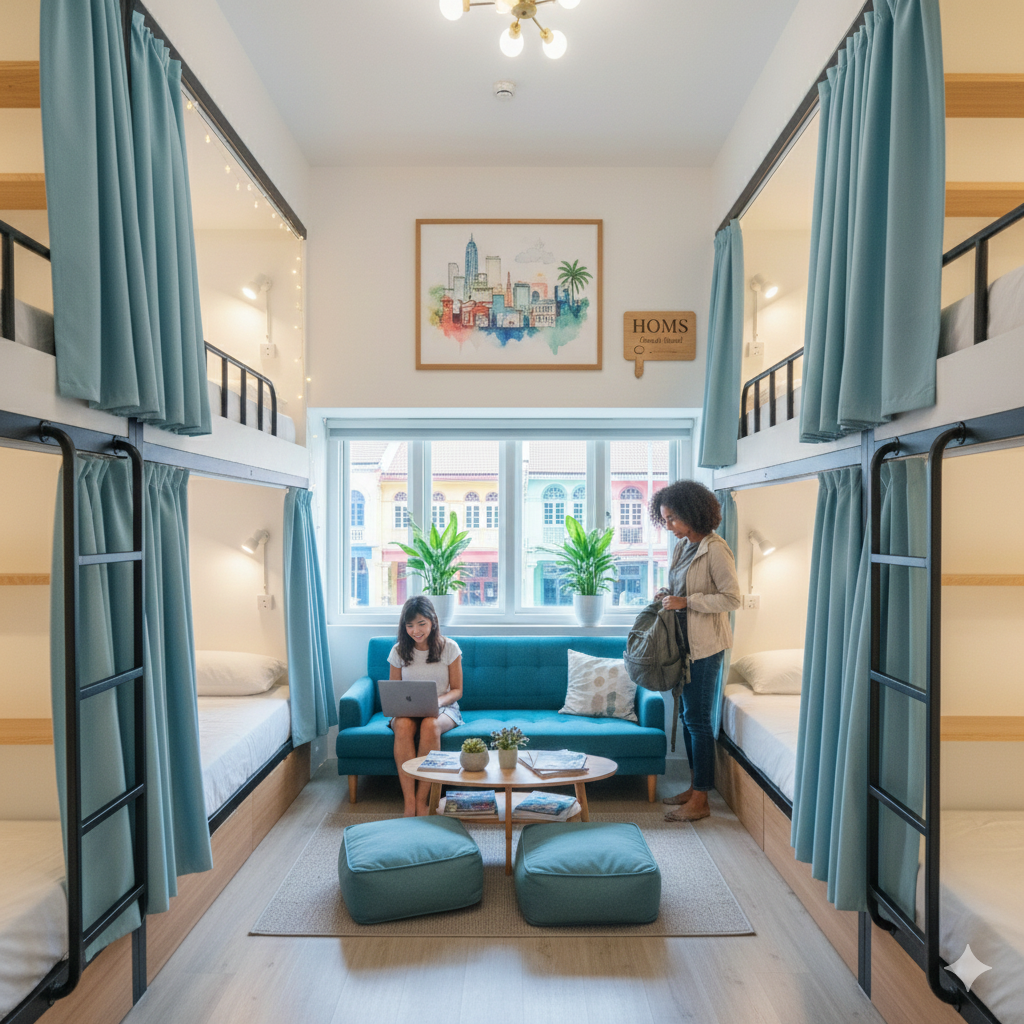
Female-friendly hostels in Penang, Georgetown,
Penang (Georgetown)
Georgetown Heritage Zone: Walking distance to attractions, street art, temples, and incredible food. Hostels and boutique hotels abound. This is where you want to be.
Batu Ferringhi: Beach resort area about 30 minutes from Georgetown. Good for beach relaxation but isolated from cultural attractions. Not ideal for solo travelers seeking social connections.
Other Destinations
Melaka: The historic center (Jonker Street area) puts you within walking distance of everything. Accommodation ranges from budget hostels to charming heritage hotels.
Cameron Highlands: Tanah Rata town offers the most accommodation options, restaurants, and tour operators. Budget and mid-range options dominate.
Islands (Perhentians, Tioman, etc.): Accommodation is mostly beach bungalows ranging from basic backpacker rooms to resort-style chalets. Book in advance during peak season.
Malaysian Borneo: Kota Kinabalu and Kuching offer urban accommodation. Jungle lodges, beach resorts, and homestays provide unique experiences outside cities.
Accommodation Types
Hostels: Female-only dorms are increasingly common. Great for meeting travelers, joining organized activities, and accessing local knowledge. Choose hostels with high ratings, good security, and active common areas.
Budget Hotels: Private rooms with basic amenities at reasonable prices. Less social than hostels but more privacy and comfort.
Boutique Hotels: Heritage buildings converted into charming hotels, particularly in Georgetown and Melaka. Character and location often compensate for smaller rooms.
Guesthouses: Family-run establishments offering personal attention and local insights. Standards vary widely.
Homestays: Living with local families provides deep cultural immersion. Most common in rural areas and Borneo.
My Recommendation for First-Time Solo Travelers
Stay in a highly-rated hostel with female-only dorms in Georgetown, Penang for your first few nights. Penang offers easier navigation than Kuala Lumpur, incredible food, manageable size, and welcoming energy. The hostel community helps you find your rhythm before moving on.
Getting Around Malaysia
Malaysia offers diverse transportation options for different budgets and comfort levels.
Inside Cities
- Kuala Lumpur has an extensive LRT and MRT system
- Grab is reliable and affordable
- Penang’s Georgetown is perfect for walking
Between Cities and Destinations
Buses: Long-distance buses provide basic amenities, variable punctuality and connect to all major destinations. Companies like Transnasional and Plusliner offer reasonable comfort. Book through 12Go Asia or Busonlineticket.com.
Trains: Limited and expensive compared to buses, but more comfortable and scenic. The KTM ETS trains connect major west coast cities (KL to Penang, KL to Ipoh).
Flights: Malaysia’s budget airlines (AirAsia, Firefly, Malaysia Airlines’ budget routes) make domestic flights affordable. Essential for reaching Malaysian Borneo or saving time on long journeys. Book in advance for best prices.
Ferries: Necessary for reaching islands. Schedules and reliability vary. Book accommodations that help arrange ferry tickets.
Transportation Safety Tips
- Always use Grab rather than unlicensed taxis
- Keep valuables secure on overnight buses
- Share your location when using Grab late at night
- On buses and trains, sit near other women or families when possible
- Avoid the front seats on buses (most dangerous in accidents)
- Keep bags on your lap or between your feet on public transport
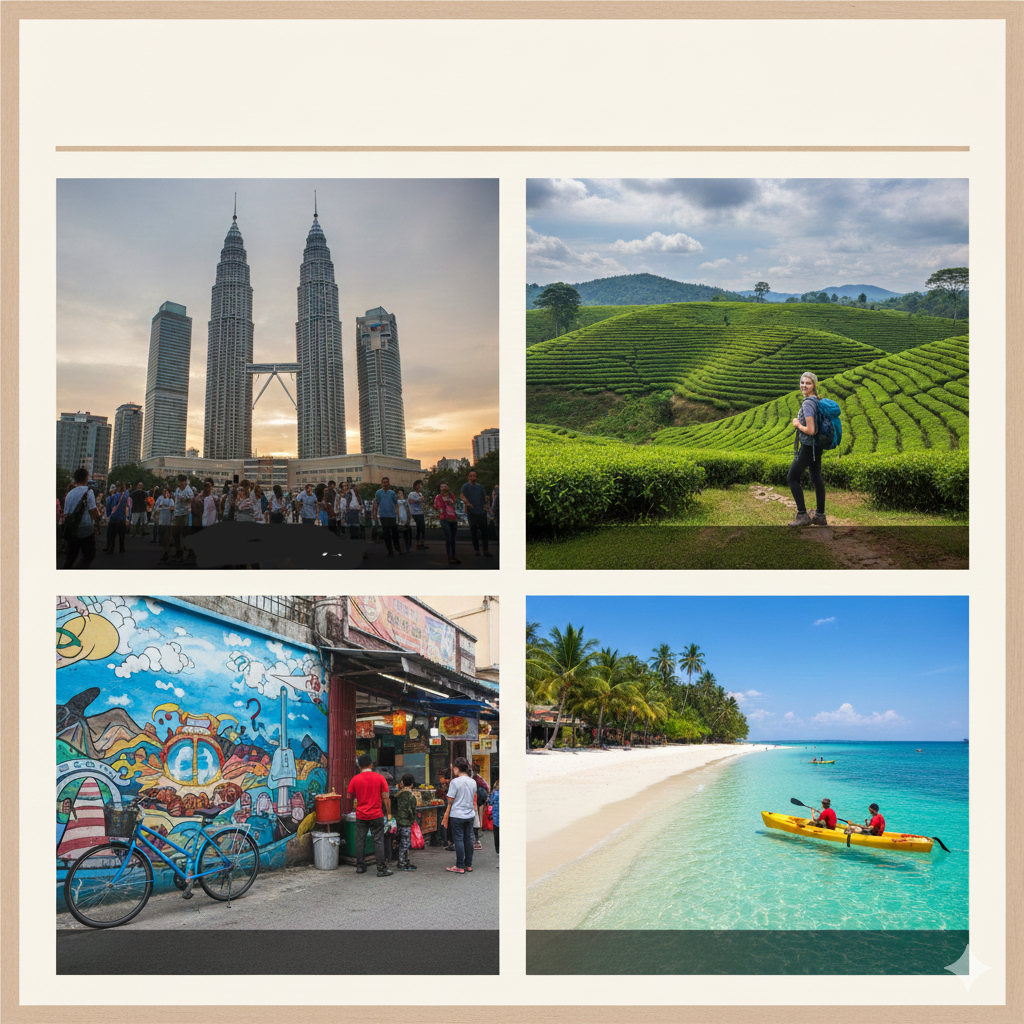
Kuala Lumpur, Penang, and tropical islands
The Perfect 10-Day Peninsular Malaysia Itinerary
Ten days is truly the sweet spot for a first trip to Peninsular Malaysia. It gives you time to dive into its incredible diversity without ever feeling like you’re rushing. This itinerary balances the must-sees: buzzing city life, cool mountain nature, world-class street food, and gorgeous beaches.
Days 1-2: Kuala Lumpur (The Urban Introduction)
After touching down, grab your local SIM and hop on the efficient KLIA Ekspres to the city. Get settled in a central area like Bukit Bintang or Chinatown and ease into the adventure.
On your first evening, start with the iconic Petronas Twin Towers. Grab tickets online in advance to go up to the Skybridge for a view that helps you get your bearings. Afterward, it’s straight to Jalan Alor night market for a delightful initiation into Malaysian food. It’s tourist-friendly and vibrant. You can try the satay, char kway teow, and fresh juices!
The Second Day starts early with a trip to the Batu Caves (aim to arrive by 8 AM to beat the intense heat and crowds!). You’ll climb the 272 famous rainbow steps to the temple while mischievous monkeys watch. Remember to dress modestly. Back in the city, refuel with local favorites like nasi lemak or roti canai at a local food court. Spend your afternoon exploring: maybe the Islamic Arts Museum for context, Central Market for souvenirs, or simply relaxing in the Perdana Botanical Garden. Wrap up the time here with shopping in Bukit Bintang or watching the fountain show at the Petronas Towers KLCC Park.
Days 3-4: Cameron Highlands (Cool Mountain Air)
Time for a change of pace and temperature! Take a morning bus (around 3.5 hours) from KL’s TBS terminal. The winding road delivers you to the Cameron Highlands, where the air is noticeably cooler.
Arrive in Tanah Rata on Day 3, check into your stay, and book a tour for the next morning. Dinner is a must-try local specialty: steamboat (hot pot), which is perfectly comforting in the mountain chill.
The Following Morning is all about the greenery. Join a half-day tour to efficiently hit the highlights. he famous BOH Tea Plantations, strawberry farms, and markets. They might feel a little touristy, but they get the job done. If you prefer independence, hike a marked trail like Trail 4 through the mossy forest, but always let your accommodation know your plans. End your mountain escape sipping tea at one of the tea houses, watching the mist drift over the rolling plantations.
Days 5-7: Penang (Food Paradise)
Next stop: Penang, the ultimate culinary destination. Take a direct bus from Cameron Highlands or consider the scenic ETS train/ferry option via Butterworth.
Arrive on Day 5, check into your Georgetown accommodation, a UNESCO heritage zone that is blissfully walkable. Begin with culture: tour the gorgeous Pinang Peranakan Mansion and wander past the elaborate Khoo Kongsi clan house and the diverse religious sites. Then, it’s time to hunt for the famous street art, especially the pieces by Ernest Zacharevic. Dinner is mandatory at a hawker center—prepare to sample everything!
On Day 6, consider joining a morning street food walking tour. They are invaluable for discovering hidden gems and truly understanding what you’re eating. Spend the afternoon exploring the Clan Jetties, waterfront stilt communities, with Chew Jetty being the most photogenic. For sunset views, head to the Rainbow Skywalk at Komtar.
The Final Morning here offers choice: take the funicular up to Penang Hill for views and cooler air (go early!), or visit the spectacular Kek Lok Si Temple. If you need a seaside fix, Batu Ferringhi offers beaches, though remember Penang’s coastline is functional rather than breathtaking. End your time returning to your favorite hawker stalls for a final fix!
Days 8-10: Islands (Perhentian Islands or Alternative)
For the grand finale, it’s time for island life and stunning beaches.
Option A: Perhentian Islands
This is the classic choice. Take an early bus from Penang to Kuala Besut (5-6 hours) and then a speedboat. You have two islands: Perhentian Kecil (more budget/backpacker friendly) and Perhentian Besar (slightly quieter and more upscale).
Life here is simple: spectacular snorkeling, diving, sunbathing, and jungle trails. Book your accommodation in advance during peak season, as options fill up fast. Spend your three days here snorkeling with sea turtles, hiking between beaches, taking boat trips around the islands, reading in hammocks, and watching truly unforgettable sunsets.
Option B: Alternative Endings
If visiting during monsoon season (November-February) when east coast islands close, or if beaches are not your priority, consider:
- Melaka (2-3 days): Historic port city with colonial architecture, Jonker Street night market, Peranakan culture, and river cruises. Easy day trip from KL or stopover between KL and Singapore.
- Ipoh (1-2 days): Charming city with limestone caves, old town coffee shops, street art, and excellent food. Good stopover between Cameron Highlands and Penang.
- Taman Negara (2-3 days): Ancient rainforest for jungle trekking, canopy walks, river cruises, and wildlife spotting. More adventurous than beaches but incredibly rewarding.
Alternative: 7-Day Malaysian Borneo Extension
If you have more time, Malaysian Borneo (Sabah and Sarawak) offers dramatically different experiences from Peninsular Malaysia.
Sabah (Kota Kinabalu Base)
Day 1-2: Fly to Kota Kinabalu. Explore markets, waterfront, and the city. Take a sunset cruise or visit nearby islands for snorkeling.
On the 3rd & 4th day: Join a tour to Kinabalu Park and Poring Hot Springs. Visit the UNESCO World Heritage Site’s botanical gardens and canopy walkway.
Day 5: Fly or bus to Sandakan, then transfer to Sepilok Orangutan Rehabilitation Centre. Watch feeding times and visit the Sun Bear Conservation Centre.
6th-7th day: Take a river safari on Kinabatangan River, staying at a jungle lodge. Spot proboscis monkeys, pygmy elephants, orangutans, and countless birds.
Sarawak (Kuching Base)
1st & 2nd day: Fly to Kuching and explore the charming city, visit the Cat Museum, walk the waterfront, and discover excellent food.
on Day 3-4: Visit Bako National Park for trekking, wildlife spotting (especially proboscis monkeys), and coastal scenery.
The last two days: Take a longboat up the Skrang or Lemanak River to visit Iban longhouses. Participate in traditional activities, share meals with local families, and experience indigenous culture.
Borneo deserves at least a week to avoid feeling rushed. Travel between locations takes time, and the experiences are too special to hurry through.
Must-See Attractions and Experiences
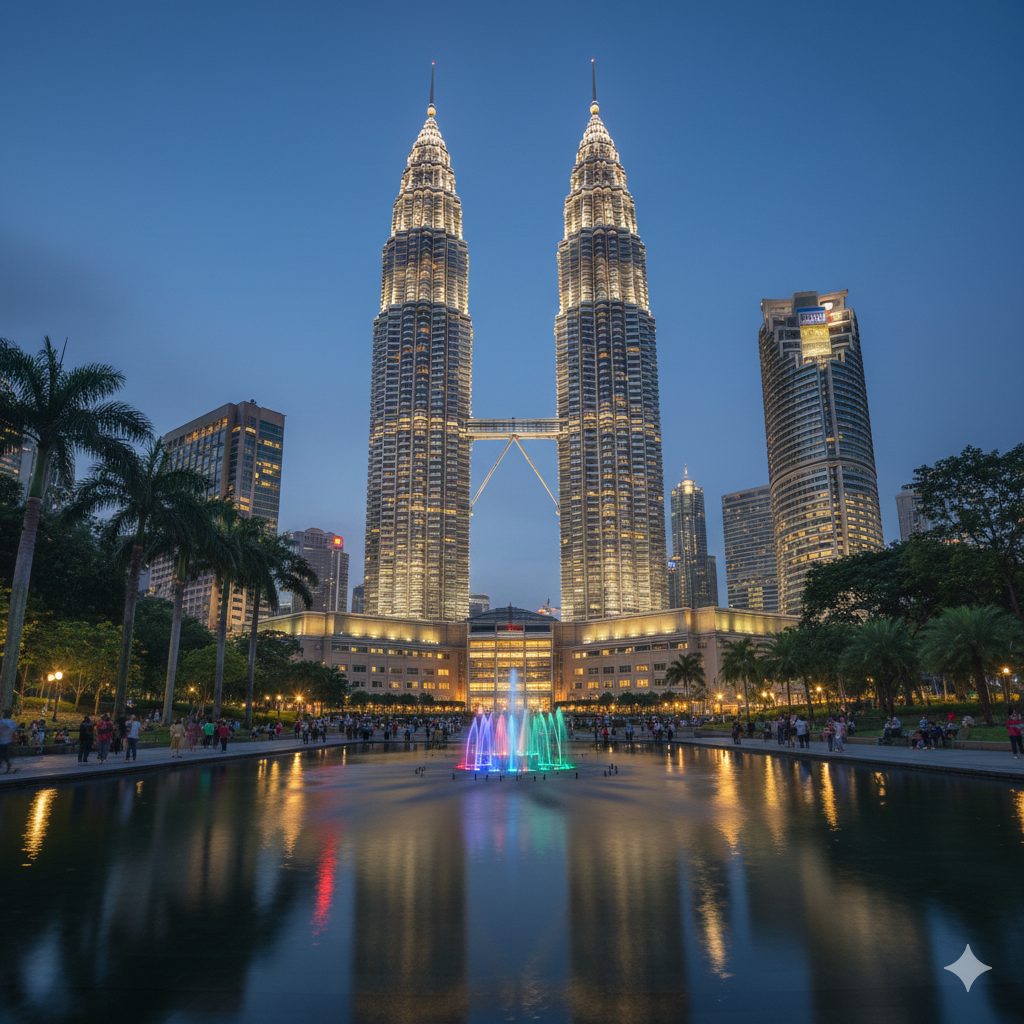
Petronas Twin Towers viewed from KLCC Park in Kuala Lumpur
Petronas Twin Towers (Kuala Lumpur)
The iconic 452-meter twin towers define KL’s skyline. Visit the Skybridge (between the towers) and Observation Deck on the 86th floor for city views.
Female Solo Traveler Tips:
- Book tickets online weeks in advance as they sell out quickly
- Free tickets are available but require very early morning queuing
- Best photo spots are from outside: KLCC Park fountains, or Traders Hotel’s SkyBar
Batu Caves (Kuala Lumpur)
This limestone hill features cave temples reached via a dramatic 272-step staircase guarded by a giant golden Murugan statue. Monkeys inhabit the area.
Solo Traveler Tips:
- Arrive early (8 AM) to beat heat, crowds, and aggressive monkeys
- Modest dress required (bring/rent covering if needed)
- Watch your belongings around monkeys
- The Dark Cave offers guided tours through undeveloped caverns
Georgetown Heritage Zone (Penang)
UNESCO-listed Georgetown preserves Chinese shophouses, clan houses, temples, mosques, and colonial buildings in a walkable historic district. Street art adds contemporary energy.
Your Travel Tips:
- Walking is the best way to explore
- Join a free walking tour to understand the history
- Get deliciously lost in the streets
- Visit heritage clan houses like Khoo Kongsi and Cheong Fatt Tze Mansion
Cameron Highlands Tea Plantations
Rolling hills of tea create one of Malaysia’s most scenic landscapes. BOH Tea Plantation offers factory tours and hilltop tea houses overlooking endless green rows.
Traveler Tips:
- Book tours through your accommodation
- The tea house at BOH Sungai Palas is the most scenic
- Morning visits offer clearer views before afternoon mist rolls in
- Bring a light jacket as temperatures can be surprisingly cool
Perhentian Islands
Two small islands off the northeast coast offer some of Malaysia’s best beaches, snorkeling, and diving. Crystal clear water, coral reefs, sea turtles, and white sand beaches create paradise.
Solo Traveler Tips:
- Book accommodation in advance during peak season
- Long Beach on Perhentian Kecil has the most backpacker social scene
- Daily snorkeling trips are easily arranged and great for meeting people
- Bring cash as ATMs are limited and unreliable
Taman Negara National Park
One of the world’s oldest rainforests at 130 million years old. Jungle trekking, canopy walks, river cruises, and wildlife spotting immerse you in primary rainforest.
Female Solo Traveler Tips:
- Join group tours from Kuala Tahan village
- The canopy walkway is thrilling but not for those afraid of heights
- Leeches are common after rain – wear proper shoes and bring salt
- Night jungle walks offer incredible wildlife spotting
Melaka Historic City
This UNESCO World Heritage Site preserves centuries of Portuguese, Dutch, and British colonial influence blended with Chinese and Malay traditions.
Travel Tips:
- Three major attractions within walking distance: A Famosa fort, Stadthuys, and St. Paul’s Church
- Jonker Street night market (Friday-Sunday) is touristy but atmospheric
- River cruises offer relaxing breaks from walking
- Try Nyonya cuisine, a unique Peranakan fusion
Islamic Arts Museum (Kuala Lumpur)
One of Southeast Asia’s finest Islamic art collections, featuring textiles, ceramics, jewelry, and architectural models from across the Muslim world.
Every Traveler’s Tips:
- Allow 2-3 hours for a thorough visit
- The architecture gallery is particularly impressive
- Free guided tours available at set times
- Modest dress appreciated but not strictly required
The Malaysian Food Experience
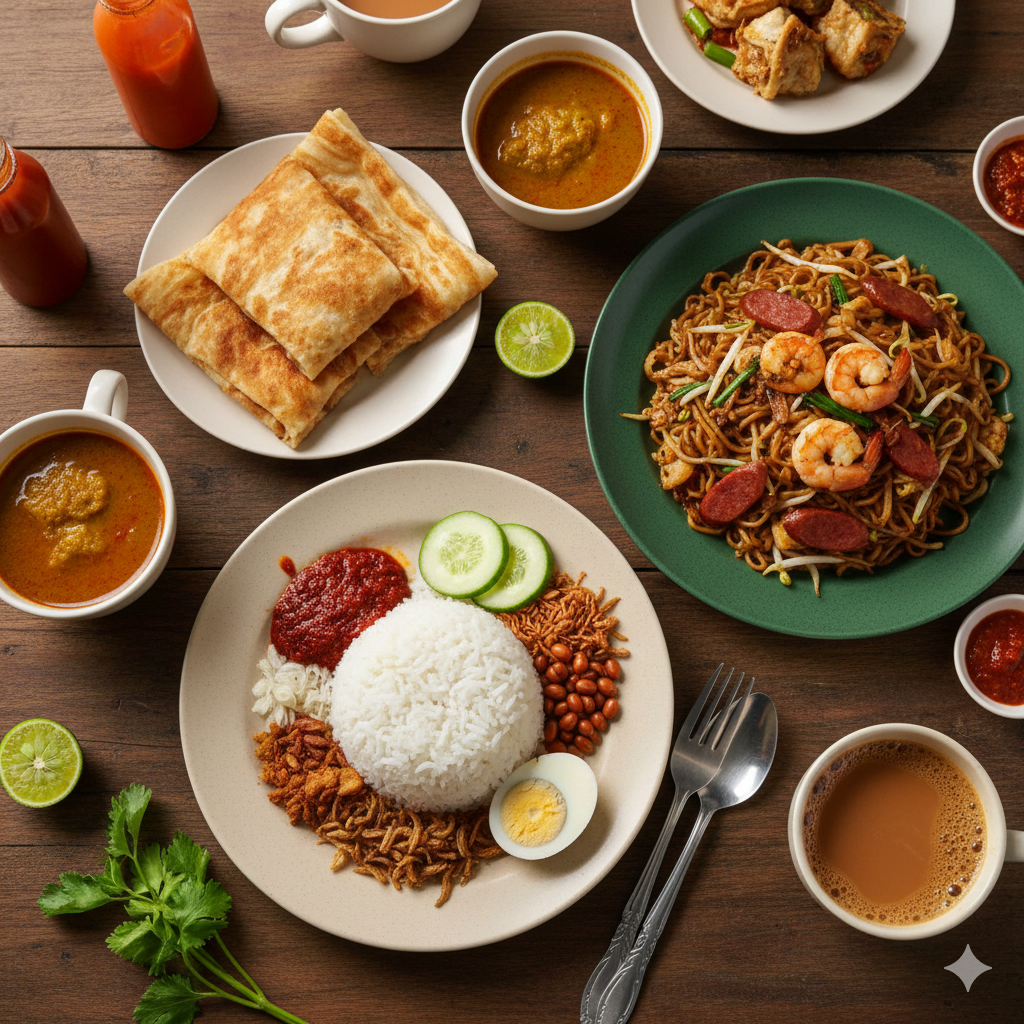
Traditional Malaysian dishes, including nasi lemak and char kway teow
If I had to choose one reason to visit Malaysia, it would be the food. Malaysian cuisine blends Malay, Chinese, Indian, and indigenous influences into something gloriously unique. Here are Essential Malaysian Dishes
Nasi Lemak – The National Dish
Coconut rice served with sambal (spicy chili paste), fried anchovies, peanuts, hard-boiled or fried egg, and your choice of protein (fried chicken, beef rendang, or sambal squid).
Traditionally breakfast food, but available all day. A complete meal costs RM 5-8 at hawker stalls.
You can find it at any local coffee shop or hawker center. Village Park Restaurant in KL is famous for their version.
Nasi Kandar
A Penang Muslim specialty featuring steamed rice served with various curries and side dishes. You point to what you want from the display, and they pile it onto your plate.
Get it at Nasi Kandar Line Clear in Penang (operating since 1947), or any Nasi Kandar restaurant.
Char Kway Teow
Flat rice noodles stir-fried over intense heat with prawns, cockles, egg, bean sprouts, and Chinese sausage. The smoky “wok hei” flavor is everything.
Where to try: Siam Road Char Kway Teow in Penang, or any hawker center with a charcoal wok and long queues.
Laksa – Multiple Regional Versions
Malaysia offers several laksa varieties:
- Penang Assam Laksa: Sour, fishy, intensely flavored noodle soup with mackerel, tamarind, and mint. Divides people into love-it or hate-it camps.
- Curry Laksa: Coconut curry broth with noodles, tofu puffs, fish balls, and prawns. Creamy, spicy comfort food.
- Sarawak Laksa: Lighter broth with prawns, chicken, and lime. Borneo’s unique contribution.
Where to try: Penang Road Famous Teochew Chendul for Assam Laksa, any hawker center for curry laksa.
Roti Canai
Flaky, buttery flatbread served with dhal (lentil curry) or curry sauces. Sometimes stuffed with eggs, onions, or even bananas and chocolate.
Breakfast staple but available all day. Perfect comfort food when you need something familiar yet exotic.
Walk to any Mamak stall (Indian Muslim coffee shops found everywhere). and try the Roti Canai.
Satay
Marinated meat skewers (chicken, beef, lamb) grilled over charcoal and served with peanut sauce, cucumber, onions, and compressed rice cakes (ketupat).
Satay Kajang in Kajang (the satay capital), or hawker centers throughout Malaysia will serve you very well.
Rendang
Slow-cooked meat (usually beef or chicken) in coconut milk and spices until dry and intensely flavorful. Rich, complex, and deeply satisfying.
Often served with nasi lemak or on its own with rice.
Try it at Malay restaurants, nasi kandar stalls, or village-style restaurants.
Bak Kut Teh
“Meat bone tea” – a Chinese herbal soup featuring pork ribs simmered with garlic, star anise, and medicinal herbs. Served with rice, youtiao (fried dough), and Chinese tea.
Where to try: Klang (the origin city), Jalan Ipoh in KL, or Penang’s Kimberly Street.
Hokkien Mee
Two versions exist:
- KL Style: Dark, thick noodles in black soy sauce with pork, prawns, squid, and crispy pork lard.
- Penang Style: Noodles in spicy prawn broth.
Both are delicious in completely different ways. Find this at Kim Lian Kee in KL for KL-style or any hawker center in Penang for Penang-style.
Banana Leaf Rice
South Indian meal served on a banana leaf. Rice surrounded by various curries, vegetables, papadum, and pickles. Traditionally eaten with your right hand.
Eat the banana leaf rice at Brickfields (Little India) in KL, or any South Indian restaurant.
Drinks and Desserts
Teh Tarik – “Pulled Tea”
Black tea with condensed milk, “pulled” between two containers to create a frothy texture. The national drink alongside coffee.
Watch the theatrical pouring at any Mamak stall.
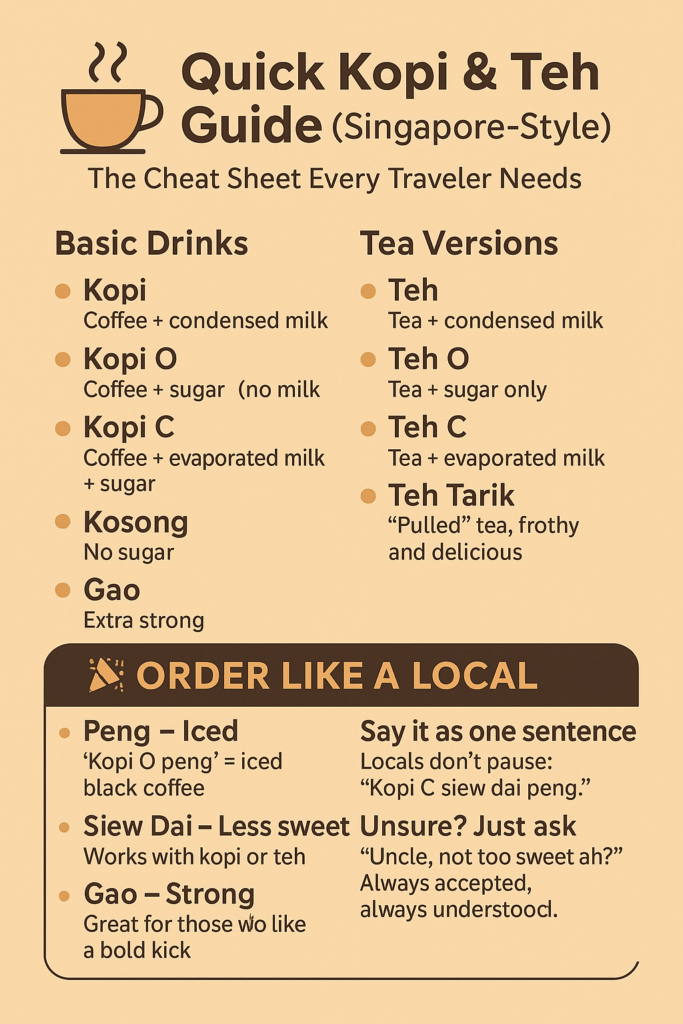
Kopi – Malaysian Coffee
Strong coffee brewed with condensed milk, you can actually order variations.
Cendol
Shaved ice dessert with pandan jelly noodles, coconut milk, palm sugar syrup, and red beans. Sweet, cooling, and perfect after spicy food.
Try Penang Road Famous Teochew Chendul in Penang.
ABC (Air Batu Campur)
“Mixed ice” – shaved ice with colorful syrups, sweet corn, red beans, grass jelly, condensed milk, and sometimes ice cream.
Available at every hawker center dessert stall.
Fresh Fruit
Malaysia offers incredible tropical fruits: mango, mangosteen, rambutan, dragon fruit, starfruit, durian (the controversial “king of fruits”), and more.
Markets sell them cheaper than restaurants. Try everything.
Kuih – Traditional Cakes
Colorful bite-sized snacks made from rice flour, coconut, and pandan. Sweet or savory options appear at morning markets and Malay stalls.
Top Hawker Centers and Food Courts:
Kuala Lumpur:
- Jalan Alor Night Market (tourist-friendly, atmospheric)
- Imbi Market (excellent local vibe, great hokkien mee)
- Restoran Yut Kee (Hainanese kopitiam institution)
- Lot 10 Hutong (food court showcasing famous hawkers)
Penang:
- Gurney Drive Hawker Centre (waterfront location)
- New Lane Hawker Centre (compact, excellent variety)
- Red Garden Food Paradise (tourist-friendly with live music)
- Kimberly Street (street-side hawker stalls)
Melaka:
- Jonker Street Night Market (weekends only)
- Glutton Street Food Court
- Portuguese Settlement (seafood)
Solo Dining Tips
Eating Alone is Normal: Malaysians frequently eat solo at hawker centers. Nobody will find it strange or sad.
Language Barriers: Point at food or show pictures. Most hawkers understand “one” and basic English. Smile and be patient.
Portion Sizes: Hawker portions are often generous. Consider ordering one dish first, then adding more if still hungry.
Spice Levels: Say “kurang pedas” (less spicy) or “tidak pedas” (not spicy) when ordering. Malaysian “mild” can still be quite spicy.
Food Safety: Stick to busy stalls with high turnover. Hot, freshly cooked food is safest. Avoid pre-cut fruits at questionable hygiene stalls.
Dietary Restrictions:
- Vegetarian: Look for Indian vegetarian restaurants or Buddhist vegetarian stalls
- Halal: Most Malay and Mamak food is halal; Chinese food usually is not
- Allergies: Communication can be challenging; carry allergy cards in Bahasa Malaysia
Food Tours and Cooking Classes
Food tours provide context, history, and access to stalls you would miss alone. Penang and KL offer excellent options through companies like Food Tour Malaysia and Simply Enak.
Cooking classes teach you to recreate Malaysian dishes at home. Nazlina Spice Station in Penang receives consistently excellent reviews.
Both are naturally solo-traveler friendly and great for meeting people.
Cultural Neighborhoods to Explore
Kuala Lumpur’s Chinatown (Petaling Street)
KL’s Chinatown centers on Petaling Street, a covered market street selling everything from fake designer goods to traditional medicines.
- Sri Mahamariamman Temple (ornate Hindu temple)
- Sin Sze Si Ya Temple (oldest Chinese temple in KL)
- Central Market (crafts and souvenirs in an Art Deco building)
- Petaling Street Night Market
- Chan She Shu Yuen Clan Association (beautiful architecture)
- Excellent hawker food at surrounding streets
Solo Tips:
- Watch belongings in crowded market areas
- Bargain at market stalls (offer 40-50% of asking price)
- Visit temples early morning for a quieter experience
- Explore the surrounding streets beyond Petaling Street itself
Brickfields (Little India, Kuala Lumpur)
KL’s Little India centers around Jalan Tun Sambanthan, walking distance from KL Sentral station.
- Colorful shops selling saris, jewelry, and spices
- Excellent South Indian vegetarian restaurants
- Sri Kandaswamy Temple
- Indian sweet shops with treats like gulab jamun and jalebi
- Textile markets
What you need to do:
- Visit on weekends for maximum energy
- Try banana leaf rice for lunch
- Browse textile shops even if not buying – the colors are incredible
- Shop for affordable Indian clothing
Kampung Baru (Traditional Malay Village, KL)
Tucked between modern KL skyscrapers sits Kampung Baru, a traditional Malay settlement that has resisted development since 1900.
- Traditional wooden Malay houses
- Saturday Night Market (Pasar Malam) with local food and goods
- Authentic Malay restaurants serving home-style cooking
- Masjid Jamek (beautiful mosque at the river confluence)
Your Tips:
- Less English spoken here than tourist areas
- Dress modestly out of respect
- Saturday night market is the best time to visit
- Try Malay kuih and traditional desserts
Georgetown’s Cultural Mix (Penang)
Georgetown deserves multiple days of wandering. Each area has a distinct character.
Little India (Penang): Centered on Lebuh Pasar and Market Street. Smaller than KL’s version but equally colorful. Sri Mahamariamman Temple is the centerpiece.
Chinatown: The largest area, spreading from Lebuh Chulia to the clan jetties. Chinese temples, clan houses, medicine shops, and endless food.
Armenian Street District: Historic heart with street art, museums, and cafes. Tourist-friendly but still authentic.
Clan Jetties: Waterfront communities built on stilts. Chew Jetty is most visited; others are quieter.
Malay Quarter: Around Masjid Kapitan Keling. Markets, Malay food, and traditional shops.
Melaka’s Jonker Street
The heart of Melaka’s heritage zone, Jonker Street (Jalan Hang Jebat) buzzes with antique shops, cafes, and galleries daily, then transforms into a night market on weekends.
- Baba & Nyonya Heritage Museum (Peranakan culture)
- Cheng Hoon Teng Temple (oldest Chinese temple in Malaysia)
- Dutch Square with red buildings and Christ Church
- A Famosa fortress ruins
- Jonker Walk Night Market (Friday-Sunday)
Travel Tips:
- Three days are overkill; two nights is perfect
- Stay in a heritage hotel in a converted shophouse
- Walk the river promenade at night
- Try Nyonya cuisine unique to Melaka
Hidden Gems and Off-the-Beaten-Path
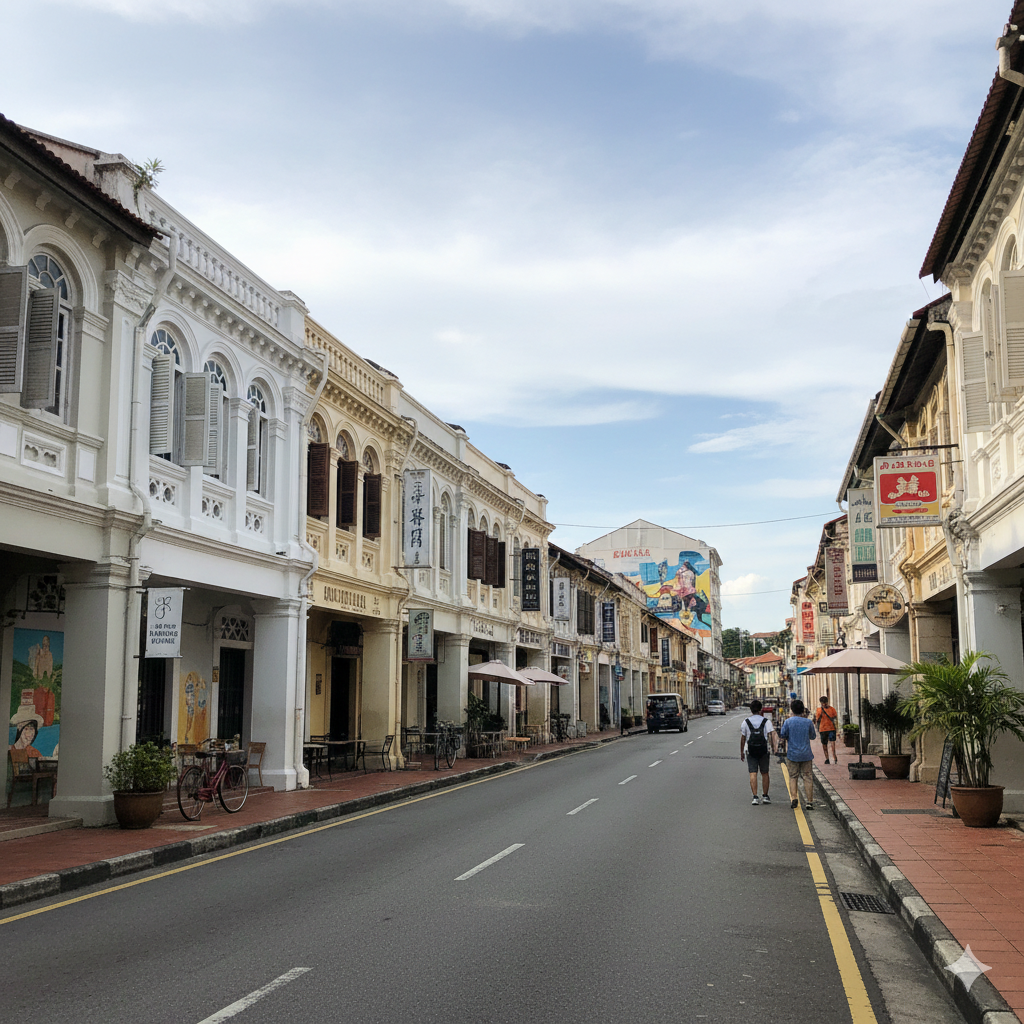
Ipoh old town streets with colonial architecture in Malaysia
1. Ipoh (Old Town Charm)
Often overlooked, Ipoh offers colonial architecture, limestone caves, excellent coffee shops, and authentic food without tourist crowds.
- Old Town white coffee shops (coffee roasted with margarine)
- Sam Poh Tong cave temple
- Concubine Lane (narrow heritage street)
- Street art similar to Georgetown but less crowded
- Kellie’s Castle (unfinished mansion with fascinating history)
Perfect as a stopover between Cameron Highlands and Penang, or a weekend escape from KL (2 hours by train).
2. Kuala Gandah Elephant Sanctuary
Ethical elephant conservation center where rescued elephants live in semi-wild conditions. Visitors can observe (not ride) elephants and watch feeding times.
Located about 2 hours from KL. Day trips available but require early starts.
Important: This is one of the few ethical elephant experiences in Malaysia. Avoid anywhere offering elephant rides.
3. Kuala Selangor (Fireflies)
An hour from KL, Kuala Selangor offers firefly river cruises where thousands of fireflies light up mangrove trees like Christmas lights.
Best visited as a half-day evening trip from KL. Combine with seafood dinner and Melawati Hill (historic fort with silver leaf monkeys).
4. Sekinchan (Fishing Village and Rice Fields)
Two hours north of KL, this coastal town features endless rice paddies, fishing villages, fresh seafood, and zero tourists.
Perfect for photographers and anyone wanting authentic rural Malaysia. Best visited during rice planting or harvest seasons when fields are greenest.
5. Tanjung Jara (East Coast Beach Luxury)
If budget allows one splurge, Tanjung Jara Resort in Terengganu offers traditional Malay architecture, pristine beaches, and genuine service.
Accessible during the dry season (March-October) only. Prices drop significantly during the low season.
6. Mulu Caves (Sarawak, Borneo)
UNESCO World Heritage Site featuring some of the world’s largest cave chambers and passages. The Deer Cave houses millions of bats that pour out at sunset.
Requires flying to Mulu, staying at nearby accommodation, and joining guided tours. Expensive but absolutely spectacular for nature lovers.
7. Gunung Ledang (Mount Ophir)
Johor’s highest mountain (1,276 meters) features challenging but rewarding jungle trekking. The summit requires about 6-8 hours round trip through primary rainforest.
For experienced, fit hikers only. Guides are mandatory. Leeches are guaranteed.
Meeting People and Building Community
Solo travel in Malaysia naturally creates social opportunities if you stay open to them.
Stay at social hostels, join walking tours, attend cooking classes, take island-hopping trips or connect on platforms like Couchsurfing and Meetup. Malaysians are naturally friendly and open to conversation.
Practical Etiquette and Local Customs
Greet people with “selamat pagi” or “terima kasih.” Use your right hand when giving or receiving items. Dress modestly in religious areas. Remove shoes where required. Ask permission before photographing people. Respect prayer times and cultural norms.
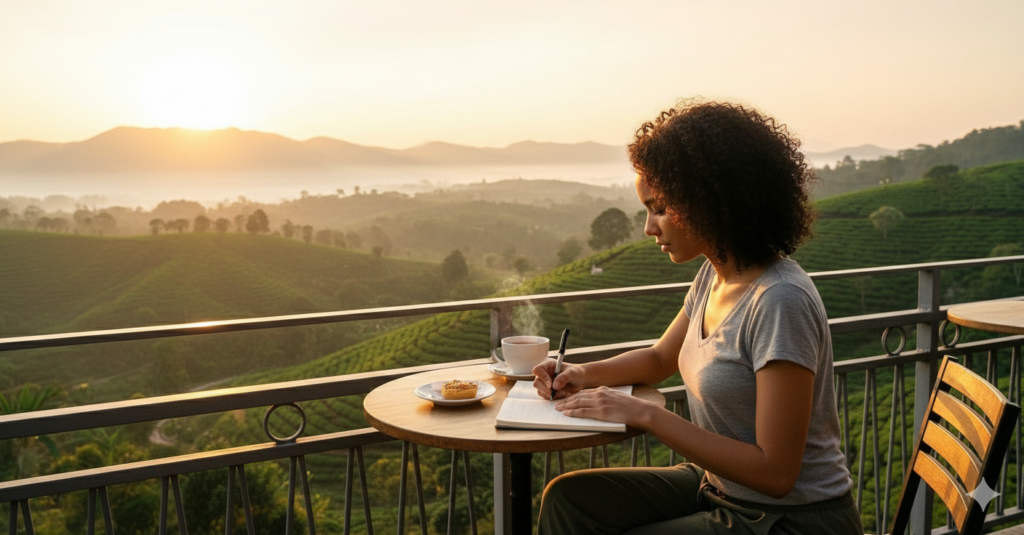
Solo But Not Lonely
Remember that being alone and being lonely are different. Some of your most meaningful experiences might involve:
- Peaceful solo hikes through tea plantations
- Watching sunsets alone while processing your experiences
- Journaling in a quiet cafe
- Observing Malaysian family life at hawker centers
Choose when to seek company and when to embrace solitude.
Religious Sensitivity:
- Remove shoes before entering mosques, temples, and many homes
- Never point feet at people or religious objects
- Ask permission before photographing people praying
- Respect prayer times (morning, noon, afternoon, sunset, evening)
- During Ramadan, avoid eating/drinking in front of Muslims during daylight hours
Social Customs:
- Use right hand for eating, giving, and receiving (left hand is considered unclean)
- Point with thumb, not index finger
- Don’t touch people’s heads (considered sacred)
- Public displays of affection between couples are frowned upon
- Remove shoes when you see shoe racks outside homes or establishments
Tipping:
- Not expected or required
- Service charges (usually 10%) often included in restaurant bills
- Rounding up for good service is appreciated but optional
- Hawker centers never expect tips
Language Basics
English works well in cities and tourist areas, but learning basic Bahasa Malaysia enhances experiences:
- Selamat pagi/petang/malam: Good morning/afternoon/evening
- Terima kasih: Thank you
- Sama-sama: You’re welcome
- Tolong: Please / Help
- Maaf: Sorry
- Ya / Tidak: Yes / No
- Berapa harga?: How much?
- Boleh kurang?: Can you reduce? (bargaining)
- Sedap: Delicious
- Halal: Permissible (for Muslims)
- Tandas / Bilik air: Toilet / Bathroom
- Di mana…?: Where is…?
Malaysians deeply appreciate any attempt to speak Bahasa, even just “terima kasih.”
Common Mistakes to Avoid
Underestimating Travel Times: Malaysia is larger than it looks on maps. Add buffer time for traffic, especially around KL, and for bus delays.
Wearing Shoes Indoors: Always look for shoe racks and follow what locals do.
Eating During Ramadan: Avoid eating or drinking in public during daylight hours during Ramadan out of respect.
Pointing with Index Finger: Use your thumb or whole hand.
Arriving During Major Holidays: Hari Raya (end of Ramadan), Chinese New Year, and Deepavali mean closed shops, triple prices, and booked transport.
Skipping Travel Insurance: Medical care is affordable but multi-day jungle treks, diving, and adventure activities warrant coverage.
Wearing Revealing Clothing in Rural Areas: What works in KL or resort beaches doesn’t work everywhere.
Expecting Singapore-Level Infrastructure: Malaysia is more relaxed, less punctual, and more chaotic. Embrace it.
Not Bargaining at Markets: Expected at street markets and market stalls (but not in malls or fixed-price shops).
Trusting Unmarked Taxis: Always use Grab or official taxi stands to avoid scams.
What to Pack for Malaysia
Malaysia’s climate requires lightweight, breathable clothing, but cultural sensitivity adds considerations.
Essential Clothing
For General Wear:
- Lightweight, loose cotton or linen clothing
- Long pants or maxi skirts (comfortable in heat and culturally appropriate)
- Long-sleeve lightweight shirts (protect from sun and mosquitoes)
- Modest t-shirts and short-sleeve tops
- One light cardigan or shawl (for air-conditioned spaces and covering up)
Specific Activities:
- Hiking shoes or sturdy sandals for jungle treks
- Flip-flops for hostels and beaches
- One dressier outfit for nice restaurants or bars
- Modest swimwear (one-piece or tankini works everywhere)
Religious Sites:
- Large scarf or sarong for covering hair at mosques
- Pants/long skirt and shirt covering shoulders
What Not to Pack
- Heavy jeans (too hot)
- Lots of shoes (you’ll wear flip-flops 90% of the time)
- Revealing clothing (culturally inappropriate)
- Bulky towels (hostels provide them)
- Full-size toiletries (buy locally)
Essential Gear
Tech:
- Universal adapter (Type G plugs)
- Power bank (long travel days drain batteries)
- Waterproof phone pouch (for boats and sudden rains)
Health and Hygiene:
- High SPF sunscreen (Malaysian sun is intense)
- DEET mosquito repellent (dengue is a risk)
- Basic first aid kit
- Hand sanitizer and wet wipes
- Any prescription medications plus copies of prescriptions
- Anti-diarrheal medication
Practical Items:
- Reusable water bottle
- Small day pack
- Ziplock bags (keeping things dry during rain)
- Rain jacket (Lightweight ) or umbrella
- Headlamp or small flashlight
- Padlock for hostel lockers
Documents:
- Passport (valid 6+ months)
- Copies of important documents stored separately
- Travel insurance documentation
- Accommodation confirmations
- Transport tickets
Dealing With Climate Challenges
Heat and Humidity:
- Dress in light, breathable fabrics
- Plan outdoor activities for early morning or late afternoon
- Take breaks in air-conditioned spaces
- Stay hydrated constantly
- Shower multiple times daily
Rain:
- Malaysia experiences sudden tropical downpours
- Keep electronics in waterproof bags
- Accept that you’ll get wet sometimes
- Rain is often brief and refreshing
Sun:
- Wear SPF 50+ and reapply every 2 hours
- Put on a hat and sunglasses
- Seek shade during peak sun (11 AM – 3 PM)
Mosquitoes:
- Use DEET repellent religiously
- Long sleeves and pants at dawn and dusk
- Check accommodation has screens or mosquito nets
- Consider lightweight mosquito net for budget stays
Health and Wellness
Vaccinations and Health Prep
Recommended Vaccinations:
- Hepatitis A and B
- Typhoid
- Routine vaccinations (MMR, tetanus, etc.)
- Japanese encephalitis (if visiting rural areas long-term)
- Rabies (if planning extensive jungle time or working with animals)
Consult a travel medicine clinic 6-8 weeks before departure.
Malaria: Low risk in most tourist areas. Borneo’s interior forests warrant prophylaxis if visiting. Mosquito prevention is most important.
Dengue Fever: Present throughout Malaysia. No vaccine or prophylaxis available. Prevent mosquito bites religiously, especially during dawn and dusk.
Healthcare in Malaysia
Malaysia offers excellent private healthcare at reasonable costs by Western standards. Public hospitals are affordable but often crowded.
If You Get Sick:
- Pharmacies (numerous) can help with minor issues
- Clinics provide walk-in care for common illnesses
- Private hospitals offer English-speaking doctors and modern facilities
- Travel insurance should cover serious medical needs
Common Health Issues:
- Dehydration (drink more water than you think you need)
- Heat exhaustion (rest, hydrate, cool down)
- Traveler’s diarrhea (usually mild; stay hydrated and consider medication)
- Sunburn (prevent with sunscreen and covering up)
- Mosquito-borne illnesses (use repellent consistently)
Food Safety
Malaysia’s food is generally safe when you follow basic precautions:
Safe Choices:
- Freshly cooked hot food
- Busy stalls with high turnover
- Peeled fruits
- Bottled or boiled water
Be Cautious:
- Pre-cut fruits from questionable vendors
- Ice in remote areas
- Raw vegetables in budget establishments
- Shellfish quality varies
Trust Your Gut: Literally. If something looks or smells off, skip it.
Mental Health and Wellness
Solo travel can be emotionally challenging. Malaysia offers various wellness options:
When You Need a Break:
- Spa treatments are affordable (RM 60-150 for massages)
- Yoga studios in major cities offer drop-in classes
- Highland areas provide cooling mental breaks
- Beach time offers natural stress relief
If Feeling Lonely or Overwhelmed:
- Join a group activity
- Video call friends or family
- Spend time in hostel common areas
- Visit a busy hawker center and people-watch
- Give yourself permission to have a quiet day
Staying Connected At Home:
- WhatsApp works well for international communication
- Internet cafes exist if you need computers
- Most accommodation has WiFi
- SIM cards provide consistent data
Do You Wish to Extend Your Southeast Asian Journey
Malaysia serves as an excellent gateway for further exploration in Southeast Asia, naturally connecting with several nearby destinations. Access Thailand via multiple overland border crossings, including Padang Besar, Bukit Kayu Hitam, Rantau Panjang, and Wang Kelian. While scenic train routes exist, I recommend flying due to the journey length.
For quick trips to Singapore, travelers can easily use frequent and affordable buses from key Malaysian cities like KL, Melaka, or Johor Bahru, or opt for cheap budget airline flights, making a combined Malaysia-Singapore itinerary seamless.
To reach Indonesia, ferries provide essential links, connecting Penang to Medan (Sumatra), Johor to Batam and Bintan islands, and Sabah to Kalimantan (Borneo). Finally, visit the unique, wealthy nation of Brunei Darussalam by bus from Miri in Malaysian Borneo.
Solo Traveler Preparation Checklist
- Two Weeks Before:
- Secure Essentials: Check 6+ month passport validity, get vaccinations, and buy travel insurance.
- Logistics: Book first nights’ stay, notify the bank, check side-trip visas, download offline maps, and research airport transport.
- One Week Before:
- Refine Details: Finalize packing, break in shoes, charge all electronics.
- Safety & Access: Share itinerary, make document copies, download apps, and arrange currency.
- Day Before:
- Final Checks: Recheck passport/documents, confirm flight, pack liquids in clear bag.
- Ready to Go: Fully charge devices, review Day 1 plans, pack snacks, set alarms, and get adequate sleep.
- Upon Arrival:
- Connect & Orient: Buy local SIM, withdraw cash (ATM), confirm accommodation directions.
- Safety First: Message safe arrival—the adventure begins!
Frequently Asked Questions
Is Malaysia safe for solo female travelers? Yes, with reasonable precautions. It’s safer than many Western cities but requires more awareness than Singapore.
Do I need to cover my head everywhere? No, only in mosques. Elsewhere, modest dress (covering shoulders and knees) is appreciated but hair doesn’t need covering.
What about Muslim dietary restrictions? If you’re non-Muslim, you can eat anything. Many restaurants are halal, but Chinese and Indian non-Muslim establishments serve pork and other non-halal foods.
Can I wear shorts? In major cities and beach resorts, yes. In rural areas, mosques, and conservative states, longer options are more respectful and attract less attention.
Can I travel during Ramadan? Yes, though be sensitive about eating/drinking in public during daylight hours. Some restaurants close during day; cities remain functional.
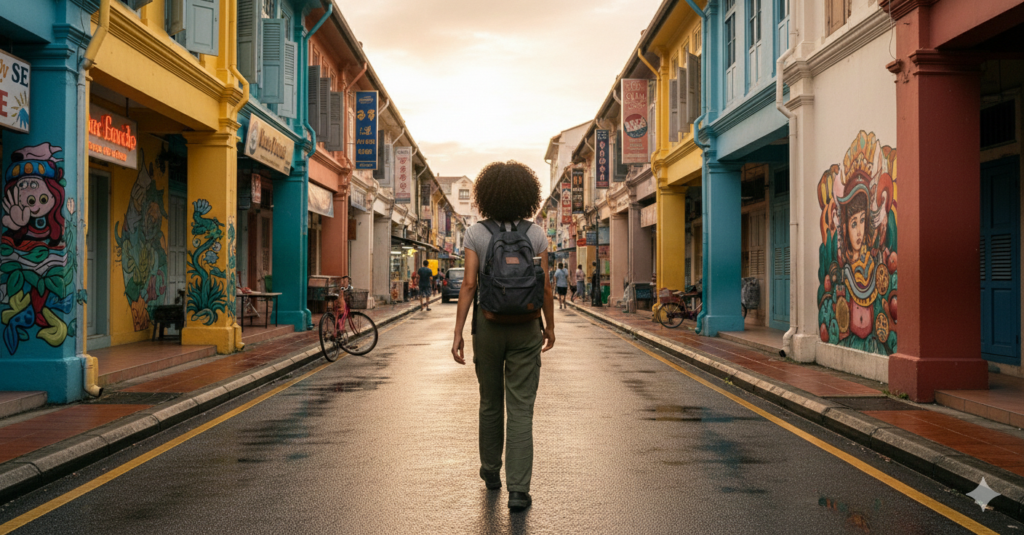
Walking confidently through a Malaysian street
So… Why Not Malaysia?
Malaysia offers something Singapore cannot: the thrill of navigating genuine cultural differences while maintaining enough infrastructure to feel safe. It’s the perfect next step in your solo travel journey.
Each small victory in Malaysia builds your confidence: Successfully ordering food in Bahasa Malaysia. Navigating the KL public transport system alone. Making friends with strangers at a hostel. Handling a sudden monsoon downpour. Eating unfamiliar food and loving it. These aren’t just travel memories. They’re proof.
Now go. Walk through Georgetown’s streets at golden hour. Sweat through the KL heat. Get deliciously lost in hawker centers and make friends with other travelers over cheap beer and expensive stories. Before you leave Malaysia, watch the jungle canopy from Taman Negara, and swim with sea turtles off Perhentian Islands. Eat until you can’t anymore, then eat again.
Additional Resources
Useful Websites
- Tourism Malaysia: www.malaysia.travel (official tourism site)
- 12Go Asia: www.12go.asia (booking buses, trains, ferries)
- Grab: www.grab.com (ride-hailing app)
- Seat61: www.seat61.com/Malaysia (comprehensive train information)
Recommended Reading
- “Kampung Boy” by Lat – Comic memoir of rural Malaysian childhood
- “Lonely Planet Malaysia, Singapore & Brunei” – Comprehensive guidebook
Facebook Groups
- Girls Love Travel – Malaysia
- Malaysia Backpackers
- Solo Female Travelers
- Digital Nomads in Malaysia
A Final Note
I wrote this guide because I wish it had existed when I first considered traveling solo to Malaysia. I was nervous. I had questions nobody seemed to answer directly. I wondered if I was brave enough, experienced enough, prepared enough.
Your Malaysia journey will be different from mine, from your friends’, from anyone else’s. That’s the beauty of solo travel. You get to write your own story, make your own mistakes, have your own adventures, and discover your own version of this incredible country.
Last Updated: December 2025
Have questions or want to share your Malaysia solo travel experience? The journey is always better when we support each other. Trust yourself, trust the process, and trust that Malaysia will meet you exactly where you are.
Selamat jalan – Safe travels.