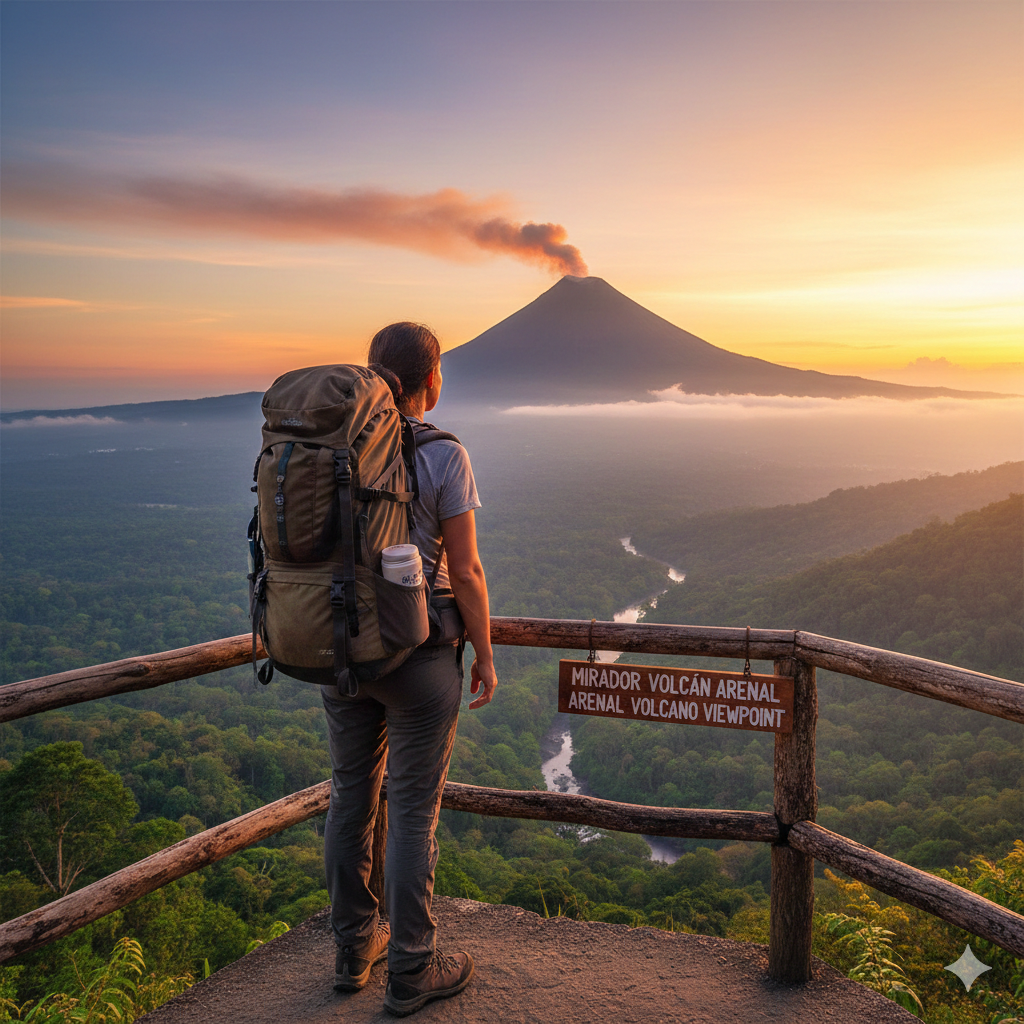

Costa Rica is one of the safest countries in Central America for solo female travelers. Most women report feeling comfortable in tourist areas like La Fortuna, Monteverde, and Manuel Antonio, though normal precautions (avoiding isolation at night and using licensed taxis) still apply. The country’s welcoming “Pura Vida” culture, well-developed tourism infrastructure, and abundance of other solo travelers make it an excellent choice for first-timers.
Walking out of Juan Santamaría International Airport at 9 PM, I felt slightly nervous, definitely jet-lagged, and wondered if I’d made the right call booking this trip alone. Within twenty minutes, I was in a licensed taxi chatting with a driver named Carlos about the best places to see sloths, and my shoulders finally came down from my ears.
That’s Costa Rica for you.
This tiny country wedged between the Pacific Ocean and the Caribbean Sea has become a rite of passage for solo female travelers. It’s nature-forward, infrastructure-rich, and genuinely friendly. You can zipline through cloud forests in the morning, soak in volcanic hot springs by afternoon, and fall asleep to howler monkeys without ever feeling like you’re taking a risk just by existing as a woman alone.
This guide is for you if:
- You’re considering your first solo trip and want somewhere safe but adventurous
- You’re a seasoned solo traveler looking for solid intel on Costa Rica specifically
- You’re a digital nomad scoping out your next base
- You want honest answers about safety, costs, and logistics — not just Instagram highlights
Let’s get into it.
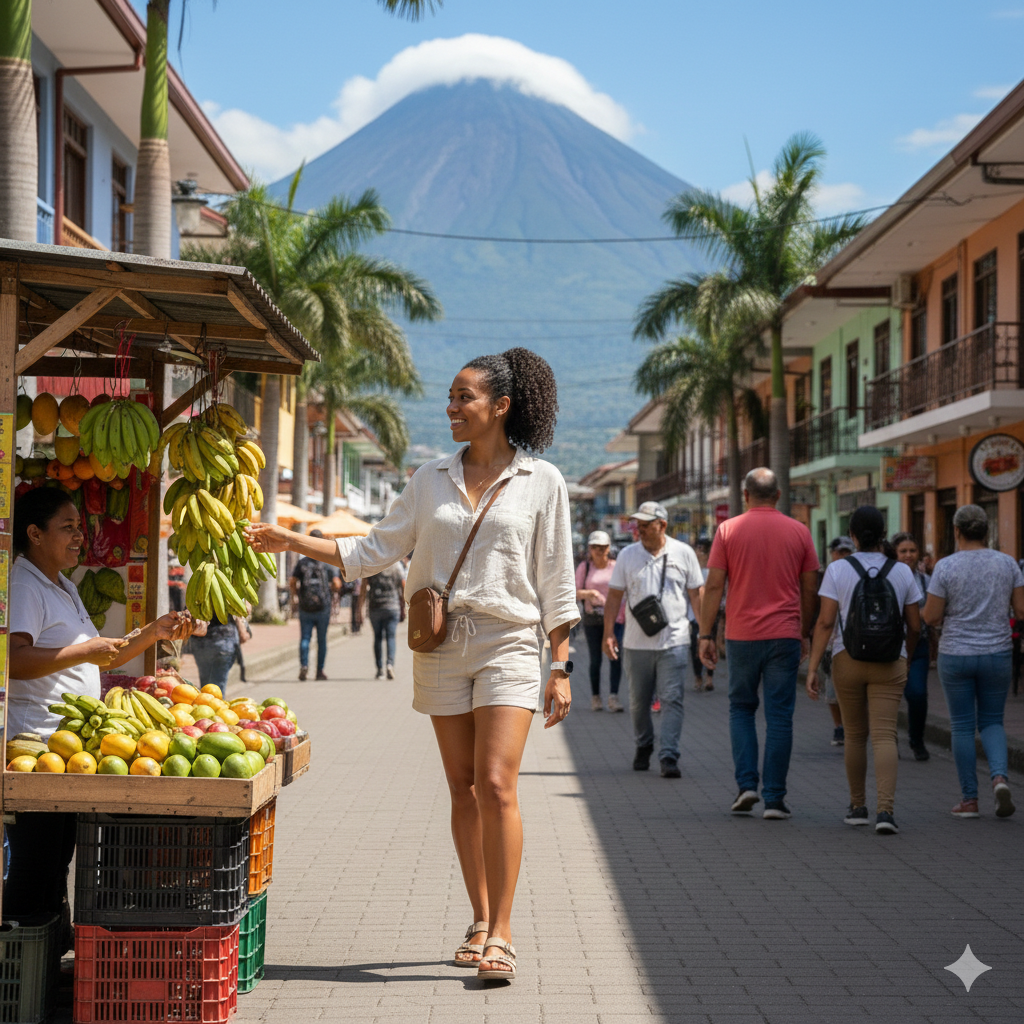
Walking safely through La Fortuna Costa Rica
Is Costa Rica Safe for Solo Female Travelers?
Costa Rica ranks as one of the safest countries in Central America, significantly safer than many destinations in North and South America. It has no standing army, maintains a stable democracy, and depends on a tourism industry that thrives when people feel welcome and secure.
That said, “safe” doesn’t mean “risk-free.” You’re still in a country where petty crime exists, where staying aware matters, and where being a solo woman requires the same street smarts you’d use in Barcelona, New York, or anywhere else.
What makes Costa Rica safer than neighboring countries:
- Strong rule of law and low violent crime rates
- Heavy police presence in tourist areas
- English-speaking infrastructure in most towns
- Established expat and digital nomad communities
- Cultural norm of respect toward women (more on this below)
What you still need to watch out for:
- Petty theft (phones, bags, wallets)
- Taxi scams in San José
- Isolated beach areas after dark
- Drink spiking in party towns (rare, but it happens)
Costa Rica won’t coddle you, but it also won’t punish you for being a woman traveling alone. You just need to be intentional.
Common Safety Concerns (and How to Avoid Them)
Pickpocketing in San José & Beach Towns
San José gets a bad rap, and some of it’s deserved. The area around the Coca-Cola bus terminal and Mercado Central can feel sketchy, especially after dark. Pickpocketing happens on crowded buses, in markets, and anywhere tourists congregate with their guard down.
How to avoid it:
- Keep your phone in your front pocket or a crossbody bag you can see
- Avoid wearing flashy jewelry or pulling out wads of cash
- Use a money belt or hidden pouch for your passport and credit cards
- On buses, keep your daypack on your lap, not overhead or beside you
Beach towns like Jacó, Tamarindo, and even Manuel Antonio see opportunistic theft — usually when people leave bags unattended on the sand or walk around at night with valuables visible.
Phone Theft
This is the #1 item solo female travelers lose in Costa Rica. Phones get snatched from tables at outdoor cafés, from hands while you’re texting and walking, and from beach towels.
How to avoid it:
- Never leave your phone on restaurant tables — keep it in your bag or pocket
- Use a phone strap or lanyard if you’re navigating while walking
- Back up your photos to the cloud daily
- Consider getting local insurance or using a secondary phone for travel
Taxi Scams
Unlicensed “pirate taxis” pose a real issue, especially around the San José airport and bus stations. They’ll overcharge you, take scenic routes to jack up the meter, or worse — though violent incidents remain rare.
How to avoid it:
- Use official red taxis with yellow triangles and working meters (called marías)
- Better yet, book Uber (available in San José and some tourist areas)
- Pre-arrange airport transfers through your hotel or a reputable company
- Never get in an unmarked taxi, no matter how friendly the driver seems
Drinking & Nightlife Awareness
Most solo female travelers have zero issues going out in Costa Rica, but drink spiking has been reported in party-heavy towns like Tamarindo, Jacó, and Puerto Viejo. It’s not an epidemic, but it’s worth knowing.
How to stay safe:
- Don’t accept drinks from strangers (yes, even friendly ones)
- Always keep your drink in your hand or in sight
- Go out with other travelers when possible — hostels often organize group outings
- Trust your gut — if a situation feels off, leave
- Have a plan for getting home (Uber, pre-arranged taxi, walking with others)
Areas Where Solo Female Travelers Feel Safest
Not all of Costa Rica feels the same. Some towns radiate a laid-back, community vibe; others pulse with transient, party-focused energy. Here’s where solo women consistently report feeling comfortable:
La Fortuna / Arenal — Small-town vibe, family-friendly, heavily touristed. You’ll see other solo women everywhere, and the town shuts down early. Feels safe day and night.
Monteverde — Quiet, nature-focused, almost zero nightlife. Perfect for introverts and slow travelers. The kind of place where you can walk alone at dusk and only worry about stepping in mud.
Manuel Antonio — Walkable, well-lit, lots of families and couples. The national park draws a mellow crowd. Beach areas are monitored during the day; just avoid isolated stretches after dark.
Santa Teresa — Surf and yoga culture dominate this remote, spread-out beach town. Solo women love it here, but you’ll want to stay in a well-located hotel or hostel and avoid walking alone late at night on unlit roads.
Safety Tips from Women Who’ve Traveled Solo in Costa Rica
I talked to a dozen solo female travelers who’ve spent time in Costa Rica — from first-timers to digital nomads who’ve been there six months. Here’s what they wish they’d known:
“Dress practically, not like you’re on vacation.” Flashy beachwear and expensive accessories make you a target. Blend in with the backpacker/expat crowd: casual, functional, not trying too hard.
“Trust your intuition, even if it feels rude.” If a guy at the hostel gives you weird vibes, you don’t owe him conversation. If a taxi driver suggests an unplanned stop, say no. Your gut is smarter than your politeness.
“Learn to say ‘No’ firmly in Spanish.” A calm, clear “No, gracias” or “No me interesa” works wonders. You don’t need to smile or soften it.
“Don’t isolate yourself at night.” Whether it’s a beach walk or a jungle trail, save solo exploring for daylight. At night, stick to populated areas or go out with others.
“You’re not paranoid — you’re prepared.” Carrying a door wedge, keeping a charged phone, or skipping that sketchy hostel isn’t overthinking. It’s just smart.
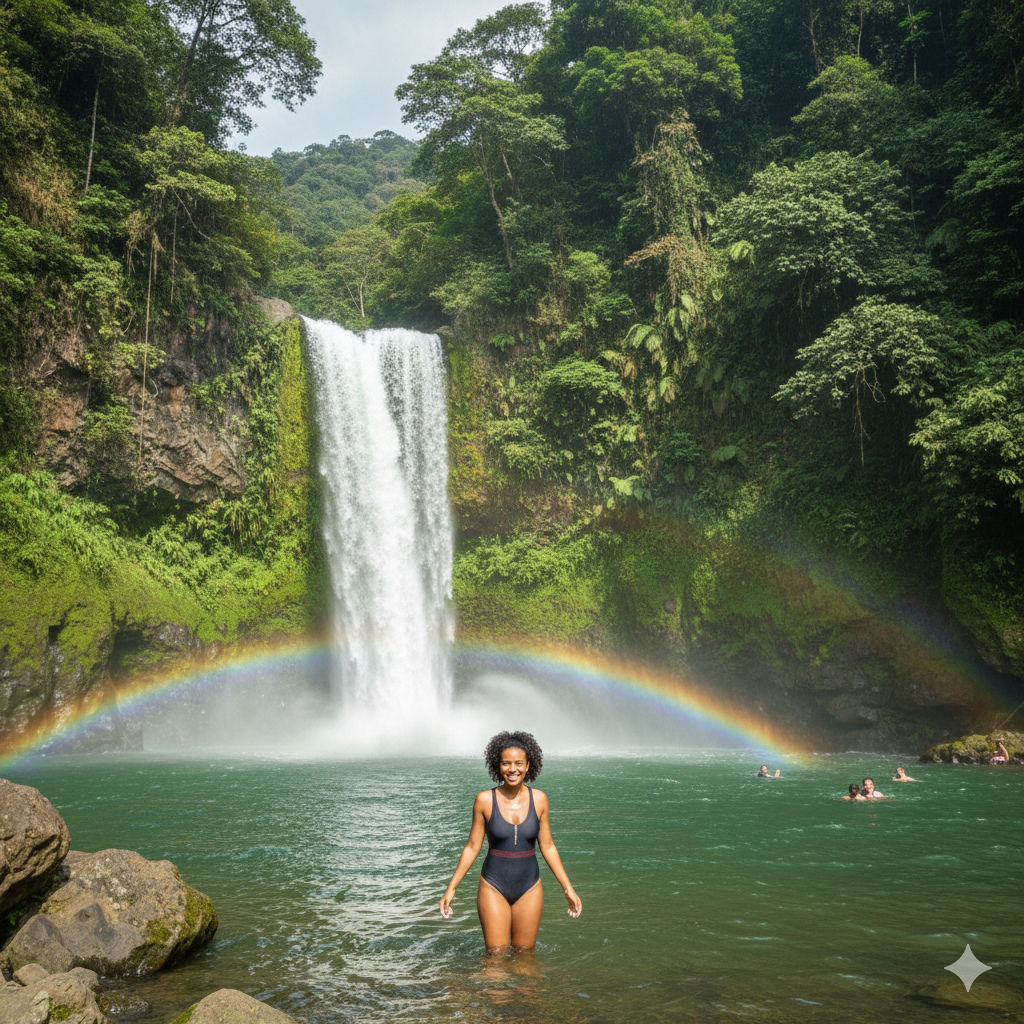
La Fortuna Waterfall is a must-visit for solo travelers
Best Places in Costa Rica for Solo Female Travelers
Costa Rica is small, about the size of West Virginia, but incredibly diverse. You can go from cloud forest to beach to volcano in a few hours. Here’s where solo women thrive:
La Fortuna & Arenal Volcano
Why it’s ideal for solo women:
La Fortuna represents the platonic ideal of a solo-friendly town. It’s small enough to navigate on foot, safe enough to walk at night, and filled with other travelers doing the exact same tours you are. You will not feel alone here — even if you want to.
What to do:
Hike to La Fortuna Waterfall, soak in Tabacón or Ecotermales hot springs, take a guided night walk to spot wildlife, or explore the hanging bridges walk in Arenal. Almost everything is offered as a group tour, which makes meeting people effortless.
Solo traveler vibe:
High. Hostels like Arenal Backpackers Resort and Hostel Backpackers La Fortuna buzz with social energy without being party-heavy. You’ll meet other solo women within hours.
Monteverde Cloud Forest
Why it’s ideal for solo women:
For introverts who want to travel solo without constant socializing, Monteverde is your sanctuary. It’s quiet, misty, and deeply nature-focused. The town of Santa Elena stays walkable and safe, while the cloud forest reserves rank among the world’s best.
What to do:
Walk the suspended bridges at Selvatura Park, try ziplining (even if you’re scared — it’s worth it), take a night tour to see tarantulas and snakes, or simply wander the Monteverde Reserve trails in blissful silence.
Solo traveler vibe:
Medium. You’ll encounter other solo travelers, but people come here to decompress, not party. Perfect if you crave space to think.
Manuel Antonio
Why it’s ideal for solo women:
Beach + wildlife + walkable town = solo travel gold. Manuel Antonio ranks among the most accessible beach destinations in Costa Rica, with a laid-back vibe and enough infrastructure to feel comfortable.
What to do:
Spend a morning in Manuel Antonio National Park (arrive early to avoid crowds), kayak or paddleboard at Playa Biesanz, join a sunset catamaran tour, or simply post up at a beachside café with a book.
Solo traveler vibe:
High. Hostels like Selina and Vista Serena fill up with solo travelers, and group tours make connecting easy.
Safety note:
The town itself feels safe and well-lit. Beaches get monitored during the day, but walking alone after dark should be avoided, especially on the road between Quepos and Manuel Antonio.
Santa Teresa & Mal País
Why it’s ideal for solo women:
Surf culture meets yoga retreats meets digital nomad central. Santa Teresa attracts a specific type of traveler who’s creative, wellness-oriented, and often solo. It’s remote, rustic, and a little rough around the edges, but the community runs strong.
What to do:
Learn to surf (lessons are everywhere), join a yoga class, watch the sunset from Playa Carmen, or work from a café and soak up the slow-living vibe.
Solo traveler vibe:
Very high, especially for women in their 20s and 30s. Meeting people happens naturally at surf lessons, co-working spaces, and beach bars.
Safety note:
Santa Teresa spreads out across unpaved, unlit roads. Stay somewhere central (near Playa Carmen or Hermosa), don’t walk alone at night, and rent an ATV or bike if you’re confident — otherwise, taxis run cheap.
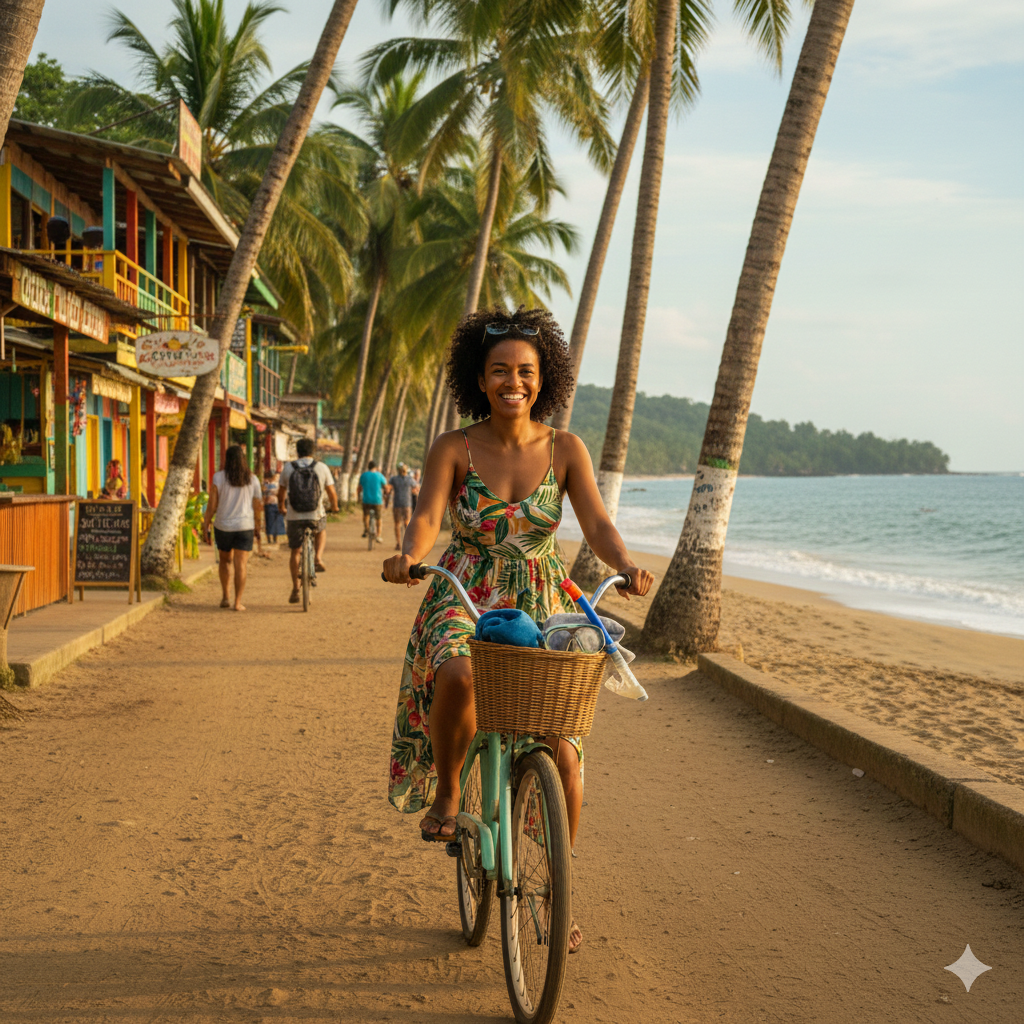
Biking to the beach, Puerto Viejo offers a unique Caribbean vibe on Costa Rica’s east coast
Puerto Viejo (Caribbean Coast)
Why it’s unique for solo women:
Puerto Viejo pulses with a completely different vibe from the Pacific side — more Afro-Caribbean culture, reggae music, and a slower, funkier energy. It’s less polished than Manuel Antonio, but many solo women love it for that exact reason.
What to do:
Bike to nearby beaches (Punta Uva, Manzanillo), take a chocolate tour, snorkel at Cahuita National Park, or dance at a beach bar (stick with groups).
Solo traveler vibe:
Medium-high. A strong backpacker scene thrives here, but the town also attracts party crowds, which can shift the vibe at night.
Safety note:
Puerto Viejo has experienced some crime issues in the past (mostly theft, occasionally more serious incidents). During the day, it’s fine. At night, stay in well-populated areas, avoid walking alone on dark beaches, and don’t flash valuables. Many solo women love it here — just stay aware.
San José: Should Solo Female Travelers Stay?
Short answer: Not unless you have to.
San José serves as Costa Rica’s capital and main transportation hub, but it’s not a highlight. It’s gritty, traffic-choked, and lacks the charm of other Central American capitals. That said, it’s not dangerous if you know where to stay.
Safe neighborhoods:
Stick to Barrio Escalante (hip cafés and restaurants), Los Yoses, or near Parque La Sabana. The areas around Coca-Cola bus terminal, Mercado Central after dark, and the red-light district should be avoided.
How long is enough:
One night, max — and only if your flight times require it. Most travelers fly in, stay near the airport (Alajuela is safer and quieter), and head out the next morning.
What to do if you have time:
Visit the Museo del Oro Precolombino, eat at a soda (local diner), or walk around Barrio Escalante. Just don’t expect magic.
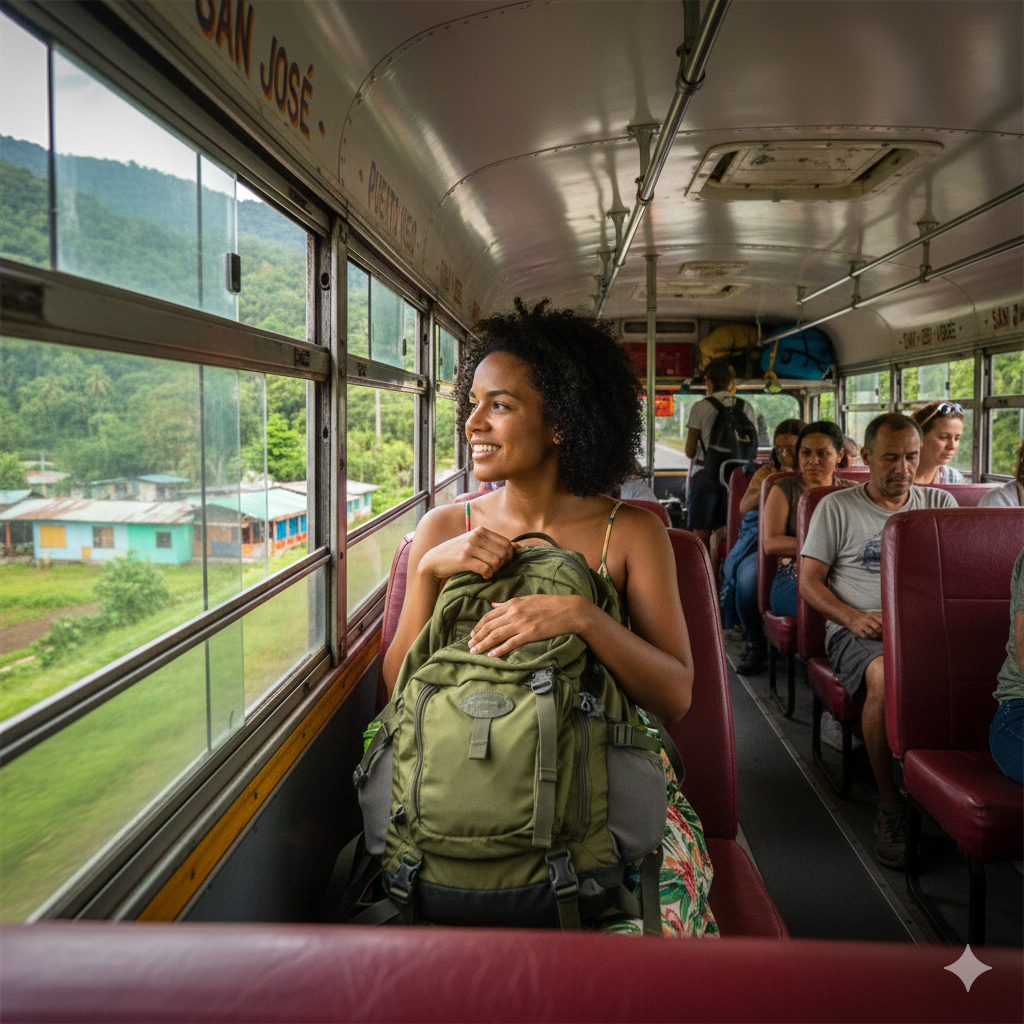
Public buses are safe and affordable, though not always comfortable
Getting Around Costa Rica as a Solo Female Traveler
Getting around Costa Rica is part adventure, part logistical puzzle. Public transport exists and runs cheaply, but it’s slow. Shuttles offer convenience but cost more. Renting a car gives you freedom but requires confidence. Here’s how to choose:
Public Buses: What to Expect
Costa Rica’s public bus system is extensive, reliable, and cheap — we’re talking $2–$10 for multi-hour trips. Locals use it daily, and plenty of solo travelers (including women) navigate the country this way.
The pros:
- Insanely affordable
- Connects almost everywhere
- Authentic local experience
The cons:
- Slow (a 3-hour shuttle ride can take 6 hours by bus)
- No AC on many routes (you’ll sweat)
- Luggage space is limited
- Pickpocketing risk if you’re not careful
Safety tips:
- Keep your daypack on your lap, not overhead
- Sit near the front where the driver can see you
- Avoid taking buses after dark whenever possible
- Book direct buses when you can (fewer stops = fewer opportunities for theft)
When buses make sense:
If you’re on a tight budget, have time, and enjoy slow travel. I met solo women who bused the whole country and loved it.
When they don’t:
If you’re short on time, carrying lots of luggage, or traveling between remote areas (some routes require multiple connections).
Shuttles vs Rental Cars
Shared Shuttles:
Companies like Interbus, Grayline, and Caribe Shuttle operate door-to-door minibus services between major tourist destinations. They’re significantly faster than public buses, air-conditioned, and you’ll meet other travelers.
- Cost: $30–$60 per trip
- Best for: Solo women who want ease and safety without driving
- Book through: Your hostel/hotel or directly online
Rental Cars:
Renting a car in Costa Rica gives you total freedom, but it comes with challenges: roads are poorly marked, GPS doesn’t always work, and night driving is genuinely risky (potholes, animals, unlit roads).
Should you rent a car solo?
Only if you’re a confident driver and comfortable navigating ambiguity. I rented a car for part of my trip and loved the flexibility, but also got lost three times and bottomed out on a dirt road in Montezuma.
Safety tips if you rent:
- Get full insurance (seriously — roads are rough)
- Never drive at night
- Lock valuables in the trunk, not visible in the car
- Download offline maps (cell service is spotty)
Uber, Taxis & Local Transport
Uber:
Available in San José and sporadically in other areas (like Manuel Antonio). It’s safer and cheaper than unregulated taxis, plus you can track your ride.
Official Red Taxis:
Look for red cars with yellow triangles on the side and a working meter (maría). These are regulated and generally safe.
Airport Transfers:
Pre-book through your hotel or a company like TaxiAereopuerto.com. It costs more ($30–$40 to San José) but eliminates the risk of scams.
Where to Stay in Costa Rica as a Solo Female Traveler
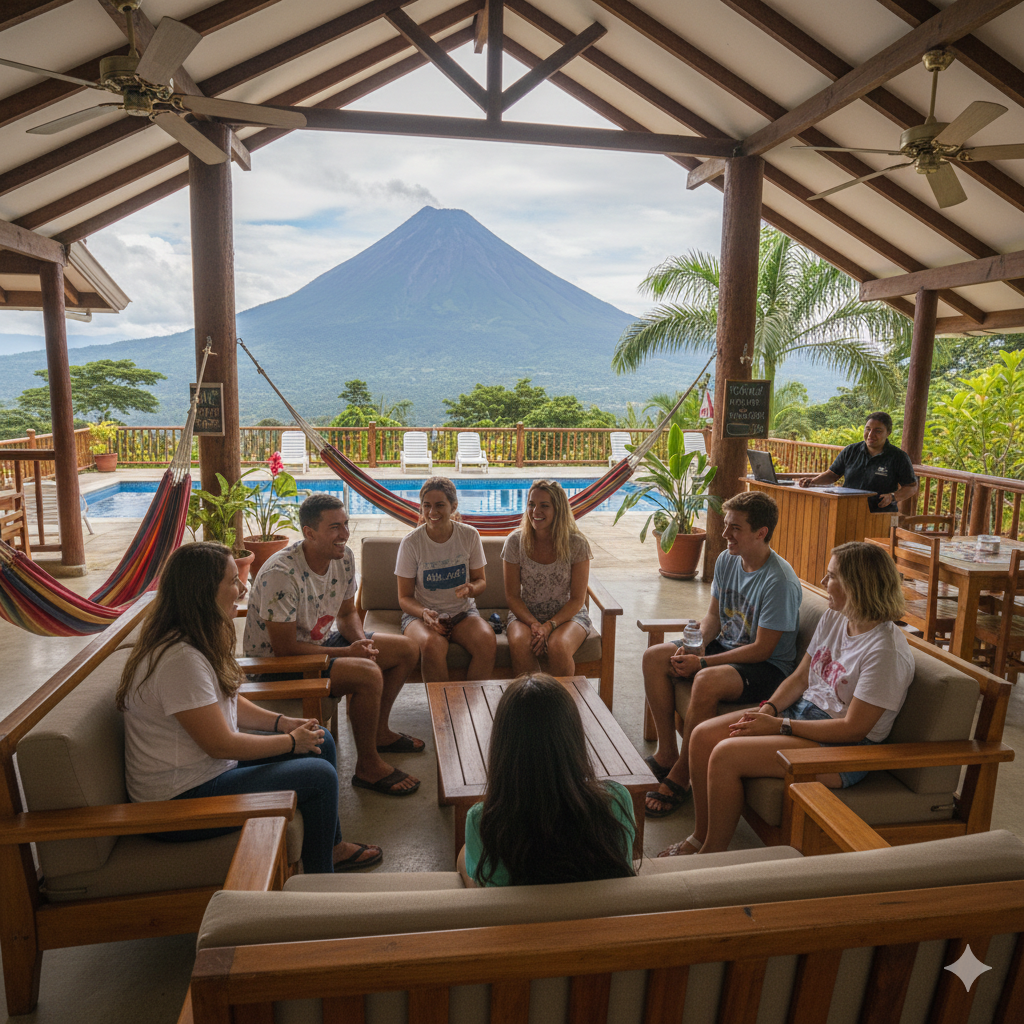
Hostels like Arenal Backpackers resort create instant community for solo travelers
Best Accommodation Types for Solo Women
Hostels:
Costa Rica has a fantastic hostel scene. Social, safe, and designed for solo travelers. Many feature female-only dorms, on-site tours, and communal dinners.
Top pick:
- Arenal Backpackers Resort (La Fortuna). It offers stunning views of Arenal Volcano just minutes from the town centre and bus stop. With a pristine pool, spacious gardens, games, a tour desk, bilingual staff, and 24-hour security, it’s an ideal base for meeting fellow travelers while staying comfortable and safe.
An alternative: - Vista Serena Hostel (Manuel Antonio) is a laid-back, budget-friendly stay offering ocean views, a relaxed social atmosphere, and easy access to the national park and nearby beaches.
Boutique Hotels & Eco-Lodges:
If you want more privacy and comfort, Costa Rica is known for its stunning boutique hotels and eco-lodges that immerse travelers in nature, from luxurious rainforest retreats like Lapa Rios and cloud forest escapes such as El Silencio Lodge to remote river lodges like Pacuare Lodge. Across regions including Guanacaste, Monteverde, and the Caribbean coast, these stays emphasize sustainability, wildlife encounters, and unforgettable, place-based experiences.
Best Areas to Book Accommodation
Central vs Remote:
Staying central works best if you’re solo — walkable towns where you can grab dinner, meet people, and not rely on taxis. Remote eco-lodges offer magic but can feel isolating when you’re alone.
Safety vs Solitude:
If you crave quiet, book a jungle lodge — but make sure they offer transport and group activities. For community, stick to town centers.
Costa Rica Hostel Culture for Solo Female Travelers
Costa Rica’s hostels radiate chill, respectful, and generally well-run vibes. You’ll meet other solo women within hours, and most hostels organize group outings (tours, beach days, pub crawls).
Dorm vs Private Room:
- Dorm: Cheaper, more social, easier to meet people. Female-only dorms are widely available.
- Private: More rest, more space, but you’ll have to work harder to connect with others.
My advice: Start in a dorm for the first few nights to meet people, then switch to private rooms if you need a break.
What Solo Female Travelers Should Budget
Let’s talk money. Costa Rica is not a budget destination like Nicaragua or Guatemala. Prices rival European costs in touristy areas, but you can still travel affordably with strategic planning.
Daily Budget Breakdown
Budget Solo Traveler ($40–$60/day):
- Hostel dorm: $15–$25
- Meals at sodas (local diners): $10–$15
- Public buses: $5–$10
- One free or cheap activity (beach, hiking): $0–$10
Mid-Range Solo Traveler ($80–$120/day):
- Private hostel room or budget hotel: $35–$50
- Mix of sodas and nicer restaurants: $20–$30
- Shared shuttles: $15–$30
- One paid tour or activity: $30–$50
Comfortable Solo Traveler ($150–$200+/day):
- Boutique hotel or eco-lodge: $70–$120
- Restaurants and nicer meals: $40–$60
- Private transport or rental car: $30–$60
- Multiple tours/activities: $60–$100
Tours and Activities Pricing
Costa Rica’s tours run expensive compared to the rest of Central America, but they’re well-organized and safe for solo travelers.
- Zipline tour: $50–$80
- Hot springs (Tabacón): $80–$100
- Manuel Antonio National Park guide: $25–$40
- Surf lesson: $40–$60
- Night wildlife tour: $25–$40
Money-saving tip: Book tours through your hostel — they often secure group discounts.
Transportation Costs
- Public bus (intercity): $2–$10
- Shared shuttle: $30–$60
- Uber/taxi (short ride): $5–$15
- Rental car: $30–$60/day + gas + insurance
Eating Out vs Cooking
Sodas (local diners) serve massive plates of rice, beans, plantains, and protein for $5–$8. Eating here saves a fortune.
Tourist restaurants charge $12–$20 for mains.
Cooking: Most hostels have kitchens. Groceries are reasonably priced — stock up at Automercado or Mas x Menos.
Is Costa Rica Expensive Compared to Europe?
Yes and no.
Touristy beach towns like Tamarindo and Manuel Antonio rival Western European prices. However, if you eat at sodas, take buses, and stay in hostels, you can travel cheaper than you would in Spain or Italy.
What to Pack for Costa Rica as a Solo Female Traveler
Clothing Essentials
Costa Rica has three climates: beach hot, jungle humid, and cloud forest cold. Pack layers and versatile pieces.
Must-haves:
- Quick-dry clothing (it’s humid and things don’t dry overnight)
- One light rain jacket (even in dry season, it can rain)
- Swimsuit (or two)
- Comfortable walking shoes (trails can be muddy)
- Flip-flops or sandals for the beach
- One pair of pants/leggings for cooler areas (Monteverde gets chilly)
- T-shirts, tank tops, shorts
Dressing modestly:
Costa Rica is relatively casual, but outside of beach towns, locals dress conservatively. You don’t need full coverage, but leaving the short-shorts and crop tops for the beach will help you blend in.
Safety & Practical Items
- Daypack with lockable zippers (I used a Pacsafe and loved it)
- Waterproof dry bag (for beach days and boat trips)
- Portable charger
- Headlamp (many towns have poorly lit streets)
- Reusable water bottle (tap water is safe in most places)
- Sunscreen & bug spray (both are expensive in Costa Rica)
- Basic first aid kit (band-aids, pain reliever, anti-diarrheal)
- Photocopies of your passport
Phone/SIM:
You can buy a local SIM from Kolbi or Claro at the airport for ~$10–$20. Data is cheap and coverage is decent in tourist areas. Alternatively, use an eSIM like Airalo.
What Most Solo Female Travelers Overpack (and Don’t Need)
- Hair dryer (humidity makes it useless)
- Too many shoes (you’ll live in sandals and sneakers)
- Fancy clothes (Costa Rica is casual — leave the dresses at home unless you’re going somewhere specific)
- Heavy camera gear (your phone is fine, and bulky cameras attract thieves)
Culture, Etiquette & Gender Dynamics
How Women Are Treated in Costa Rica
Costa Rica is generally respectful toward women, but like anywhere in Latin America, you’ll encounter some cultural differences.
The good:
Ticos (Costa Ricans) are genuinely friendly and helpful. If you’re lost, someone will help. Struggling with Spanish? Someone will try English. There’s a baseline of politeness that makes solo travel easier.
The reality:
You might get catcalled (piropos), especially in San José or beach towns. It’s usually harmless but annoying. A firm “No, gracias” or ignoring it entirely works. Ticos generally respect boundaries if you set them clearly.
Flirtation vs. friendliness:
Costa Rican men can be flirtatious, but it’s rarely aggressive. If you’re not interested, a polite but firm decline is respected. When someone doesn’t take no for an answer, walk away or ask staff for help.
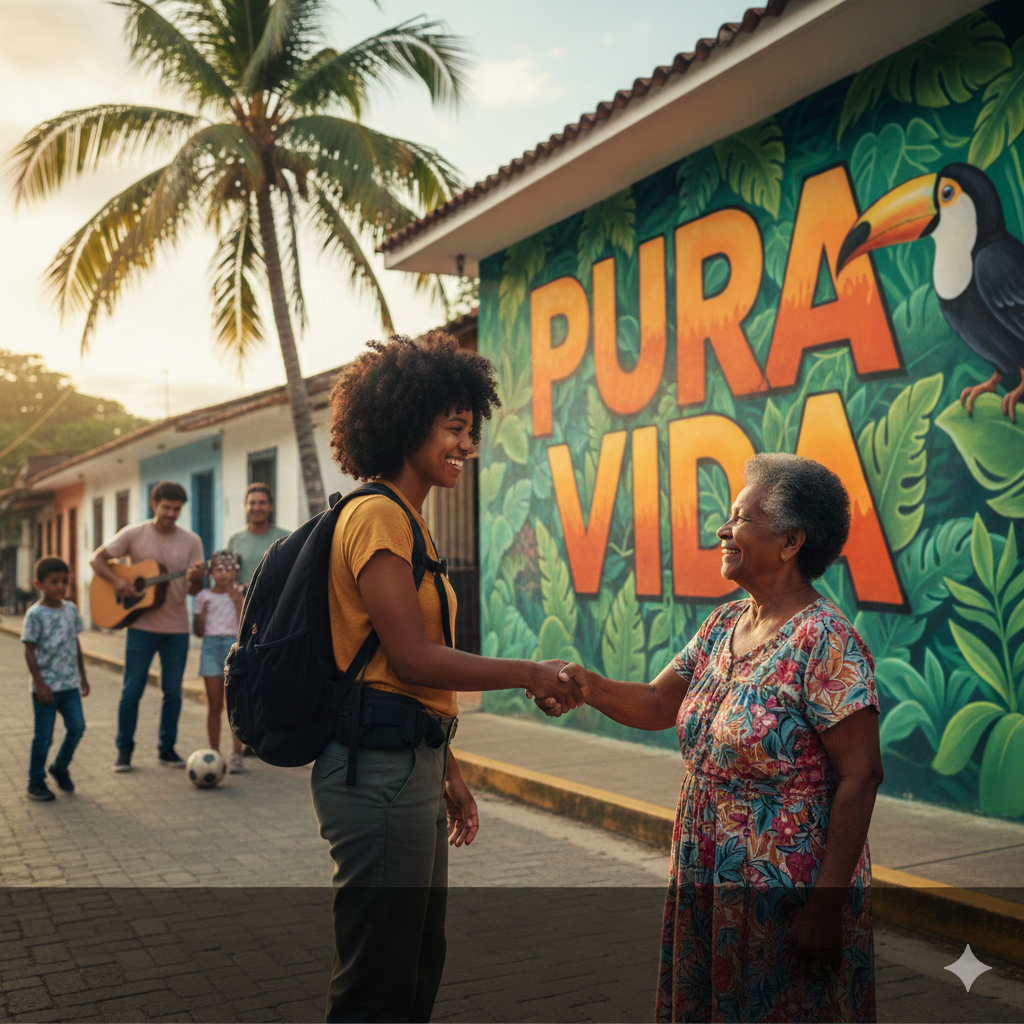
Pura Vida is a genuinely welcoming way of life
Understanding “Pura Vida” Culture
“Pura Vida” literally means “pure life,” but it’s more of a philosophy: go slow, don’t stress, enjoy the moment. It’s on every T-shirt and license plate, and genuinely woven into daily life.
What this means for you:
- Buses will be late. Shrug it off.
- Restaurant service is slower than you’re used to. Relax.
- Plans change. Roll with it.
It’s maddening at first if you’re Type A (guilty), but once you surrender to it, Costa Rica becomes a lot more enjoyable.
Language Tips for Solo Women
Do you need Spanish?
Not in tourist areas. English is widely spoken in La Fortuna, Manuel Antonio, Monteverde, and Tamarindo. Outside these hubs, Spanish helps a lot.
Key phrases for boundaries:
- “No, gracias.” (No, thank you.)
- “Déjame en paz.” (Leave me alone.)
- “No me interesa.” (I’m not interested.)
- “¿Dónde está la policía?” (Where is the police?)
General useful phrases:
- “¿Cuánto cuesta?” (How much does it cost?)
- “¿Dónde está…?” (Where is…?)
- “No entiendo.” (I don’t understand.)
- “Pura vida!” (All-purpose greeting/goodbye/thanks/you’re welcome)
Download Google Translate offline before you go.
Cultural Norms to Be Aware Of
Personal space:
Ticos are warm but not overly touchy. Handshakes and light hugs are normal, though if someone’s too close, you can step back without offense.
Time expectations:
“Tico time” is real. If someone says 10 AM, expect 10:30 or later. Tours are usually punctual, but social plans flow more fluidly.
Dress standards:
Outside of beaches, locals dress modestly. Tank tops and shorts work fine in tourist areas, but when visiting smaller towns or churches, cover shoulders and knees.
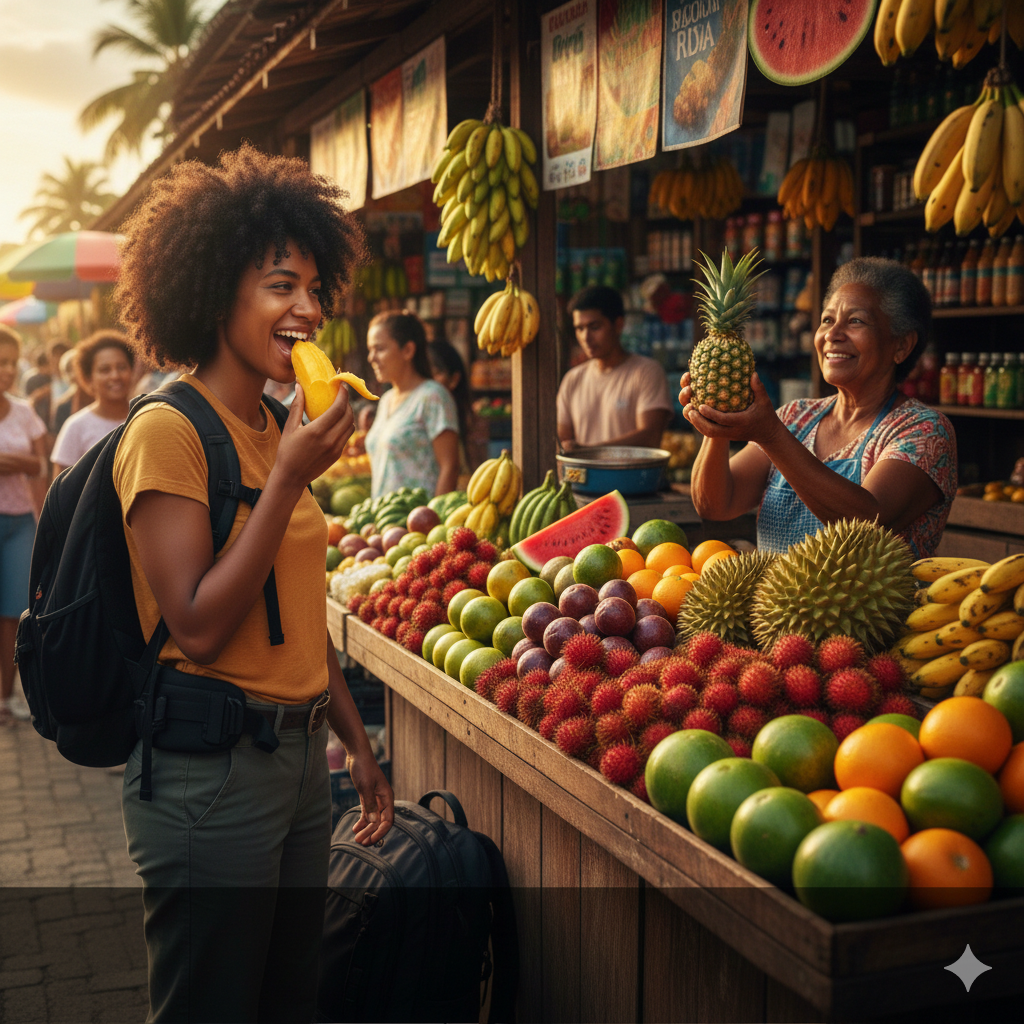
Fresh fruit market in Costa Rica
Food, Drinking Water & Health Tips
Is the Food Safe?
Yes. Costa Rica maintains high food safety standards compared to much of Central America. You can eat street food, fresh fruit, and salads without much worry.
Street food tips:
Look for busy stalls (high turnover = fresh food). Anything that’s been sitting out in the heat for hours should be avoided.
Eating fresh vs. cautious:
I ate everything — ceviche, fresh fruit, ice in drinks — and never got sick. That said, everyone’s stomach is different. If yours is sensitive, ease in slowly.
Where tap water is safe:
Most of Costa Rica, including San José, La Fortuna, Monteverde, and Manuel Antonio. The water is treated and safe to drink.
Where to use bottled water:
Remote beach towns, rural areas, and anywhere your gut tells you to be cautious. When in doubt, ask your hotel.
Pro tip:
Bring a filtered water bottle (like LifeStraw or Grayl) if you’re hiking or visiting remote areas.
Health & Travel Insurance Tips
Mosquito protection:
Dengue, Zika, and Chikungunya exist in Costa Rica, though cases are relatively low. Bring strong bug spray (DEET 30%+) and wear long sleeves/pants at dawn and dusk.
Clinics and pharmacies:
Pharmacies (farmacias) are everywhere and sell most medications over the counter. For emergencies, Costa Rica has excellent private hospitals (CIMA in San José is the best).
Travel insurance:
Get it. I use World Nomads or SafetyWing. Costa Rica’s healthcare is good, but if you need evacuation or serious treatment, insurance will save you thousands.
Emergency numbers:
- Police: 911
- Ambulance: 911
- Tourist police (English-speaking): 2527-3000
Solo Female Travel Costa Rica: Best Time to Visit
Dry Season vs Green Season
Dry Season (December–April):
Perfect weather, blue skies, calm seas. This is peak season — expect crowds and higher prices, especially around Christmas and Easter.
Green Season (May–November):
Afternoon rain, lush landscapes, fewer tourists, lower prices. It’s not monsoon season — mornings are usually sunny, and rain comes in short bursts.
Shoulder months (May, November):
The sweet spot. Still green, fewer crowds, decent weather.
Best Months for Solo Female Travelers
For safety, comfort, and social travel:
January–March — Peak season means tons of other travelers, which makes meeting people easy and hostels social. Weather is perfect.
For budget and tranquility:
May, June, or November — Fewer tourists, lower prices, still manageable weather. You’ll have more space to yourself but might have to work a bit harder to meet people.
Avoid if possible:
September–October — Wettest months, some roads and tours close, and it can feel isolating if you’re solo.
Making Friends & Avoiding Loneliness
Here’s the thing about solo travel: you’re alone, but you’re rarely lonely — if you put yourself out there.
Group Tours
Tours are the easiest way to meet people. You’ll spend 4–8 hours with the same group, and by the end, you’ll have inside jokes and WhatsApp numbers.
Best tours for meeting people:
- Zipline tours (you’re literally strapped to other humans)
- Night wildlife walks
- Surf lessons
- Manuel Antonio National Park guided hikes
Hostels:
Book hostels with communal dinners, organized outings, or social common areas. Selina and Nomada are great for this.
Co-working spaces:
If you’re a digital nomad, check out co-working spots in Santa Teresa (Selina, Tribal), Tamarindo, or Manuel Antonio. Instant community.
Yoga Retreats & Surf Camps
If you’re solo and want built-in community, book a yoga retreat or surf camp. You’ll share meals, activities, and downtime with other travelers — many of whom are also solo women.
Apps and Platforms to Meet Other Travelers Safely
- Tourlina — App specifically for solo female travelers to connect
- Bumble BFF — Make platonic friends (works in Costa Rica)
- Facebook groups — “Solo Female Travelers Costa Rica” and “Digital Nomads Costa Rica”
- Couchsurfing (not for housing, but for meetups and events)
Pro tip: Ask your hostel if they have a WhatsApp group for current guests. Instant friend group.
What I’d Do Differently Next Time
I would skip San José entirely.
There’s nothing there worth an overnight. Fly in, then head straight to Alajuela or La Fortuna.
I would spend more time in Monteverde.
I gave it two days. Four would have been better. The cloud forest is meditative and grounding in a way the beaches aren’t.
I would book fewer tours and leave more time for spontaneity.
Over-scheduling made me feel rushed. Some of my best memories were unplanned beach walks and random conversations at hostels.
I would bring a better waterproof bag.
A downpour ruined a journal and a book. Learn from my mistakes.
I would trust myself more.
Every decision got second-guessed at first — which hostel, which tour, whether to rent a car. In hindsight, I was fine. Trust your gut, trust the process.
Sample 5-Day Itinerary (Flexible & Safe)
If you’re feeling overwhelmed by options, here’s a tried-and-true itinerary that balances safety, nature, beach time, and social opportunities — perfect for a first-time solo trip to Costa Rica:
Day 1: Arrive in San José → Transfer to La Fortuna
- Land at Juan Santamaría International Airport (SJO)
- Pre-book a shared shuttle to La Fortuna (3 hours, ~$50)
- Check into your hostel (Arenal Backpackers or Selina)
- Settle in, meet other travelers, early night to recover from travel
Why this works: Skipping San José entirely gets you straight to one of the safest, most solo-friendly towns in Costa Rica.
Day 2: La Fortuna (Waterfalls & Hot Springs)
- Morning: Hike to La Fortuna Waterfall (bring swimsuit — you can swim!)
- Afternoon: Lunch at a soda in town, explore local shops
- Evening: Tabacón or Ecotermales hot springs (book ahead or through your hostel)
Solo tip: Hot springs tours often pick up groups from multiple hostels — instant friends and shared shuttle rides.
Day 3: La Fortuna → Manuel Antonio
- Morning: Quick hanging bridges walk OR sleep in and grab breakfast
- Mid-morning: Shared shuttle to Manuel Antonio (4–5 hours)
- Afternoon: Check into your hostel (Selina or Vista Serena), walk around town
- Evening: Sunset at the beach, dinner at a local spot
Why this works: The direct shuttle eliminates the need for Monteverde (which requires an extra day), getting you to the beach faster while still experiencing volcano country.
Day 4: Manuel Antonio (Beach & Wildlife)
- Early morning: Manuel Antonio National Park visit (arrive at 7 AM to beat crowds)
- See sloths, monkeys, iguanas, and pristine beaches
- Afternoon: Beach time at Playa Espadilla or Playa Biesanz
- Evening: Optional sunset catamaran tour OR relax at hostel and meet other travelers
Solo tip: The national park is packed with other solo travelers. Strike up a conversation at the sloth sighting and you’ll likely spend the day together.
Day 5: Manuel Antonio → Departure
- Morning: Final beach walk or paddleboard session
- Late morning: Shared shuttle back to San José airport (3.5 hours)
- Depart Costa Rica (or extend your trip!)
Flight timing tip: Book afternoon/evening flights to avoid rushing. Most shuttles arrive at SJO by 2–3 PM.
Extensions & Alternatives:
Add 2 days for Monteverde:
After La Fortuna, take the jeep-boat-jeep to Monteverde (stay 1–2 nights), then shuttle to Manuel Antonio. This gives you cloud forest + beach.
Add 2–3 days for Santa Teresa:
Replace Manuel Antonio with Santa Teresa for surf lessons, yoga, and digital nomad vibes. More remote, but incredible for solo female travelers seeking community.
Have a full week?
Follow the original plan: La Fortuna (2 days) → Monteverde (2 days) → Manuel Antonio (3 days).
Only have 3 days?
Stick to La Fortuna only. Two nights gives you waterfalls, hot springs, and volcano views without feeling rushed.
Misconceptions About Costa Rica
Let’s bust some myths that hold women back from booking their Costa Rica solo trip:
“You need to speak fluent Spanish.”
Reality: About 10 phrases and Google Translate will get you through. In tourist areas, English is everywhere. Rural areas feature patient, helpful locals even if you butcher their language.
“It’s only for adventurous extroverts.”
Reality: Costa Rica welcomes introverts beautifully. You can spend entire days in cloud forests, on quiet beaches, or reading in a hammock. Social opportunities exist if you want them, but you’re never forced into constant interaction.
“You’ll be lonely the whole time.”
Reality: Only if you actively avoid people. Hostels, group tours, and the sheer number of other solo travelers make loneliness rare — unless you’re seeking it.
“It’s too expensive for budget travelers.”
Reality: It’s pricier than Nicaragua or Guatemala, but still affordable if you eat at sodas, take buses, and stay in hostels. Traveling Costa Rica on $50/day is possible with discipline.
“Solo travel means you can’t do couples/group activities.”
Reality: Almost every tour in Costa Rica is designed for groups. Ziplines, hot springs, and national parks get experienced alongside other solo travelers. You’re never the odd one out.
“It’s dangerous for women alone.”
Reality: Costa Rica ranks among the safest countries in Latin America. Yes, you need to be smart (avoiding dark beach walks at night, watching your phone), but it’s no riskier than solo travel in Spain, Portugal, or Greece.
Why Some Solo Female Travelers Don’t Love Costa Rica (And That’s Okay)
Costa Rica isn’t for everyone. Here’s who might prefer a different destination:
If you want ultra-budget travel:
Costa Rica runs expensive by Central American standards. Pinching every penny? Nicaragua, Guatemala, or Mexico offer more bang for your buck.
If you crave cultural immersion:
Heavy tourism makes Costa Rica safe and easy but also a bit sanitized. Deep cultural experiences await in Peru, Colombia, or Bolivia.
If you want pristine, undiscovered beaches:
Costa Rica’s beaches are beautiful but often crowded (especially in high season). For deserted paradise vibes, try Panama’s islands or Mexico’s Oaxaca coast.
If you hate rain:
Even in dry season, it can rain. Getting grumpy when plans change due to weather? Costa Rica might frustrate you.
If you want vibrant cities:
San José isn’t Lisbon or Buenos Aires. Love urban exploring, art scenes, and nightlife? Costa Rica’s cities will disappoint.
FAQs:
Is Costa Rica safe for solo female travelers?
Yes. Costa Rica is one of the safest countries in Central America for women traveling alone. Normal precautions apply (don’t walk alone at night in isolated areas, watch your belongings, use licensed taxis), but violent crime against tourists is rare. Tourist areas like La Fortuna, Manuel Antonio, and Monteverde feel particularly safe.
Can you travel Costa Rica without a car?
Absolutely. Public buses and shared shuttles connect all major destinations effectively. A car gives you flexibility, but it’s not necessary. Most solo female travelers use a combination of shared shuttles (convenient, social) and public buses (budget-friendly).
Is Costa Rica good for first-time solo female travelers?
Yes. It’s one of the best countries to start with — safe, English-friendly, well-touristed, and full of other solo travelers. The infrastructure makes logistics easy, and you’ll meet other solo women constantly.
Do I need Spanish to travel alone in Costa Rica?
No, but it helps. In tourist hubs (La Fortuna, Manuel Antonio, Tamarindo), English is widely spoken. Rural areas and public buses require more Spanish. Download Google Translate offline and learn a few key phrases. You’ll be fine.
Is Costa Rica Worth It for Solo Female Travelers?
Yes.
Costa Rica is one of those rare destinations that balances adventure with safety, nature with infrastructure, and solitude with community. It’s forgiving for first-timers, rewarding for experienced travelers, and genuinely welcoming to women traveling alone.
You’ll hike through cloud forests where the only sound is your own breath. Sloths will move in slow motion through jungle canopies above your head. You’ll soak in volcanic hot springs under the stars, surf your first wave, and eat the best rice and beans of your life for $6.
You’ll also meet other solo women doing the exact same thing you are — proving to themselves that they can navigate a foreign country, book their own tours, and sit alone at dinner without feeling self-conscious.
Costa Rica is worth it if:
- You want your first solo trip to feel manageable, not overwhelming
- You love nature more than nightlife
- You’re okay with paying a bit more for safety and ease
- You want to challenge yourself without feeling constantly on edge
Consider somewhere else if:
- You’re on an ultra-tight budget
- You hate tourist infrastructure and crave off-the-beaten-path authenticity
- You prefer cities over jungles
- You want pristine, empty beaches
Before You Go: Your Solo Costa Rica Checklist
3 Months Before:
- ✓ Book your flights using Skyscanner , it gives you the cheapest deals across airlines. And SJO is the main airport.
- ✓ Get travel insurance from World Nomads or SafetyWing
- ✓ Check passport validity (needs 6 months beyond your travel dates)
- ✓ Start researching hostels and first-night accommodation
1 Month Before:
- ✓ Book your first few nights of accommodation here.
- ✓ Reserve any must-do tours (Tabacón hot springs book up in high season)
- ✓ Get any necessary vaccines (Hepatitis A recommended, Yellow Fever not required)
- ✓ Download offline maps and Google Translate
- ✓ Notify your bank you’re traveling
1 Week Before:
- ✓ Pack (use the packing list above)
- ✓ Print/save digital copies of your passport, insurance, and reservations
- ✓ Buy a local SIM or set up an eSIM
- ✓ Screenshot important addresses and phone numbers
- ✓ Tell someone your rough itinerary
Day of Departure:
- ✓ Breathe
- ✓ Trust yourself
- ✓ Remember: thousands of solo women have done this before you, and you’re about to join them
You’ve Got This
Here’s what no one tells you about solo travel: the fear doesn’t disappear. You’ll still feel nervous in the airport. You’ll still second-guess yourself when you’re alone in a new town at dusk. Questions about whether you packed the right things, booked the right hostel, or made the right call skipping that sketchy tour will run through your mind.
But then you’ll hike to a waterfall and swim in water so clear you can see your toes. A German girl in your hostel who’s also traveling alone will become your companion for the next three days. You’ll order dinner in broken Spanish and the waiter will smile and bring you exactly what you wanted.
You’ll realize you’re not just surviving this trip — you’re loving it.
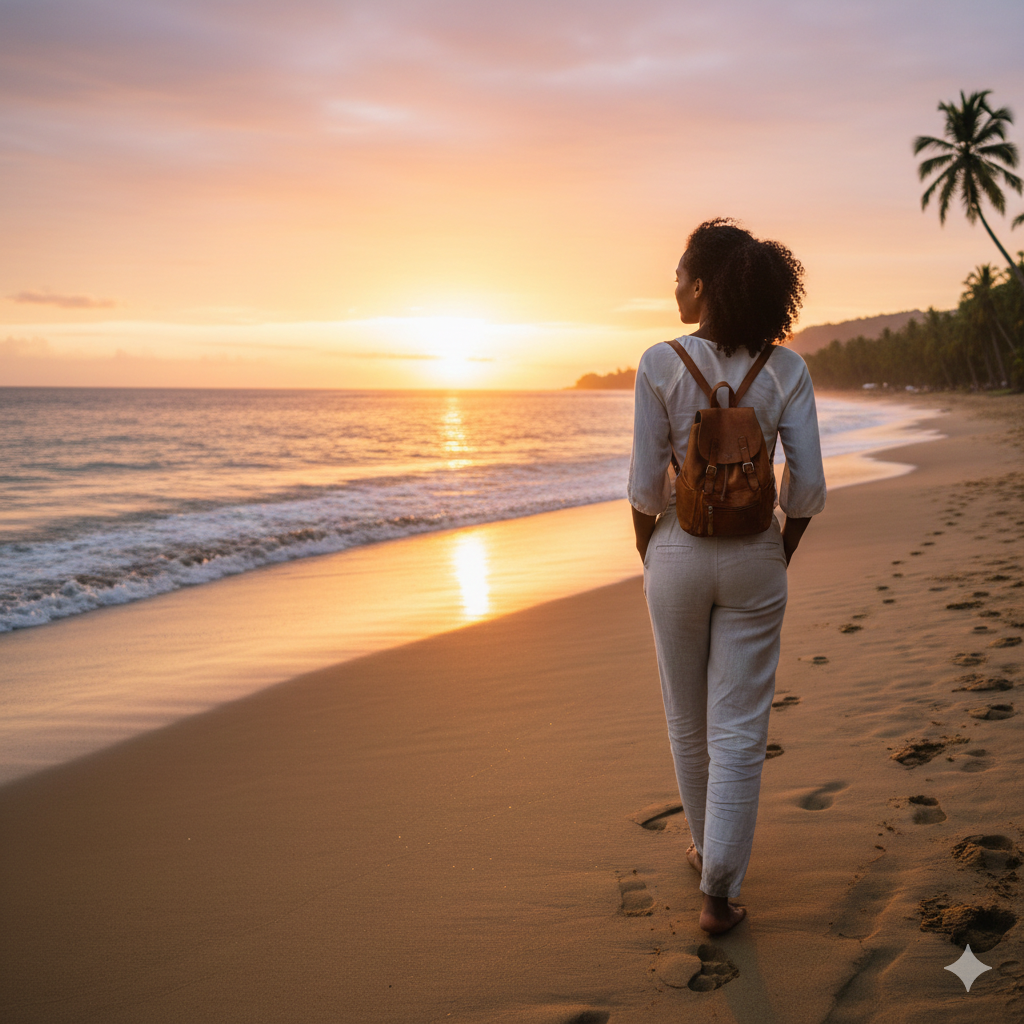
Sunset beach
Costa Rica is the perfect place to prove to yourself that you can do hard things. That you can navigate uncertainty, trust strangers, and sit with discomfort without falling apart.
So book the flight. Pack the bag. Get on the plane.
Costa Rica is waiting, and so is the version of yourself who’s brave enough to go alone.
Pura vida. ✨
Have questions or want to share your Costa Rica solo travel story? Drop a comment below — I read and respond to every single one.
About the Author:
I’ve been traveling solo since 2019 and have visited 47 countries alone. Costa Rica was my nieth solo trip and the one that made me fall in love with Central America. I’ve returned twice since and helped dozens of friends plan their first solo adventures. This guide reflects my personal experience, conversations with other solo female travelers, and ongoing research to keep information current and accurate.
Disclaimer: This guide reflects my personal experience and research as of January 2026. Safety conditions, prices, and travel regulations can change. Always check current travel advisories and trust your own judgment. This post may contain affiliate links, which means I earn a small commission if you book through them at no extra cost to you. I only recommend services I’ve personally used and loved.
