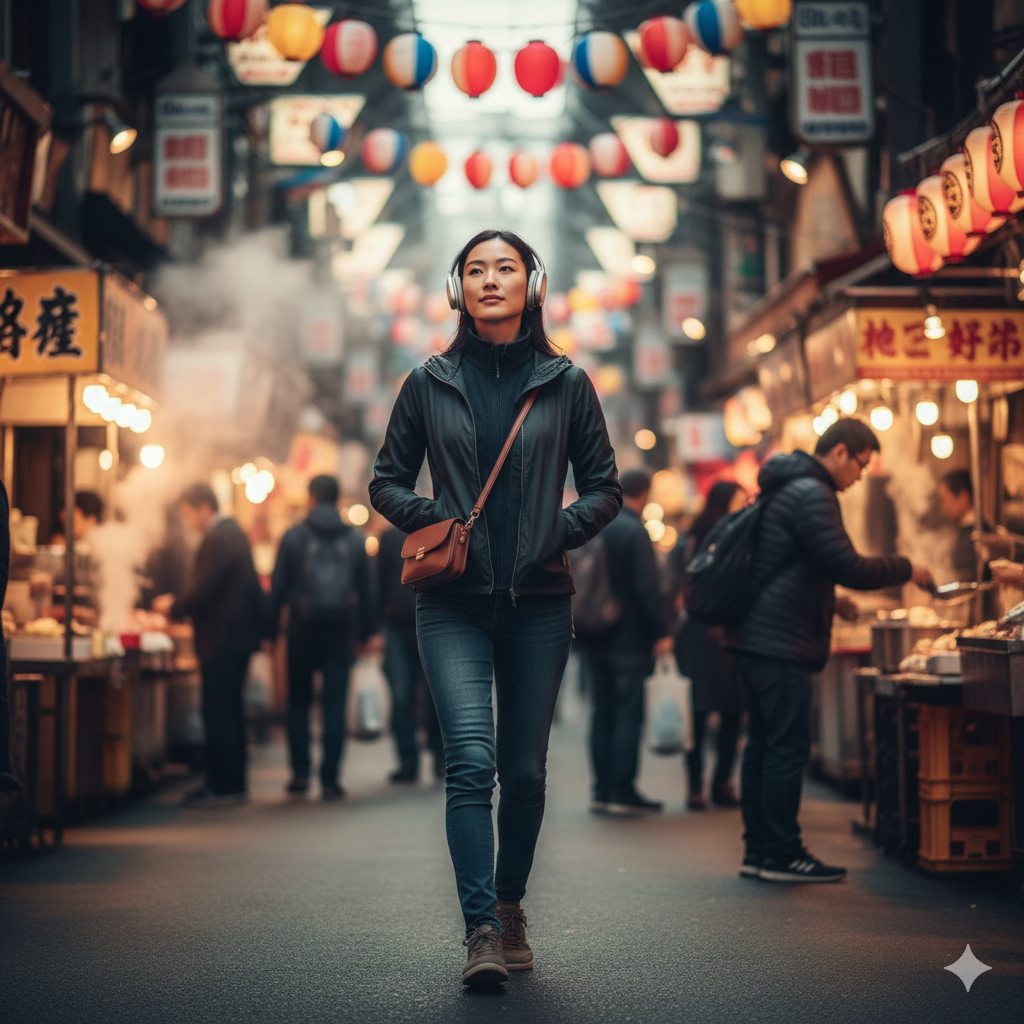

Is solo female travel safe in 2026?
After traveling alone across 47 countries spanning Europe, Asia, Africa, and the Caribbean, my answer is this:
Solo female travel safety isn’t about avoiding destinations — it’s about understanding risk, building systems, and trusting your instincts faster than your fear.
In the past four years, I’ve:
- Had my phone snatched in Barcelona
- Gotten sick alone in Lisbon
- Been lost at night in Paris
- Experienced harassment in Kenya — and watched strangers intervene
- Navigated cities from Tokyo to Botswana entirely on my own
Nothing about my approach to solo female travel safety is theoretical. It was learned in real time — sometimes the hard way.
In 2026, more women are traveling solo than ever before, and according to global tourism data, solo female travel continues to rise year-over-year. Here is the truth on safety.
No place is perfectly safe.
No place is automatically dangerous.
And preparation matters more than geography.
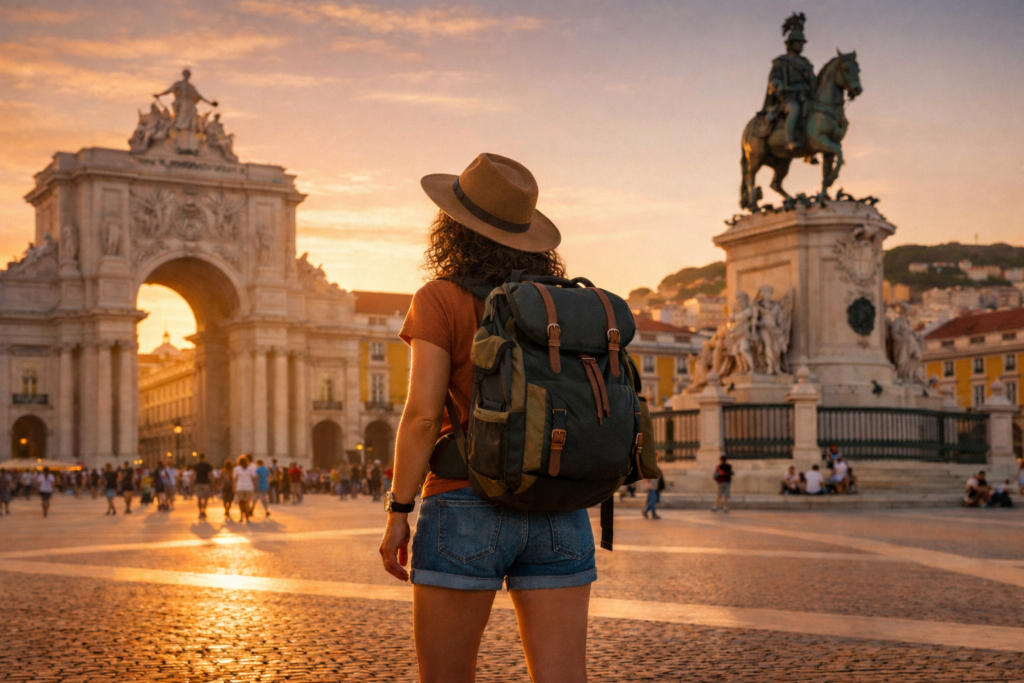
Golden hour in Praça do Comércio
This guide breaks down what actually protects you when traveling alone as a woman — from accommodation strategy to digital safety tools to what to do when something goes wrong.
Because solo female travel safety isn’t about being fearless.
It’s about being prepared.
Quick Summary: Solo Female Travel Safety in 2026
- Solo female travel is safe with preparation
- Accommodation choice impacts safety most
- Arrival timing matters
- Trust instincts immediately
- Build digital backups
- Most issues are petty and recoverable
Regional Safety Comparison: What I’ve Actually Experienced
Safety varies dramatically—not just by country, but by city, neighborhood, and your own preparation. Here’s how the regions I’ve traveled compare based on real experience:
| Region | Safety Level | Key Considerations | Best For |
|---|---|---|---|
| Japan/Singapore | Highest | Language barriers, high costs, excellent infrastructure | First-time solo travelers, those prioritizing safety |
| Western Europe | High (with caveats) | Pickpocketing in major cities, safety varies by neighborhood | Culture, history, easy logistics |
| Iceland/Scandinavia | Highest | Very expensive, remote areas require preparation | Nature lovers, outdoor enthusiasts |
| Southeast Asia | Moderate to High | Scams common, traffic safety concerns, affordable | Budget travelers, beach/culture seekers |
| East Africa | Moderate | Requires more preparation, incredible rewards, situational awareness essential | Wildlife, nature, meaningful cultural connections |
| Caribbean | Moderate to High | Varies greatly by island, some tourist-heavy areas very safe | Beach relaxation, water sports |
Note: Safety ratings based on personal experience traveling solo as a woman. Your experience may vary based on season, specific cities, and individual circumstances.
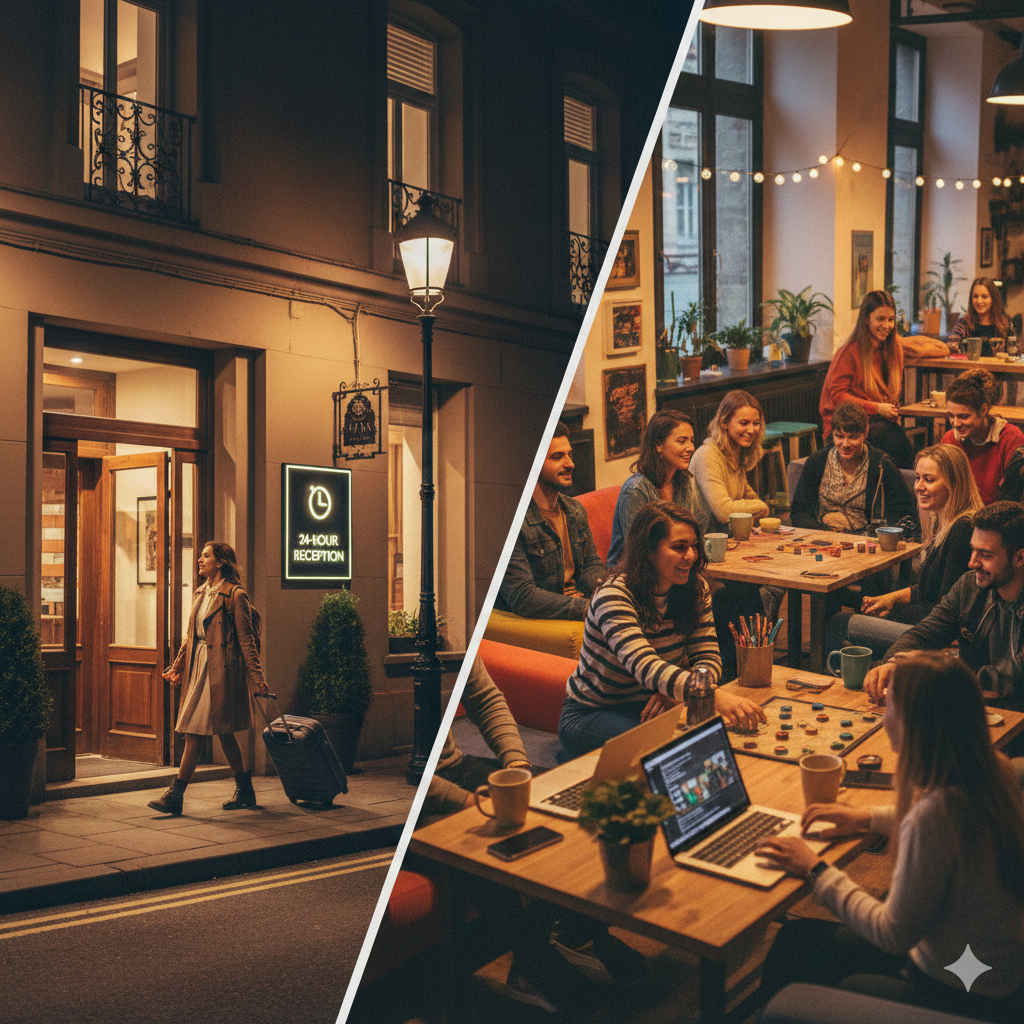
Hostel entrance at night with 24-hour reception in Paris, France
Accommodation Safety
Where You Sleep Matters More Than Almost Anything Else
I learned this early.
In Paris, I once booked a “great deal” slightly outside the center. The reviews were fine—but the walk back at night wasn’t. One evening, after getting lost and ending up several blocks from where I thought I was, I felt that creeping awareness that something was off. The street was too quiet. The lighting was wrong. A man crossed the street to walk behind me.
Nothing happened—but my body knew before my brain caught up.
I moved accommodations the next morning.
Since then, I choose places that:
- Are central and well-lit
- Have recent reviews from solo women
- Have staff on-site or 24-hour reception
Safety isn’t just locks and cameras. According to personal safety trainers, early discomfort is often your most reliable warning system.
Transit Safety
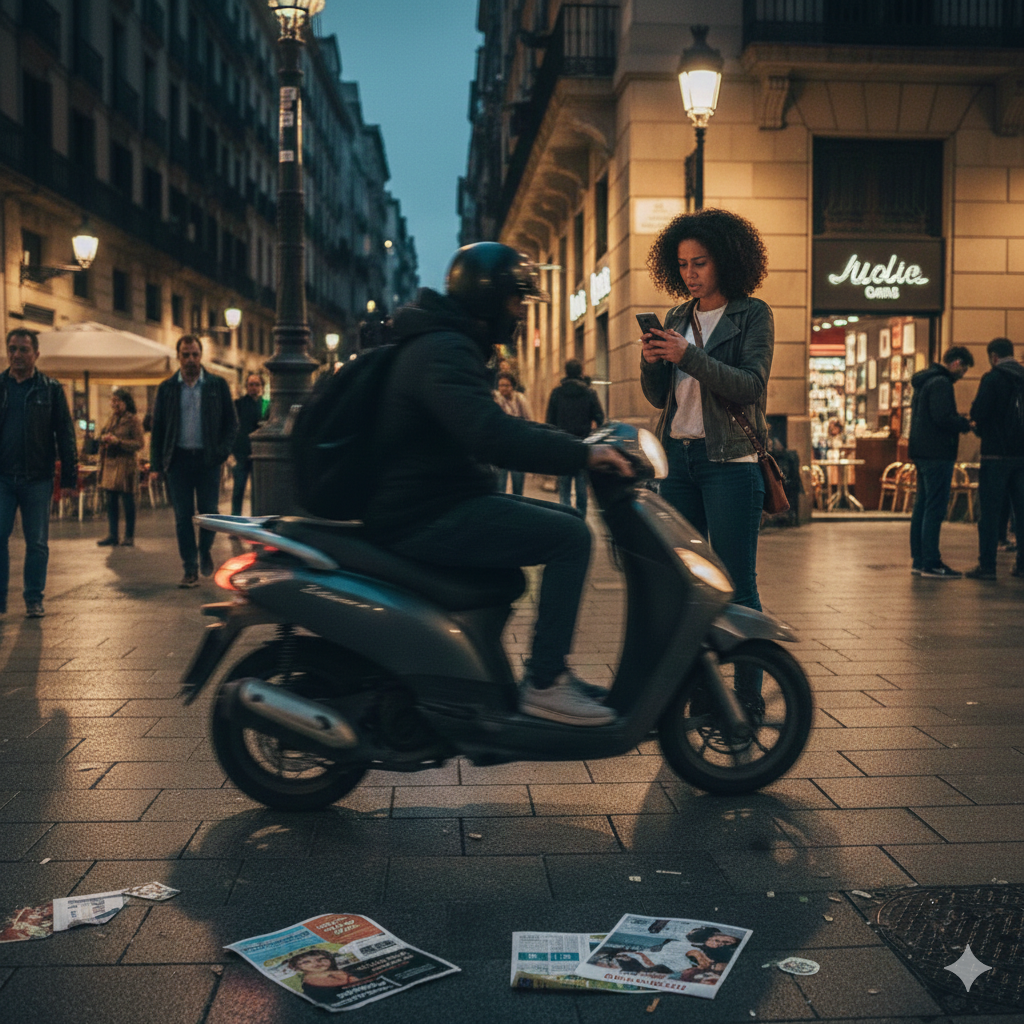
Las Ramblas Barcelona at night
Arrival Timing Is a Hidden Risk Window
I used to think night arrivals were “fine.”
Then I arrived late in Barcelona, jet-lagged, distracted—and my phone was snatched right out of my hand near Las Ramblas.
It happened in seconds. A scooter. Two people. Gone before I could process what happened.
What I did next mattered more than what happened:
- I didn’t chase
- I went straight into a café
- Used a staff phone to contact my accommodation
- Locked my accounts remotely through a borrowed laptop at the hostel
- Bought a cheap backup phone the next day
I felt shaken. Angry. Embarrassed that I’d been so obvious, standing there staring at Google Maps with my phone at arm’s length.
But also… capable.
Since then, I arrive during daylight when I can, or pre-book transport. Not because night is always dangerous—but because fatigue lowers awareness, and awareness is your best defense.
The Barcelona incident taught me something critical: having backup systems in place—cloud backups of documents, emergency numbers saved offline, travel insurance—meant one bad moment didn’t spiral into a crisis.
Petty theft remains the most common risk for travelers globally.
Trust and Intuition: Your First Line of Defense
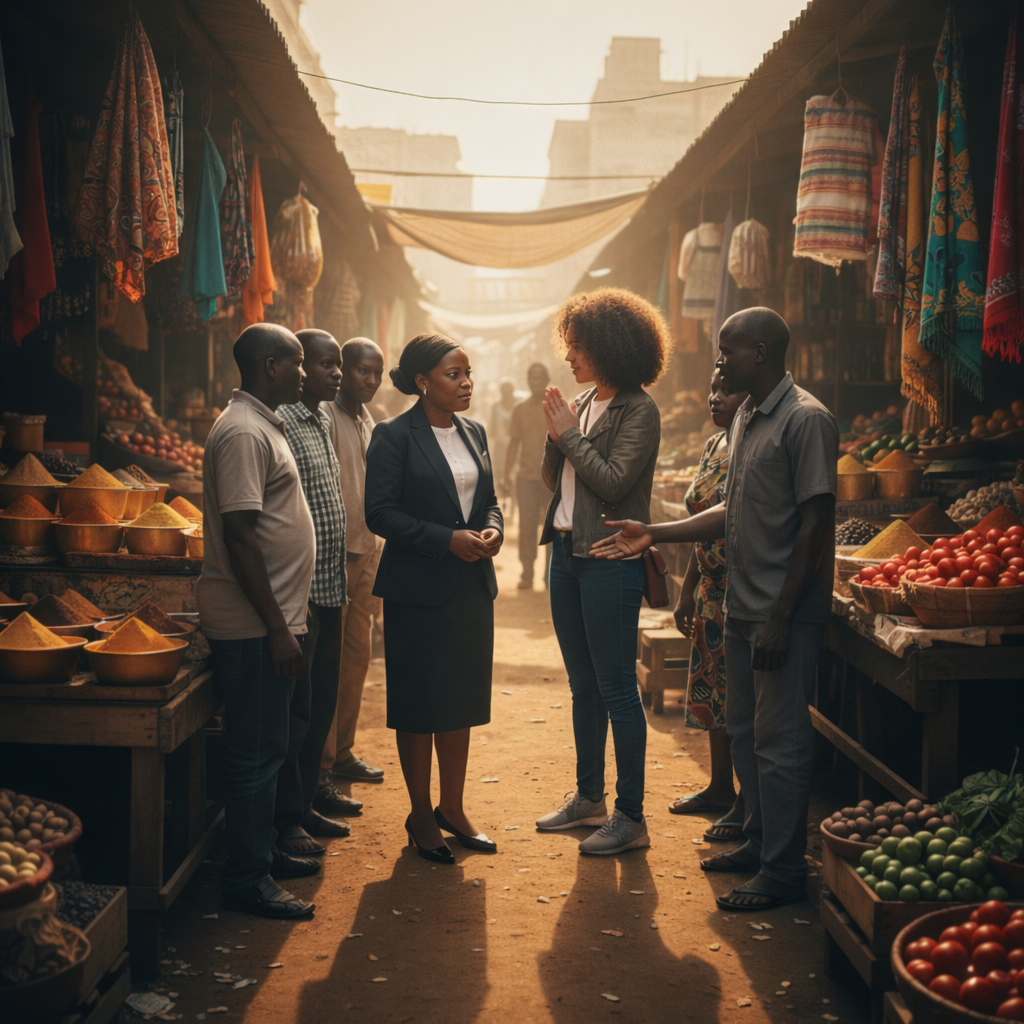
Getting help from strangers in the Kenyan market scene
Trusting Your Instincts Will Save You Faster Than Politeness Ever Will
In Kenya, I was harassed in public. It wasn’t subtle. A man followed me from the market, getting closer, saying things I tried to ignore. It escalated quickly.
Before I could even decide what to do, other people stepped in. Strangers—men and women—intervened firmly. One woman stood beside me without saying a word, just positioned herself between us. Another told the man to leave. A shop owner came out and gestured for me to come inside.
That moment rewired something in me.
I didn’t feel weak.
I felt supported.
It reminded me that:
- Not every place is hostile
- Not every crowd is indifferent
- And asking for help isn’t failure—it’s situational intelligence
Now, if something feels wrong, I don’t explain myself. I move. I enter a shop. I stand near others. I trust that instinct immediately. Women are socialized to be polite, to not make a scene—but your safety matters more than anyone’s comfort.
The Destination Matters Less Than You Think
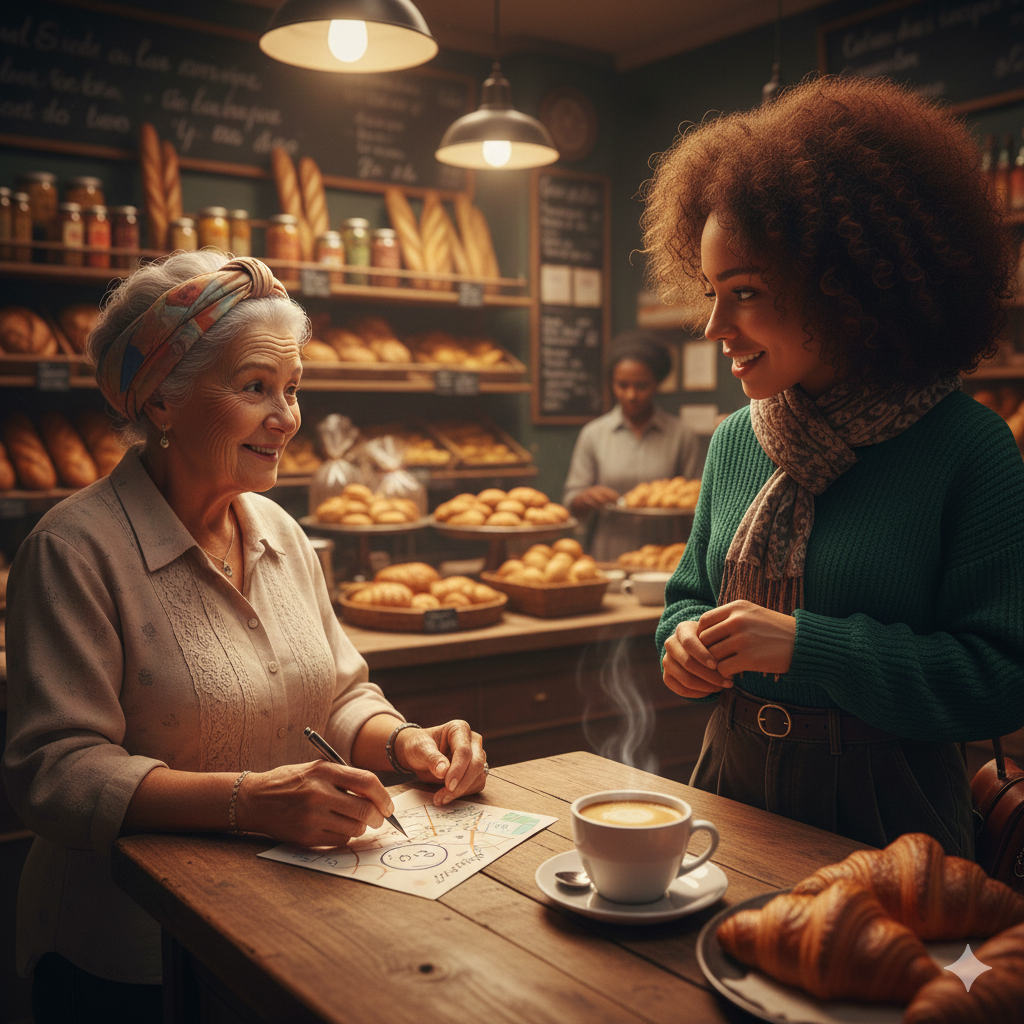
Asking for help while lost led to kindness from a local in a Parisian bakery
I’ve felt safer walking alone at night in Tokyo than in parts of cities considered “safe” in Europe. I’ve also felt deeply cared for in places people warned me about.
Safety isn’t geography—it’s context, timing, awareness, and behavior.
When I got lost in Paris that first night (yes, the same trip where I felt unsafe walking home), I was overwhelmed. My map wasn’t loading. Nothing looked familiar. I could feel panic rising.
Instead of standing in the middle of the sidewalk looking confused, I:
- Stepped into a bakery
- Bought something small
- Asked calmly for directions
The world responded kindly—because I approached it calmly. The woman behind the counter not only gave me directions but drew a little map on a napkin and circled landmarks to watch for.
That interaction taught me more about safety than any guidebook: how you move through uncertainty matters as much as where you are.
What Matters Less Than People Think
Being a Woman Is a Risk Factor—Not a Sentence
Yes, being female changes the calculation. But women aren’t fragile objects navigating a hostile planet—we’re adaptive, observant, and resilient.
Billions of women move through the world every day. Solo travel doesn’t make you reckless—it makes you aware.
Gender affects your risk profile but doesn’t make solo travel impossible or even inadvisable. The women I’ve met on the road—in hostels in Chiang Mai, on group tours in Botswana, sharing tables in Lisbon—prove this every single day.
A Male Companion Is Not a Magic Shield
I’ve seen women take bigger risks with men around because they felt “protected.” Solo, I make sharper decisions.
False security is more dangerous than honest alertness. When you’re alone, you stay alert. You read the room. You trust yourself. These skills matter more than having someone beside you.
Dressing “Like a Local” Is Overrated
In Barcelona, I was dressed plainly when my phone was stolen—jeans, a dark t-shirt, sneakers. Nothing flashy.
In Singapore, I stood out—blonde hair, pale skin, obviously foreign. And I felt perfectly safe.
What matters more:
- Not flashing valuables or expensive gear
- Being able to move quickly in your clothing and shoes
- Looking purposeful, not confused or lost
You’re often obviously a tourist regardless of what you wear. Instead of trying unsuccessfully to look local, focus on looking aware and confident.
Health Emergencies: When Your Body Becomes the Crisis
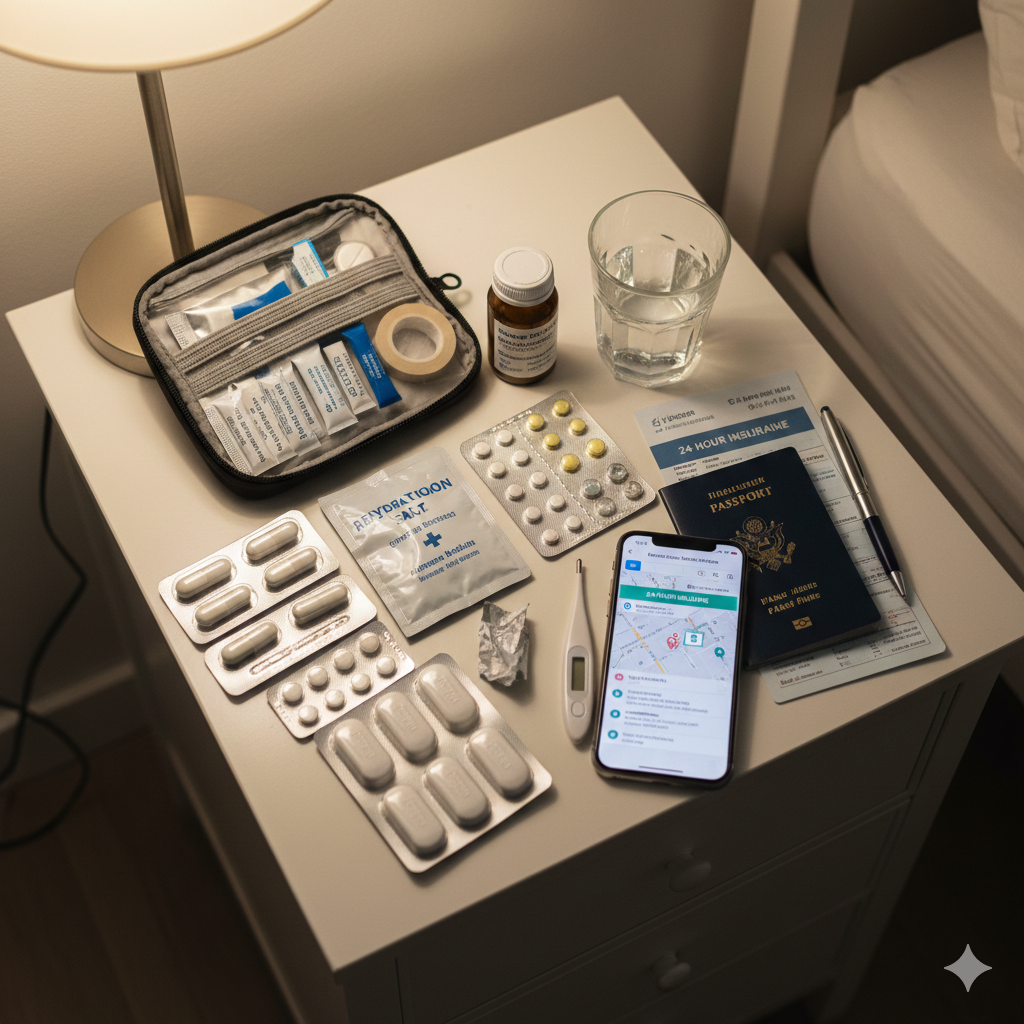
Essential travel first aid kit
Getting Sick in Lisbon: A Lesson in Preparation
In Lisbon, I got sick. Really sick.
Alone in my accommodation, feverish, dizzy, unsure if I should wait it out or seek help. It was 2 AM. I’d eaten something bad—or maybe it was a virus. Either way, I was alone and my body wasn’t working right.
What helped wasn’t bravery—it was preparation:
- I already knew the emergency number (112 for Portugal)
- I had travel insurance with a 24-hour helpline
- I had saved clinic locations offline in my maps
- I had basic medications in my bag—anti-nausea, rehydration salts, pain relief
- I had someone at home I could message if things got worse
I rested. Hydrated. Monitored my symptoms. By morning, the worst had passed.
And I learned something critical:
You don’t need to feel strong, but you need systems in place before you’re weak. Travel insurance providers report that most claims are related to illness, and not violent crime.
Medical evacuations remain one of the costliest travel emergencies. Frequently topping $50,000 to $150,000 depending on location and complexity. For solo female travelers, having robust evacuation coverage isn’t just practical — it’s a fundamental safety strategy. It ensures that if a serious illness or injury occurs far from home, the logistics of coordinating transport, medical care, and cross-border hospital transfers don’t become an additional crisis.”
— Global Travel Insurance & Risk Specialist
For most of my trips, I’ve used World Nomads as my travel insurance.
Best Solo Female Travel Insurance for 2026
After getting sick in Lisbon, I learned that not all travel insurance is equal. Look for policies that include:
- Medical evacuation coverage (minimum $100,000)
- 24-hour emergency helpline with multilingual support
- Trip cancellation and interruption coverage
- Lost or stolen belongings protection
- No pre-authorization requirements for emergency care
Without a travel companion to help in emergencies, insurance is your safety net. When I got sick in Lisbon, knowing I had 24-hour helpline access and evacuation coverage if needed gave me the confidence to rest and recover rather than panic.
Essential Solo Travel Safety Systems
After my experience in Europe, South East Asia, Africa, and the Caribbean, I now travel with these non-negotiable systems in place:
Digital Safety Tools and Apps
Technology has transformed solo travel safety. Here are the apps and tools I actually use:
- Offline Maps: Google Maps and Maps.me (download every city before arrival)
- Location Sharing: WhatsApp location sharing with a trusted contact at home
- Emergency Numbers: TripWhistle Global SOS app (provides local emergency numbers and GPS coordinates)
- Cloud Storage: Google Drive or Dropbox with copies of passport, visa, insurance, credit cards
- VPN: For secure connections on public WiFi
- Translation: Google Translate with offline language packs
Physical Backup Systems
- Two separate payment methods kept in different places
- Comprehensive travel insurance with medical evacuation coverage
- A more extensive first aid kit than I think I need
- Physical copies of critical documents in a separate bag
- Emergency cash (USD or EUR) hidden separately
These aren’t signs of fear.
They’re signs of experience.
Emergency Numbers You Should Save Before You Land
When my phone was stolen in Barcelona, I realized something: I’d memorized 112 for Europe, but I didn’t have Spain’s specific police number. It didn’t matter in the end, but it made me realize how unprepared I was.
Here are the numbers I now save before every trip:
| Country/Region | Emergency Number | Specifics |
|---|---|---|
| Universal | ||
| Most of Europe | 112 | Works across EU and many other countries |
| Western Europe | ||
| France | 17 (Police) / 15 (Medical) / 18 (Fire) | 112 also works as universal emergency |
| Spain | 091 (National Police) / 062 (Civil Guard) | 112 for general emergencies |
| Italy | 113 (Police) / 118 (Medical) | 112 widely adopted in recent years |
| Portugal | 112 | All emergencies, excellent English support |
| Iceland | 112 | All emergencies |
| Asia | ||
| Japan | 110 (Police) / 119 (Medical/Fire) | Excellent English support in major cities |
| Thailand | 191 (Police) / 1669 (Medical) | Tourist police: 1155 |
| Vietnam | 113 (Police) / 115 (Medical) | English support limited outside major cities |
| Singapore | 999 | All emergencies, excellent English support |
| Africa | ||
| Kenya | 999 / 112 | Most reliable in Nairobi and Mombasa |
| Botswana | 999 / 911 | Response times vary by location |
Emergency numbers verified as of January 2026. Always confirm locally upon arrival as numbers may change.
Critical tip: Save your embassy’s after-hours emergency number separately. Standard embassy numbers may not work outside business hours.
What I Wish I’d Known Before My First Solo Trip
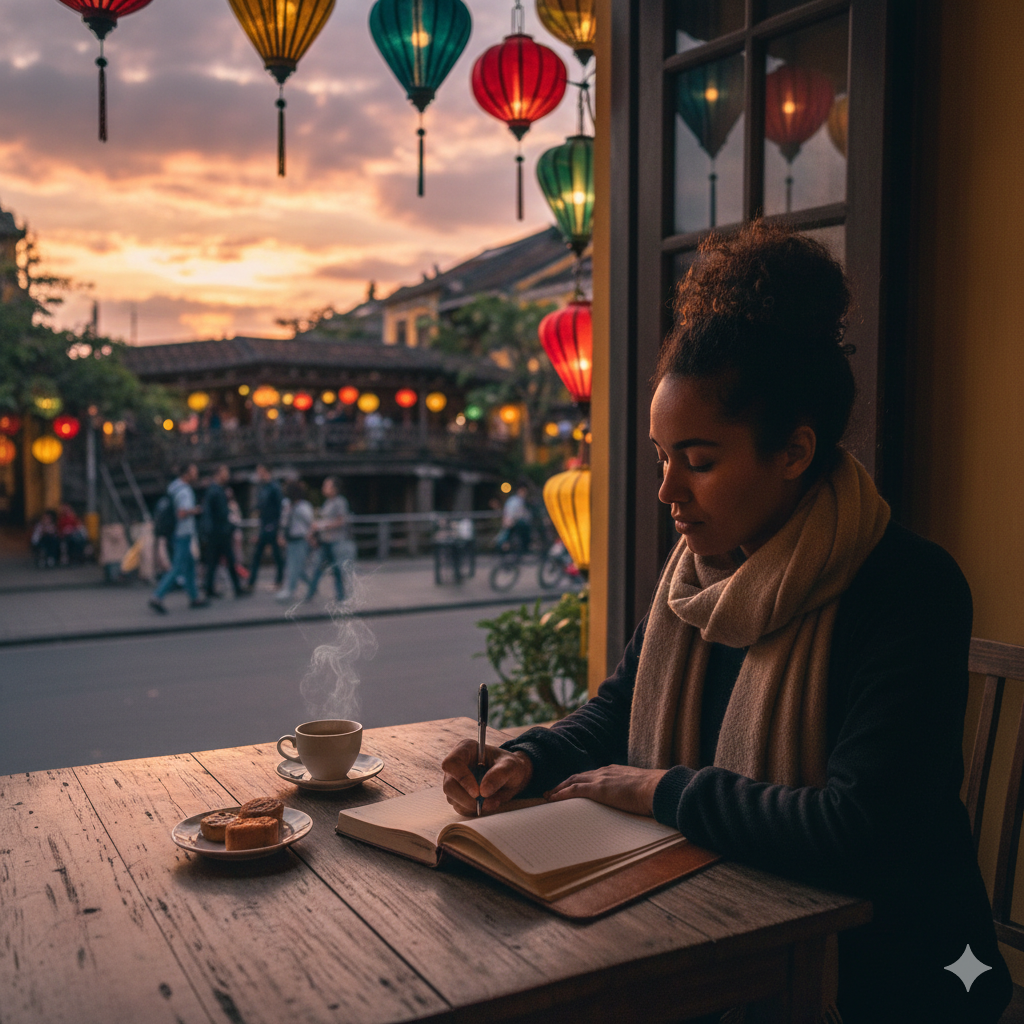
Loneliness Comes in Waves, and That’s Normal
Some evenings in Vietnam hit harder than others. Especially in beautiful places. I’d watch the sun set over Hoi An’s lantern-lit streets, surrounded by couples and groups, and feel profoundly alone.
Loneliness doesn’t mean you’re failing at solo travel. It means you’re human.
I learned to:
- Sit in cafés without rushing through my meal
- Journal instead of scrolling social media
- Join a walking tour or cooking class when silence felt heavy
- Message someone back home, not to complain, but just to connect
The wave always passed. And when it did, I remembered why I’d chosen this.
You Don’t Owe Travel Constant Productivity
Some of my safest, happiest days were slow ones:
- Reading in a café in Florence, watching people pass for three hours
- Wandering aimlessly through Bangkok’s back streets with no destination
- Doing nothing on Caribbean beaches except swimming and napping
- Taking a full day to recover in my room in Iceland after pushing too hard
Rest is not wasted time. It’s regulation. And when you’re managing everything alone—navigation, decisions, safety, logistics—rest becomes essential, not indulgent.
Most People Want to Help—If You Let Them
I used to think everyone else had friends. That I was the only one sitting alone at hostel breakfast tables.
They didn’t. They were just as hesitant as I was.
Connection often started with one sentence:
“Mind if I join you?”
In Thailand, I met two women this way who became travel companions for a week. In Kenya, after the harassment incident, the woman who stood beside me invited me for tea afterward. We talked for an hour. She’d traveled solo for years and shared stories that made me feel less alone.
Starting conversations is a skill you develop, not something you need to be naturally good at. Each time gets easier.
Book the First Few Nights, Wing the Rest
I over-planned my first trip to France, booking everything in advance. Which meant when Paris felt wrong, I was stuck. When I fell in love with a small town in Provence, I couldn’t stay.
Now I book my first 3-4 nights, then decide the rest as I go. This balance provides security—you know where you’re sleeping when you arrive tired and disoriented—while maintaining flexibility.
If a place feels unsafe or wrong, I can leave. If somewhere feels magical, I can extend. Flexibility is a safety tool, not just a convenience.
The Hardest Part Is Starting
Booking my first solo flight to Spain felt terrifying. The night before I left, I questioned everything. The first day in Barcelona alone felt overwhelming.
Then I figured it out. By day three, I wondered why I’d been so anxious.
The anticipation is almost always worse than the reality. Once you’re in it, you adapt. You become the person who can do this—not through magic, but through doing it.
Managing Common Solo Travel Fears
Fear never fully disappears. It just changes shape.
Now, when fear shows up, I ask:
- Is this intuition or anxiety?
- Do I need to act—or just breathe?
Fear isn’t a stop sign. It’s information.
“Something bad will happen and no one will know”
This fear feels visceral because it’s about fundamental vulnerability.
What I do:
- Set up regular check-ins with someone at home—every 2-3 days via WhatsApp
- Share my itinerary, even if it’s loose
- Use location sharing on my phone
- Tell my accommodation if I’m going hiking or somewhere remote and when I expect to return
This means if something happens, someone notices within a defined timeframe. The reality check: Thousands of solo travelers are out there right now, safe and fine. Your brain is catastrophizing a low-probability event.
“I’ll get sick or injured far from home”
This happened to me in Lisbon. And what made it manageable was preparation, not panic.
What helps:
- Comprehensive travel insurance with medical evacuation
- Research medical facilities before traveling—know where the international hospital is
- Pack a more extensive first aid kit than you think you need
- Bring prescriptions for any medications you take
- Keep both digital and physical copies of your insurance policy
The reality check: You can get sick or injured at home too. Many countries have excellent, affordable healthcare. Knowing you can get home or access quality medical care addresses the core fear.
“I’ll be targeted because I’m alone”
This fear has some basis in reality. But being aware isn’t the same as being afraid.
What I learned:
- Don’t advertise that you’re alone (you don’t need to lie, but don’t volunteer it)
- If someone asks intrusive questions, mention meeting friends later or keep answers vague
- Stay in accommodations where other travelers gather
- Trust discomfort—if someone or some situation feels wrong, leave
- Move with confident body language—walk upright, make brief eye contact, look purposeful
The reality check: Most people everywhere are neutral to kind. The ones who aren’t usually reveal themselves quickly through boundary-pushing behavior. Being targeted is less about being alone and more about appearing unaware.
![Solo female traveler at [iconic location in Iceland] representing confidence gained through 47 countries of independent travel experience](https://www.jetgurl.com/wp-content/uploads/2026/02/Iceland-solo-travel-.png)
The confidence of independent travel in Iceland
How to Move Confidently Through the World
Blending In Is Overrated—Looking Purposeful Matters More
In Barcelona, I was dressed plainly when my phone was stolen. In Singapore, I stood out completely. What mattered wasn’t my clothing—it was whether I looked confused and distracted or aware and purposeful.
What works:
- Move with confidence even when you’re lost—step into a shop to check directions rather than standing in the middle of the sidewalk looking confused
- Observe before participating—spend time watching how locals behave before jumping in
- Wear practical clothing you can move quickly in
- Use headphones as a social barrier (even without music playing)
- Learn key phrases beyond pleasantries—”leave me alone,” “I need help,” “stop following me”
- Position yourself strategically—near other women, families, or exits in restaurants and on transport
The biggest strategy: Look like you belong. Not like you’re from there, but like you have every right to be there. Walk like you’re going somewhere specific. The energy of “I’m supposed to be here” matters more than what you’re wearing.
FAQs:
Is solo female travel safe in 2026?
Solo female travel in 2026 is statistically common and practically manageable. Millions of women travel alone every year. Problems can happen—just as they can at home—but most issues are petty, short-lived, and recoverable with preparation.
The real risk isn’t traveling alone. It’s traveling without systems, awareness, or self-trust.
What’s the safest country for solo female travelers?
Safety varies more by city, neighborhood, and individual circumstances than by country. From personal experience, I’ve felt particularly safe in Japan, Iceland, Singapore, Portugal, and New Zealand.
But I’ve also felt unsafe in parts of cities widely considered “safe,” and deeply supported in countries people warned me against.
Focus on researching specific destinations, reading recent reviews from solo female travelers, and choosing accommodations in safe neighborhoods rather than relying solely on country-level rankings.
How do you protect yourself as a woman traveling alone?
What has protected me most consistently:
- Choosing accommodation carefully—well-reviewed places in central areas with reviews from solo women
- Arriving prepared, not rushed—daylight arrivals or pre-arranged transport, or 24-hour reception stays, and comprehensive travel insurance (like SafetyWing) to manage crises before they happen.
- Trusting discomfort immediately and acting on it
- Having backup systems—insurance, cloud copies, emergency numbers, location sharing
- Using solo female travel safety apps like offline maps and location sharing
Safety comes from awareness and readiness, not fear or avoidance.
What are essential items for solo female travel?
Your 2026 packing list should prioritize security and independence:
- Safety Hardware: A portable door jam/wedge for accommodation, a personal safety alarm, and an anti-theft crossbody bag with slash-proof straps.
- Connectivity: A high-capacity power bank (essential for maps) and a secondary/backup phone if possible.
- Digital Backups: Cloud copies of your passport, visa, and insurance, plus an AirTag in your luggage and daypack.
- The “Just in Case” Kit: An extensive first-aid kit with rehydration salts, local emergency contacts printed on paper, and an emergency cash stash kept separate from your wallet.
What are the best solo female travel safety apps for 2026?
The apps I actually use and rely on:
- Google Maps and Maps.me: Download offline maps for every city
- WhatsApp: For location sharing with trusted contacts
- TripWhistle Global SOS: Provides local emergency numbers and GPS coordinates instantly
- Google Translate: With offline language packs for key phrases
- TripIt: Organizes all travel confirmations in one place
What should you avoid when traveling solo as a woman?
Based on mistakes I’ve made:
- The Late Arrival: Avoid arriving in a new city after dark. Fatigue lowers your awareness, making you a target for petty theft.
- Over-Sharing: Never volunteer that you are traveling alone to strangers. Using a “fake wedding ring” or mentioning a “husband meeting you later” is a common and effective deterrent.
- Politeness Traps: Don’t let a desire to be polite override your instinct. If someone makes you uncomfortable, move to a crowded area or yell for help if necessary—drawing attention is your best defense.
- Visible Valuables: Avoid using your phone while walking in busy areas like Barcelona’s Las Ramblas or London’s streets, where scooter-based snatch-and-grab thefts are common.
- Over-planning everything—rigidity keeps you stuck in places that feel wrong
Avoidance isn’t about fear—it’s about reducing unnecessary exposure.
Do I need travel insurance for solo travel?
Yes. Comprehensive travel insurance with medical coverage and emergency evacuation is essential.
Without a travel companion to help in emergencies, insurance provides crucial support. When I got sick in Lisbon, knowing I had 24-hour helpline access and evacuation coverage if needed gave me the confidence to rest and recover rather than panic.
How do you deal with loneliness when traveling alone?
I manage loneliness by:
- Staying in social accommodations (hostels with common areas)
- Joining group tours or cooking classes
- Scheduling alone time so it feels chosen rather than imposed
- Maintaining regular contact with people at home
- Saying “mind if I join you?” to other solo travelers
Remember that loneliness comes in waves—it’s temporary, not constant. Many solo travelers report feeling less lonely traveling than in their daily lives.
What are safe neighborhoods for solo female travelers in major cities?
Safe neighborhoods vary by city, but general principles apply:
- Choose central, well-lit areas near public transportation
- Read recent reviews from solo female travelers specifically
- Look for neighborhoods with 24-hour businesses and foot traffic
- Avoid booking based solely on price—safety is worth paying more for
From my experience: In Barcelona, stay in Eixample or Gràcia (not too far from Las Ramblas). In Paris, the Marais or Saint-Germain. In Bangkok, Sukhumvit or Silom. In Nairobi, Westlands or Kilimani. Always prioritize accommodation reviews over neighborhood guides.
What Safety Really Is
Solo female travel safety in 2026 isn’t about being fearless.
Over 47 countries, I’ve learned that safety is not the absence of problems — it’s your ability to respond to them.
It’s:
- Locking your phone immediately after theft
- Moving into a public space when something feels wrong
- Knowing the emergency number before you need it
- Leaving a place that doesn’t feel right — without apology
- Building backup systems before boarding the flight
- Recovering well when things go wrong
- Reading situations early
- Trusting yourself after mistakes
- Knowing you can handle what comes next
Solo female travel doesn’t require perfection. It requires adaptability.
I didn’t become confident before traveling solo.
I became confident because I did.
Every country, every misstep, every quiet victory added to that trust.
You don’t need certainty.
You need willingness.
And once you begin—the world meets you halfway far more often than fear would have you believe.
Bookmark this guide. Share it with a woman planning her first solo trip. And revisit it before you board your next flight.
This guide reflects my personal experiences traveling solo. Risk levels vary by location and circumstances. Always research your specific destination before traveling.
About the Author: The writer is a solo female traveler who writes for women who want the truth on solo female travel safety, destination strategy, and real-world risk management. She has explored 47 countries across Europe, Asia, Africa, and the Caribbean over the past four years, and focuses on balanced, experience-backed safety advice.
