
The anxiety hit hardest at 7 PM on a Tuesday in Lisbon. I’d spent the day exploring cobblestone streets and tile-covered buildings, working up a serious appetite. But as dinner time approached, I found myself paralyzed outside a charming Portuguese restaurant, watching groups of friends and couples stream inside. The thought of walking in alone, asking for a table for one, and sitting there under what I imagined would be pitying stares felt overwhelming.
Sound familiar?
If you’ve ever wondered how to eat alone while traveling without feeling self-conscious, you aren’t alone. It’s the ultimate solo travel paradox: you can trek across continents, but sitting down for a meal by yourself feels like the hardest part of the journey.
After visiting 47 countries across six continents, I’ve realized that solo dining anxiety is universal. Whether you’re looking for tips for eating alone in a restaurant for the first time or you’re a seasoned traveler concerned about solo female travel safety, this guide is for you.
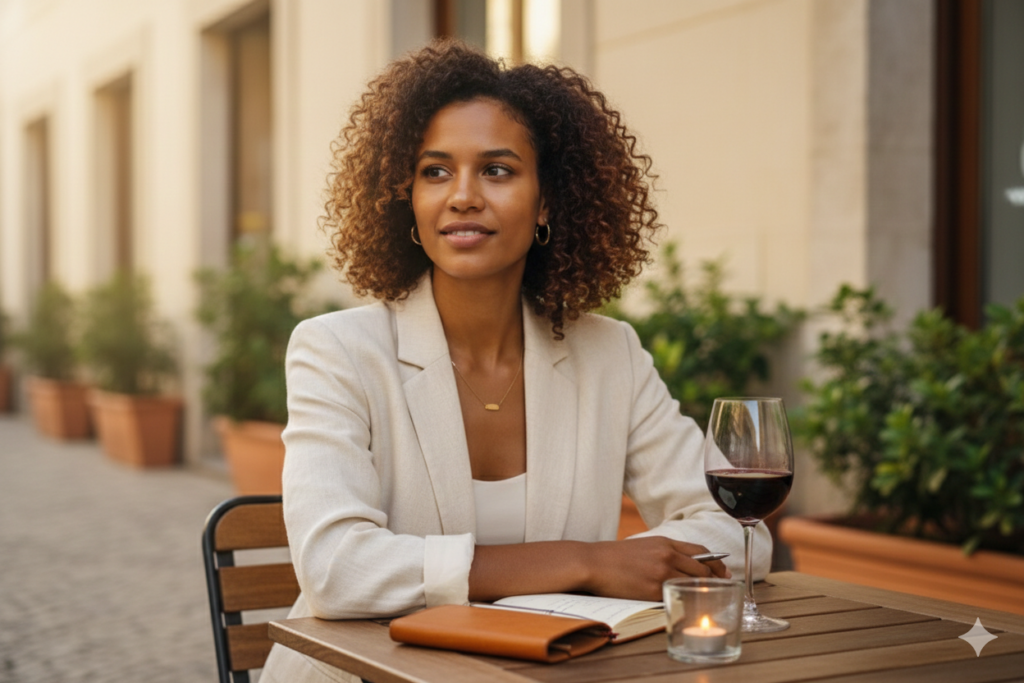
In this comprehensive solo dining guide, I’ll share the exact strategies I’ve used—from the sushi counters of Tokyo to the bistros of Paris—to move from paralyzed anxiety to genuinely romanticizing my own company. You’ll learn:
- How to manage the “pitying stare” myth (Spoiler: Nobody is watching).
- The best solo female travel dining etiquette to blend in like a local.
- Strategic tools to help you not feel lonely while eating alone.
- How to choose the safest, most welcoming neighborhoods for your first solo meal.
Solo dining isn’t just a logistical hurdle; it’s a transformative skill that opens up the best culinary experiences in the world. Let’s build your confidence muscle, one meal at a time.
At a Glance: 8 Quick Tips for Solo Dining
- Sit at the Bar: Counter seating removes the “empty chair” anxiety and offers built-in entertainment.
- Start with Breakfast: It’s the most normalized meal for solo diners and builds your “confidence muscle.”
- Bring a ‘Prop’: A book or journal gives you something to do with your hands and eyes.
- Own Your Solo Status: Say “one for dinner” — never apologize or say “just one.”
- Order Something Interactive: Ramen, a charcuterie board, or anything with ritual gives you something to focus on.
- Go Off-Peak: A quiet Tuesday at 6pm beats a packed Saturday night for building confidence.
- Connect with Your Server: A warm exchange turns a stranger into a friendly presence at your table.
- Give Yourself a Time Limit: A hard stop on your first solo outing removes the pressure to perform.
The Real Issue Isn’t the Eating—It’s the Feeling
Here’s what most solo dining advice gets wrong: it treats the problem as logistical when it’s actually emotional.
You don’t need instructions on how to physically eat food by yourself. What you need is a way to manage the self-consciousness, the feeling of being watched, the narrative in your head that everyone in the restaurant is wondering why you’re alone.
I remember my first solo dinner in Copenhagen—I’d walked past the same restaurant three times before finally forcing myself inside. My heart was pounding as I asked for a table for one.
The host smiled warmly and led me to a cozy corner table with a candle.
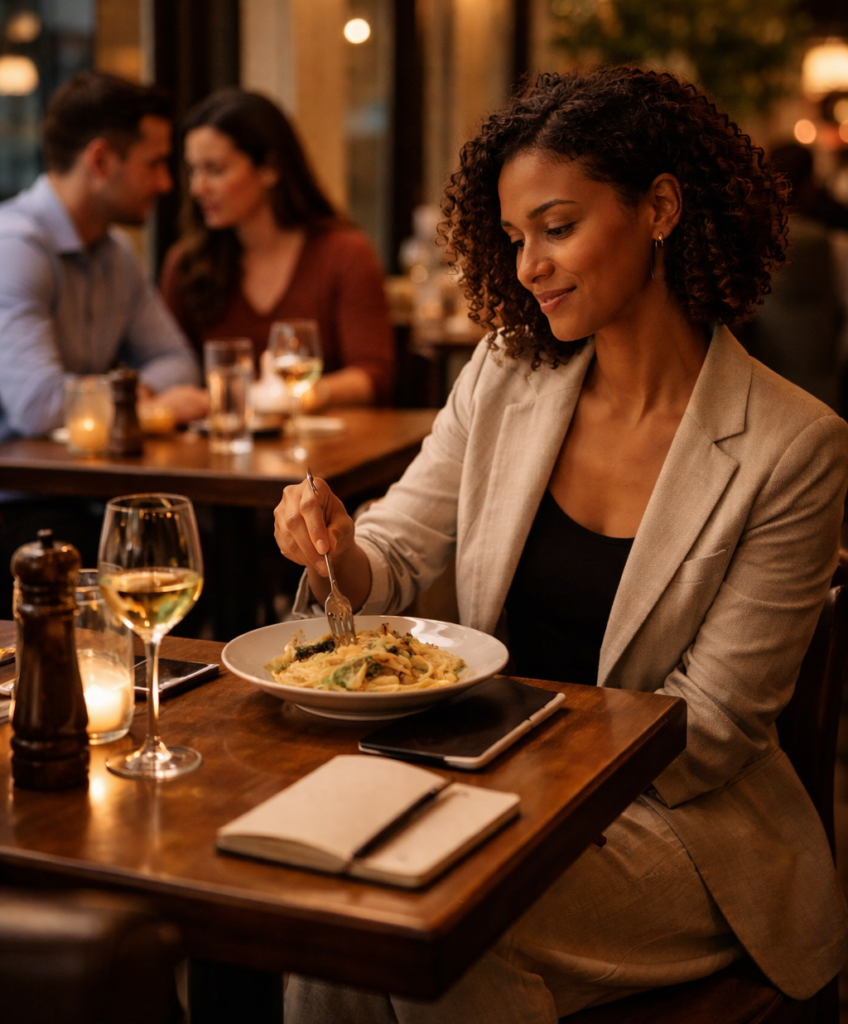
Nobody stared. Nobody whispered.
The couple next to me was absorbed in their own conversation. The businesswoman across the room was reading emails between courses. Life simply went on, and I realized with startling clarity: nobody cared that I was alone.
This realization has repeated itself in dozens of countries since then. Whether I was eating injera in Addis Ababa, fresh ceviche in Lima, or pasta carbonara in a tiny Roman osteria, the pattern held true: my anxiety was entirely self-generated.
A recent thread on Reddit’s solo travel community confirmed I wasn’t alone in this experience, with travelers from around the world sharing their struggles, breakthroughs, and hard-won wisdom about solo dining.
One Redditor captured this perfectly, describing how they felt “so self-conscious and embarrassed” eating alone, even resorting to getting takeout just to avoid the experience. Another traveler admitted to literally hiding in their hotel room rather than face a restaurant alone.
The good news? This discomfort is almost entirely in your head, and it gets easier every single time you do it.
Nobody Is Watching You (Really)
The single most liberating truth about eating alone while traveling is this: other diners are not paying attention to you.
They’re focused on their own conversations, their own meals, their own lives.
I tested this theory during a week in Vietnam. After days of confidently eating solo at street stalls and local restaurants in Hanoi and Hoi An, I started actually observing other diners.
Not once did I see anyone point at a solo diner, whisper, or even glance twice.
People were absorbed in their pho, their banh mi, their own companions.
When You Do Get Noticed, It’s Usually Positive
When you do get noticed, it’s rarely judgment:
- In a wine bar in Bordeaux, the sommelier spent twenty extra minutes with me because, as he said, “Solo diners actually pay attention to the wine”
- At a seafood restaurant in Zanzibar, the owner brought me a complimentary dish because he appreciated that I’d come alone to “truly taste the food”
- Multiple travelers reported similar experiences—restaurant staff often show respect or even admiration for solo diners
This shift in perspective is the foundation of confident solo dining. You’re not a person eating alone because something is wrong.
You’re a traveler having an experience, a curious person exploring local cuisine, someone confident enough to enjoy their own company.
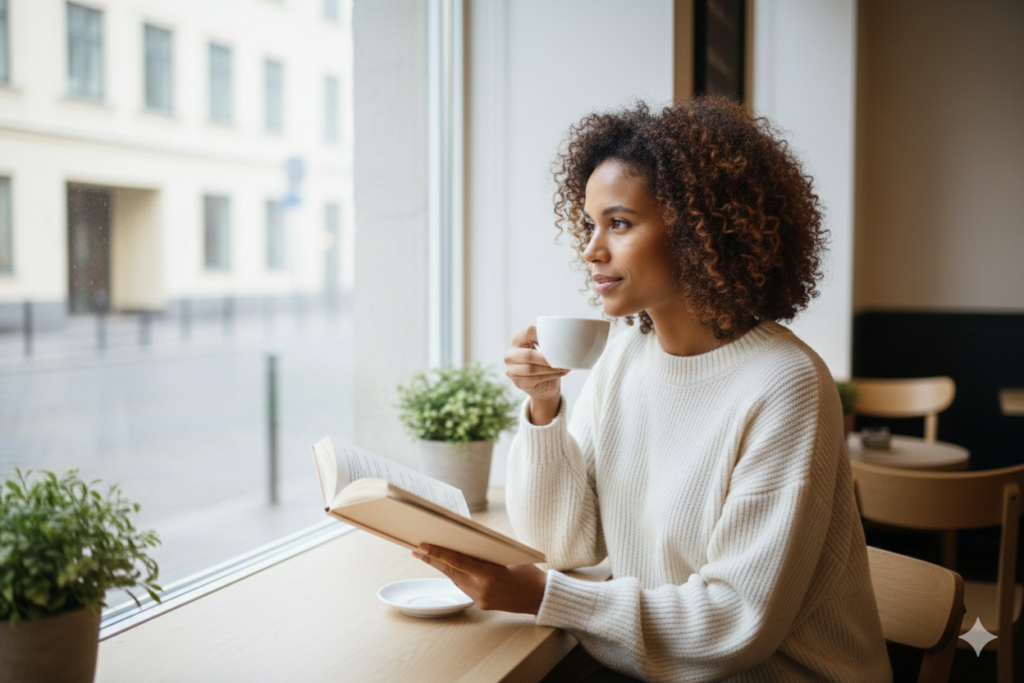
Dining alone at a café window seat in Reykjavik with coffee and a book. Perfect psychological easing.
Is Solo Dining Safe for Women? What You Need to Know
One of the most frequent questions I get from my readers is: Is it actually safe to eat alone as a woman? The short answer is yes, solo dining is generally very safe, and in many cultures, it’s a completely normal part of daily life. However, safety isn’t just about physical security—it’s about feeling comfortable enough to enjoy your meal without constant hyper-vigilance.
After navigating 47 countries solo, here is my “Safety First” framework for dining alone:
1. Research the “Walk Back”
Safety often has less to do with the restaurant itself and more to do with the neighborhood.
- Check the lighting: Before booking a late dinner, look at Street View. Are the surrounding streets well-lit?
- The Transit Rule: I prioritize restaurants within a 10-minute walk of my accommodation or those easily accessible by a reputable ride-share app.
2. Use the “Bartender Buffer”
As a solo female traveler, the bar or counter is your safest real estate. The bartender acts as a natural “gatekeeper.” If someone is making you uncomfortable, a quick, quiet word to the staff is usually all it takes to resolve the situation. They are trained to manage the floor and will usually have your back.
3. Management of Information
You are under no obligation to tell curious strangers that you are traveling alone.
- The “Meeting a Friend” White Lie: If a stranger becomes too persistent, it’s perfectly okay to say, “I’m just grabbing a quick bite before meeting my friends back at the hotel.”
- Watch Your Drink: The same rules apply at a restaurant as they do at a club. Keep your drink in sight, and if you have to leave the table for the restroom, it’s better to wait until you’ve finished your glass.
4. Daytime vs. Nighttime
If you are in a city where you feel less certain about the safety climate, shift your main meal to lunch. You’ll get the same world-class cuisine and atmosphere, but with the added security of daylight and a more professional, “business-lunch” crowd.
Pro Tip: Prioritize safe neighborhoods for solo dining by checking local expat forums or heat maps before you head out.”
Trust your “gut” over “politeness.” If a restaurant feels “off” or the vibe is overly aggressive, leave. Your safety and peace of mind are worth more than a reservation or a deposit.
Practical Tips for Eating Alone in a Restaurant for the First Time
Eating alone at a restaurant for the first time can feel intimidating, but it quickly becomes one of life’s quiet pleasures once you get the hang of it.
Before You Go
- Choose the right spot — a busy casual restaurant or a bar with counter seating is far more comfortable than a formal dining room. Cafes, ramen shops, sushi bars, and diners are all fantastic for solo diners because solo eating is already normalized there.
- Go at an off-peak time — a late lunch or early dinner means less of a wait and less ambient pressure from a bustling room.
When You Arrive
- Don’t apologize for being one person. Just say “just me” or “one, please” with confidence. Hosts seat solo diners dozens of times a day and think nothing of it.
- Ask for a seat at the bar or counter if there is one — it’s often the best seat in the house. You get a view of the kitchen or the room, and bartenders tend to be great conversationalists if you want company, or perfectly professional if you don’t.
At the Table
- Bring something to do if you want it — a book, a podcast, your phone — but don’t feel obligated. Many experienced solo diners find that people-watching and simply being present is more than enough entertainment.
- Order whatever you actually want. One of the genuine pleasures of eating alone is that you don’t have to negotiate the menu with anyone. Get the thing you’d normally feel guilty ordering.
- You can ask your server about the menu more freely than you might in a group. Without the social pressure of holding up a table decision, you can have a real conversation about what’s good that day.
Managing the Mental Side
- The self-consciousness you feel is almost entirely internal. Other diners are focused on their own meals and conversations — you’re not nearly as visible as you think. This fades completely after the first few times.
- Reframe it: you’re not “eating alone,” you’re dining solo, which is a different and rather sophisticated thing. You’re present, unhurried, and in complete control of the experience.
Practical Bits
- Bring a card — it’s easier than fumbling with cash when there’s no one to split the check with.
- Tip generously. Solo diners sometimes occupy a table for a while, and a good tip acknowledges that.
- If a server or host is ever weird about you being alone (rare, but it happens), it’s a reflection of them, not you. Most hospitality professionals genuinely enjoy solo diners because the interaction is often more personal.
If the thought of a formal dinner alone still makes your stomach flip, start with lower-stakes situations.
Breakfast is the gateway drug of solo dining—it’s so normalized that you’ll barely notice you’re doing it.
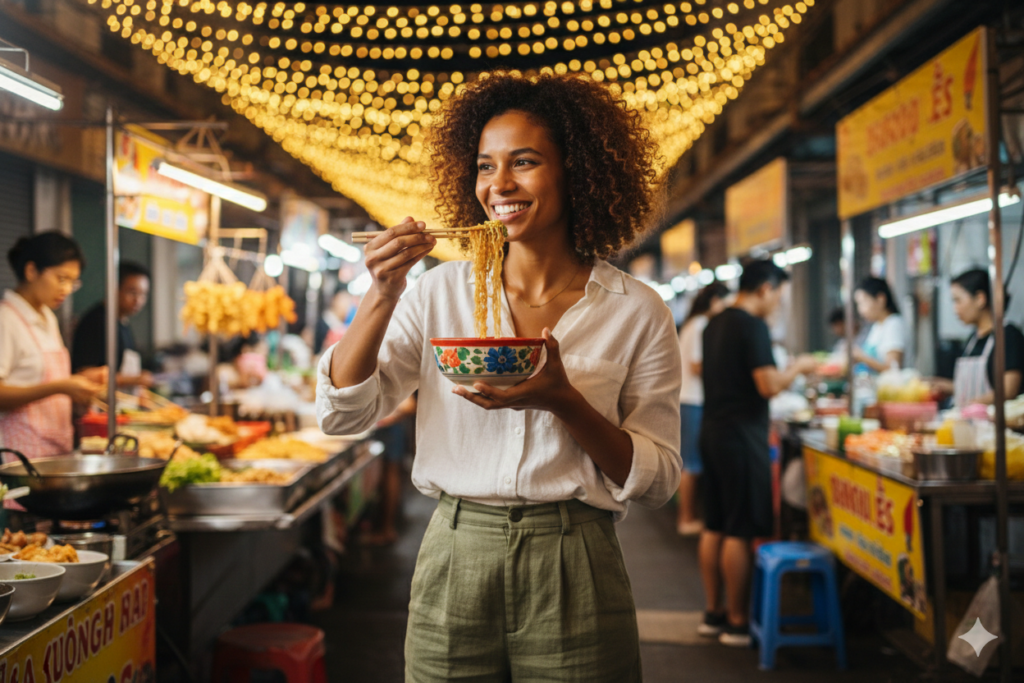
Night market scene in Chiang Mai
Best Places for Solo Dining Beginners
Breakfast & Coffee Shops
- My confidence-building journey started at a café in Reykjavik
- Icelandic yogurt and rye bread by the window
- Reading news on my phone while sipping coffee
- Nobody questioned it—completely normalized
Lunch Spots
- Food markets like Mercato Centrale in Florence
- Counter seating with a lampredotto sandwich
- Business professionals eating solo everywhere
- Faster pace, more casual atmosphere
Early Dinners
- Discovered this accidentally in Barcelona
- Arrived at 7 PM (before the Spanish dinner rush)
- Empty restaurant, attentive service, relaxed atmosphere
- By the time it filled up, I was comfortable and settled
Low-Pressure Practice Grounds
Street Food & Markets (Perfect for building confidence):
- Night markets in Chiang Mai
- Fish market in Bergen
- Empanada stands in Buenos Aires
- Standing while eating = inherently less formal
- My most memorable meals: standing at a corner in Hanoi, eating bun cha while watching motorbikes stream past
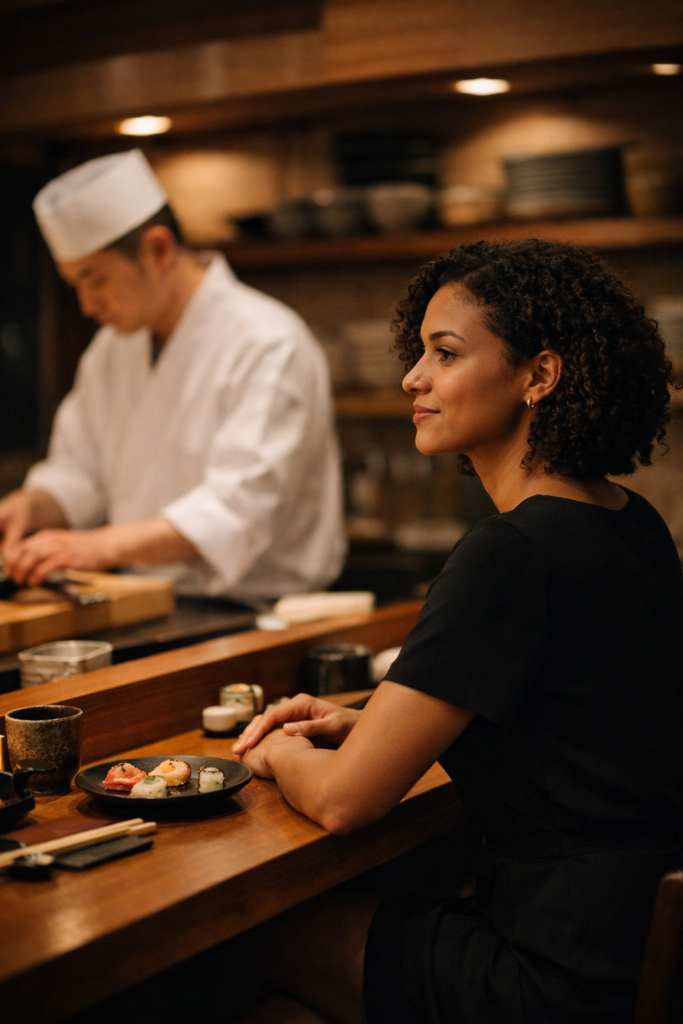
At a sushi counter in Tokyo, watching the chef prepare omakase
The Magic of Counter Seating (The Solo Diner’s Secret Weapon)
If there’s one universal piece of advice from experienced solo diners, it’s this: sit at the bar or counter whenever possible.
Why Counter Seating Transforms Solo Dining
Counter seating completely changes the experience:
✓ No awkward empty chair across from you
✓ Natural entertainment: watching the kitchen or bar in action
✓ Easy conversations with bartenders and neighboring diners
✓ Better service: bartenders are attentive and often great conversationalists
✓ Prime viewing: you see dishes being prepared, drinks being mixed
My Best Counter Seating Experiences
- Watched the chef work with focused precision
- Each piece of nigiri was a small sculpture
- Just me, the chef, and the intimate theater of omakase
- No wondering where to look or what to do with my hands
Copenhagen Michelin-Starred Restaurant
- Requested bar seating at the reservation
- Watched the chef plate every dish
- Learned techniques I’d never see from a dining room table
- Chef sent out an extra course “for the curious solo diner”
Wine Bar in Lyon
- Bartender explained the story behind each cocktail ingredient
- Led to recommendations for off-the-beaten-path neighborhoods
- Those suggestions became some of the best discoveries of my trip
Where Counter Culture Thrives
Japan: The Counter Culture Capital
- Ramen shops with individual booths (perfect for introverts)
- Sushi bars where counter seating is preferred
- Izakayas with long counters for yakitori and beer
- Solo dining is the norm, not the exception
Everywhere Else
- Asking for bar seating signals you’re comfortable dining alone
- Staff recognize you as an experienced solo traveler
- Natural conversation opportunities without forcing them
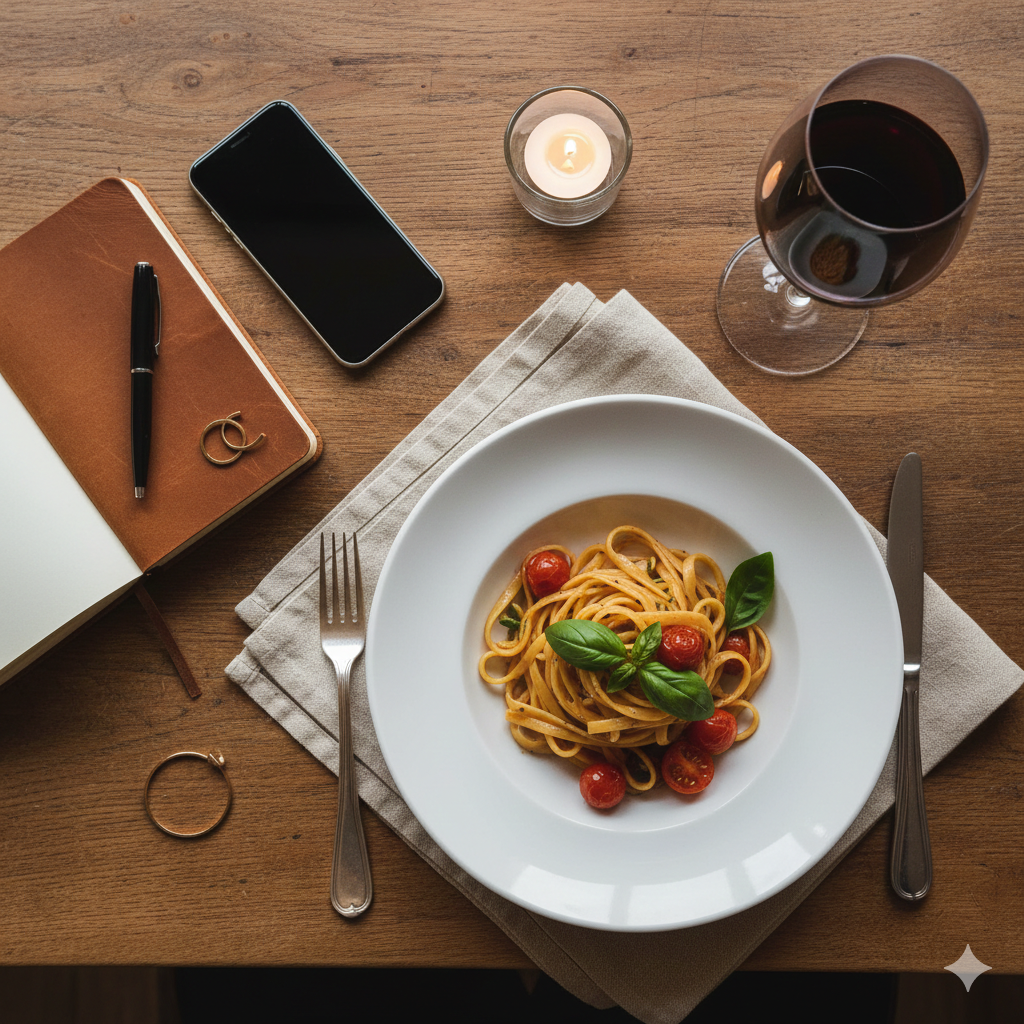
Solo dining tool kit
How to not feel lonely eating alone
Many travelers ask how to not feel lonely eating alone; the secret is turning the meal into an observation exercise.
What do you do with your hands, your eyes, your attention while you’re sitting there alone?
The honest answer is: whatever makes you comfortable.
Despite old-fashioned etiquette that might frown upon phones at dinner, modern solo dining has different rules.
Charged Phone
- Photos of your food
- Notes about the meal
- Research about what you’re eating
- Entertainment if you want it
- Portable charger is essential
Small Notebook & Pen
- Journal about the day’s discoveries
- Write between courses, eat mindfully during courses
- Capture memories you’ll treasure years later
- Gives your hands something to do naturally
Book or E-Reader
- A paperback for atmosphere
- E-reader for unlimited options and soft glow
- Creates a cozy bubble around you
- Perfect for rainy evenings or long lunches
Headphones (Optional but Useful)
- I don’t always use them, but having the option is comforting
- Creates a private space when you need it
- Good for podcasts or background music
What Actually Works
The key is having something that makes you feel occupied without making you feel isolated.
You want to project “I’m enjoying myself” rather than “I’m desperately trying to look busy.”
In that Lisbon restaurant where I finally conquered my initial anxiety, I pulled out my journal and started writing about the day’s discoveries. It gave my hands something to do, my eyes somewhere to focus, and captured memories I still read years later.
The Cultural Context
Solo dining acceptance varies dramatically around the world. Understanding these cultural differences helps calibrate your expectations and choose appropriate strategies.
Quick Comparison: Solo Dining by Region
| Region | Difficulty | Best Strategy | Top Tip |
| Japan | Very Easy | Counter / Vending | Look for “Hitori” (solo) signs |
| Europe | Easy | Outdoor Terraces | Bring a book; people-watching is a sport |
| SE Asia | Very Easy | Street Markets | Communal tables are your friend |
| USA/UK | Moderate | Bar Seating | Arrive early to snag a bartender seat |
Japan: Solo Diner’s Paradise
Why it’s perfect for eating alone:
- Strong culture of independent dining
- Counter seating everywhere
- Vending machine ordering (minimal interaction)
- Partitions between seats at ramen shops
- Respectful of individual space
First night in Tokyo, tiny ramen shop in Shinjuku. Partitions creating semi-private booths with counter seating facing the kitchen. Watched the chef work, slurped ramen alongside salarymen doing the same. Heaven for introverted solo diners.
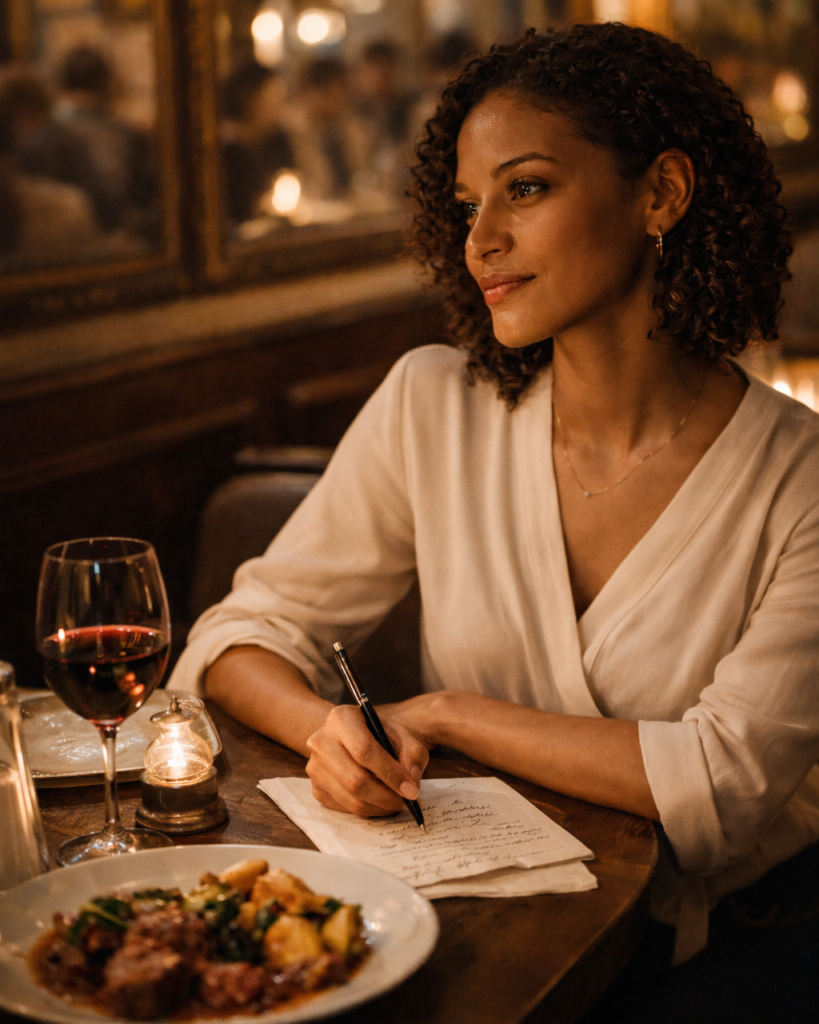
Evening reflections at a Parisian bistro
Europe: Café Culture Embrace
Best for solo female travelers:
- Paris, Lyon, Bordeaux bistros
- Italian trattorias (despite family culture)
- Nordic countries (cultural reserve works in your favor)
- A respected tradition of solo diners reading newspapers
I spent the entire afternoons at Paris bistro terraces, drinking wine and watching life unfold. I could see solo diners everywhere—reading, writing, and observing. It’s a lifestyle, not an aberration.
Southeast Asia: Street Food Freedom
Most liberating solo dining experiences:
- Thailand, Vietnam, Cambodia, Malaysia
- Street stalls and hawker centers
- Eating alone is completely normalized
- Casual format removes all pressure
Best spots for solo travelers:
- Maxwell Food Centre (Singapore)
- Any night market in Bangkok
- Hawker centers with communal tables
- Everyone absorbed in their own meal
East Africa: Warmth and Curiosity
What to expect:
- Communal eating is cultural (injera platters meant for sharing)
- Solo dining less common but met with warmth
- Curiosity rather than judgment
- Opportunities for cultural exchange
I was in a restaurant in Addis Ababa, and the owner asked if I was waiting for friends. When I said no, she smiled: “Then you get the whole platter!” Sat with me briefly explaining each dish.
South America: Navigating Communal Culture
Timing strategies that work:
- Lunches easier than dinners
- Business hours in Buenos Aires parrillas
- Lima’s food scene (internationally influenced)
- Market food in smaller towns
Solo dining tips:
- Early dinners work better
- Major cities more accommodating
- Street vendors and markets always safe bets
- Hotel restaurants for exhausted evenings
Botswana: Safari Lodge Dynamics
Unique considerations:
- Dining often communal by design
- Long tables with other guests
- Arriving solo is completely common
- Staff masterful at reading social cues
While in my lodge in Okavango Delta, the staff could tell when I wanted conversation versus processing wildlife sightings in silence.
Solo Female Travel Dining Etiquette: How to Blend In Anywhere
At the Table
- Sit with your back to the wall when possible — good for awareness and comfort.
- Keep your bag on your lap or looped around your chair leg, never hanging freely.
- Order with confidence — don’t over-explain or apologize for dining alone.
- A book or journal signals “I’m busy” without being rude to staff.
- Avoid excessive phone use — it signals distraction and can attract unwanted attention.
Handling Unwanted Attention
- A polite but firm “I’m fine, thank you” ends most conversations cleanly.
- Wearing headphones (even without music) is universally understood as “not available.”
- Don’t feel obligated to be friendly beyond what you’re comfortable with.
- If someone is persistent, involve your server — good restaurants handle this without drama.
- You never owe anyone a conversation, smile, or explanation.
Navigating Cultural Differences
- In some countries, solo women are seated in less desirable spots — ask to be moved if you’re uncomfortable.
- In conservative regions, modest dress reduces unwanted attention significantly.
- In Japan, solo dining is completely normalized — zero awkwardness expected.
- In Southern Europe and Latin America, dinner runs late — eating at 7pm marks you as a tourist.
- In the Middle East, look for “family sections” which are often safer and more comfortable for women alone.
Paying and Leaving
- Pay by card when possible — less fumbling, cleaner exit.
- Have your route back planned before you sit down.
- Leave during busy hours when the street is still active.
- Don’t linger outside the restaurant alone after dark looking at your phone.
- Walk with purpose — confidence is the best camouflage.
The best trips are built on meals eaten fearlessly. With the right preparation, dining alone as a woman anywhere in the world becomes less about survival and more about pure, unfiltered pleasure.
How to Find the Best Restaurants for Solo Dining in Any City
Use the Right Search Terms
When I landed in Portugal, I didn’t search “best restaurants in Lisbon.” That’s how you end up in romantic candlelit spots built for two.
Instead, I searched:
- “best solo dining Lisbon”
- “best bar seating Lisbon”
- “counter seating restaurants Lisbon”
That’s how I found neighborhood wine bars where I could sit at the counter and feel part of the energy instead of separate from it.
Read Reviews Specifically for Solo Mentions
On Google and Yelp, I search inside reviews for the word “alone” or “solo.”
People will say things like:
- “Came here alone and felt completely welcome.”
- “They made space for me at the bar.”
- “Wouldn’t recommend if dining solo.”
That tells me more than star ratings ever will.
Use Platforms That Respect Party Size One
If a restaurant allows you to book a table for one on platforms like OpenTable or Resy, that’s a strong signal.
When a restaurant makes solo reservations easy, they’re saying:
You’re not an inconvenience.
If I can’t book for one online and they require a phone call “to check availability,” I usually move on.
There are too many welcoming places to waste time convincing one to seat me.
What to Actually Do While Eating
Here’s a secret that experienced solo diners know: the meal itself becomes the entertainment when you’re paying full attention to it.
Mindful Eating as Entertainment
Lyon, Traditional Bouchon Experience:
Without conversation to distract me, I noticed:
- How the pike dumplings’ texture changed from center to edge
- The way the sauce’s acidity cut through richness
- The slight sweetness in the salad that followed
- This mindful eating transformed fuel into a genuine sensory experience
Keep Detailed Food Notes
I started documenting solo meals in a journal:
- San Sebastián pintxos progression
- How each one told a story about Basque ingredients
- Years later, I can still taste those meals reading my descriptions
Master the Art of People-Watching
Observations that enriched my travel:
Copenhagen café: Danish parenting styles—kids given remarkable independence, parents unhurried and present
Hanoi’s Old Quarter: Intricate dance of motorbike traffic while eating pho, choreography that appeared chaotic but was perfectly ordered
Key insight: When you’re talking, you’re inward-focused on your table. When you’re solo and observant, you’re absorbing the texture of life around you.
Building Connections: Solo Dining Can Be Social
Solo dining can be as social as you want it to be. Some of my best travel connections happened precisely because I was eating alone and therefore approachable.
How Staff Become Informal Guides
Real connections from solo dining:
Bordeaux wine bar: Bartender drew a hand-drawn map to hot springs only locals visit
Buenos Aires: Bartender’s recommendation led to a milonga with tango dancers until midnight
Rome: Sommelier’s suggestion to visit a specific enoteca = my favorite wine of the trip
Chiang Mai: Chef invited me to watch him shop at the market and prep for service
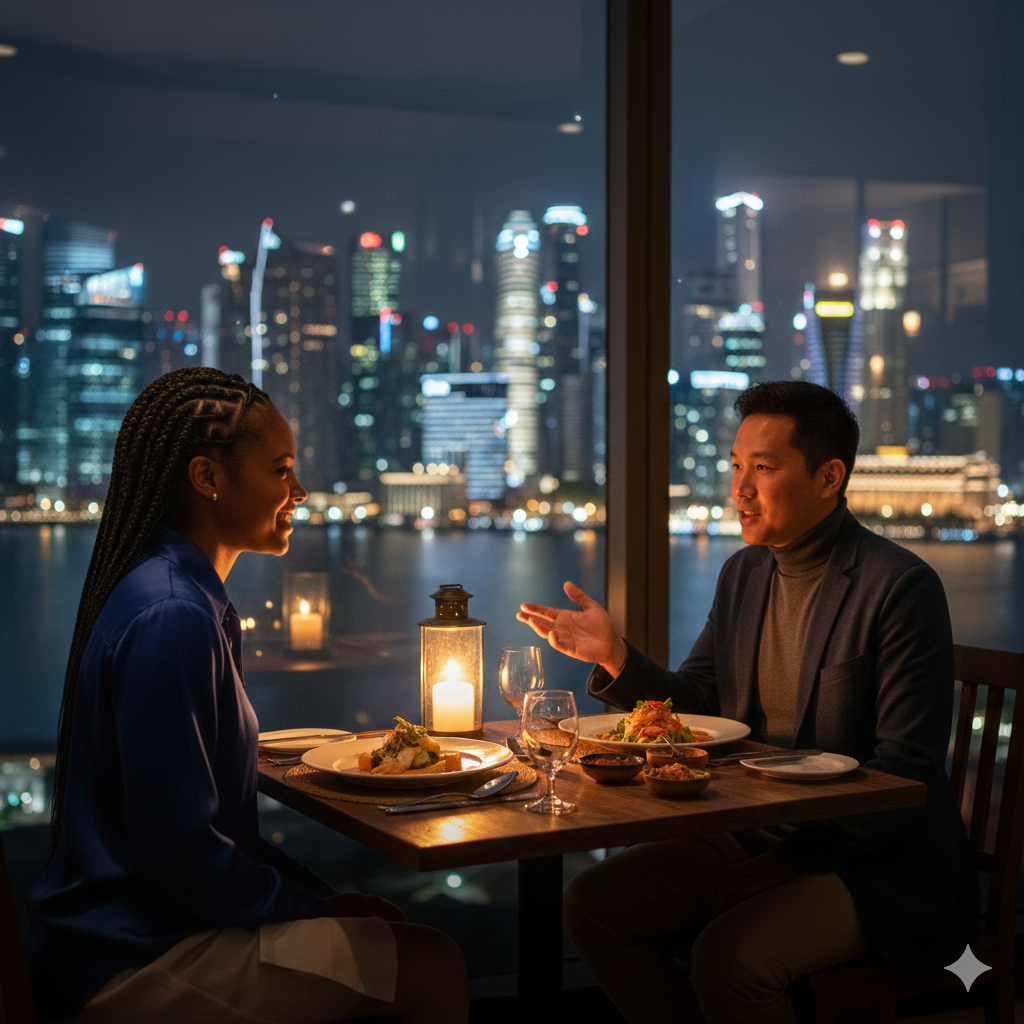
Dinner connections in Singapore
Fellow Diners as Conversation Starters
Natural opening lines:
- “What did you order?”
- “Is that dish good?”
- “Any recommendations from the menu?”
Memorable conversations with:
- Retired schoolteacher in Bergen
- Tech entrepreneur in Singapore
- Wildlife guide in Maun
- French couple who invited me to dinner the next night
The Important Balance
Connections are a bonus, not the goal.
The goal is being comfortable enough with yourself that you’re genuinely content either way—social or solitary.
Handling Uncomfortable Moments
Let’s be honest about the less pleasant side: sometimes eating alone does attract unwanted attention, particularly for women traveling solo.
My Strategies That Actually Work
Body Language Signals
- Headphones (even if not listening) = unavailability
- Book creates visual barrier
- Confident posture—shoulders back
- Eye contact with staff, not lingering gazes around room
Strategic Seating Choices
- Bar seating = bartenders naturally run interference
- Window seats let you look outward
- Avoid secluded corners where you might feel trapped
Direct Communication
- “I’m actually enjoying some quiet time, but thanks”
- No elaborate explanations needed
- You don’t owe anyone polite conversation
Staff as Allies
- Good restaurants watch for these dynamics
- In Zanzibar, waiter smoothly intervened when man kept trying to talk
- Brought my check, asked if I needed anything = natural exit point
Trust Your Instincts
- If a place feels off, leave
- In 47 countries, I’ve walked out of exactly two restaurants
- Both times found better options around the corner
- You’re not obligated to stay anywhere uncomfortable
The Reality Check
These uncomfortable moments have been rare exceptions, not the rule.
The vast majority of solo dining experiences across six continents have been neutral-to-wonderful.
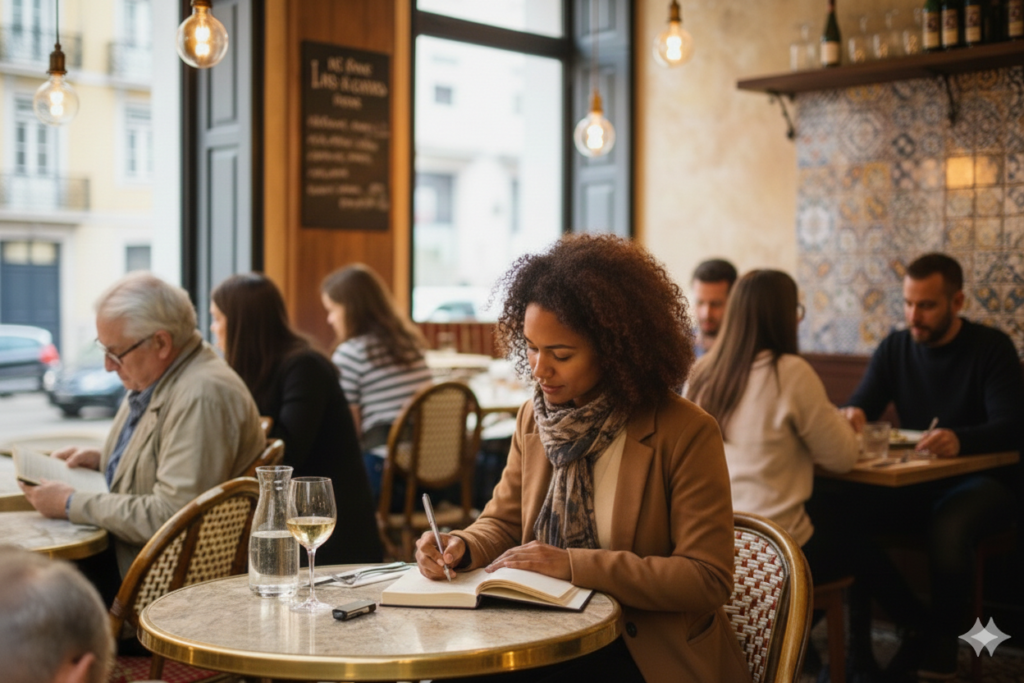
Journaling at a Paris cafe to boost mental clarity and create visual barriers
Reservations, Timing, and Logistics
Should You Make Reservations for Solo Dining?
YES, for high-end or popular spots:
- Always mention you’re dining alone
- Ask about bar/counter seating availability
- Example: Called Noma in Copenhagen, asked if they accommodated solo diners
- They enthusiastically said yes, gave me counter seating watching the kitchen
- One of my most memorable meals ever
What to check before booking:
✓ Do they have bar/counter seating? (Look at Google Maps photos)
✓ Do reviews mention solo diners?
✓ Is the cuisine solo-friendly? (Omakase, tasting menus, tapas YES / Family-style sharing plates HARDER)
Best Times for Solo Dining
Early Dinners (5:30-6:30 PM)
- Less crowded restaurants
- More attentive service
- Better seat availability
- Barcelona: 7 PM instead of 10 PM = pick of seats
Lunch Hours
- Universally easier than dinner
- Business professionals dining solo
- Faster pace, casual atmosphere
- Paris, Rome, Bangkok, Buenos Aires—solo diners blend seamlessly
Off-Peak Hours
- Going when locals don’t = advantages
- Reykjavik at 6 PM (early by Icelandic standards)
- More interaction with staff
- Relaxed atmosphere
Hotel Restaurants: Don’t Dismiss Them
When they’re actually perfect:
- After long travel days (20-hour journey to Botswana)
- When you’re exhausted
- Designed for business travelers = extremely solo-friendly
- Convenience when you can’t face navigating a new city
My balance: Hotel restaurants when exhausted; local spots when I have energy to explore.
Food Halls and Markets: The Solo Diner’s Best Friend
Why they work so well:
- Casual format normalizes solo dining
- Graze across multiple vendors
- Eat at communal tables or standing
- Zero pressure
My favorites across continents:
- Mercato Centrale (Florence)
- Time Out Market (Lisbon)
- Or Tor Kor Market (Bangkok)
- Local markets in Addis Ababa (kinche breakfast with commuters)
When You’re Just Not Feeling It (And That’s Okay)
After 47 countries, I’ve learned that forcing yourself to dine out every meal is unnecessary and sometimes counterproductive.
Legitimate Alternatives to Restaurant Dining
Room Service & Delivery
- Not “giving up”—it’s listening to yourself
- After an overwhelming week moving through Vietnamese cities, I ordered spring rolls and pho to a hotel twice
- Exactly what I needed to process sensory overload
Grocery Shopping Like a Local
- Iceland: I bought Icelandic yogurt, rye bread, and smoked salmon
- Made simple meals in guesthouse
- Watching midnight sun from my window was more authentic than another restaurant
Picnic-Style Dining
- Market ingredients eaten in parks
- Shopping where locals shop
- Creating meals the way residents do
- Often more immersive than restaurants
Private Deck Dining
- Safari lodges in Botswana
- After predawn and sunset safaris
- Eating on private deck overlooking waterhole
- Sometimes solitude > communal dinner
The Unexpected Benefits of Eating Alone While Traveling
What’s remarkable is how solo dining has changed my relationship with food even when I’m not traveling.
After that first breakthrough dinner in Lisbon, something shifted. I started dining alone occasionally in my home city, not because I had to but because I wanted to.
Freedoms Group Dining Doesn’t Offer
Complete Autonomy
- San Sebastián pintxos crawl: 15-20 minutes per bar
- Trying one or two dishes before moving on
- Restless grazing works perfectly solo
- Would be exhausting coordinating with companions
Fearless Experimentation
- Restaurant in Addis Ababa: ordered unidentifiable dishes
- Menu I couldn’t read
- Waiter delighted, brought parade of injera with various wots
- With nervous companions, might have stuck to safe choices
Budget Flexibility
- Reykjavik: splurged on Michelin tasting menu one night
- Gas station hot dogs the next
- No one to judge, no budget coordination needed
Pacing Control
- Long lunch in Tuscany: lingered three hours
- Ate slowly, wrote in journal between courses
- Ordered extra wine just to extend the afternoon
- Perfect for me; potentially boring for companions
Memorable Meals Born from Solo Dining
Some of my most cherished food memories happened because I was dining alone and therefore fully present.
Tokyo: Silent Conversation at Tsukiji
Tiny sushi counter in Tsukiji. The chef and I communicated almost entirely through gestures and smiles.
He’d hold up a fish → I’d nod → he’d prepare it → I’d eat it → we’d both nod in appreciation.
This silent conversation across languages created intimacy impossible in a chattering group.
Paris,: Rainy Tuesday in the Marais
A bistro where I was the only diner for the first hour.
The owner brought me cognac “for the weather” and we talked about her grandmother’s recipes. When other diners arrived, she’d check on them then return to our conversation.
Left with recipes scrawled on napkins.
Chiang Mai: Family Dinner Invitation
After a cooking class, the instructor invited me to join her family’s dinner.
Because I’d been eating solo confidently all week, saying yes felt natural rather than desperate.
Ate khao soi around her family table, grandmother asking about my travels through translation.
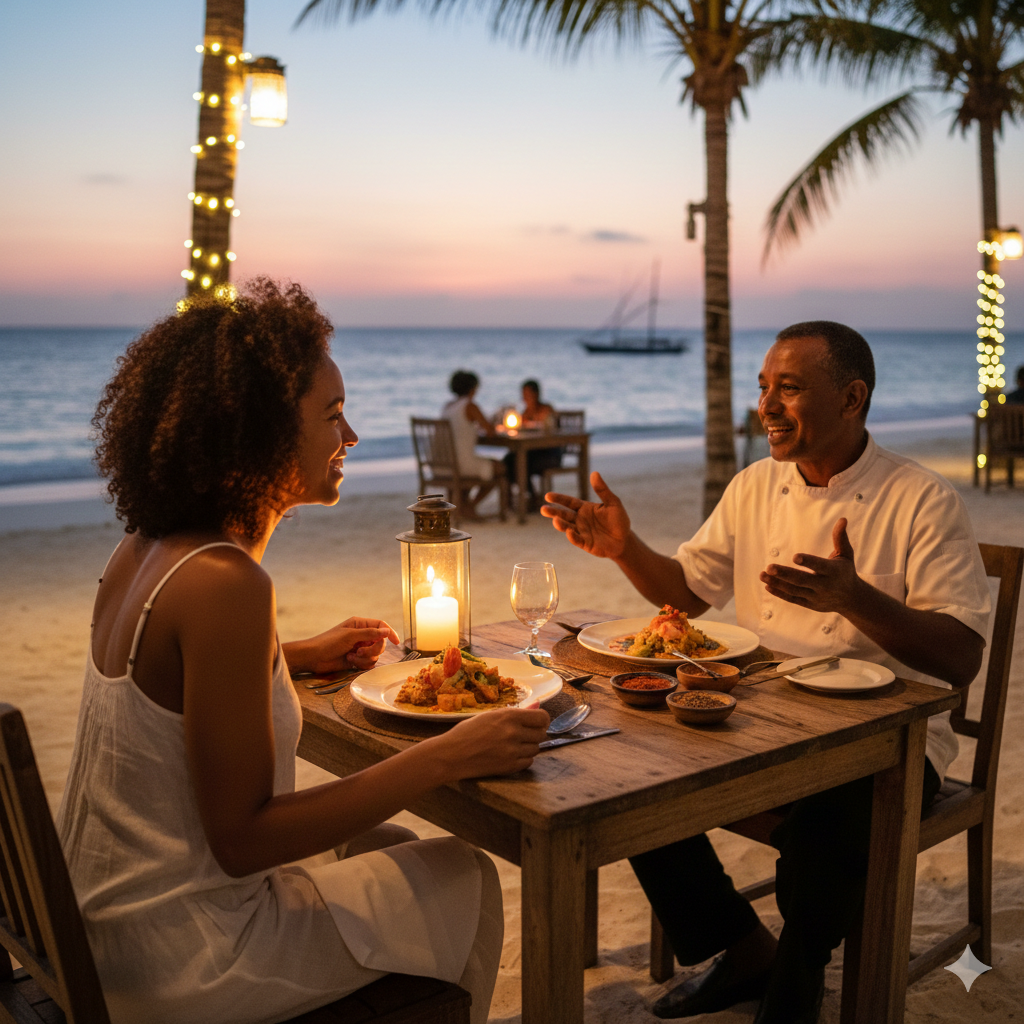
Enjoying Swahili cuisine at Beachfront Zanzibar
Zanzibar: Chef’s Stories
Beachfront dinner where the chef brought each course personally, explaining Swahili influences and Indian spices.
Because I was alone and clearly interested, he sat down between courses to tell stories about his training in Dar es Salaam and his grandmother’s coconut curry.
These experiences didn’t happen despite dining alone—they happened because of it.
The Confidence Muscle: My Personal Evolution
My first solo meal abroad was in Paris in 2022.
I was 27, terrified, and ate dinner at 5:30 PM at a tourist trap near my hotel because I couldn’t summon courage for anything else. The food was mediocre, the experience was uncomfortable, and I nearly gave up on the whole solo travel dream.
The Progression from Scared to Confident
Paris (First Trip):
- Tourist trap at 5:30 PM
- Terrified and uncomfortable
- Nearly gave up
Next Night:
- Small bistro in residential neighborhood
- Brought a book
- Ordered in halting French
- Waiter was kind, food was good
- I survived
End of Two-Week Trip:
- Eating at bistro terraces
- Ordering wine by the glass
- Chatting with neighbors in broken French
- Not comfortable yet, but competent
Japan (Six Months Later):
- Counter culture transformed everything
- Ramen at 11 PM standing at counters
- Sushi bars watching chefs work
- Discovered solo dining could be joyful, not just tolerable
Each Trip Built Confidence
Italy: Warmth transcends language Southeast Asia: Street food is the great equalizer East Africa: Curiosity bridges cultural differences South America: Trust your instincts about timing and location
Now, 47 countries later:
- Walk into restaurants alone without heart racing
- Ask for bar seating with confidence
- Order tasting menus designed for two, eat happily solo
- Strike up conversations with chefs, sommeliers, fellow diners
- Also happily spend entire meals reading without talking to anyone
The transformation wasn’t overnight. It was dozens of meals, each one slightly less uncomfortable, until one day I realized I was actively looking forward to dining alone.
Practical Tips from 47 Countries of Solo Dining Experience
Here’s what actually works, distilled from hundreds of solo meals across six continents:
Research Smart
Use Google Maps strategically:
- Look at restaurant photos before going
- Counter seating visible = solo-friendly
- Big groups at round tables = communal dining design
- Adjust expectations or choose elsewhere
If something truly requires multiple people (whole roasted fish), the server will tell you.
Tipping Well Pays Off
Why generous tips matter:
- Solo diners tipping well stand out positively
- Word gets around in food communities
- Servers remember you on return visits
- Better service, better recommendations
Language Prep
Learn these two phrases in every language:
- “Table for one”
- “The check, please”
Examples:
- Ethiopia: “ande sew” (one person)
- Thailand: “kon diaw” (one person)
- France: “une personne” (one person)
- Japan: “hitori” (one person)
These phrases plus pointing at menus will get you through most situations.
Time Management
Plan around energy levels:
High Energy → Exciting new restaurants
- When fresh and curious
- Ready for adventure and conversation
- Peak dining hours acceptable
Low Energy → Familiar formats
- Hotel breakfast
- Market lunch
- Takeout dinner
- When tired or overwhelmed
The Evolution Continues
Even after 47 countries and hundreds of solo meals, I’m still learning.
Last month in Singapore, I walked past a restaurant twice before going in—old habits die hard.
But now I recognize that momentary hesitation for what it is: a reflex, not reality. I breathe, remember every previous successful solo meal, and walk in.
What Keeps Building
The confidence muscle keeps growing:
- Each new country with new food culture
- Each new meal, adds to the foundation
The scared 27-year-old eating at a Paris tourist trap would be amazed to see me now:
- Confidently ordering omakase at Tokyo sushi counters
- Chatting with winemakers in Bordeaux
- Navigating Ethiopian coffee ceremonies
But she’d also be proud.
Because the journey from scared to confident wasn’t about becoming a different person—it was about trusting myself, pushing through discomfort, and discovering that the worst thing about solo dining is the anxiety beforehand, not the experience itself.
Your First Step: Take It Tonight
If you’re reading this from a hotel room, anxious about tonight’s dinner, here’s what I want you to know:
That first solo meal will probably be a bit uncomfortable.
You might:
- Feel self-conscious
- Check your phone more than necessary
- Leave earlier than planned
And that’s completely normal and completely okay.
What Will Actually Happen
✓ You’ll survive it, and the second meal will be easier, while the tenth meal will feel routine
✓ The fiftieth meal might be something you look forward to.
Your Action Plan for Tonight
1. Choose Wisely
- Not the fanciest spot for your first attempt
- Somewhere that genuinely interests you
- Counter or bar seating if available
2. Prepare
- Bring a book or charge your phone
- Wear something that makes you feel confident
- Learn “table for one” in the local language
3. Execute Confidently
- Host asks “just one?” → Say “yes, please”
- Follow them to your table
- Order something you’re excited about
- Look around, observe, be present
Why Solo Dining Matters
The restaurant is just a building. The food is just food.
But the act of walking in alone and claiming your space at the table?
That’s you becoming the kind of traveler—and person—who doesn’t let fear dictate the journey.
After 47 countries, I can tell you with absolute certainty: that person is worth becoming.
And the journey starts with a single meal.
Quick Reference: Solo Dining Confidence Checklist
Before You Go:
- Research restaurant (look for counter seating in photos)
- Make reservation if needed (mention you’re solo)
- Charge phone + pack book/journal
- Learn “table for one” in local language
- Wear confidence-boosting outfit
Arriving:
- Say “yes, please” when asked “just one?”
- Request bar/counter seating
- Project confident body language
During the Meal:
- Be fully present with your food
- People-watch without staring
- Journal, read, or use phone—whatever feels right
- Engage with staff if interested
- Trust your instincts about leaving if uncomfortable
Building Confidence:
- Start with breakfast/lunch before tackling dinner
- Begin with casual spots, progress to finer dining
- Each meal makes the next easier
- Celebrate small wins
- Remember: nobody is watching you
Most Important:
- You deserve to enjoy good food
- Solo doesn’t mean lonely
- This gets easier every single time
- You’re not dining alone—you’re dining with yourself
- And that’s excellent company
Start tonight, or start tomorrow. Start scared if you need to—but start. Your first confident solo meal is waiting for you.
