
I’d arrived in Florence the night before, exhausted and slightly anxious about traveling alone to Italy for the first time. But when I stepped out of my guesthouse into the crisp morning air, the sound of church bells echoing through the quiet streets, the smell of fresh espresso drifting from a corner café, something shifted. Every cobblestone seemed to whisper a story, and suddenly, being alone didn’t feel lonely. It felt like freedom.
Italy has a way of pulling you in from the very first moment. Maybe it’s the sound of those bells echoing through a quiet piazza, or the feeling that every street holds a story. For solo female travelers, Italy is one of those rare destinations that feels both exciting and manageable. It offers history, culture, incredible food, and well-connected transport, all wrapped in a country that genuinely enjoys welcoming visitors.
This is the essence of il dolce far niente, the sweetness of doing nothing, but on entirely your own terms. No compromises on which museum to visit, no debates about dinner reservations. Just you, your curiosity, and a country that rewards wanderers with beauty at every turn.
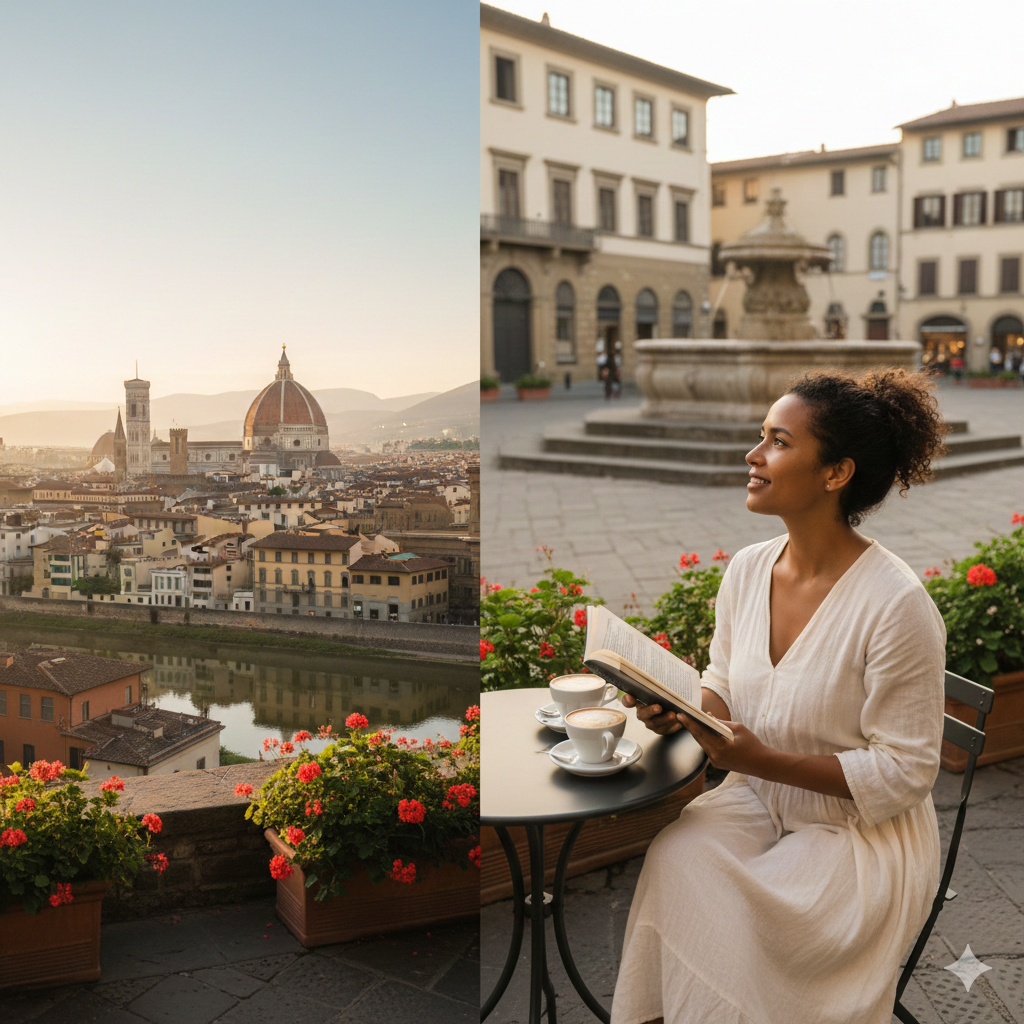
Solo female traveler enjoying a morning coffee at a quiet outdoor café in Florence, Italy.
Why Visit Italy in 2026?
Beyond its timeless appeal, the country has emerged from the 2025 Jubilee celebrations transformed. Rome’s major monuments—including the newly pedestrianized Piazza Pia and the areas around Castel Sant’Angelo—are more accessible and solo-friendly than ever.
Digital infrastructure has caught up with the modern traveler: unified “City Pass” apps like Roma Mobility and Firenze Pass now integrate buses, trams, and bike-sharing into single QR codes. The burgeoning “slow travel” movement emphasizes authentic experiences over tick-box tourism, and Italy has never been more welcoming to thoughtful solo travelers.
If you’re thinking about traveling Italy alone, this guide walks you through everything you need to know.
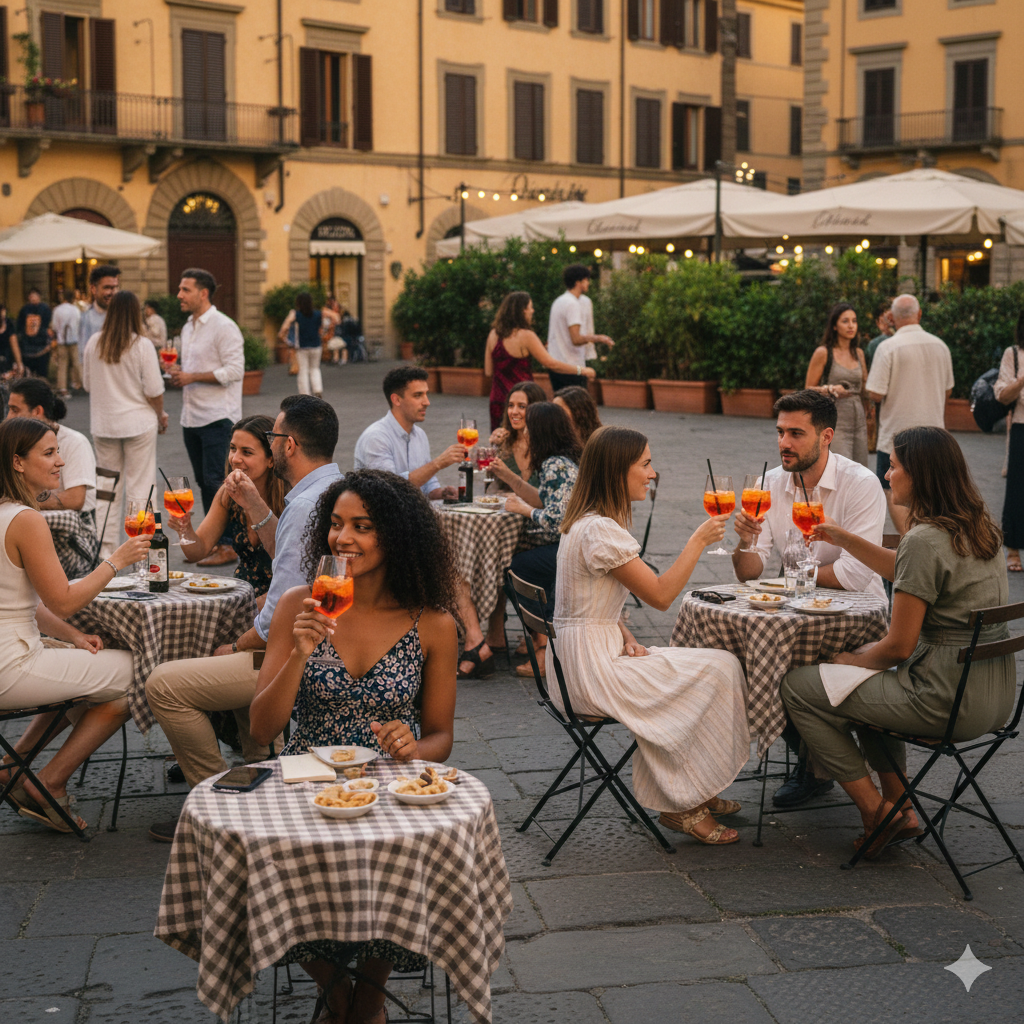
Italians enjoying aperitivo in a lively piazza
What to Know Before You Go
Italy is a culture deeply rooted in tradition, family, and food. Meals are unhurried affairs meant to be savored, greetings are warm and tactile (expect cheek kisses even from acquaintances), and daily life revolves around simple pleasures: the morning espresso at the bar, the evening passeggiata (stroll), and the ritual of aperitivo hour.
Traveling solo here feels immersive rather than lonely. Cities are lively, public spaces are social, and there’s always something happening around you. Even when you’re completely on your own.
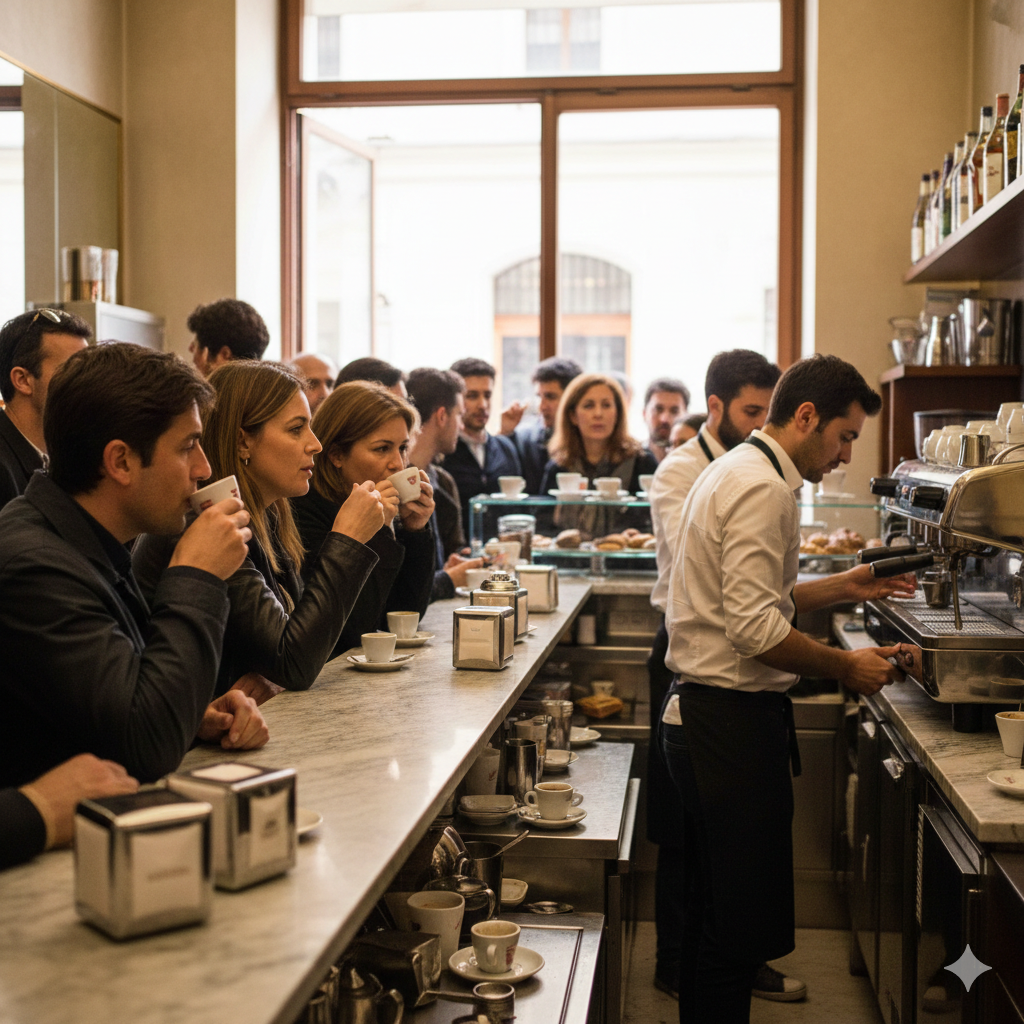
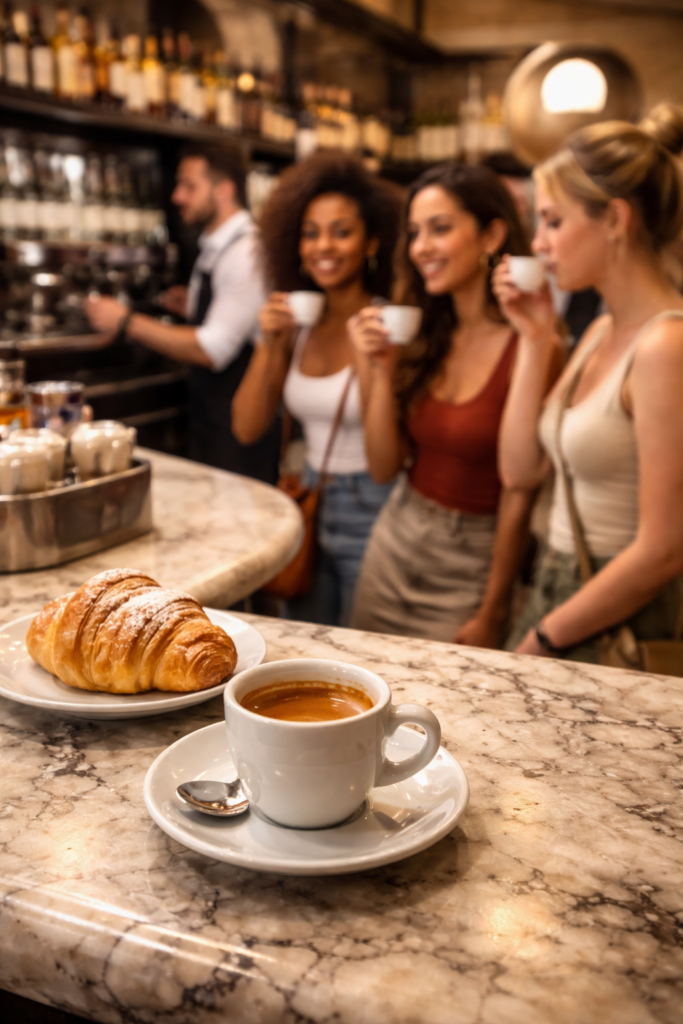
Locals standing at an Italian espresso bar
Understanding Italian Rhythm & Customs
The Coperto: Solo travelers are often surprised by a €2-4 charge labeled “coperto” on their restaurant bill. This is a standard cover charge for bread, table service, and linens that applies regardless of party size. Understanding this in advance prevents that uncomfortable “am I being overcharged?” feeling.
Stand-Up Espresso Culture: Drinking coffee standing at the bar isn’t just cheaper (you avoid the seated service charge), it’s the most authentic way to experience Italian coffee culture. Those 30-second interactions with the barista—the quick buongiorno, the perfectly pulled espresso, the ritual of wiping foam from your lip—are among the most Italian moments you’ll have. Locals rarely sit for coffee unless they’re settling in for hours.
Learn Key Phrases: A few Italian phrases beyond the basics—ciao, grazie, per favore, and scusi—goes a remarkably long way. I once butchered the pronunciation of “porcini” so badly in a Bologna market that the vendor laughed, corrected me three times, then gave me an extra handful for my effort. Even clumsy attempts are usually met with encouraging smiles and patient corrections.
Practical Essentials
Currency: Italy uses the euro. While cards are widely accepted in cities, carrying cash (especially smaller bills) is essential for markets, small cafés, and family-run trattorias.
Power & Connectivity: Bring a universal adapter—Italy uses European-style plugs with two round pins. For data, Airalo’s e-SIM cards provide affordable connectivity without dealing with Italian telecom shops.
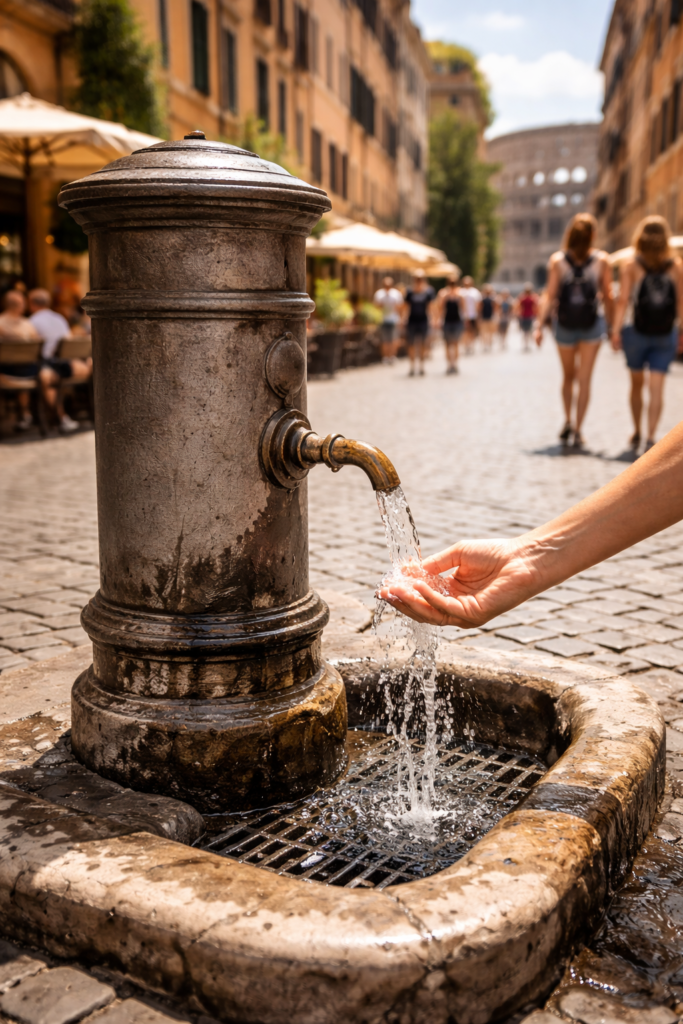
A traditional Roman ‘nasone’ public drinking fountain in Rome
Pro Tip—Free Water: In Rome, look for the nasoni (big noses)—ornate public drinking fountains scattered throughout the city. The water is perfectly safe, ice-cold, and free. It’s a budget-friendly way to stay hydrated while exploring.
Choosing Your Italian Adventure: At-a-Glance
Italy is one of the 9 safest European destinations for first-time solo female travelers, and it deserves its own deep dive.
| Destination | Best For | Solo Vibe | Budget (per night) |
|---|---|---|---|
| Florence | Art & Walkability | Safe, compact, “Renaissance dream” | €80-120 |
| Rome | History & Socializing | High energy, easy to meet people | €100-150 |
| Bologna | Food & Authenticity | Intellectual, welcoming, covered porticos | €60-100 |
| Amalfi Coast | Coastal Glamour | Scenic, requires confidence | €80-250 |
| Cinque Terre | Active Adventure | Hiking, younger backpacker vibe | €90-140 |
| Sicily | Grit & Soul | Raw, authentic, best for seasoned travelers | €60-160 |
Top Destinations for Solo Travelers
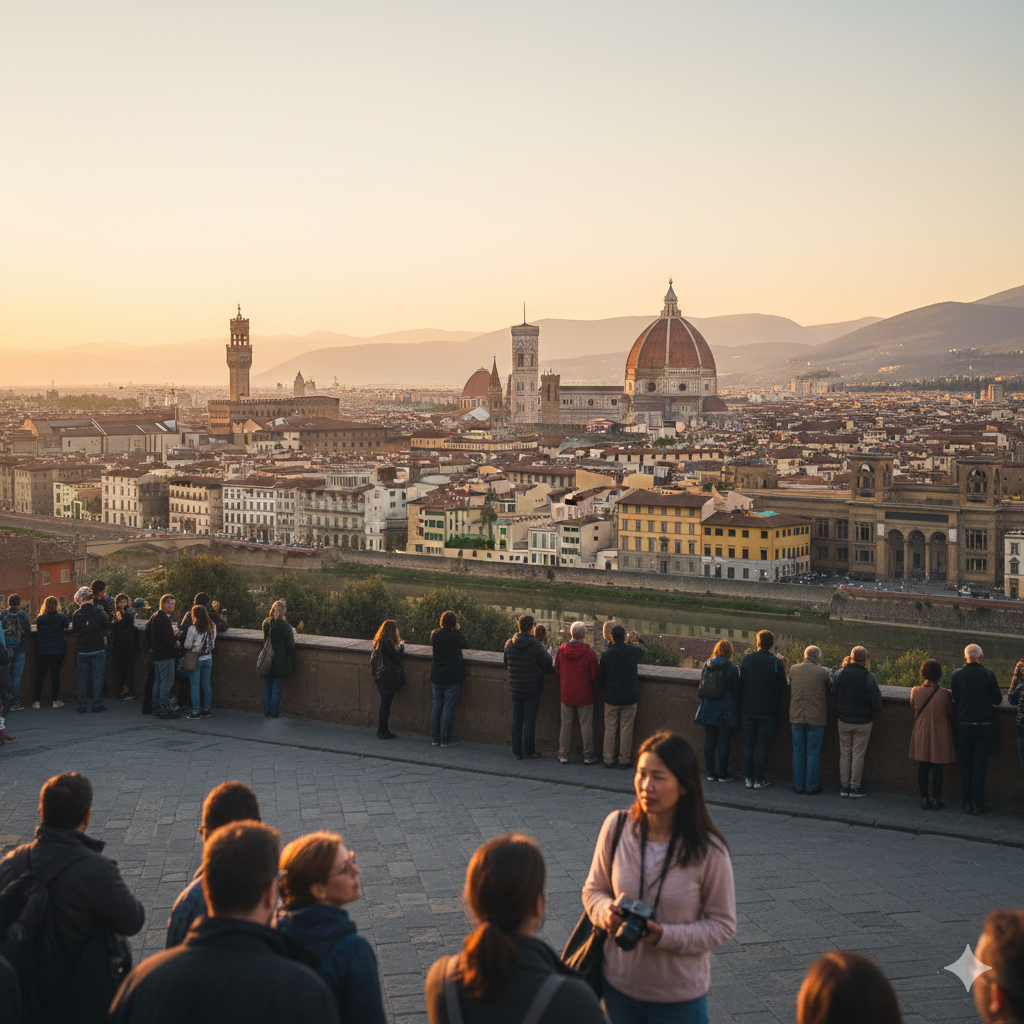
Florence skyline viewed from Piazzale Michelangelo
Florence: The Golden Child
Best for: Art lovers, first-time solo travelers, walkability enthusiasts
Perfect time to visit: April-May, September-October
Florence is the solo traveler’s dream, a Renaissance jewel box small enough to navigate confidently yet packed with enough art, architecture, and enoteche to fill weeks. The historic center is wonderfully compact and safe, with most major sights within a twenty-minute walk. Everything feels manageable here, which is exactly what you want when traveling solo.
What Makes It Special: Wander the Oltrarno neighborhood for artisan workshops where leather workers and jewelry makers still practice centuries-old techniques. Claim a spot on the steps of Santo Spirito as locals play guitar and students sprawl with wine bottles as the sun sets. Join the pilgrimage to Piazzale Michelangelo at golden hour, where the entire city spreads below you in impossible beauty.
Where to Stay While in Florence
The Oltrarno or San Niccolò neighborhoods offer authentic Florentine life away from tour group congestion. Family-run B&Bs or Small boutique hotels between Ponte Vecchio and Piazzale Michelangelo—you’ll pay €80-120 per night for charm, safety, and walkability. I stayed in a tiny guesthouse run by a woman named Giulia who drew personalized maps highlighting her favorite bakeries and tucked them under my door each morning.
Plus Florence Hostel near Santa Maria Novella station offers female-only dorms (€30-40) with private lockers and a rooftop terrace where solo travelers naturally congregate over sunset spritzes. Avoid staying directly across from Santa Maria Novella station—walk 10 minutes in any direction for better value and atmosphere.
2026 Tip: Download the Firenze Pass app for integrated public transport. It now includes buses and the city bike-sharing system on one QR code.
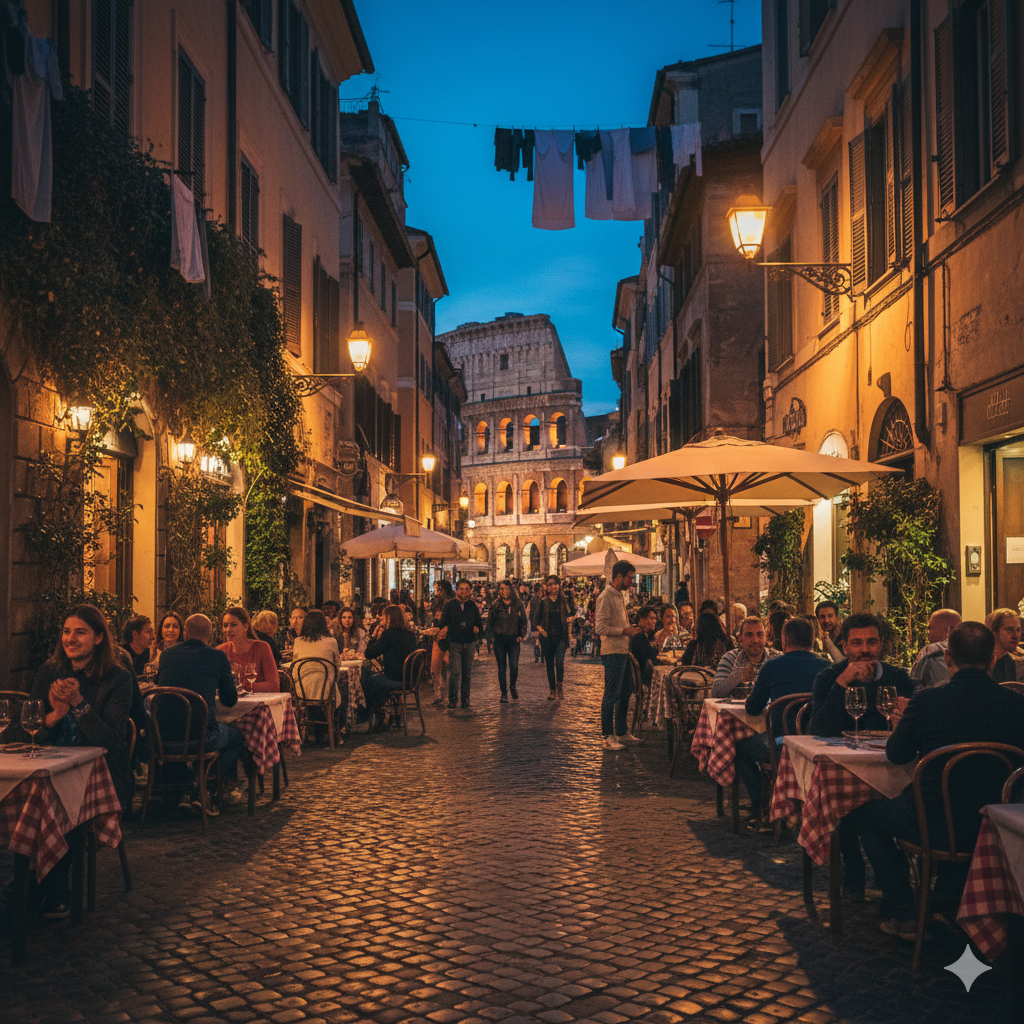
Rome’s historic streets at dusk
Rome: The Social Hub
Best for: History buffs, social butterflies, first-time Italy visitors
Perfect time to visit: April-June, September-October
Rome is where solo travelers become accidental extroverts. The neighborhoods of Trastevere and Monti practically demand social interaction—join a food tour through Testaccio’s market where vendors still shout prices in Roman dialect, take an evening stroll along the newly pedestrianized Tiber walkways (a 2025 Jubilee improvement that’s made riverside walks safer and more pleasant), or grab a seat at a communal table in a traditional trattoria where conversations flow as freely as the house wine.
What Makes It Special: Rome is busy, bold, and endlessly fascinating. History literally surrounds you at every corner—the Colosseum, the Pantheon, neighborhood churches with Caravaggio paintings just casually hanging on the walls. The energy here is infectious, and Romans appreciate a confident solo diner who knows how to savor a plate of cacio e pepe without rushing.
Accommodation in Rome
Monti is Rome’s sweet spot for solo travelers—cobblestoned, centrally located, and filled with wine bars and independent shops that stay open late. Budget €100-150 for a small hotel or guesthouse here.
Trastevere works for more seasoned travelers who don’t mind navigating its nighttime energy (it can get quite lively).
Prati, near the Vatican, suits those seeking quiet residential charm with excellent morning cafés where you’ll be the only tourist among locals reading their newspapers.
Whatever you choose, ensure you’re within walking distance of a metro stop—Rome’s transit system is your friend for saving energy across this sprawling city.
2026 Tip: Download the Roma Mobility app for integrated public transport. It now includes metro, buses, trams, and the city bike-sharing system on one QR code.
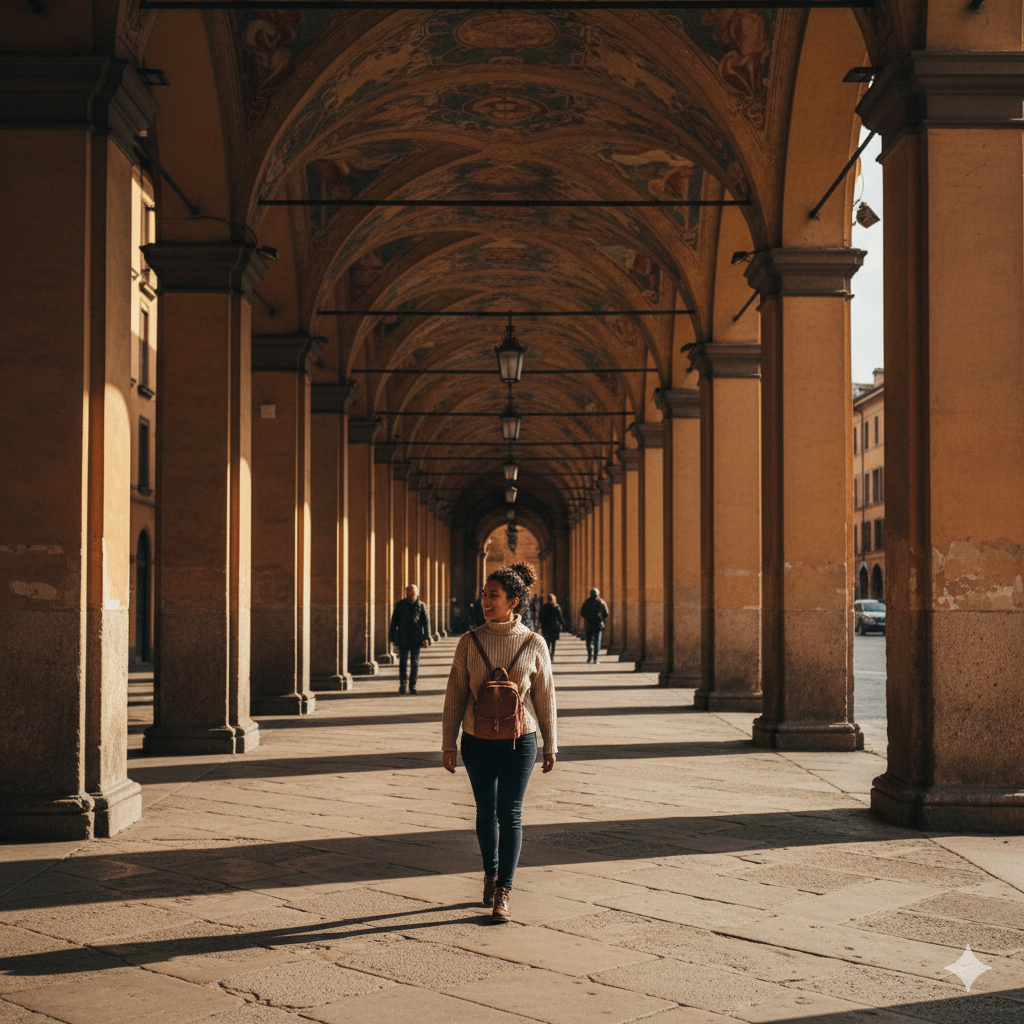
Covered porticos in Bologna
Bologna: The Foodie’s Haven
Best for: Food obsessives, authentic experiences, university town vibes
Perfect time to visit: April-June, September-November
Often overlooked by tourists rushing between Florence and Venice, Bologna is Italy’s best-kept secret for solo travelers. This university city pulses with youthful energy, intellectual curiosity, and the country’s finest food scene. Locals call it “La Grassa” (the fat one) and “La Dotta” (the learned one)—a city equally devoted to knowledge and eating well.
What Makes It Special: The city boasts 40 kilometers of covered porticos—medieval arcades that provide shelter from rain and summer heat while creating an inherent sense of safety and connection. You can walk almost anywhere under these covered walkways, which somehow makes exploring alone feel more protected and purposeful. I learned to make tortellini from an 80-year-old woman who refused to speak anything but Bolognese dialect and somehow I still understood everything.
Where I Stayed While in Bologna
The historic center within the ring road is entirely walkable and safe for solo women, with the university presence ensuring streets stay populated even late into the evening.
Look for stays near Piazza Maggiore or in the university quarter (Zona Universitaria) where the energy stays vibrant. Small pensioni runs €60-100 and often include breakfast with house-made pastries that will ruin you for packaged croissants forever.
We_Bologna Hostel offers female dorms (€25-35) in a renovated palazzo with a communal kitchen where pasta-making sessions spontaneously emerge among guests. The university area means you’re surrounded by students, affordable osterias, and a general atmosphere of intellectual curiosity that makes solo dining and exploring feel not just normal, but celebrated.
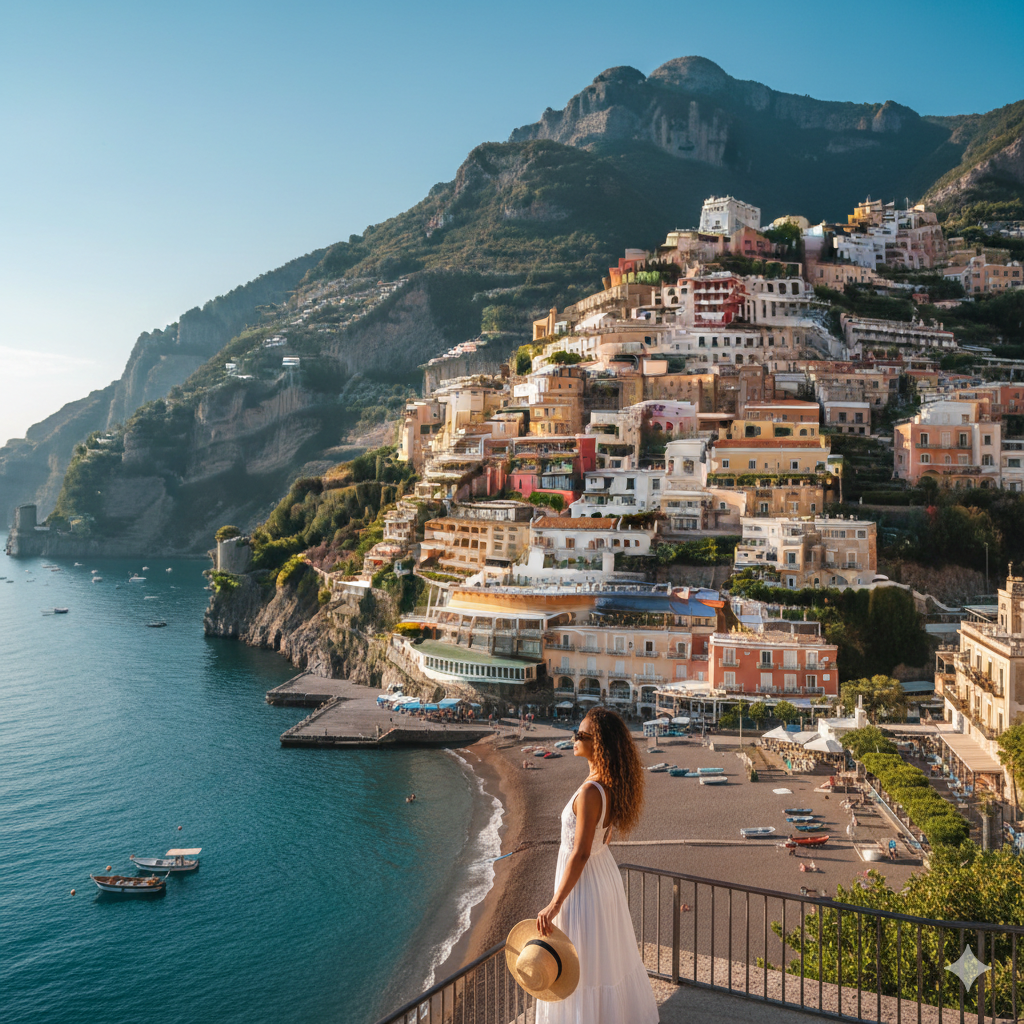
Colorful cliffside houses of Positano on the Amalfi Coast
The Amalfi Coast: Coastal Glamour
Best for: Scenic seekers, confident travelers, Instagram dreamers
Perfect time to visit: May-June, September (avoid July-August crowds)
The Amalfi Coast—Positano, Ravello, Amalfi itself—delivers la dolce vita in its most photogenic form. This is where you go for breathtaking scenery and coastal charm, for terraced lemon groves tumbling toward turquoise water, for the kind of beauty that makes you stop mid-step and just stare.
Strategic Base: Sorrento is your home base here: significantly less expensive than Positano, excellent ferry connections to all coastal towns, and a town center perfect for solo evening strolls and gelato missions
Budget €80-120 for a comfortable guesthouse within walking distance of the port. Hotel Nice has loyal solo traveler followings for its rooftop terraces where guests naturally mingle over limoncello and sunset views.
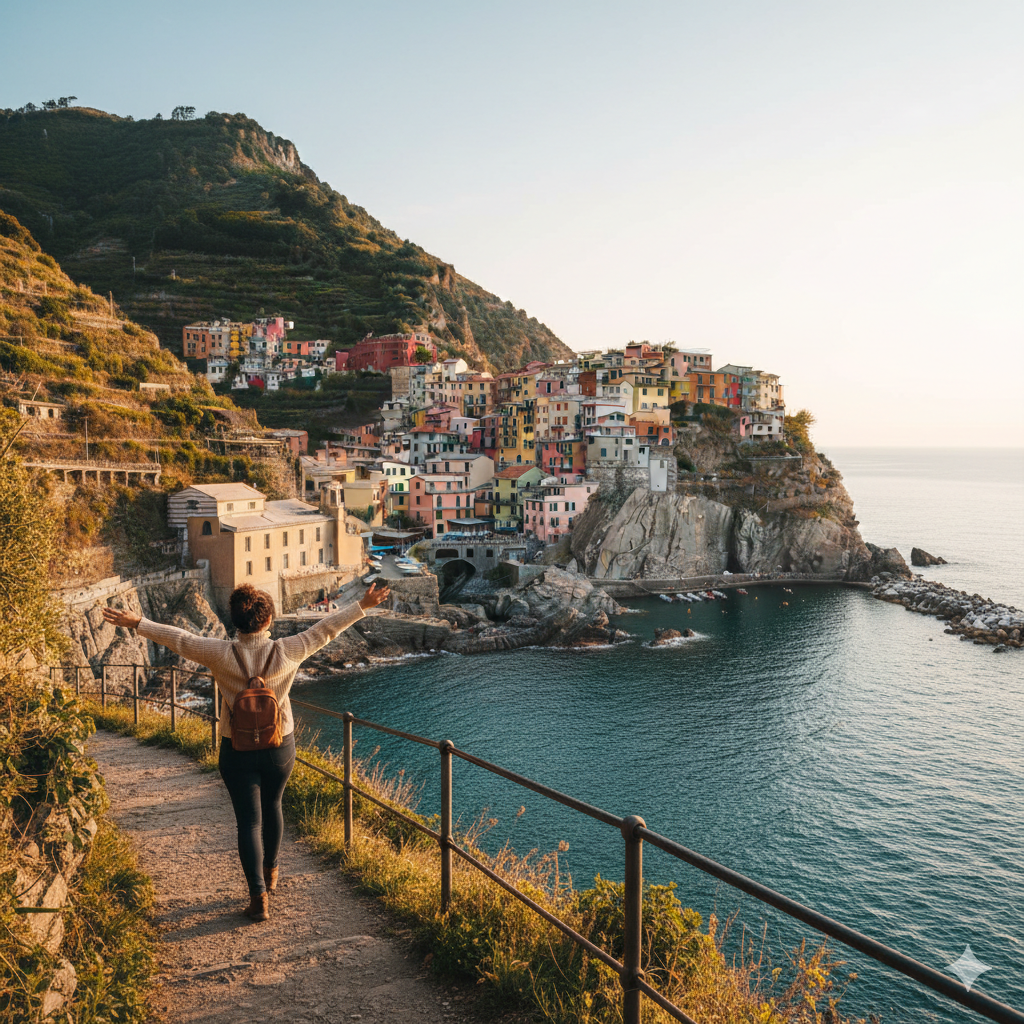
Hiking trail overlooking the sea in Cinque Terre
Cinque Terre: Active Adventure
Best for: Hikers, nature lovers, backpacker vibes
Perfect time to visit: May-June, September
Cinque Terre attracts the active solo traveler. Hike the legendary Path of the Gods (the name is not hyperbole), cool off with a swim in crystalline coves, and end your day with focaccia and local white wine overlooking the sea.
Best Villages for Solo Travelers: Monterosso and Riomaggiore are the most solo-friendly. Monterosso has an actual beach (the only one among the five towns), more lodging options, and blessedly flat streets—crucial after a day of hiking steep coastal trails. Expect €90-140 for a simple but charming room; many affittacamere (room rentals) are run by local families who’ll point you toward the best hiking trails, secret swimming spots, and the bakery that makes the freshest focaccia.
Riomaggiore appeals to those who want dramatic cliffsides and a younger backpacker energy—5 Terre Backpackers offers female dorms (€35-45) and organizes group hikes and beach days, making it wonderfully easy to find hiking companions. Avoid staying in Corniglia unless you’re exceptionally fit—it sits 100 meters above sea level with 377 steps (yes, I counted) from the train station. Beautiful, but brutal with luggage.
Sicily: For the Seasoned Wanderer
Best for: Adventure seekers, street food lovers, experienced solo travelers
Perfect time to visit: April-May, September-October
Sicily is your victory lap. Palermo especially demands a traveler comfortable with chaos, grit, and spectacular spontaneity. This is a city that operates on its own rules, where traffic lights are suggestions and street food vendors have been frying panelle on the same corner for three generations.
What Makes It Special: The street food alone—arancini, panelle, sfincione, pani câ meusa—is worth the journey, and honestly represents some of Italy’s best eating. Taormina offers a more refined (if significantly more touristy) coastal escape with a Greek theater and views of Mount Etna. Sicily rewards those who embrace its contradictions: ancient Greek temples and Baroque churches, pristine beaches and rugged mountains, sophistication and rawness all coexisting on one extraordinary island.
Palermo Night Stays
Stick to the historic center, particularly near Quattro Canti or in the Kalsa district, which has gentrified significantly over the past decade and now hosts art galleries and trendy wine bars alongside traditional markets. Expect €60-100 for characterful B&Bs in restored palazzos with frescoed ceilings and breakfast spreads featuring Sicilian pastries.
Skip stays near the train station, which feels isolated and slightly sketchy after dark.
Taormina Alternative: This hilltop town offers easier logistics and more English-speaking staff if you’re feeling travel-weary. The historic center along Corso Umberto puts you within walking distance of restaurants and the ancient Greek Theatre. Budget €100-160 for hostels with terrace views—waking up to Mount Etna and the Ionian Sea genuinely justifies the splurge. Villa Schuler is beloved by solo travelers for its garden breakfast setting where guests naturally chat over strong coffee and plans for the day.
Safety & Cultural Nuances
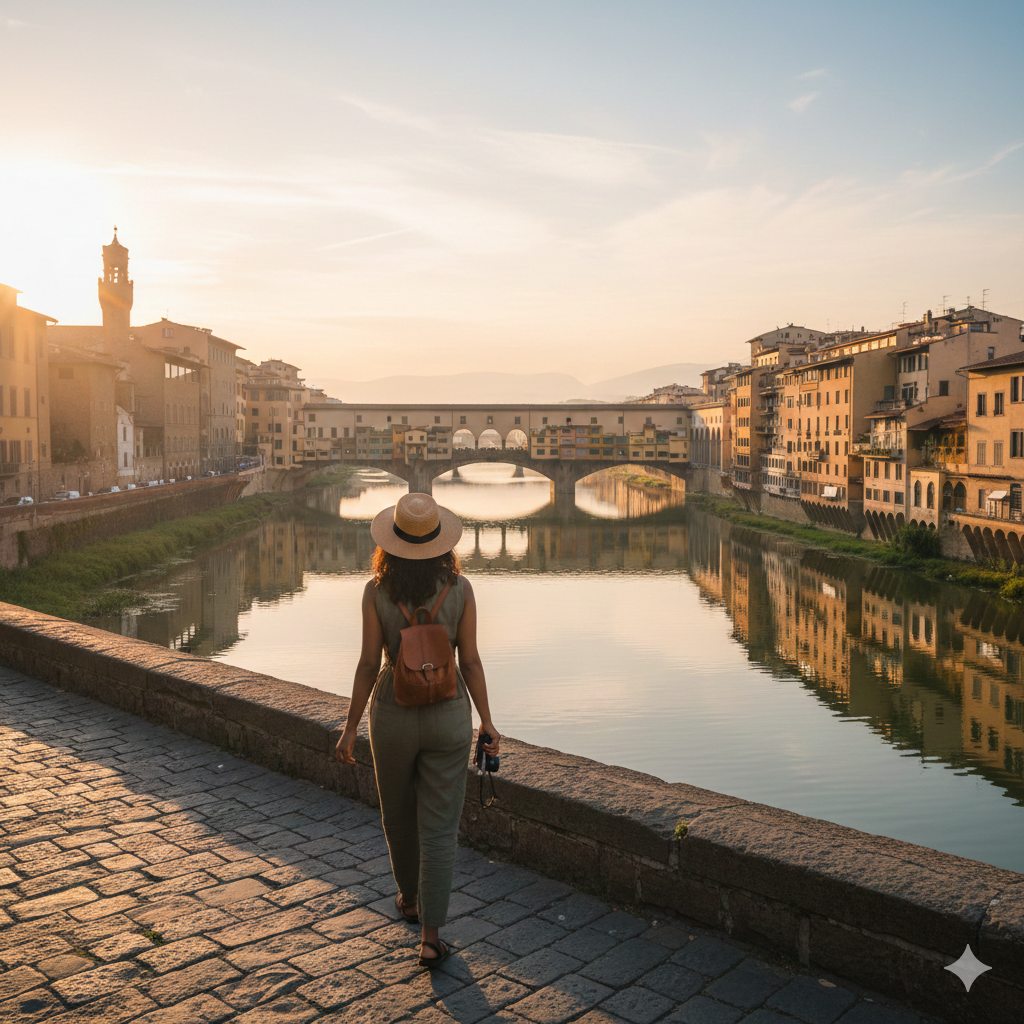
Italian solo travel is remarkably safe, but cultural awareness elevates your experience from cautious to confident. Many women (including myself, multiple times) travel Italy alone without issues and leave feeling more capable and confident than when they arrived.
Street Smarts
The infamous “wolf whistle” or persistent attention from men is less common in Northern cities and more prevalent in the South, though it’s declined significantly across the country over the past decade. When it happens, most Italian women respond with complete indifference or a sharp “Basta!” (enough!)—and you should too. Make eye contact sparingly with men who seem intent on getting your attention, walk with purpose, and remember that assertiveness is both respected and effective in Italian culture.
Pickpocketing is the most common issue in crowded areas like markets, transport hubs, and major tourist sites (especially in Rome, Florence, and Venice). A crossbody bag worn in front is your friend. Keep phones and wallets in front pockets or internal compartments. Stay alert on buses and metros, particularly during rush hour.
Stick to well-lit streets at night, though in most Italian city centers, this isn’t difficult since neighborhoods stay lively late into the evening. Trust your intuition—it’s one of your best travel tools and usually alerts you to situations before they become problems.
2026 Safety Update: Cities like Milan have piloted “Pink Taxis” and late-night female-only transport initiatives. Check local tourism websites for similar programs in your destination cities.
Transportation Safety
Italy’s train network—particularly the high-speed Italo and Trenitalia services—is excellent for solo travelers and makes moving between cities wonderfully straightforward. Book tickets in advance through the Trenitalia or Italo apps for better prices and reserved seating. Choose daytime trains when possible.
Critical tip: Avoid booking accommodation directly adjacent to major train stations like Roma Termini or Napoli Centrale, which attract more petty crime and offer less charm. Stay one or two neighborhoods away (a 10-15 minute walk or short metro ride) for a more authentic and peaceful experience at often better prices.
Validate your tickets when required—especially for regional trains. This small step prevents hefty fines.
Health & Tech Essentials
Download FreeNow for reliable, licensed taxis—it’s Italy’s answer to Uber and eliminates language barriers and price negotiations. The app shows you the fare upfront and charges your card automatically.
Save 112 (the EU-wide emergency number) in your phone, and screenshot your accommodation addresses in case your data fails at a crucial moment.
The Italian healthcare system is excellent; EU citizens should carry their European Health Insurance Card (EHIC), while others should verify their travel insurance covers medical emergencies abroad.
Master the Art of Solo Dining
Solo dining in Italy isn’t just acceptable—it’s an art form worth mastering. And honestly, once you’ve done it here, you’ll never feel awkward eating alone anywhere else.
The Aperitivo Culture
Aperitivo hour (roughly 6-9 PM) is the solo traveler’s secret weapon and possibly my favorite Italian tradition. For the price of a drink (usually €8-12), you gain access to elaborate buffets ranging from olives and chips to pasta, pizza, vegetables, and sometimes even seafood. It’s simultaneously dinner, entertainment, and a low-pressure social opportunity.
Settle into a bar in Milan’s Navigli district or Turin’s city center, order your Aperol Spritz or Negroni, and enjoy the quintessentially Italian ritual of people-watching while grazing. I’ve had some of my best travel conversations during aperitivo—there’s something about the casual atmosphere and shared food that makes people naturally friendly.
Enoteche vs. Ristorantes
Wine bars (enoteche) are the solo traveler’s natural habitat. These establishments prioritize wine paired with small plates (cicchetti in Venice, taglieri elsewhere), creating an atmosphere where solo diners blend seamlessly into the scene. Counter seating encourages conversation with bartenders who genuinely love talking about their wines, and fellow enthusiasts often strike up conversations about what you’re drinking.
The casual format removes any awkwardness about table size or feeling like you’re wasting a server’s prime seating. Save formal restaurants for when you crave a proper multi-course meal, and embrace enoteche for the majority of your evenings.
The “Table for One” Confidence
Italians dine late—typically 8:30 PM or later—and once you adjust to this rhythm, solo dining becomes effortless. Request “un tavolo per una persona” without apology or excessive explanation. Bring a book or journal if it helps you feel comfortable, but also observe how many Italians dine solo, completely absorbed in their food, the newspaper, or their own thoughts.
The key is projecting calm confidence: you’re not waiting for someone or making do with solo dining—you’ve actively chosen this. That subtle distinction in your energy matters and affects how you’re treated. The first time I ate dinner alone at 9 PM in a Roman trattoria, the waiter brought me a complimentary glass of wine and said, “For courage.” By dessert, I was chatting with the couple at the next table about their favorite hiking trails in Umbria.
Pro tip: Restaurants slightly away from major landmarks often offer better food and a more relaxed solo experience. Eat where locals eat.
Making Friends While Traveling Solo
Solo doesn’t mean alone—not in Italy. The country’s social infrastructure makes connection easy if you want it, while still respecting your independence if you prefer solitude.
Join organized experiences: Book small-group food tours or wine tastings where you’ll meet fellow travelers. Take a cooking class—pasta-making workshops are inherently social and you’ll leave with new skills and often new friends. Free walking tours (tip-based) are excellent for orientation and meeting people on your first day in a new city.
Stay social when you want: Choose accommodation with shared spaces—hostel common areas, guesthouse breakfast rooms, or hotels with rooftop terraces naturally facilitate conversation. Properties like The Beehive in Rome or Plus Florence offer private rooms with optional social interaction—the best of both worlds.
Embrace daily rituals: Spend time in cafés, markets, and public squares. Italians are remarkably generous with conversation when you show genuine interest, and I’ve had wonderful exchanges that started simply by asking a vendor how to select the best tomatoes or asking a café regular for menu recommendations.
Be open to spontaneity: Some of my most memorable travel moments came from accepting invitations to join other solo travelers for dinner, following a local’s recommendation to an unlisted jazz bar, or striking up conversations with fellow museum-goers who turned into day-long exploration companions.
Reality check: Many travelers note that solo travel can still feel lonely at times—even in hostels with social spaces. This is completely normal, not a failure. Not every moment will feel magical, and that’s okay. Build “anchor moments” into your day—morning coffee rituals, sunset walks, or evening piazza time—to create structure and comfort.
Packing & Etiquette
Your packing choices directly impact how you’re perceived and how comfortably you move through Italy.
The Bella Figura Rule
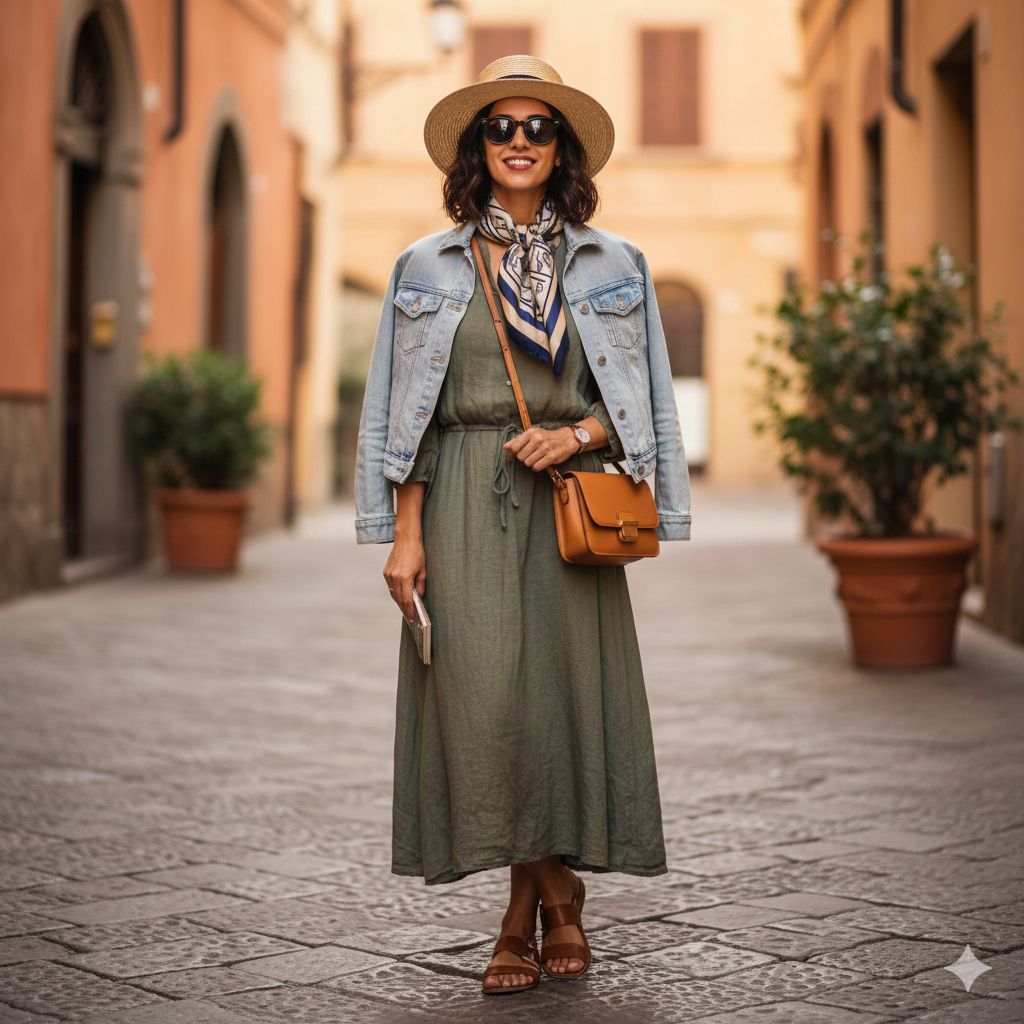
Bella figura—literally “beautiful figure”—is the Italian principle of presenting yourself well in all situations. This doesn’t mean designer labels or high fashion, but it does mean avoiding athletic wear outside actual athletic activities, ensuring your clothes are clean and reasonably fitted, and putting minimal effort into your appearance.
Italians notice this effort and respond accordingly. You’ll receive better service in restaurants, fewer hassles from vendors, smoother interactions at train stations, and easier navigation through social situations when you honor this cultural value. A simple dress or nice jeans with a fitted top will always serve you better than yoga pants and sneakers, no matter how comfortable the latter might be.
The Church Dress Code
Italy’s churches—from the Vatican to small village chapels—enforce modest dress codes requiring shoulders and knees covered. Guards at major basilicas will turn you away if you’re not appropriately dressed, and honestly, it’s respectful to honor these rules in sacred spaces regardless of enforcement.
Carry a lightweight scarf or shawl in your daypack. This simple item grants you access to spectacular sacred spaces and doubles brilliantly as a plane blanket, beach cover-up, picnic blanket, or impromptu head covering in unexpected rain.
Luggage Strategy: Carry-On Only
This is non-negotiable for solo Italian travel. Most accommodations feature stairs—sometimes three or four flights without elevators. Train platforms require navigating steps, narrow corridors, and overhead luggage racks. Cobblestone streets destroy wheeled luggage and your shoulders. Ferry docks involve precarious gangplanks.
A carry-on sized backpack or small soft-sided roller keeps you mobile, eliminates baggage claim anxiety, and forces you to pack only what you genuinely need. Italian regional trains have narrow overhead racks—soft-sided bags are superior to hard-shell rollers which often don’t fit.
Embrace capsule wardrobes in neutral colors that mix and match, wear your bulkiest shoes during travel days, and plan to do laundry once during any trip over a week. Most accommodations offer laundry services or coin-operated machines.
I learned this lesson the hard way in Venice, dragging a full-sized suitcase over bridges and through narrow calli in August heat. Never again. Now I travel with a 40-liter backpack for trips up to three weeks, and it’s genuinely liberating.
Itinerary Ideas
The Classic (10 Days): Rome → Florence → Venice
This triumvirate delivers Italy’s greatest hits with logical train connections and minimal backtracking. Spend three nights in Rome (ancient ruins, newly pedestrianized areas, Trastevere nightlife), four in Florence (with a day trip to Siena or Tuscan wine country), and three in Venice (including a ferry to colorful Burano or the Lido beach for respite from crowds).
This route provides architectural variety spanning two millennia, distinct regional cuisines, and a satisfying narrative arc from ancient empire to Renaissance glory to maritime power. The train connections are frequent and straightforward—Rome to Florence is 90 minutes, Florence to Venice is two hours.
Pacing tip: Experienced travelers consistently advise against rushing. Two or three nights per city is the minimum recommended for truly experiencing a place.
The Food & Coast (10 Days): Bologna → Florence → Cinque Terre
For travelers prioritizing cuisine and natural beauty over monumental sights, this northern route delivers exceptional eating and hiking. Bologna offers four nights of pasta workshops, market explorations, and the best mortadella you’ll ever taste. Florence provides three nights of Renaissance art and architecture as a cultural palate cleanser. Cinque Terre rewards you with three nights of coastal hiking, village-hopping, and seaside dinners where the catch was swimming hours earlier.
This itinerary trades southern intensity for northern sophistication, and you’ll eat extraordinarily well throughout.
The Southern Soul (7 Days): Naples → Sorrento → Positano
This condensed southern route suits experienced solo travelers comfortable with intensity, chaos, and unpolished authenticity. Two nights in Naples deliver the ultimate pizza pilgrimage, the archaeological museum’s treasures from Pompeii, and street energy that either thrills or overwhelms depending on your temperament.
Three nights in Sorrento serve as your Amalfi Coast base, with day trips to the island of Capri, the haunting ruins of Pompeii, and the pastel perfection of Positano. End with two nights in Positano itself for pure coastal indulgence—though your budget will feel this decision.
This itinerary trades northern polish and organization for southern soul and spontaneity, and the food reaches transcendent levels. The pizza in Naples alone is worth the trip.
Overcoming Common Challenges
The Language Barrier
You don’t need to be fluent. In major cities and tourist areas, English is commonly spoken, especially by younger Italians and anyone working in hospitality. However, in smaller towns and rural areas, knowing a few basic phrases makes your experience smoother and significantly more rewarding.
Master these essentials:
- “Vorrei il conto, per favore” (I’d like the bill, please)
- “Dov’è il bagno?” (Where’s the bathroom?)
- “Non parlo bene italiano” (I don’t speak Italian well)
- “Quanto costa?” (How much does it cost?)
- “Mi scusi” (Excuse me/I’m sorry)
- “Posso avere il menù?” (Can I have the menu?)
Italians genuinely appreciate effort over perfection—even clumsy Italian earns warmer responses, better service, and more patient assistance than assuming everyone speaks English. Download Google Translate’s offline language pack so you can translate menus and signs without data.
Combating Loneliness
Solo travel naturally oscillates between exhilarating freedom and occasional loneliness—this is completely normal and doesn’t mean you’re doing anything wrong. Accept that not every moment will feel magical. Lonely days happen, and solo travel isn’t about constant excitement—it’s about freedom.
Combat loneliness strategically:
- Book small-group food tours or wine tastings
- Take a cooking class—pasta-making workshops are inherently social
- Stay in boutique hostels with female-only dorms and communal spaces
- Join walking tours on your first day in a new city
- Download Meetup for local events or language exchanges
- Chat with shopkeepers, café owners, and your accommodation hosts
Build anchor moments into your day: Morning coffee rituals, sunset walks, or evening piazza time help create structure and comfort when you’re feeling unmoored.
Reality check: Don’t expect instant friendships. Connection happens, but it’s not guaranteed every day. Some of my closest travel friendships began with simple questions like “Is this seat taken?” or “What would you recommend?” The openness matters more than elaborate conversation starters.
Your Pre-Departure Checklist
Before You Go
- Plan a loose itinerary, not an overpacked one—choose 2-3 key cities and allow flexibility
- Book accommodation in central, well-reviewed neighborhoods (not directly by train stations)
- Learn basic Italian phrases beyond ciao and grazie
- Pack light with a soft-sided carry-on bag
- Bring a crossbody bag with zipper compartments
- Download essential apps: Trenitalia/Italo, FreeNow, Google Translate offline pack, city transport apps
- Screenshot accommodation addresses and emergency numbers
Money & Documents
- Notify your bank of travel dates
- Bring a mix of cards and cash (smaller bills)
- EU citizens: pack your EHIC card
- Non-EU: verify travel insurance covers medical emergencies
- Keep digital and physical copies of important documents
Packing Essentials
- Lightweight scarf for church visits
- Comfortable walking shoes for cobblestones
- One nice outfit for special dinners or opera
- Layers—weather can change
- Reusable water bottle
Final Thoughts
Italy doesn’t just host solo travelers; it transforms us. Somewhere between your first confident restaurant reservation and your last sunset over the Duomo, between navigating your first train connection without anxiety and that evening you sat alone in a piazza feeling completely, peacefully content, you evolve from tourist to flâneur—that wonderful French concept of the aimless urban wanderer who finds meaning in observation and motion.
You’ll return home with more than photographs and souvenirs. You’ll carry the memory of that perfect cornetto eaten standing at a bar while locals rushed through their morning espresso, the unexpected conversation with an elderly woman selling vegetables who insisted you try her grandson’s olive oil, the moment you successfully ordered an entire meal in Italian and the waiter’s genuine pride in your effort, the evening you sat alone with wine and watched the sun paint the sky impossible colors.
Italy rewards courage with beauty, curiosity with connection, and solitude with self-discovery. It’s a country that invites you to slow down, pay attention, and savor the present moment—skills that translate far beyond travel.
So book that flight. Pack your carry-on. Download your rail app. Learn to say “un tavolo per una persona” without hesitation. And prepare to fall in love—with Italy, certainly, but more importantly, with your own capacity for adventure, resilience, and joy.
If you’ve been waiting for a sign—this is it.
Buon viaggio, solo traveler. Italy is waiting, and you’re ready.
About the Author
I’m a solo female traveler who’s spent the last three years exploring 17 European cities independently, staying in 23 hostels, and learning what truly makes destinations safe and welcoming for women traveling alone. I’ve walked midnight streets, joined countless free walking tours, made mistakes, and figured out what works. Now I share honest, practical advice based on real experiences. My mission with Jetgurl is to help women feel confident, prepared, and empowered to explore the world on their own terms, because solo travel isn’t just safe—it’s transformative.
Pricing Disclaimer
All prices mentioned in this guide are approximate and based on 2026 estimates at the time of writing. Accommodation rates, attraction fees, transportation costs, and restaurant prices can fluctuate based on season, booking timing, currency exchange rates, and local economic conditions. Budget ranges provided (€60-250 per night for accommodations, €8-12 for aperitivo, etc.) are meant as general guidelines to help you plan, not exact quotes. Always check current prices directly with providers, book in advance when possible for better rates, and build a buffer into your travel budget for unexpected costs. Exchange rates between your home currency and the euro will also affect your actual spending.