The late afternoon sun warmed my shoulders as I stood at a tapas bar in Seville, watching the bartender expertly slice jamón ibérico. A middle-aged woman beside me ordered her vermouth, tossed her napkin on the floor (yes, really), and struck up a conversation about the best local restaurants—all in rapid Spanish punctuated with hand gestures. Within five minutes, she’d drawn me a map on a napkin and insisted I try the churros at a café her abuela had been visiting for 40 years.
That moment captured exactly why Spain became my favorite European country for solo female travel. I’ve also toured other incredible destinations in Europe that stole my heart as a first-time traveler.
After one year exploring Spain independently, from Barcelona’s party streets to quiet Andalusian mountain villages, I’ve navigated late-night dining culture, mastered tapas hopping solo, and discovered that solo female travel in Spain isn’t just safe. It’s transformative.
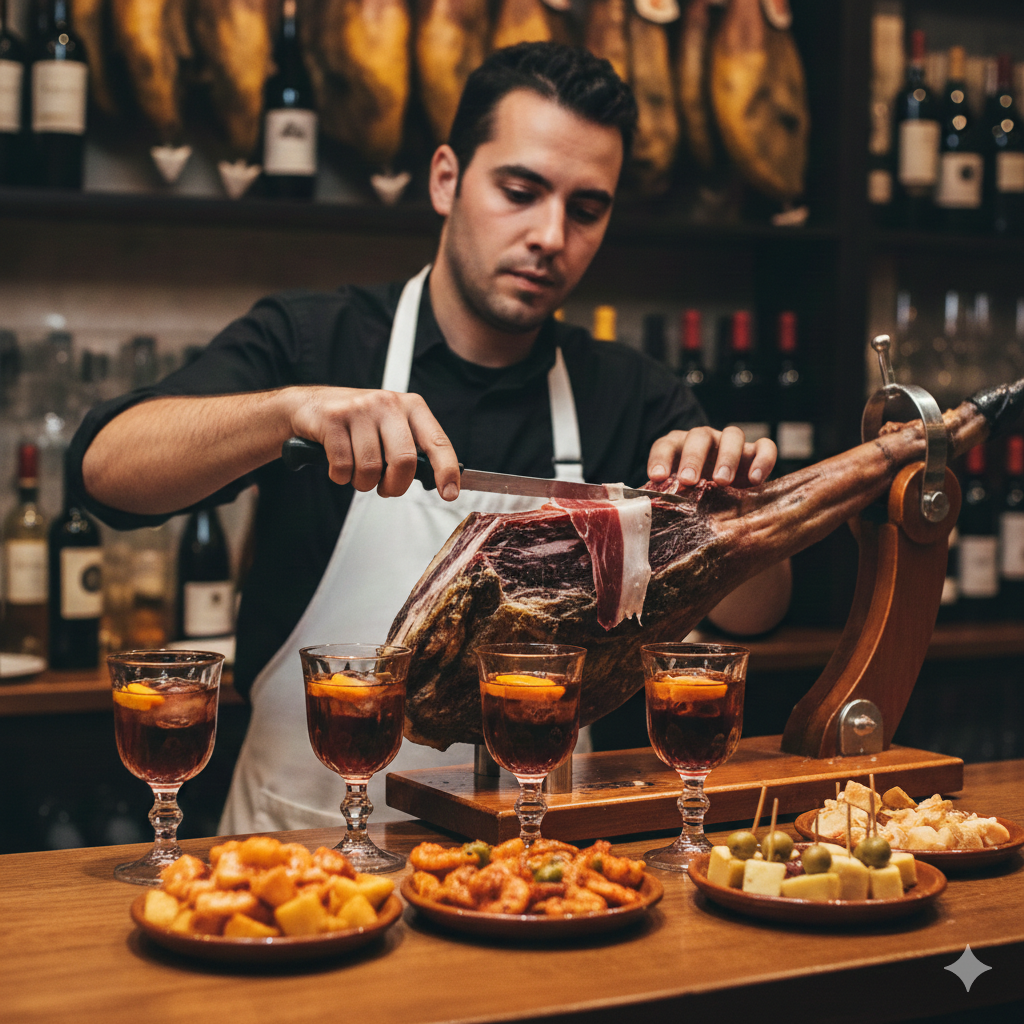
Tapas culture is Spain’s greatest gift to solo travelers
Why Spain Works for First-Time Solo Female Travelers
Spain consistently ranks as one of Europe’s safest countries. The culture here practically invites solo travel—from normalized solo dining to late-night streets filled with people creating natural safety through numbers.
What makes it work:
- Solo dining is normalized – Standing at tapas bars alone is standard, not awkward
- Late-night crowds – Streets stay packed until 3 AM on weekends
- Reliable transport – Safe metros, high-speed trains connecting cities
- Budget-friendly – €10-15 meals, €15-25 hostel beds, museums under €15
- English widely spoken – Especially in tourist areas and by younger locals
- Diverse experiences – Moorish palaces, beaches, mountains in one country
- Social hostels – Daily activities make meeting travelers effortless
The first-timer mistake: Trying to eat dinner at 6 PM. Embrace the 10 PM dinner time, and everything else falls into place.
Spain taught me to slow down. To linger over meals, trust detours, and accept that traveling alone often opens doors that group travel never does. Solo doesn’t mean lonely here—it means connected in unexpected ways.
Is Spain Safe for Solo Female Travelers?
Yes. Without hesitation.
Spain ranks #25 on the Global Peace Index 2025. Violent crime against tourists is exceptionally rare. When locals discuss safety, they’re talking about pickpockets, not physical danger.
What Spain Taught Me in One Year
From bustling Barcelona to remote Galician villages, I’ve never once felt physically unsafe. My biggest threat? Someone trying to swipe my phone at a metro station. More annoying than dangerous.
Different cities have varying profiles—Barcelona sees more pickpocketing than Granada, Madrid metro lines can feel sketchy late at night—but with basic urban awareness, Spain is wonderfully safe.
The Basics
- Watch belongings in crowded areas
- Use crossbody bags, not backpacks hanging off your back
- Avoid poorly lit streets late at night
- Trust your instincts
- Take registered taxis or rideshare apps when needed
The Cultural Advantage
Spain’s late-night culture works in your favor. Streets overflow with people until 2-3 AM, creating safety through numbers. You’re rarely walking deserted streets alone.
The culture is warm and social. Bar owners have insisted on calling me taxis, hostel staff have walked me to metro stations at night, strangers have intervened when they sensed I was uncomfortable. It’s part of how things work here.
Your belongings might get stolen, but not you.
7 Best Spanish Cities for Solo Female Travelers
After exploring 15+ Spanish destinations solo, these seven stand out for safety, social ease, and that quality that makes solo travel unforgettable.
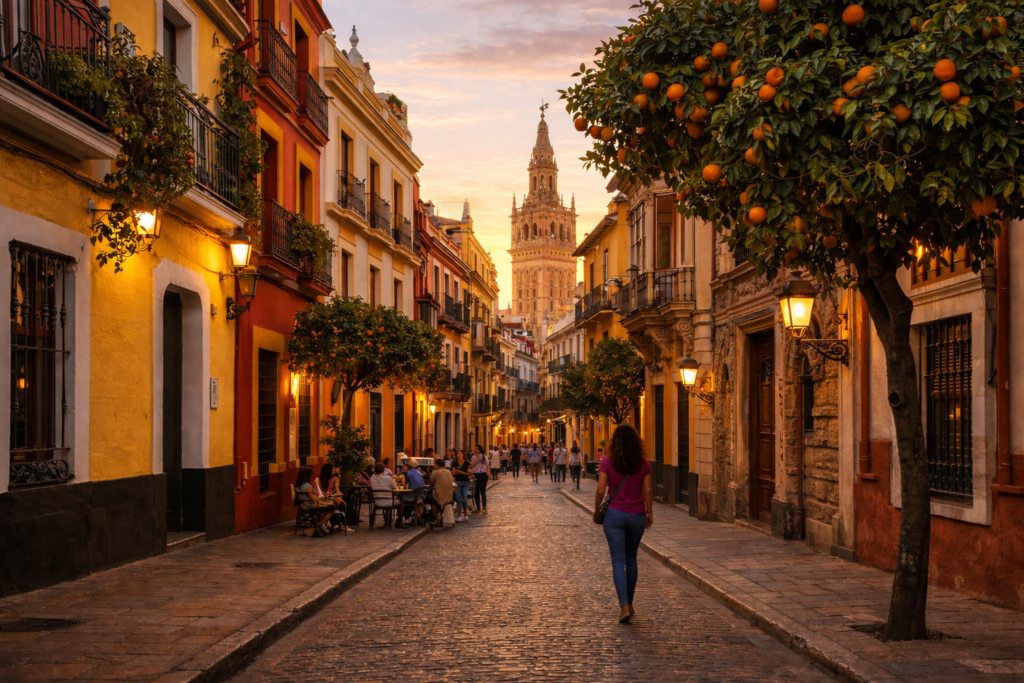
The magic of Seville: where every street invites wandering and every bar welcomes solo travelers
1. Seville: The Soul of the South
Best for: Flamenco lovers, architecture enthusiasts
Best Time to Visit Seville: March–May or September–November. You experience the warm, pleasant weather, blooming orange trees, and major festivals (Semana Santa).
Seville feels like a neighborhood rather than a city. Warm, colorful, unapologetically Spanish. The kind of place where getting lost in Santa Cruz’s maze leads to a grandmother’s courtyard and an invitation for lemonade with her parrot who—she swears—only speaks Andalusian.
Why it works for solo travelers:
- Extremely safe, even neighborhoods like Santa Cruz and Triana late at night
- Social and sunny—locals recommend their favorite spots freely
- Tapas culture makes solo dining feel natural
Where I Stayed: La Banda Rooftop Hostel—social without being a party hostel. Rooftop terrace, organized flamenco nights and tapas tours. Female dorms available.
Don’t Miss:
- Real Alcázar (book one week early)
- La Giralda tower for views
- Plaza de España before tour buses arrive
- Triana for ceramics and riverside sunsets
- Casa del Flamenco for intimate shows
- Casa Morales near Cathedral—authentic tapas bar since 1850
- Bar El Comercio for chocolate con churros breakfast
Beating the Heat: Summer temperatures reach 40°C+ in July-August. Visit monuments early morning, embrace siesta 2-5 PM, save activities for after sunset (9 PM+). Seville’s rhythm runs late: lunches 2-4 PM, dinners 9-11 PM.
Timing Hacks: Hit Real Alcázar at opening for quiet courtyards and cooler temps. Plaza de España at golden hour for best photos. In peak heat, use shaded lanes from Avenida de la Constitución → Archivo de Indias → Jardines de Murillo → Santa Cruz.
Solo Dining in Seville
Walk into any bar, stand at the counter, order plates one by one. The atmosphere is friendly and casual. Bartenders are used to solo diners and often suggest favorites when you hesitate. Try jamón ibérico at Las Teresas or montadito de pringá at Bodeguita Romero. Tapas dining turns meals into experiences.
Tapas Strategy: Order 1-2 tapas per bar, then move to the next. Mercado de Triana has local market eats, budget-friendly.
Safety Notes: Seville is generally safe. Avoid poorly lit areas at night, especially parks. Santa Cruz gets very quiet after 11 PM—stay on main streets. Watch belongings on crowded buses. Heat is dangerous—stay hydrated, siesta during midday. Dial 112 for emergencies (police, medical, fire). Also: 091 for national police, 092 for local police, 061 for medical.
Flamenco Booking: Book 24-48 hours in advance. Arrive 20 minutes early for front-row seats and better sightlines. Carry a folding fan—stylish and practical.
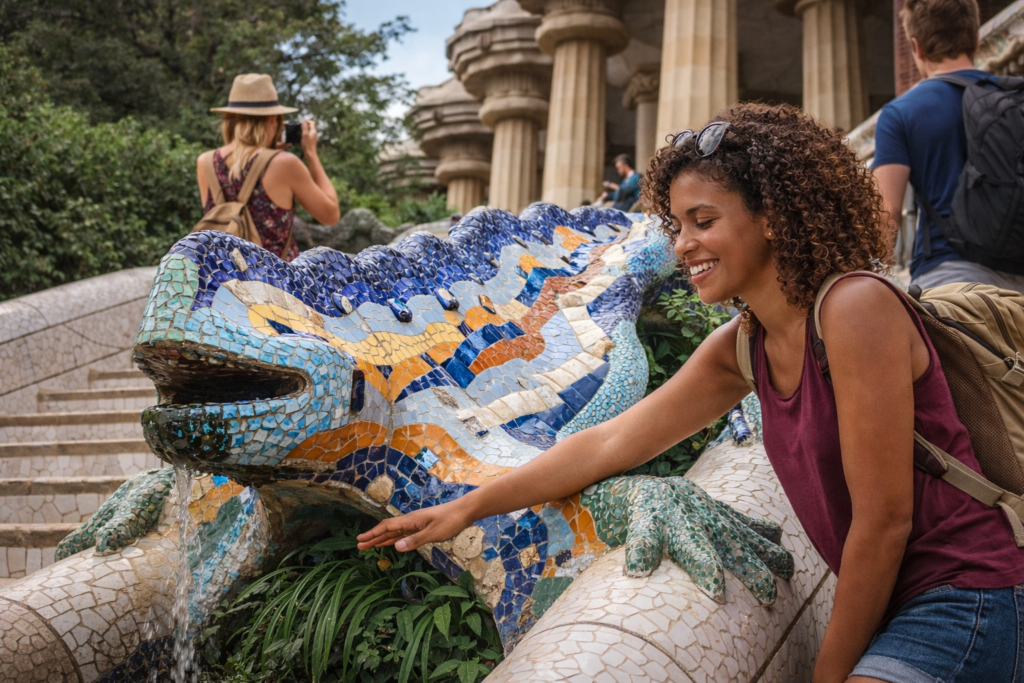
Park Güell mosaic dragon
2. Barcelona: High Energy & Gaudí Magic
Best for: Art lovers, beach days, architecture
Best Time to Visit Barcelona: May–June or September–October. Warm, pleasant weather, manageable crowds, and more affordable than summer. If you’re a beach lover, then July and August are ideal, while November to February is best for budget travel and manageable crowds.
Barcelona pulses with creative energy—Gaudí’s architecture defies gravity, beaches sprawl along the Mediterranean, tapas bars spill onto streets. It’s also Spain’s pickpocket capital.
Barcelona isn’t dangerous, but it’s opportunistic. Violent crime is rare; petty theft targets distracted tourists. I’ve spent weeks here solo without incident, though awareness is your best protection.
Your Defense: Crossbody anti-theft bag with slash-proof straps. Never leave phones on outdoor café tables. Keep bags closed and in front on metros. Stay alert in Las Ramblas, Sagrada Família, Boqueria Market.
Where I Stayed: Generator Hostel in Gràcia—trendier, less touristy area, walkable to sights. Rooftop bar, organized activities, female dorms.
Don’t Miss:
- Sagrada Família (book weeks ahead, 9 AM ideal)
- Park Güell for mosaics and city views
- Gothic Quarter walking tour
- Vermouth in El Born
- Barceloneta Beach sunset
3. Madrid: The Authentic Heart
Best for: Art lovers, night owls, urban explorers
Best Time to Visit Madrid: March–May or September–November. Experience the warm weather ideal for walking, outdoor dining, and sightseeing. The also parks bloom during this season.
Madrid represents “Real Spain.” While Barcelona attracts international crowds, Madrid feels deeply local—a city where nightlife doesn’t start until midnight, and dinner is never before 10 PM.
I joined my hostel’s tapas crawl on a Tuesday. By 1 AM, I was sharing churros con chocolate with travelers from four continents. That’s Madrid—infectious energy that makes you feel at home within hours.
What defines it:
- Madrileños live and work here—authentic, not performative
- World-class art (Prado, Reina Sofía, Thyssen) within walking distance
- Late-night culture: dinner 10 PM, bars midnight, clubs 3 AM
Where I Stayed: Hostel One Madrid—daily activities, free walking tours, tapas crawls, flamenco nights. You’ll never eat alone unless you want to.
Don’t Miss:
- Prado Museum (arrive at opening)
- Retiro Park—rent a rowboat (€6)
- Royal Palace with audio guide
- Malasaña for hipster coffee and vintage shops
- La Latina tapas bars
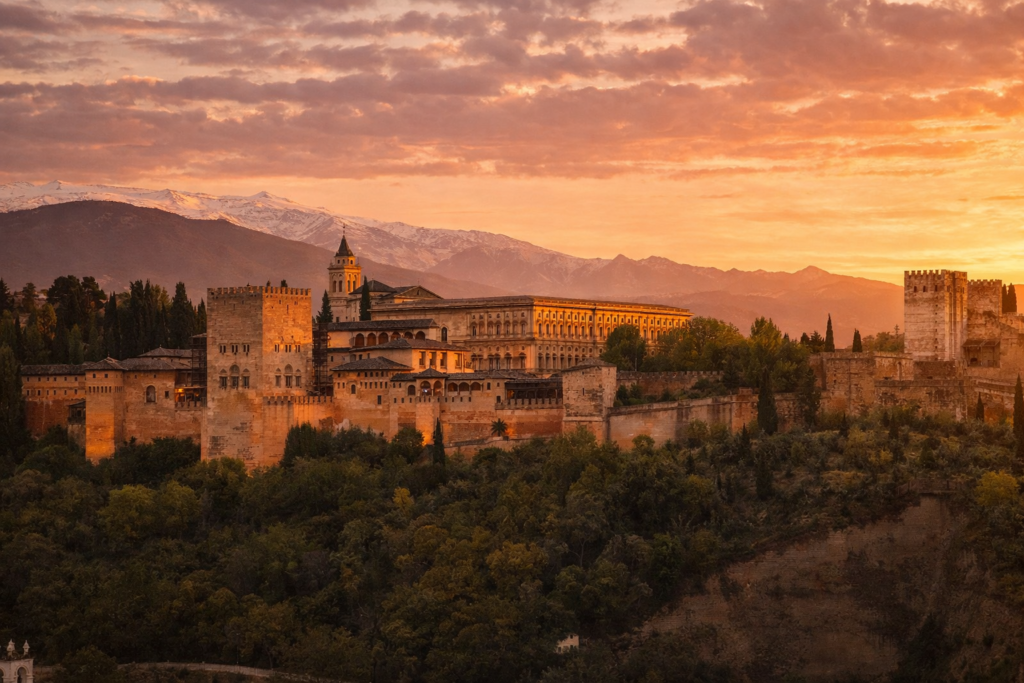
Sunset view of Alhambra from Mirador de San Nicolás with Sierra Nevada behind
4. Granada: Moorish Magic on a Budget
Best for: History buffs, budget travelers
When to Visit Granada: April–May or October is the perfect season to explore the Alhambra and the Albaicín neighborhood. April and May are great for gardens and festivals, while September and October offer comfortable, quieter sightseeing.
Granada is Andalusia’s crown jewel—Islamic history against snow-capped mountains. It’s also Spain’s most budget-friendly major city.
Free Tapas Culture: Order a drink, receive substantial free food. Two drinks often equal dinner. Granada is one of the last Spanish cities maintaining this tradition.
What sets it apart: Cheaper everything, the Alhambra, Sierra Nevada 45 minutes away, safe and walkable.
Don’t Miss:
- The Alhambra (book 4 weeks ahead—sells out year-round)
- Albaicín wandering, sunset at Mirador de San Nicolás
- Sacromonte’s cave houses
- Hammam Al Andalus Arab baths (€30-50)
Tapas Strategy: Calle Navas, Campo del Príncipe, Realejo. Order drinks (€2-3), receive free tapas. Two drinks = dinner solved.
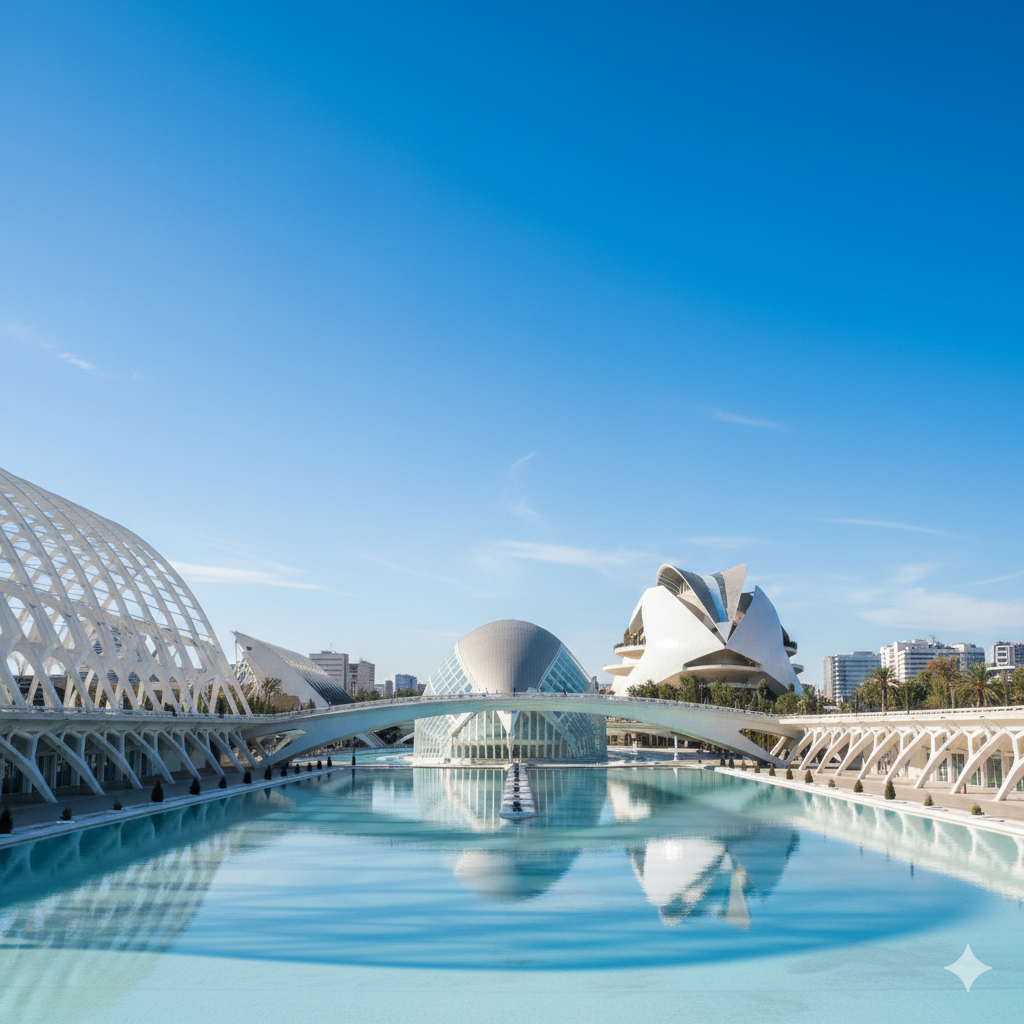
Futuristic white structures of City of Arts and Sciences with blue sky
5. Valencia: Futuristic & Beachy
Best for: Paella lovers, bike enthusiasts
Best Time to Visit Valencia: April and May are ideal for mild temperatures and a vibrant city, while September and October offer warm sea temperatures for swimming.
I expected “backup Barcelona.” I left already planning my return. Valencia has perfect balance: sophisticated without pretension, beachy without tourist traps, affordable without sacrificing quality.
What works: Futuristic architecture minutes from medieval streets. Authentic paella (rabbit and snails, not seafood). Flat city with bike lanes everywhere (€1.50/day rentals).
Where I Stayed: Purple Nest Hostel in Ruzafa—Valencia’s coolest neighborhood. Paella classes, bike tours, beach days. Female dorms available.
Don’t Miss:
- City of Arts and Sciences combo ticket
- Paella cooking class
- Central Market—art nouveau with hanging jamones
- Horchata and fartons at Mercado de Colón
- Bike Turia Gardens to beach
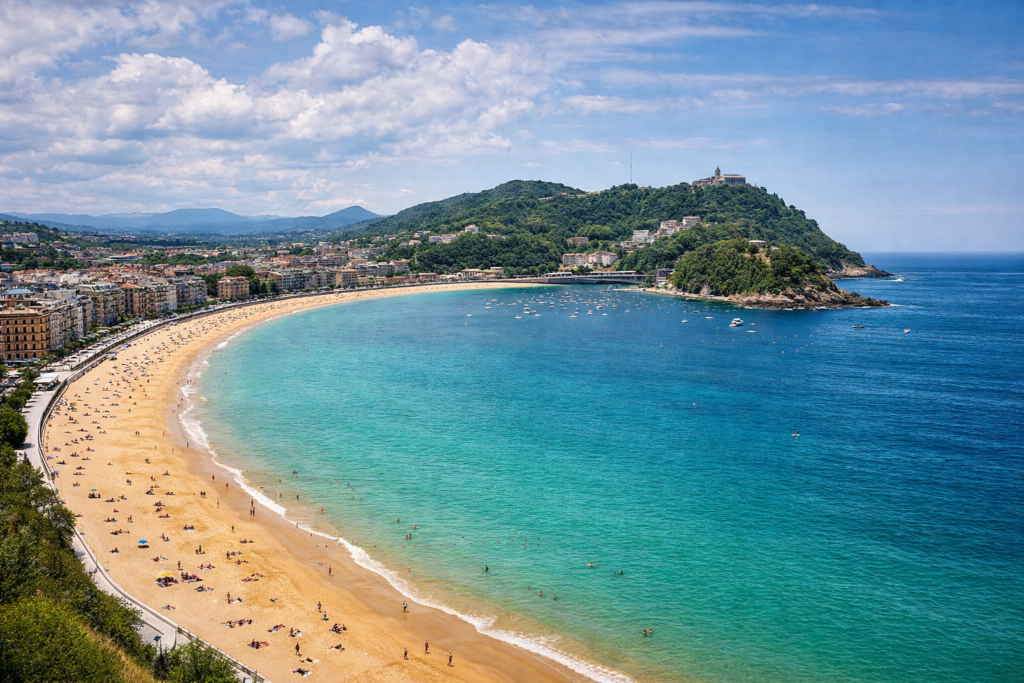
Shell-shaped La Concha beach with turquoise water and city
6. San Sebastián: Culinary Crown
Best for: Foodies, pintxo crawlers
Best Time to Visit San Sebastián: Go in March to May (spring), and enjoy prime, fresh seasonal ingredients like anchovies, asparagus, and artichokes, alongside comfortable weather and easier dining reservations.
San Sebastián is expensive—Spain’s priciest after Barcelona. But the quality justifies it. More Michelin stars per capita than anywhere except Kyoto. La Concha, Spain’s most beautiful city beach. Pintxos culture that turns every meal into a social event.
Pintxos crawling is inherently solo-friendly. One drink and 1-2 pintxos per bar, then move on. Solo diners fit naturally into the standing, social rhythm.
Where I Stayed: Pension Altair in Parte Vieja—charming rooms with balconies, walking distance to everything.
Best Pintxos Bars:
- Bar Nestor: Steak and tortilla (1 PM and 8 PM only—time it right)
- La Cuchara de San Telmo: Creative modern
- Gandarias: Traditional Basque
- Ganbara: Wild mushrooms
Pintxos Strategy: Go 8-10 PM. Order 1-2 pintxos and a drink per bar. Stand at the bar. Ask “¿Cuál es vuestra especialidad?” Try Txakoli (local white wine).
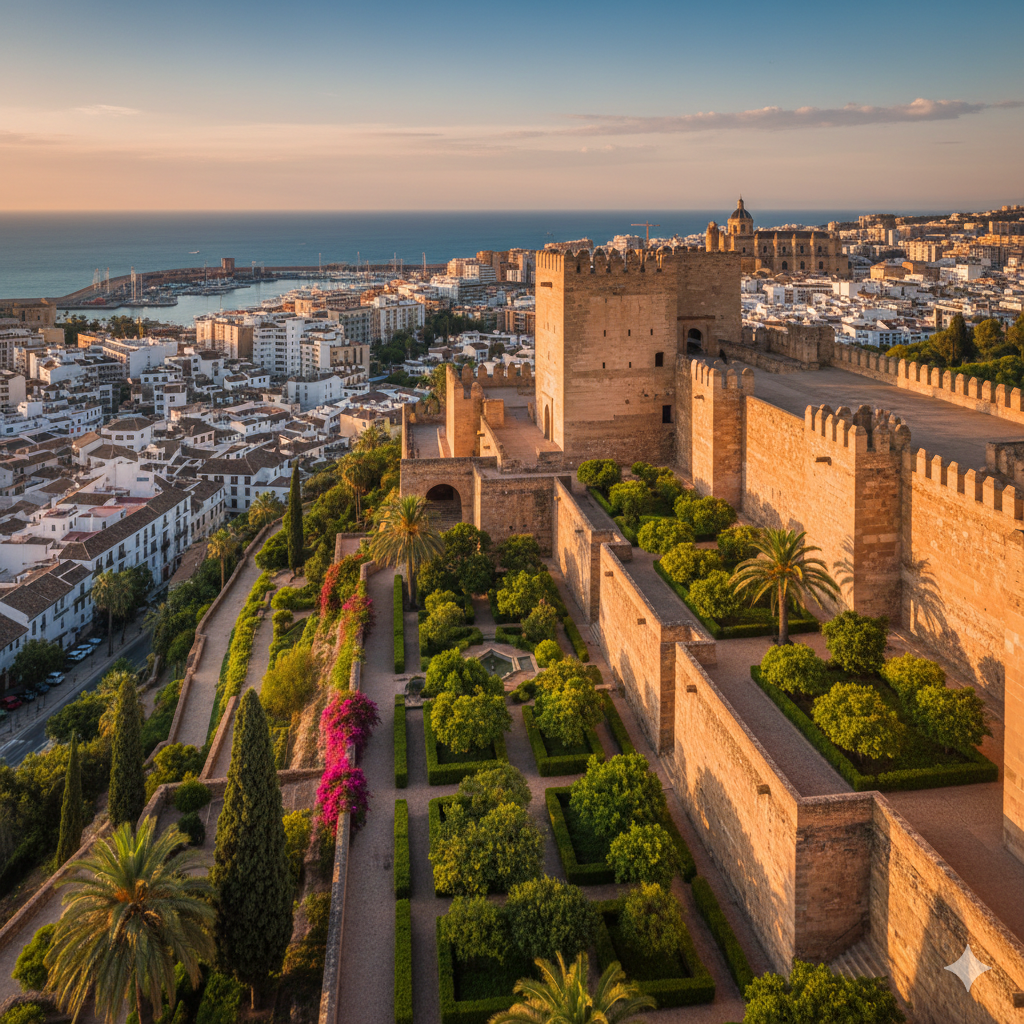
Moorish Alcazaba fortress
7. Málaga: Year-Round Sunshine
Best for: Picasso fans, day trippers, budget travelers
Best Time to Visit Malaga: April, May, September, and October offer the perfect balance of sunshine and moderate temperatures. While June to August are great for nightlife and beach life.
Every day felt like summer. That reliable sunshine creates ease—no weather backup plans, beach always an option, outdoor dining guaranteed.
What works: 300+ sunny days (January hits 18°C). Museums (Picasso, Thyssen-Carmen, Pompidou). Day trip hub to Granada, Ronda, Nerja. Budget-friendly.
Where I Stayed: Lights Hostel—modern rooms, rooftop terrace, organized day trips.
Don’t Miss:
- Alcazaba early (9 AM)
- Gibralfaro Castle hike
- Picasso Museum
- Atarazanas Market for lunch
- Ronda day trip
Budget Planning: What Spain Costs
Spain is one of Europe’s most affordable countries, but costs vary by city and style.
Daily Budget by Style
Budget (€40-60/day): Hostel dorm (€15-25), menu del día lunch + tapas dinner (€15-25), metro/bus (€3-5), free tours (€5-10), local wine (€5-10)
Mid-Range (€80-120/day): Private room or budget hotel (€40-70), sit-down restaurants (€30-40), metro + taxis (€5-15), museums and tours (€20-30), cocktails (€15-20)
City-by-City Costs
| City | Budget Daily | Comfortable |
|---|---|---|
| San Sebastián | €80-120 | €100-150 |
| Barcelona | €60-90 | €90-120 |
| Madrid | €50-80 | €80-110 |
| Seville | €40-60 | €70-90 |
| Valencia | €40-65 | €70-100 |
| Málaga | €35-60 | €65-95 |
| Granada | €35-55 | €60-85 |
Smart Savings
Food: Menu del día for lunch (€10-15 vs €25+ dinner). Tapas for dinner (4-5 tapas = €15-20). Free tapas in Granada. Supermarket breakfasts (€3-5 vs café €8-12).
Transport: Walk centers. Buy 10-ride metro cards (save 30-40%). Book trains 2-3 weeks early (€20 vs €80). Night buses free with metro card.
Activities: Free museum hours. Free walking tours (tip €5-10). Parks and beaches. Sunday markets.
Worth the Splurge
Alhambra full experience. Flamenco in Seville or Granada. Paella class in Valencia. One Michelin experience in San Sebastián. Ronda day trip.
The Spanish Daily Rhythm
Spain operates 2-3 hours later than you think. Fighting it exhausts you; embracing it unlocks everything.
- 9 AM: Coffee and pastry standing at a bar
- 2-4 PM: Lunch—the main meal (menu del día €10-15)
- 2-5 PM: Siesta—shops close, rest or visit museums
- 7-9 PM: Tapas crawl
- 9 PM-Midnight: Dinner (peak 9:30-10 PM)
- 11 PM-4 AM: Nightlife (bars midnight, clubs 2-3 AM)
Solo Hack: Make lunch your big meal. Cheaper, better light for photos, solo dining feels more normal during business rush.
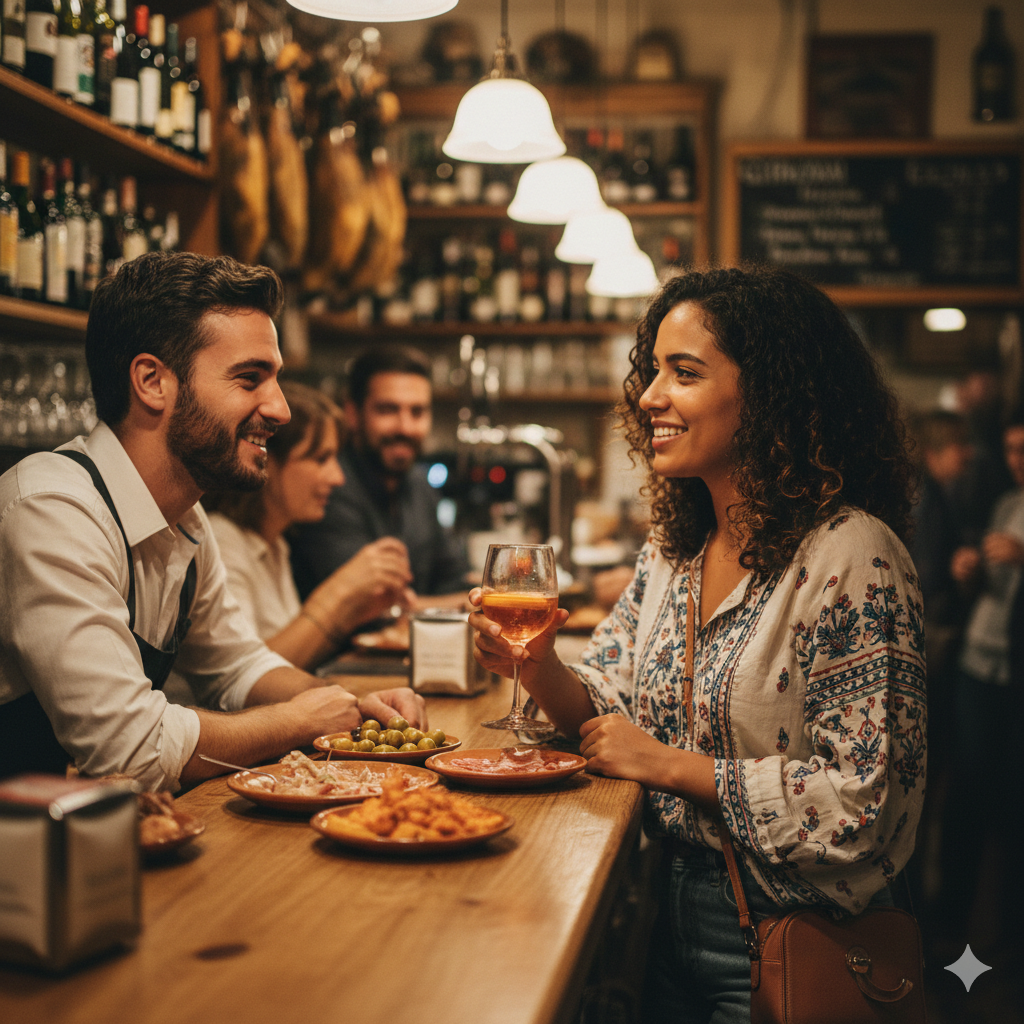
Standing at the tapas bar counter, chatting with a bartender
Solo Dining in Spain
Solo dining is often the “final boss” for travelers. In Spain, the culture is built for it.
Head straight for the bar (la barra). Standing or sitting at the counter is completely normal. You’re surrounded by locals having quick bites. Easy conversations. You’re participating, not just observing.
A solo woman reading at a café is seen as sophisticated, not lonely.
Best scenarios: Tapas bars (standing), markets with counter seating, beach chiringuitos, cafés for breakfast.
The Pickpocket Reality
Spain’s biggest threat isn’t violence—it’s opportunistic theft.
Hotspots: Barcelona (Metro Lines 1, 3, 4, Las Ramblas, Sagrada Família, La Boqueria). Madrid (Sol metro, El Rastro Sundays).
Four-Point Defense:
- Anti-theft crossbody bag (slash-proof, locking zippers, €30-50)
- Phone never on tables (motorcycle snatchers)
- Front pockets only
- Bag in front in crowds
I’ve traveled Spain extensively with zero theft by following these rules. Awareness, not paranoia.
Getting Around
High-Speed Trains: Madrid-Barcelona 2.5 hours (€20-100). Book 2-3 weeks ahead for best prices. Use Renfe.com or Omio.
City Transport: Metro single ride €1.50-2.50. 10-ride cards €10-15 (save 30-40%). Taxis €6-15 across cities. Uber/Bolt available.
Walking: Best way to explore. All seven cities have walkable centers.
Biking: Valencia is perfect. Valenbisi €13.30/week unlimited rides.
What to Pack
Essentials: Crossbody anti-theft bag, European adapter, portable charger, reusable water bottle, sunscreen, sunglasses.
Spring/Fall: Layers (t-shirts, cardigan, light jacket), 2-3 jeans, comfortable walking shoes, light scarf.
Summer: Lightweight breathable clothes, sundresses, swimsuit, sun hat, walking sandals. Avoid black.
Dress Code: Spaniards dress more formally than Americans casually. Avoid gym clothes outside gyms, flip-flops in cities, very short shorts. Smart casual: neat jeans, nice top, clean sneakers.
FAQ
Do I need Spanish? Not required. Major cities have English speakers. But 10-20 basic phrases dramatically improve your experience.
What’s the Best time to visit Spain? April-May or September-October. Pleasant weather, fewer crowds, lower prices. Avoid July-August (hot, crowded, and expensive).
Meeting travelers? Social hostels, free walking tours, group tours, hostel common areas, tapas bars.
Solo dining awkward? No. Tapas culture is perfect. Eat at the bar, bring a book. Most natural: San Sebastián, Granada, Barcelona.
Travel insurance? Yes. Medical emergencies, theft, cancellations. SafetyWing or World Nomads (€5-15/day).
Your Spanish Adventure
One year later, Spain remains my favorite solo destination. Safety that lets you relax. Culture that makes solo dining easy. Late-night energy. Affordability. Diversity that means every city feels different.
You’re capable of navigating foreign cities, solving problems, thriving independently. You can change plans on a whim. You’ll learn who you are without the influence of companions.
Life is meant to be savored, not rushed. Strangers become friends over shared tapas. Getting lost leads to discoveries. Solo doesn’t mean lonely—it means freedom.
Ready?
- Choose your starting city (Seville for romance, Granada for budget, Barcelona for energy)
- Book a social hostel
- Learn 20 basic phrases
- Pack light
- Book first accommodation and trains
- Get travel insurance
- Download offline maps
- Trust yourself
Your Spanish adventure is waiting. All you have to do is take that first step.
¡Buen viaje, amiga!
Last updated: January 2026
Disclaimer: Travel situations change. Always check official advisories before your trip. This reflects my experiences as of 2025-2026. Prices and conditions may vary.