
The first time I stood on Dubrovnik’s ancient walls at sunrise, watching the Adriatic stretch endlessly beyond limestone towers, I felt something shift inside me. Traveling alone didn’t feel intimidating—it felt powerful. That salt air on my skin, centuries of history beneath my feet, nothing but possibility ahead.
Croatia captured my heart that morning, and after exploring 47 countries independently, I can tell you: it’s the one place that keeps calling me back.
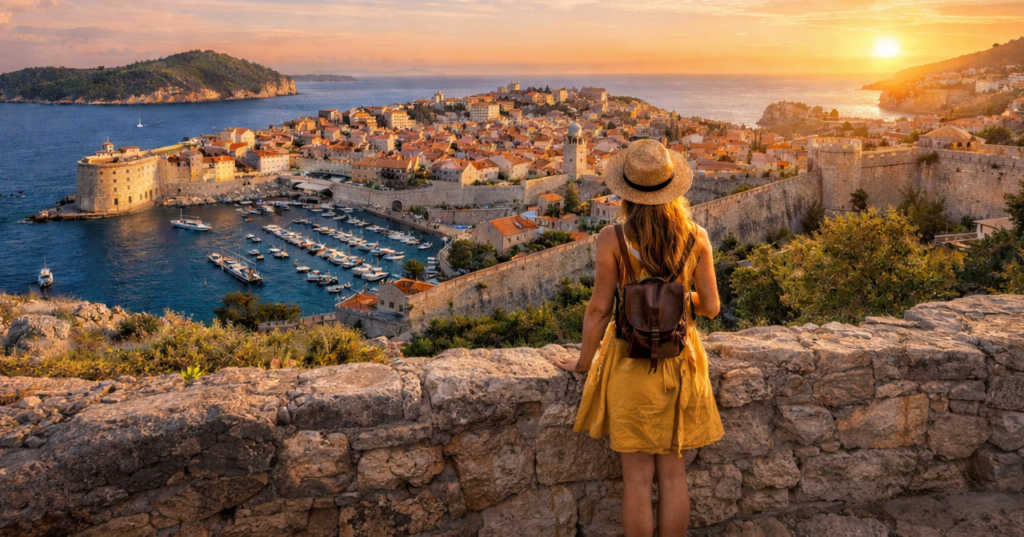
Golden sunset over Dubrovnik Old Town walls
Now, I’m sharing everything you need to know about exploring this stunning Mediterranean gem on your own terms. Whether you’re nervous about your first solo flight or you’re a seasoned pro looking for hidden Istrian truffles, I’ve got you covered.
Because you absolutely can explore Croatia alone—and you absolutely should.
Is Croatia Safe for Solo Female Travelers?
Yes. Croatia is one of Europe’s safest destinations for solo women.
After traveling to Croatia multiple times and talking with hundreds of solo female travelers who’ve explored this country, I can confidently say: Croatia ranks among the easiest, safest, and most rewarding solo travel destinations in Europe.
The country ranks 19th safest globally (Global Peace Index 2025)—safer than France, Spain, and Italy. Violent crime against tourists is exceptionally rare. The main concerns are standard precautions: watch for pickpockets in crowded tourist areas and use common sense during nightlife.
But here’s what really matters: I felt safe walking Croatian cities at night. Split’s ancient alleys, Dubrovnik’s marble streets, Zagreb’s café-lined avenues—all felt secure even after dark. The locals’ genuine warmth, excellent infrastructure, and widespread English make Croatia ideal for launching your solo adventure.
Of course, no destination is completely risk-free, but with smart preparation, you can explore confidently. For official safety updates, always check Travel.State.gov before your trip.
Croatia at a Glance: Solo Female Travel 2026
| Factor | Details |
|---|---|
| Safety Rating | 14th safest country globally (out of 163) |
| Solo-Friendly Scale | 10/10 – Excellent for first-time solo travelers |
| Best Time to Visit | May, June, September (warm weather, fewer crowds, better prices) |
| Currency | Euro (€) – adopted January 2023 |
| English Level | Widely spoken in tourist areas (95% of interactions effortless) |
| Average Daily Budget | Budget: €50-70 | Mid-Range: €100-120 | Comfort: €150-200 |
| Top Solo Bases | Split (island-hopping hub), Dubrovnik (history & beaches), Hvar (beach & social scene) |
| Crime Rate | Very low – petty theft in crowded areas only concern |
| Transportation | Excellent bus/ferry network, safe for solo women |
| EU Member | Yes (since 2013) – EU standards apply |
| Healthcare | EU-standard, EHIC accepted for EU citizens |
Where Exactly is This Mediterranean Gem?
Croatia is a small, crescent-shaped country tucked into the northwestern part of the Balkan Peninsula. It’s uniquely positioned at the crossroads of Central Europe and the Mediterranean, which explains why you’ll find such a fascinating mix of Italian, Slavic, and Austro-Hungarian influences in the food and architecture.
To plan your trip, it helps to think of the country in three distinct “slices”:
- The Blue Coast (Adriatic Basin): This is the jagged, 3,600-mile-long coastline dotted with over 1,200 islands. It’s where you’ll find the marble streets of Split, the walls of Dubrovnik, and the crystal waters of Hvar.
- The Green Heart (Dinaric Alps): A rugged mountain belt that separates the coast from the interior. This “limestone spine” is home to the cascading waterfalls of Plitvice and the dramatic peaks of the Velebit range.
- The Continental North (Pannonian Plain): A land of rolling hills, fertile river valleys, and the bustling capital of Zagreb. This region feels more like Central Europe—think cozy coffee houses and grand Baroque squares.
Jetgurl Tip: Because of this geography, you can literally go from a mountain hike in the morning to a beach sunset in the evening. Just keep in mind that while the coast is mild and Mediterranean, the mountains and the north can get quite chilly even in the shoulder seasons!
Getting Around Croatia: Your Solo Transit Strategy
Croatia lacks a major rail network, but don’t let that worry you. The infrastructure for buses and boats is world-class, making it one of the easiest European countries to navigate without a car.
1. The Intercity Bus (The Solo Traveler’s Best Friend)
Buses are the primary way to get around. They are modern, air-conditioned, and reliable.
- Top Apps: Download GetByBus or FlixBus. You can buy tickets on your phone and simply show the QR code to the driver.
- Jetgurl Tip: For the scenic route from Split to Dubrovnik, sit on the right side of the bus. You’ll have front-row seats to the sparkling Adriatic cliffs for the entire four-hour journey.
2. Ferries & Catamarans (Island Hopping)
To get to Hvar, Korčula, or Brač, you’ll use the ferry system.
- Jadrolinija is the main state-line (great for large car ferries), while Krilo offers faster, sleek catamarans.
- Booking: In peak season (July-August), book at least a few days in advance. In the shoulder season, you can usually buy a ticket at the pier 30 minutes before departure.
3. Flying (The Time Saver)
If you’re short on time and moving between Zagreb and Dubrovnik, a domestic flight with Croatia Airlines can save you an 8-hour bus ride. These flights are often surprisingly affordable if booked a month out.
4. Local Taxis & Rideshare
- Avoid: Unmarked taxis or “freelance” drivers at ferry ports who don’t use meters.
- Use: Uber and Bolt are active in Zagreb, Split, Zadar, and Dubrovnik. They provide a transparent price and a digital trail, which adds a great layer of safety for solo women.
Safety Deep Dive: What You Really Need to Know
General Safety Reality:
Croatia is very safe for solo female travelers—I walked alone day and night without issues across multiple trips. However, smart travel practices always apply.
Specific Safety Measures
Tourist Areas:
- Watch valuables in crowded spots: Dubrovnik’s Stradun, Split’s Green Market, Zagreb trams
- Pickpocketing is rare compared to Western Europe but exists in peak season crowds
- Keep bags zipped and in front of you in busy areas
Transportation:
- Use official taxi apps: Uber, Bolt, Cammeo, or Eko Taxi (avoids meter disputes)
- Don’t accept rides from strangers offering “cheap taxis”
- Sit near driver on night buses if traveling alone
- Share your location with friends/family when moving between cities
Beach Safety:
- Don’t leave valuables unattended while swimming
- Hide items under towel or ask trustworthy-looking family nearby to watch
- Watch for sea urchins on rocky beaches—water shoes essential (€10-15, worth it)
- Check swimming flags and local conditions before entering water
- Sun protection critical: Croatian summer sun is brutal (SPF 50+, reapply every 2 hours, put on a hat, and take shade breaks)
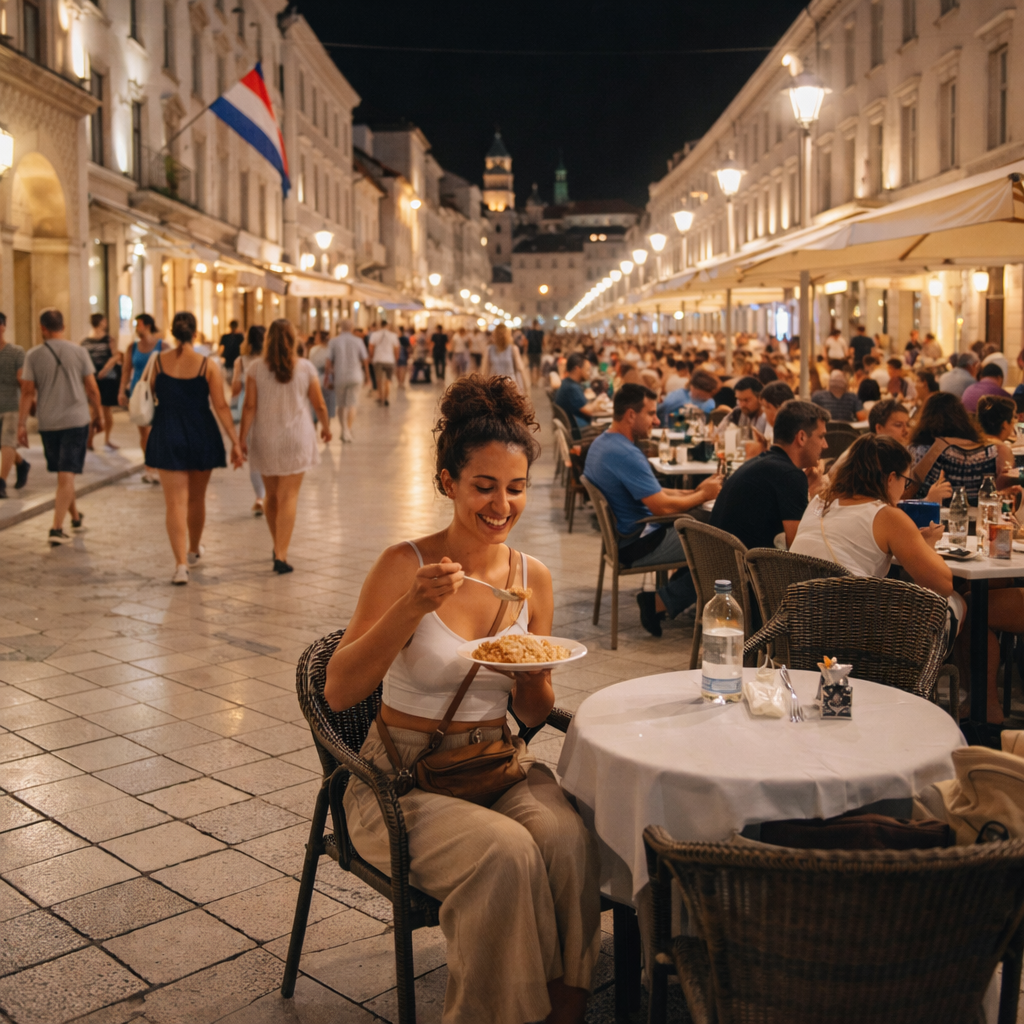
A lively dining atmosphere during warm summer nights along the vibrant Riva promenade
Nightlife:
- Drink less than you would at home—two drinks is good limit
- Never leave drinks unattended—take them to bathroom with you
- Only accept drinks from bartenders, never strangers
- Stay in well-lit, populated areas when walking at night
- Tell hostel staff where you’re going if hitting nightlife
- Trust your instincts—if something feels wrong, leave immediately
Emergency Contacts:
- General Emergency: 112 (English operators, works throughout EU)
- Police: 192
- Ambulance: 194
- Fire: 193
- Save these in your phone before arriving
My Honest Experience:
Two months exploring Croatia solo with zero incidents. I walked Split’s ancient alleys at 11 PM without fear, swam at isolated beaches, and chatted with strangers at cafés. The biggest “threat” was aggressive kindness—locals insisting I try family wine, stay for lunch, accept gifts.
Croatia isn’t risk-free (nowhere is), but it’s genuinely one of Europe’s safest destinations for solo women.
Why Croatia Is Perfect for First-Time Solo Female Travelers
Croatia feels like Europe’s best-kept secret, even though everyone seems to know about it now. Crystal-clear waters, medieval walled cities, sun-drenched islands, and warm hospitality make this country irresistible.
The language advantage you didn’t expect
Unlike France or Spain, Croatians realize most tourists won’t speak Croatian and adjust immediately. You’ll find occasional people who don’t speak English—taxi drivers, small shop owners—but 95% of the time communication is effortless. This single factor transforms the solo travel experience from stressful to seamless.
Infrastructure that actually works
The Adriatic country has excellent travel infrastructure with hotels at various price levels and bus and ferry connections all over the place. EU membership since 2013 has brought significant tourism investment, meaning everything simply works—buses run on schedule, ferries publish accurate timetables, and emergency services (dial 112) operate reliably.
Budget-friendly Mediterranean beauty
Croatia costs 20-30% less than Italy or France while offering comparable beauty. Fresh seafood, stunning coastlines, medieval architecture—all more affordable than Western European alternatives. Hostels here are high quality and reasonably priced, with dorm beds averaging €20-30 per night outside peak season.
Solo dining feels completely normal
Zagreb’s café culture welcomes solo travelers beautifully. Locals spend hours at cafés with books and newspapers, making solo diners completely unremarkable. No awkward solo table stigma, no rushed service, no condescending treatment. You blend seamlessly.
The solo traveler community
Hostel culture attracts independent travelers from around the world. Making friends for island-hopping adventures or sharing sunset cocktails happens naturally when you want company—plus complete solitude remains available when you crave peace.
From Roman ruins in Split to lavender-scented islands in Hvar, Croatia offers incredible cultural immersion. And here’s what I wish someone had told me before my first trip: traveling alone in Croatia isn’t harder than traveling with companions—it’s often easier. You move at your own pace, make spontaneous decisions, and forge authentic connections that group travel rarely allows.
Now, let me be your guide through Croatia’s most magical destinations for solo female travelers.
Day 1: Arrival Checklist (Your Stress-Free First Hour)
Landing in a new country alone can be a whirlwind. Follow this checklist to transition from the arrivals hall to your hotel like a local.
1. Connectivity First (Don’t leave the airport without data!)
- eSIM Users: Switch on your travel eSIM (like Airalo or Holafly) as soon as you land.
- Physical SIM Users: Head to a Tisak or iNovine newsstand in the arrivals hall. Ask for a “Tourist SIM.” In 2026, Hrvatski Telekom and A1 offer 10-day unlimited data packs for about €10-€12.
- Tip: It’s slightly cheaper in the city, but having GPS and WhatsApp immediately is worth the extra €2 for a solo traveler’s peace of mind.
2. The Money Move (Avoid the Airport Traps)
- Skip the Exchange Desk: Airport exchange rates are notoriously poor.
- Use a Bank ATM: Look for a bank-branded ATM (like PBZ, Erste, or OTP) to withdraw some Euros.
- Warning: Avoid “Euronet” ATMs—they have blue and yellow branding and charge massive fees. Always choose “Decline Conversion” if the ATM asks so your home bank handles the exchange rate.
3. Secure Your Ride
- Zagreb: Take the Pleso Prijevoz shuttle bus (€8) to the Main Bus Station, then a quick tram to the center.
- Split/Dubrovnik: Use the official airport shuttle bus (aligned with flight arrivals) or open your Uber/Bolt app.
- Safety Tip: If you take a taxi, always confirm the price before the suitcase goes in the trunk. An Uber from Dubrovnik airport to the Old Town should cost roughly €25–€35.
4. The “Check-In” Safety Protocol
- Registration: By law, your accommodation must register you with the local police. They will ask for your passport; this is normal! They usually take a photo and give it back immediately.
- Share Your Location: Once you arrive at your hotel or hostel, drop a “pinned location” to a friend or family member back home so they know you’ve made it safely to your base.
5. Hydrate & Fuel
- Tap Water is Gold: Croatian tap water is perfectly safe and delicious. Refill your bottle at the hotel.
- The First Meal: Walk to the nearest Pekara (bakery) for a slice of Burek. It’s cheap, filling, and the ultimate Croatian “welcome home” meal.
Croatia Destination Comparison: Where Should You Go?
| Destination | Best For | Vibe | Budget Level | Days Needed |
|---|---|---|---|---|
| Split | Island-hopping base, Roman history | Active, social, beach-city hybrid | €€ Moderate | 3-4 days |
| Dubrovnik | Game of Thrones, city walls, stunning views | Romantic, touristy, beautiful | €€€ Expensive | 2-3 days |
| Hvar | Beach clubs, nightlife, lavender | Glamorous, party, relaxing | €€€ Expensive | 2-3 days |
| Zagreb | Culture, museums, cafés | Artsy, authentic, underrated | € Budget-friendly | 2-3 days |
| Zadar | Sunset, Sea Organ, peaceful | Chill, romantic, uncrowded | €€ Moderate | 1-2 days |
| Plitvice Lakes | Nature, waterfalls, hiking | Peaceful, natural, photogenic | €€ Moderate | 1 day trip |
| Rovinj | Italian influence, pastel charm | Romantic, photogenic, artsy | €€ Moderate | 2-3 days |
The Classic Adriatic Triangle: Split (3 nights) → Hvar (2 nights) → Dubrovnik (3 nights) = Perfect 8-10 day first trip
Culture & Nature Route: Zagreb (3 nights) → Plitvice day trip → Zadar (2 nights) → Split (3 nights) = Balanced 9-10 days
1. Split: Croatia’s Soul in Stone
Split is Best for: History buffs, beach lovers, and your island-hopping base
Perfect Time to Visit: May-June, September-October (warm weather, manageable crowds)
Why Split Captured My Heart
Split isn’t just a city; it’s a living museum where locals still live, work, and socialize within 1,700-year-old Roman palace walls. Mid-morning, I wandered through Diocletian’s Palace, ducking into hidden courtyards where residents hung laundry from ancient stone windows. An elderly woman selling fresh figs insisted I try one, explaining her family has worked this same corner for generations.
The Vibe: Ancient meets modern seamlessly. You’ll explore Roman ruins in the morning, swim at Bačvice Beach in the afternoon, and sip cocktails on the Riva promenade by evening. The energy is infectious without feeling overwhelming, and solo travelers blend in effortlessly.
A micro-moment I loved: I climbed Marjan Hill just before sunset and watched the city glow golden below. A local artist painting the view invited me to sit, and we talked about life, travel, and why Split keeps people coming back. Those spontaneous connections happen when you travel alone—you’re more approachable, more open to the magic.
Safety & Solo-Friendly Features
Split is very safe for solo women. Watch belongings at the busy Green Market and in crowded palace areas during peak summer. Use taxi apps (Uber, Bolt, Cammeo) to avoid overcharging. The waterfront stays well-lit and populated into the evening.
What to Do in Split
Must-See Attractions:
- Wander Diocletian’s Palace (UNESCO site, free to explore) and get beautifully lost in its maze-like streets. Arrive 8-9 AM before cruise ship crowds swell.
- Climb the Cathedral of St. Domnius bell tower for panoramic city and sea views (€6 entrance)
- Stroll the Riva promenade at sunset when locals come out for their evening paseo—this is Split’s soul
- Visit the Green Market (Pazar) early morning for fresh produce, local specialties, and authentic Croatian life
- Hike or bike through Marjan Forest Park for nature, viewpoints, and peaceful escape from urban energy
Beach Time:
- Bačvice Beach: Sandy city beach (rare in Croatia!), perfect for swimming and watching locals play picigin (traditional ball game)
- Žnjan Beach: Longer, less crowded, local favorite with beach bars
- Kaštelet Beach: Small, secluded cove on Marjan peninsula—my secret spot
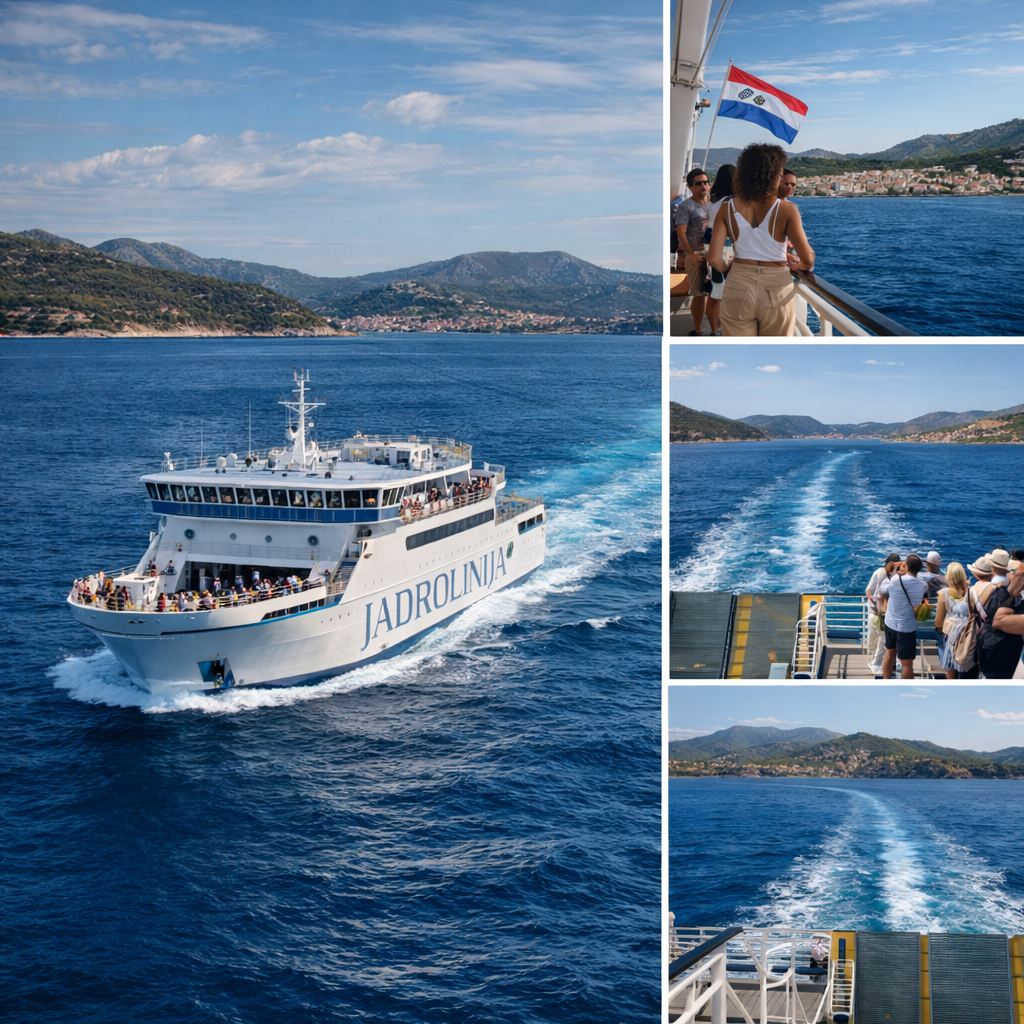
Ferry journey to Hvar Island
Island-Hopping from Split:
Split serves as the perfect base for exploring Croatia’s stunning islands. Ferry companies Jadrolinija and Krilo run regular routes to:
- Hvar: Lavender fields, beach clubs, nightlife (ferry 1-2 hours)
- Brač: Famous Zlatni Rat beach, quieter atmosphere (ferry 50 minutes)
- Vis: Remote, authentic, Blue Cave tours (ferry 2.5 hours)
- Korčula: Medieval town, wine country (ferry 3 hours)
Pro Island Tip: Buy ferry tickets at the port the same day or book online for peak season. Arrive 30 minutes early in summer for best deck spots. Pack snacks and water—onboard prices are expensive. Consider overnight stays on islands versus day trips; Hvar and Vis deserve at least one night each.
Day Trips from Split:
- Krka National Park: Stunning waterfalls, swimming allowed (2 hours by bus)
- Trogir: Medieval UNESCO town, charming old streets (30 minutes by local bus)
- Plitvice Lakes: Croatia’s most famous national park (full day trip, organized tours)
Where to Stay in Split
I loved Dvor Hostel in the heart of the old town, steps from Diocletian’s Palace. Female dorms available, rooftop terrace with palace views, and a social atmosphere perfect for meeting other travelers for island-hopping adventures. The staff organized evening walks along the Riva, making solo travel feel less solo when I wanted company.
Alternative Option: Private apartments near Diocletian’s Palace: Modern comfort in ancient surroundings.
Neighborhood Guide:
- Old Town (within palace walls): Most atmospheric, walkable to everything, some noise at night
- Varoš (west of palace): Local neighborhood, authentic restaurants, quieter, 5-minute walk
- Manuš (north): Residential, good value, 10-minute walk to center
Split Pro Tips
Budget Savers:
- Eat at konobas (traditional taverns) away from Riva for better prices and quality—walk 2-3 streets inland
- Breakfast at bakeries: burek (savory pastry) costs fills you up for hours
- Free walking tours daily from Peristyle Square (tip €5-10)
- Shop at Konzum or Tommy supermarkets for picnic supplies
- Many beaches are free; just bring your towel and water shoes for rocky areas
Foodie Highlights:
- Villa Spiza: Tiny konoba with daily menu, locals’ favorite—arrive 12:30 PM or 7:30 PM (fills fast!)
- Fife: Generous portions, budget-friendly, authentic Croatian food, cash only
- Green Market: Try fresh figs, cherries, or local Pag cheese for picnics
- Happy hour: Many bars offer 2-for-1 drinks 5-7 PM along Riva
Luggage Storage:
- Most hostels store bags for free on checkout day
- Luggage hack: Leave main luggage at Split hostel when island-hopping for 2-3 nights—traveling light makes ferries and beaches infinitely easier
Solo Dining Strategy in Split
Split’s café culture makes eating alone completely normal. Many restaurants have counter seating facing the street, perfect for solo travelers who enjoy people-watching. The Riva promenade buzzes with life, and sitting with a drink or gelato while watching the world go by never feels lonely.
I often sat at Cogito Coffee with a book, watching tourists stream past while locals chatted with baristas like old friends. That’s the beauty of solo travel in Croatia—you’re alone when you want to be, connected when you’re ready.
My Split Days
I spent three days in Split, and it was the perfect mix of ancient soul and spontaneous connection. My first day was all about Roman ruins and local life; I beat the cruise crowds to Diocletian’s Palace and the Peristyle, fueled up on a €3.50 bakery breakfast, and sweated my way up the bell tower for those killer views before settling into a picnic from the Green Market and a sun-drenched afternoon at Bačvice Beach.
Day two served as the ultimate island escape, where a 7:40 AM ferry whisked me to Hvar for a day of fortress climbs and secluded swims, ending with wine and stories shared with fellow solo travelers before returning to Split by nightfall.
I spent my final day leaning into nature and local neighborhoods, hiking through Marjan Forest Park and enjoying a long lunch of grilled fish at Kaštelet, before spending the afternoon chatting with gallery owners and shopkeepers. I wrapped up my adventure at a rooftop bar overlooking the palace, trading Instagram handles with new friends and reflecting on solo travel’s beautiful paradox: you’re alone, but in a place this vibrant, you’re rarely ever lonely.
2. Dubrovnik: The Pearl (With Strategic Timing)
Dubrovnik is Best for: Game of Thrones fans, history lovers, and stunning photography
Best Time to Visit: May-June, September (warm weather, fewer cruise ships)
The Pearl’s Reality Check
Dubrovnik is wildly popular for good reason—this iconic walled city feels like walking into a fairy tale. When I first stood on the ancient city walls, marble streets glowing below and the Adriatic stretching endlessly ahead, I understood why Lord Byron called it “the pearl of the Adriatic.”
But honesty matters: Four cruise ships can dock simultaneously, dumping 10,000+ passengers into compact Old Town. I visited on such a day during peak summer and wanted to scream. Shoulder-to-shoulder crowds, inflated restaurant prices, that theme park feeling that destroys magic.
The solution? Timing transforms everything. Arrive at sunrise or after 5 PM when cruise passengers depart. Visit May, June, or September. Check CruiseMapper.com and avoid multi-ship days. Suddenly Dubrovnik shifts from overwhelming to enchanted.
Personal Moment: I arrived at Pile Gate at sunrise, when the city still sleeps and golden light kisses the limestone walls. Walking Stradun (the main street) completely alone felt like owning the city. By 8 AM, magic intensified as locals opened shops and the aroma of fresh coffee filled the air. That’s Dubrovnik without the chaos—pure, transcendent beauty.
Why Dubrovnik Works for Solo Travelers
Despite the crowds (when timed wrong), Dubrovnik is remarkably solo-friendly. The city is compact, making navigation effortless. English is everywhere. Solo dining feels natural at cafés lining Stradun. The combination of history, beaches, and islands nearby creates the perfect solo travel balance.
Croatia’s coastal towns buzz with evening life, so you’ll find plenty of people around late into the night, and popular waterfront areas are well-lit and safe.
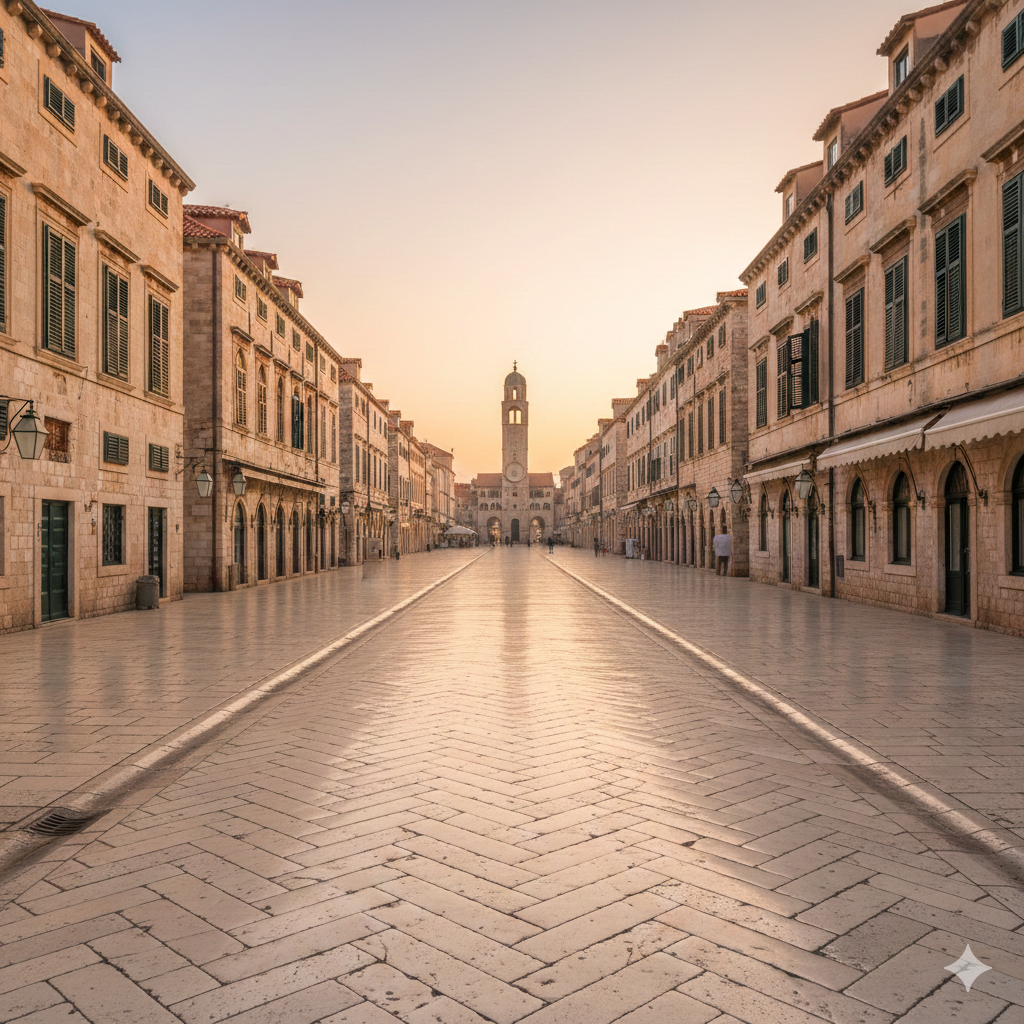
An empty Stradun in the early morning, perfect for solo photography.
What to Do in Dubrovnik
Must-See Attractions:
- Walk the City Walls (Essential): Opens 8 AM—arrive then for golden light and zero crowds. This timing changed my entire Dubrovnik experience. Complete circuit takes 1.5-2 hours. Go clockwise from Pile Gate for best photo opportunities.
- Dubrovnik Pass (2026 Pricing):
- 1 Day: €45 (includes city walls + public transport + 9 museums)
- 3 Day: €60 (best value if visiting multiple sites)
- 7 Day: €80
- Note: If you’re only visiting walls and 1-2 museums, buying separately is cheaper
- Stradun (Placa): The 300-meter limestone main street buzzes with cafés, shops, and people-watching. Best experienced early morning or after 6 PM.
- Rector’s Palace: Beautiful Gothic-Renaissance architecture with historical museum (€10)
- Franciscan Monastery: Late Gothic cloisters and one of the world’s oldest working pharmacies (€6)
- Fort Lovrijenac: “Dubrovnik’s Gibraltar” with fortress views and Game of Thrones filming location (€3, or included in city walls ticket)
Game of Thrones Experiences:
Dubrovnik served as King’s Landing, and filming locations are accessible throughout the city. Blackwater Bay, Joffrey’s wedding site, and walks of shame are all here. Consider joining a guided GOT tour (€25-35) for insider filming secrets and photo opportunities—guides often worked as extras and share behind-the-scenes stories.
Beaches:
- Banje Beach: Most famous beach, steps from Ploče Gate, stunning Old Town views (€10-15 for sunbed, or bring towel for free rocky area)
- Sveti Jakov Beach: Secluded, peaceful, 1.8 km from center—worth the walk down 160 steps (and climb back!)
- Buža Beach Bar: Jump off rocks into crystal water, grab drinks at the clifftop bar. Not really a beach but an unforgettable Dubrovnik experience.
Day Trips:
- Lokrum Island: 10-minute ferry from Old Port (€15 return), peacocks wandering freely, botanical gardens, saltwater Dead Sea lake, nudist beach, 11th-century monastery ruins. Perfect half-day escape.
- Cavtat: Charming harbor village 30 minutes southeast by bus, quieter atmosphere, waterfront promenade
- Elafiti Islands: Boat tours to Koločep, Lopud, or Šipan for sandy beaches and tranquility (€30-50 tours)
- Montenegro (Kotor): Full-day organized trip to stunning bay and medieval town (€40-60), though note: immigration lines can be 1-2 hours in peak summer
Where to Stay in Dubrovnik
Dubrovnik accommodation is pricier than other Croatian cities, especially in summer. I stayed at Old Town Hostel just outside Pile Gate. Female dorms available, friendly staff, and perfect location for exploring without being in the noisy center.
Budget Strategy: Dubrovnik in summer is eye-wateringly expensive, with dorm beds reaching €40-45. Stay in Lapad Peninsula or Gruž and take the bus to Old Town—saves €20-30/night.
Alternative Option: Lapad Peninsula: Residential area 3 km west, beaches nearby, better value (€25-35/night hostels), bus #6 to Old Town (10 minutes)
Dubrovnik Pro Tips
Budget Savers:
- Eat away from Stradun: Walk 2-3 streets back for 30-40% cheaper prices, better quality
- Free activities: Walking Lapad Bay promenade, swimming at public beaches, sunset viewpoints
- Happy hour cocktails 5-7 PM at many bars (€5-7 versus €10-12 regular price)
- Pack picnics: Buy supplies at Konzum supermarket versus restaurant meals
- Skip beach clubs with €10 entry fees—public access is free and equally beautiful
Timing Hacks (Critical for Enjoying Dubrovnik):
- City walls: Arrive at 8 AM opening for golden light and solitude versus 11 AM crowds
- Avoid 10 AM-4 PM when cruise ships dock—up to 10,000 passengers! Check CruiseMapper.com for daily schedules
- Visit September for warm weather, fewer crowds, and 20-30% lower prices than July-August
- Sunset at Fort Lovrijenac: Fewer people than Buža Bar, equally stunning views
Safety Notes:
Generally very safe for solo women. Old Town’s narrow alleys aren’t always well-lit after dark—stick to main paths. Watch belongings in crowded Stradun during cruise ship hours. Use taxi apps to avoid overcharging. Summer heat reaches 35°C—stay hydrated, SPF 50+.
Solo Dining:
Dubrovnik’s café culture welcomes solo diners warmly. Try counter seating at wine bars or communal tables at taverns. I loved sitting at Cogito Coffee with a book, watching tourists stream past while locals chatted with baristas like old friends.
The waterfront at sunset draws everyone—solo travelers, couples, families—all mesmerized by the same beauty. You’re never truly alone in Dubrovnik; you’re part of a collective experience.
Must-Try Foods:
- Fresh seafood: Black risotto (crni rižot), grilled fish with blitva (chard and potatoes)
- Pašticada: Traditional Dalmatian braised beef with gnocchi
- Rozata: Local crème caramel dessert (similar to crème brûlée)
- Croatian wine: Pošip (white) or Dingač (red) from Pelješac peninsula
- D’Vino Wine Bar for tastings without leaving town
My Dubrovnik Days
I dedicated three days to the “Pearl of the Adriatic,” and timing was truly my secret weapon for beating the chaos. I kicked off day one at 8 AM sharp on the City Walls—the best decision I made—capturing the morning light before exploring the narrow side alleys and cooling off at Banje Beach with the Old Town as my backdrop.
My second day was split between the peaceful botanical gardens of Lokrum Island and the rugged heights of Fort Lovrijenac, ending with a communal dinner near Gruž where a shared table and flowing wine turned a solo meal into a beautifully social night.
By day three, I purposefully slowed down, walking the Lapad Bay promenade with a book and a bakery burek, eventually catching a bus to the quiet harbor of Cavtat for lunch. It was the perfect reminder that solo travel isn’t just about the “must-sees”; it’s about the luxury of slowing down and being fully present in your own company.
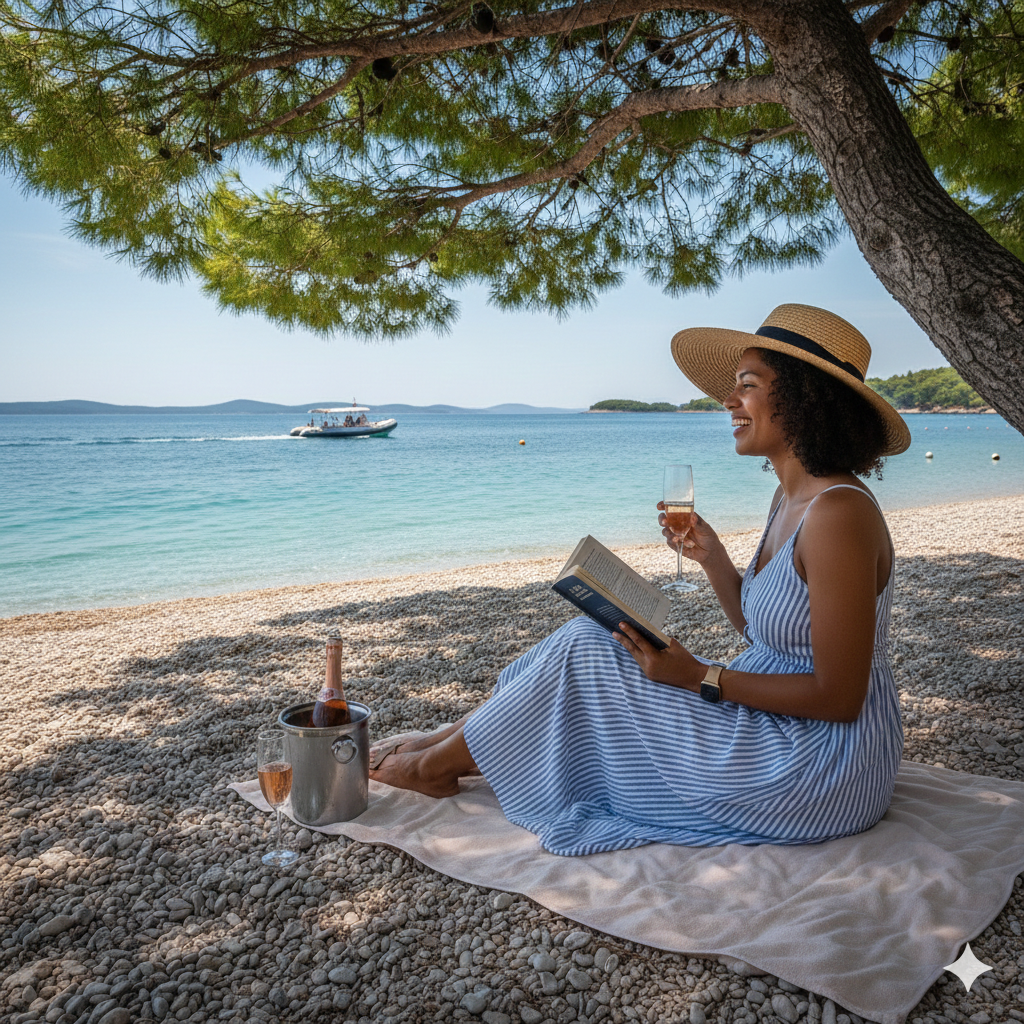
Reading under pine trees in Pakleni Islands
3. Hvar: Glamour Meets Grounded Beauty
Hvar is Best for: Beach lovers, social atmosphere, lavender fields, luxury on a budget
Perfect Time to Visit: May-early June or September (avoid July-August crowds and party intensity)
Croatia’s Glamorous Island
Hvar is the island where celebrities vacation, but you don’t need a yacht to enjoy it. Lavender-scented air, turquoise coves, medieval architecture, and vibrant nightlife create an intoxicating mix. I fell for Hvar’s dual personality—sophisticated and wild, relaxing yet energizing.
My Hvar Moment: I rented a scooter (€30/day) and rode to quiet beaches beyond Hvar Town. Stopped at a family farm where the owner’s grandmother made lavender honey. She insisted I stay for lunch, homemade wine appeared, we communicated through gestures and laughter. That’s the real Hvar beneath the glamour—warm, generous, human.
Solo Female Travel on Hvar
Hvar is among the easiest Croatian islands to reach, with regular ferries from Split (1-2 hours). The island balances party atmosphere with peaceful corners. Solo women blend in perfectly—you’ll meet travelers at beach clubs, hostel terraces, and sunset viewpoints.
Safety context: Hvar Town in July-August has intense nightlife requiring standard club precautions (watch drinks, avoid isolated areas late, use taxis for returns). Outside peak season or beyond Hvar Town, the island is remarkably peaceful and safe.
What to Do on Hvar
Hvar Town:
- Climb to Fortica (Spanish Fortress): panoramic views especially at sunset. The 20-minute uphill walk is worth every sweaty step.
- Wander the marble Stradun and harbor lined with yachts—people-watching at its finest
- Visit St. Stephen’s Cathedral in the main square
- Explore hidden beaches: Walk 20 minutes past the main harbor for quieter swimming at Pokonji Dol or Mekićevica
Beyond Hvar Town:
- Stari Grad: Quieter, more authentic old town with UNESCO-listed agricultural plain, 30-40% cheaper accommodation, regular buses to Hvar Town (20 minutes)
- Jelsa: Small fishing village, local vibe, budget-friendly, beautiful beaches
- Pakleni Islands: Boat taxi to these small islands for secluded beaches—Stipanska and Palmižana are favorites
- Lavender fields: Best in late June-July around villages of Brusje and Velo Grablje (scooter access recommended)
Beach Hopping:
- Dubovica Beach: Pebble beach, crystal water, small konoba restaurant—arrive early or late afternoon
- Milna Beach: Quiet village, family-friendly atmosphere
- Bonj Beach Club: Beach club experience without completely breaking the bank
Activities:
- Kayaking tours around Pakleni Islands
- Wine tasting in Jelsa or Vrboska
- Scooter rental to explore independently—liberating and fun
- Sunset boat trips from Hvar harbor
Where to Stay on Hvar
Hvar Town (most popular):
I stayed at Hvar House Kokolo, walking distance to everything. Rooftop terrace with fortress views, female dorms, kitchen, and social atmosphere. Perfect for meeting other solo travelers for beach days and evening adventures without the aggressive party hostel vibe.
Budget Strategy: Hvar Town in July-August is pricey (€40-45 dorm beds). Stay in Stari Grad or Jelsa for 30-40% savings, take regular buses to Hvar Town for nightlife and beaches.
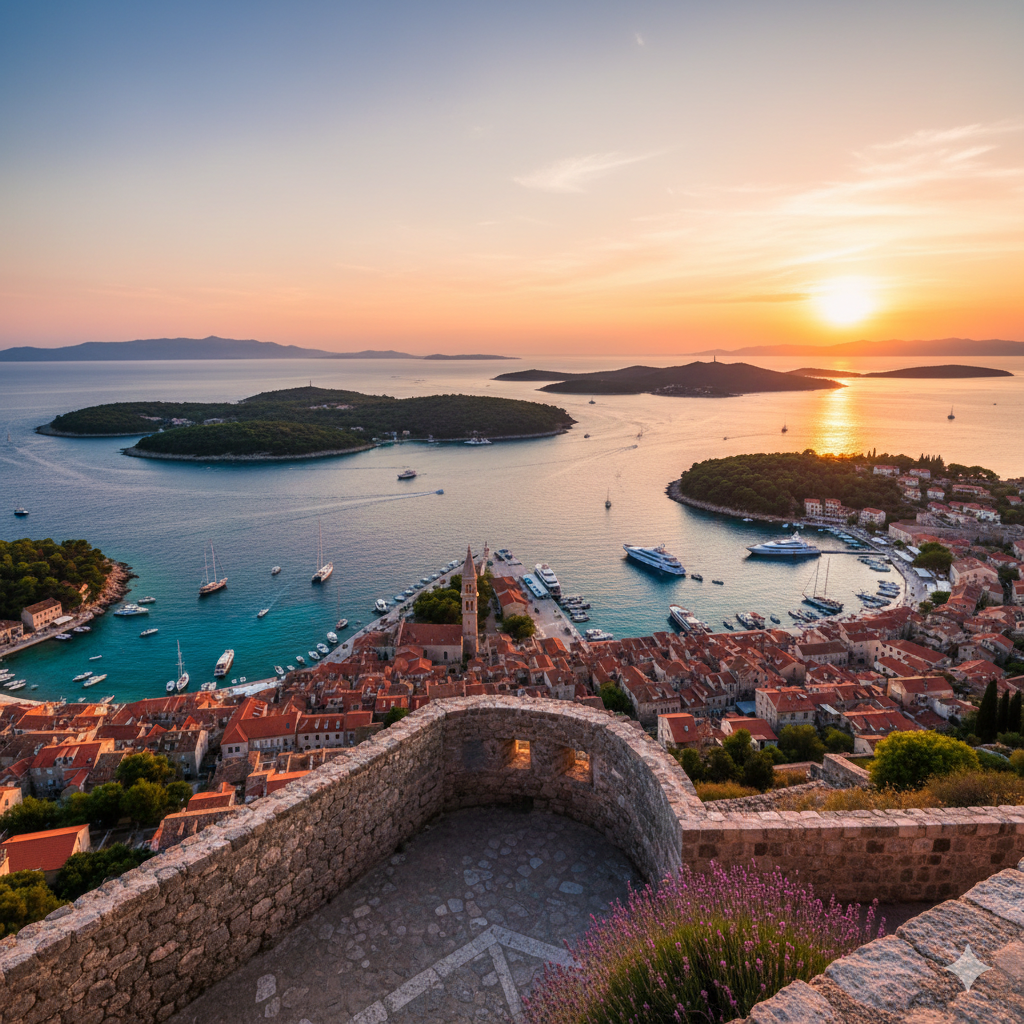
Panoramic view from the Hvar Spanish Fortress (Fortica) overlooking the Pakleni Islands and the turquoise harbor of Hvar Town, Croatia.
Hvar Pro Tips
Budget Savers:
- Visit June or September for 30-40% lower prices than peak summer
- Eat at konobas in villages outside Hvar Town (Milna, Vrboska)—better prices, better quality
- Many beaches are free (rocky or pebbles, bring water shoes)
- Skip beach clubs with €10-15 entry fees unless you really want that scene
- Supermarket picnics from Tommy or Konzum
- Happy hour at harbor bars 6-8 PM (€5-7 cocktails versus €10-12 regular)
Getting There:
- From Split: Jadrolinija ferry or Kapetan Luka catamaran
- Ferry to Hvar Town or Stari Grad—check which port your accommodation is near
- Book ferry tickets same day at port or online for busy season (July-August book ahead)
Island Transport:
- Buses between Hvar Town, Stari Grad, and Jelsa
- Scooter rental for flexibility and adventure (international license helpful but not always required)
- Water taxis to Pakleni Islands from Hvar Town harbor (always negotiate)
- Hitchhiking is common and safe on Hvar (I did it twice, locals are friendly)
Safety:
Very safe for solo women. Hvar Town nightlife requires standard club precautions in July-August (watch drinks, use taxis late). Watch for sea urchins—water shoes essential. SPF 50+ mandatory; Croatian sun is intense.
Solo Dining:
Hvar Town’s harbor is perfect for solo dining. Restaurants have outdoor tables where people-watching is prime entertainment. I loved sitting with local Pošip wine and grilled fish, watching sunset yachts arrive while travelers and locals mingled. You’re never awkwardly alone here—the harbor energy includes everyone.
My Hvar Island Day
My three days on Hvar perfectly captured the island’s dual personality of glamour and grounded beauty. I spent day one climbing to the Fortica fortress for those iconic terracotta views and wandering the marble streets before a spontaneous sunset drink with a group of women I met at a clifftop bar—one of those beautiful solo travel accidents.
Day two was pure peace; I took a water taxi to the Pakleni Islands, spent hours beach-hopping and reading under pine trees, and eventually joined a sunset boat tour to toast the day with champagne.
I saved my final day for exploring the authentic side of the island on a rented scooter, riding out to the historic streets of Stari Grad and stopping at a lavender farm. Lunch was a highlight—a family konoba in Jelsa where the grandmother cooked while we communicated through smiles and Google Translate—revealing the authentic soul of Hvar that most tourists miss
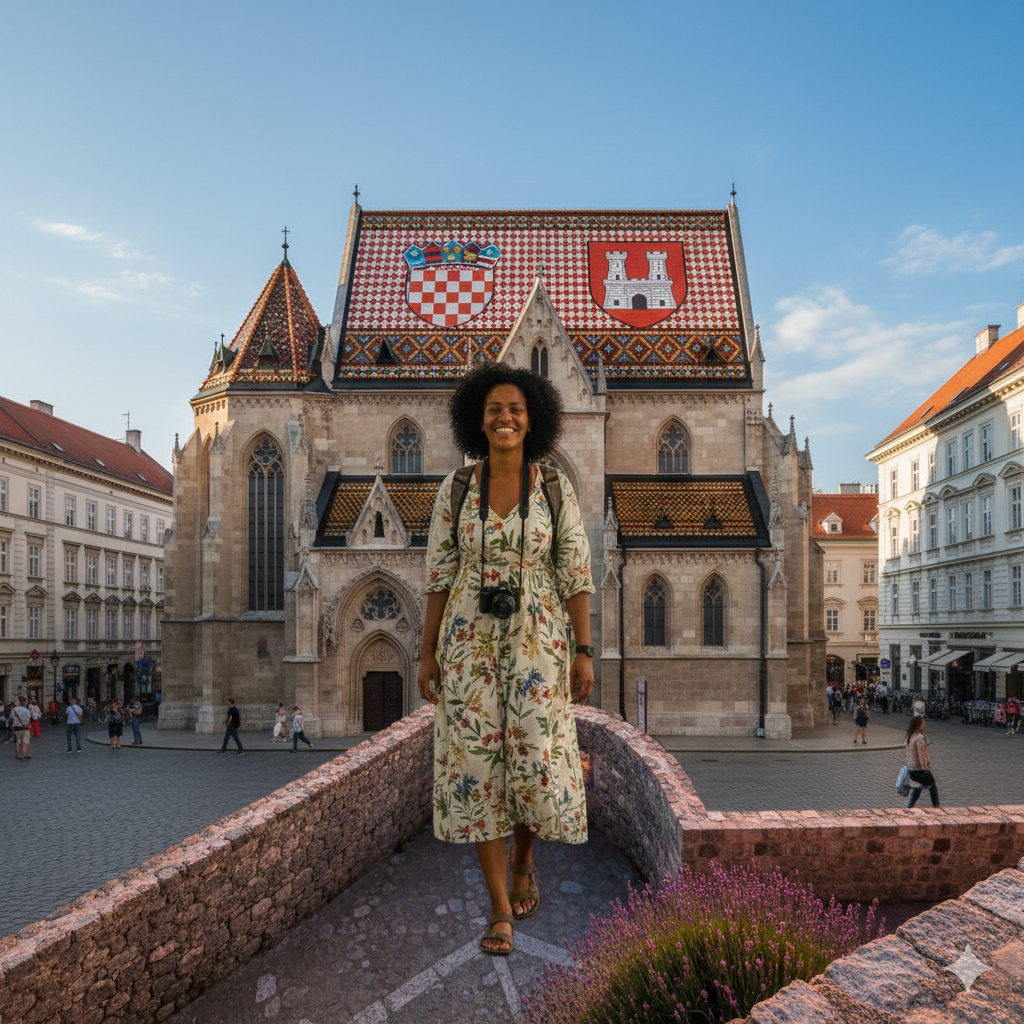
St. Mark’s Church in Zagreb, with its medieval architecture and the colorful tiled roof featuring the coat of arms of Croatia.
4. Zagreb: The Underrated Capital
Zagreb is Best for: Culture lovers, café hoppers, Christmas markets, art and architecture
Best Time to Visit: April-May, September-October (pleasant weather) or December (magical Christmas markets)
Croatia’s Charming Capital
Zagreb surprises travelers who rush straight to the coast. This vibrant capital blends Austro-Hungarian elegance with bohemian energy. Café culture thrives, museums are world-class yet intimate, and the city feels refreshingly non-touristy compared to coastal hotspots.
My Zagreb Discovery: I stumbled upon the Museum of Broken Relationships, expecting quirky but finding deeply moving. Personal objects and stories from ended relationships worldwide—funny, heartbreaking, profoundly human. An ex’s garden gnome. A wedding dress with an axe through it. Letters never sent. Perfect for solo reflection on love, loss, and connection. One of my favorite museums anywhere.
Why Zagreb for Solo Female Travelers
Zagreb is one of the safest cities in Europe. The city is affordable (30-40% cheaper than Dubrovnik), compact enough to explore on foot, and filled with cozy cafés perfect for solo travelers who want to journal, people-watch, or meet locals. Zagreb residents are friendly and many speak excellent English.
The café culture advantage: Solo dining and solo coffee drinking are completely normal here. Locals spend hours at cafés reading newspapers, working on laptops, or simply watching life pass. You’ll blend seamlessly—no one rushes you, no one makes you feel awkward. Order a kava (coffee), claim a window seat, stay two hours. This is Zagreb’s soul.
What to Do in Zagreb
Upper Town (Gornji Grad):
- Take the funicular (world’s shortest public transport), to Upper Town—more about the experience than the distance
- Visit St. Mark’s Church with its colorful tiled roof featuring Croatian and Zagreb coats of arms
- Walk through the Stone Gate, Zagreb’s medieval entrance with a chapel inside
- Explore Lotrščak Tower and catch the Grič cannon fired daily at noon (locals set their watches by it)
- Stroll Strossmayer Promenade for city views and peaceful benches
Lower Town (Donji Grad):
- Ban Jelačić Square: Zagreb’s main square, bustling with life and meeting point for everything
- Dolac Market: Open-air produce market with traditional sellers in red umbrellas—go morning for fresh samples and authentic atmosphere
- Tkalčićeva Street: Pedestrian street lined with cafés, restaurants, and bars—Zagreb’s social heart
- Croatian National Theatre: Beautiful building, and affordable performances
- Zrinjevac Park: One of several green horseshoe squares perfect for relaxing with a book
Museums & Culture:
- Museum of Broken Relationships: Unique, moving, highly recommended (allow 1-2 hours)
- Croatian Museum of Naïve Art: Delightful folk art collection
- Mimara Museum: Wide art collection from ancient to modern
- Museum of Illusions: Fun, interactive experience—surprisingly enjoyable solo
- Botanical Gardens: Free entry, peaceful escape from urban energy
Grič Tunnel Experience:
Walk through the WWII shelter tunnel connecting Upper Town—now an art and event space, atmospheric and historical.
Where to Stay in Zagreb
I loved Stay Swanky Hostel in the city center, steps from Ban Jelačić Square. Female dorms, clean modern facilities, social common area with board games and books, excellent breakfast included. The location made exploring on foot effortless—everything within 20 minutes walking.
Alternative Options:
- Main Square Hostel: Prime location, friendly staff, social atmosphere
- Private apartments: Affordable throughout the city (€40-80/night via Booking.com or Airbnb)
Neighborhood Notes:
- Center (Donji Grad): Most convenient, walkable to everything, best for short stays
- Upper Town: Quieter, historic, requires more walking/stairs but charming atmosphere
- Trešnjevka: Residential neighborhood, local vibe, tram access to center, budget-friendly
Zagreb Pro Tips
Budget Savers:
- Many museums offer free or reduced entry first Sunday of each month
- Eat at bakeries: Fresh burek and pastries for €2-3 make perfect breakfast
- Supermarkets (Konzum, Plodine) for groceries—breakfast from supermarket saves €5-7 daily
- Dolac Market: Fresh produce cheaper than restaurants, try fresh fruit
- Free walking tours daily from Ban Jelačić Square (tip €5-10)
- Tram day pass: €4 for unlimited rides (though most sights are walkable)
Café Culture Immersion:
Zagreb’s café culture is legendary—and perfect for solo travelers. Order a coffee, grab a window seat on Tkalčićeva, bring a book or journal. Stay two hours. No one rushes you. This is Zagreb’s rhythm—dolce far niente (the sweetness of doing nothing). Locals do it daily; you’ll fit right in.
Best Cafés for Solo Travelers:
- Amelie: Cozy vintage décor, popular with students and creatives, Tkalčićeva location
- Cogito Coffee: Specialty coffee, minimalist vibe, perfect window seats
- Kava Tava: Traditional Zagreb café with outdoor terrace and people-watching
- Kavana Mala: Hidden gem near Upper Town, locals’ hangout
Safety:
Very safe overall. Watch belongings at bus/train stations and crowded trams. Avoid poorly lit parks alone after 10 PM. Well-lit streets and safe public transport. Solo women walk around evening regularly without issues.
Solo Dining:
Zagreb’s Tkalčićeva Street is perfect for solo dining. Restaurants have outdoor tables, locals dine alone regularly, and the atmosphere is lively yet relaxed. I often sat with a book and local Graševina wine, feeling completely at ease. Counter seating at wine bars also works beautifully for solo travelers.
Food to Try:
- Štrukli: Baked or boiled cheese pastry—Zagreb specialty, comfort food at its finest
- Čevapi: Grilled minced meat sausages with flatbread, onions, kajmak (cream cheese)
- Zagreb schnitzel: Breaded veal or pork cutlet stuffed with ham and cheese
- Kremšnite: Custard cream cake from nearby Samobor—take day trip or find in Zagreb bakeries
My Zagreb Day
Capital Culture
Started with coffee at Tkalčićeva café, watching Zagreb wake up. Took the funicular to Upper Town, explored St. Mark’s Church, got lost in medieval streets. The Museum of Broken Relationships moved me to tears and laughter—exactly what solo travel gifts you: space to feel everything deeply.
Lunch at Dolac Market, buying fresh cherries and local cheese for picnic in Zrinjevac Park. Afternoon wandering Botanical Gardens for quiet journaling. Evening at Croatian National Theatre watching ballet (€18 ticket)—dressed up, felt sophisticated and alive.
If staying longer: Day trip to Plitvice Lakes (details in Plitvice section) or explore local café culture more deeply.
5. Plitvice Lakes National Park: Nature’s Masterpiece
Plitvice Lakes are Best for: Nature lovers, photographers, hiking enthusiasts
Best Time to Visit: May-June or September-October (avoid summer crowds, winter snow)
Croatia’s Natural Wonder
Plitvice Lakes isn’t a city, but no Croatia trip is complete without visiting this UNESCO World Heritage Site. Sixteen turquoise lakes connected by waterfalls, wooden walkways winding over crystal water, and thick forests create a fairy tale landscape that feels almost unreal.
My Plitvice Experience: Walking wooden boardwalks inches above rushing water, surrounded by butterflies and dragonflies, I felt transported to another world. The lakes’ colors shift from emerald to azure to turquoise depending on minerals and light—nature’s masterpiece, constantly evolving.
Solo Travel at Plitvice
Plitvice feels safe and well-organized—one of the best places to visit in Croatia if you’re chasing incredible nature. Wooden trails are easy to navigate, clearly marked, and you’ll see solo travelers everywhere enjoying the scenery at their own pace.
The park’s beauty attracts international visitors, creating a respectful, peaceful atmosphere. I never felt unsafe or uncomfortable as a solo woman—just awed by nature.
Planning Your Visit
Getting There:
- From Zagreb: Bus 2-2.5 hours- Best option for a day trip. Departures 6:30 AM, 7:30 AM, 8 AM from main bus station. Book via GetByBus.com or at station.
- From Split: Bus 3-4 hours
- From Zadar: Bus 1.5-2 hours
- Book tickets in advance for peak season (July-August)
Entrance Fees (2026 Prices):
- April-May & October: €10-15
- June-July: €25-30
- August: €35-40 (peak price, peak crowds)
- November-March: €8-10 (cold but beautiful)
- Entrance includes boat ride and panoramic train within park
Entrances: Two main entrances (Entrance 1 is main and closer to lower lakes). Most routes start from Entrance 1.
How Long:
- Half day minimum (4-5 hours for partial exploration)
- Full day ideal (6-8 hours) to explore both upper and lower lakes without rushing
- Park opens 7 AM in summer, 8 AM rest of year—arrive early!
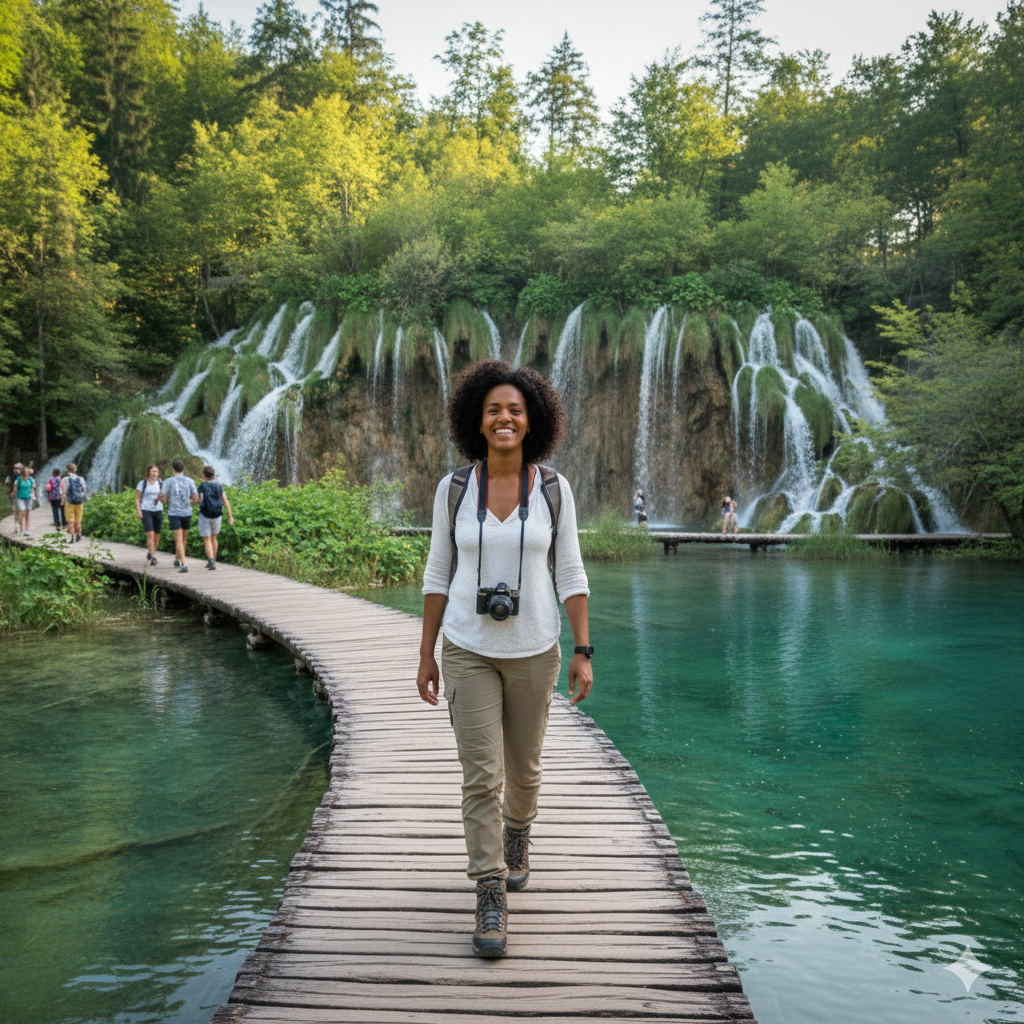
Wooden hiking boardwalks winding over crystal-clear turquoise lakes and cascading waterfalls in Plitvice Lakes National Park, a UNESCO World Heritage site in Croatia
What to Do at Plitvice
Hiking Trails:
Several marked routes ranging from 2-8 hours. Most popular is Route K (6-8 hours) covering both lake sections with variety. Trails are well-marked with wooden boardwalks over water and forest paths. Easy-moderate difficulty suitable for most fitness levels.
Photography:
Every turn is Instagram-worthy—no exaggeration. Best light is early morning or late afternoon (golden hour magic). Bring waterproof camera case or phone pouch—spray from waterfalls is constant and beautiful.
Swimming:
Swimming is NOT allowed in the lakes (strictly enforced by rangers). Admire, don’t swim.
Boats & Trains:
Included in entrance fee. Panoramic train and electric boat transport you between sections, giving legs a break. Boats are especially scenic, crossing the largest lake.
Where to Stay Near Plitvice
Most visitors day-trip from Zagreb, but staying overnight allows early morning park access before crowds arrive—transformative experience.
Mukinje Village:
- Walking distance to park (10-15 minutes)
- Guesthouses and small hotels (€40-80/night)
- Pizzeria Vučnica has surprisingly excellent pizza for dinner
Rastoke Village:
- 20 minutes away by bus or car
- “Mini-Plitvice” with waterfalls running through village and traditional mills
- Charming, worth visiting even if not staying overnight
Plitvice Pro Tips
Timing (Critical for Best Experience):
- Arrive at park opening (7-8 AM) for magical solitude before tour buses arrive
- Avoid 11 AM-3 PM when tour buses invade and crowds are shoulder-to-shoulder
- Weekdays are quieter than weekends
- September is ideal—warm weather, beautiful light, manageable crowds
What to Bring:
- Water and snacks (€5-8 inside park at limited kiosks, versus €2-3 outside)
- Comfortable waterproof hiking shoes (boardwalks get wet and slippery—I saw multiple people slip)
- Rain jacket (weather changes fast in mountains)
- Sunscreen and hat (limited shade on boardwalks)
- Power bank for phone photos (you’ll take hundreds)
- Cash for entrance if not pre-booked online
Solo Strategy:
I joined a small group tour from Zagreb (€40-60 including transport and entrance), perfect for solo travelers wanting company and logistics handled. Made friends with other solos, explored together while still having personal space and pace.
Alternatively, independent travel by public bus works perfectly—just arrive early for best experience.
My Plitvice Day from Zagreb:
Caught 7:30 AM bus from Zagreb main station (booked ticket night before on GetByBus.com, €12). Arrived at park 10 AM, entered via Entrance 1, followed Route K through both lake sections.
The morning light on waterfalls was ethereal—absolutely magical in peaceful early hours before crowds thickened. Packed lunch from Zagreb bakery (€4), ate on a bench overlooking the big waterfall, watching water cascade while dragonflies hovered nearby.
Spent 6 hours total in the park, never rushed, took hundreds of photos. Every turn revealed new beauty—turquoise pools, cascading falls, forests alive with birdsong. Returned to Zagreb by 7 PM bus, exhausted but glowing from nature’s majesty.
Best day trip of my Croatia adventure. Worth every minute.
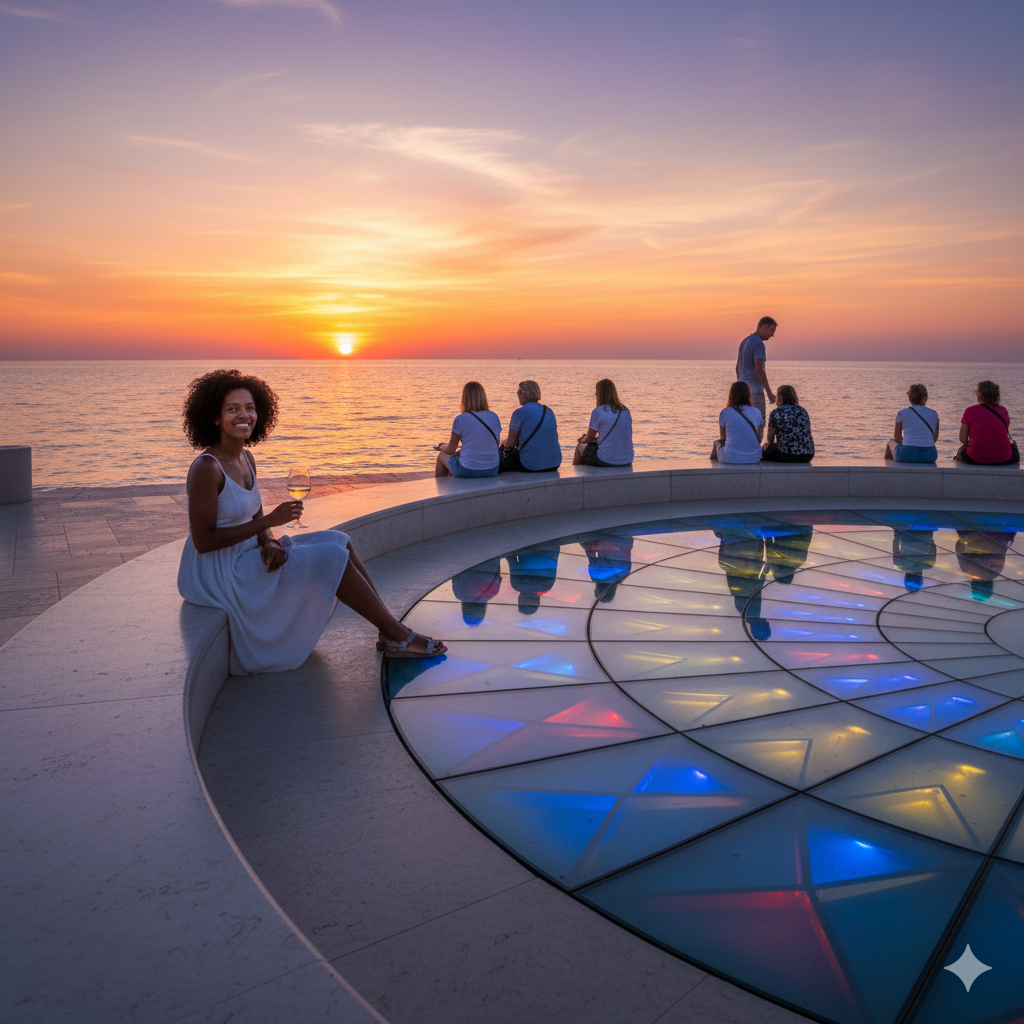
Sea Organ with waves that create haunting music through underwater pipes installed in marble steps
6. Zadar: The Unexpected Adriatic Gem
Zadar is Best for: Unique art installations, romantic sunsets, peaceful vibes, budget-conscious travelers
Perfect Time to Visit: May-June, September (warm, uncrowded)
The City That Surprised Me
Many solo travelers fly into Zadar (Ryanair hub) then rush to Split or Dubrovnik. Big mistake. Zadar deserves more than airport status—this city combines Roman ruins with modern art, creating vibrant atmosphere that’s smaller than Split, more authentic than Dubrovnik, and significantly cheaper than both.
Alfred Hitchcock called Zadar’s sunset “the most beautiful in the world.” Sitting on Sea Organ steps at dusk, listening to wave-created music while sun melted into Adriatic, I understood his enthusiasm completely.
Why Solo Travelers Love Zadar
Zadar is easy to navigate, safe, affordable, and the Sea Organ at sunset attracts travelers from around the world—easy to strike up conversations if you’re feeling social. The city’s compact old town feels manageable for solo exploration, locals are helpful, and tourist infrastructure exists without overwhelming charm.
What to Do in Zadar
Unique Installations:
- Sea Organ: Waves create haunting music through underwater pipes installed in marble steps (free, open 24/7, magical at sunset)
- Greeting to the Sun: Solar-powered 22-meter light installation next to Sea Organ, dances with colors after dark (free)
- Sunset Experience: Find a spot on the waterfront, bring wine from the supermarket, and experience what Hitchcock raved about
Historical Sites:
- Roman Forum ruins (free to wander, impressive remains from 1st century BC)
- St. Donatus Church (9th century, iconic circular design)
- Cathedral of St. Anastasia (€tower climb for city views)
- Old Town narrow streets and cafés—get lost intentionally
Beaches:
- Kolovare Beach: Near Old Town, pebbles, swimming platforms, beach bars
- Borik Beach: 3 km north, larger, family-friendly
- Diklo Beach: Local favorite, less touristy
Day Trips from Zadar:
- Plitvice Lakes: 1.5 hours by bus
- Kornati Islands National Park: Boat tours through 89 islands
- Krka National Park: Waterfalls with swimming (1.5 hours)
Where to Stay in Zadar
Downtown Boutique Hostel Zadar: Designer accommodation at budget prices, stunning dorm design with wooden accents, central Old Town location, rooftop terrace. Female dorms are available. Perfect for solo travelers wanting style without luxury prices.
Alternative Options:
- Hostel Forum: Another well-reviewed option near Roman Forum
- Private apartments: Old Town or Borik area
Zadar Solo Tips
Perfect Stopover: Zadar works beautifully for 1-2 nights if you’re flying in/out or traveling between Zagreb and Split. Build it into your itinerary—you won’t regret it.
Sunset Ritual: The Sea Organ naturally brings people together. I made friends there simply by sharing a marble step and listening to the ocean’s music together. Spontaneous conversations about travel, life, dreams—solo travel magic.
Budget-Friendly: Zadar is noticeably cheaper than Dubrovnik or Hvar (30-40% less), with excellent food and accommodation value. Eat local, stay central, enjoy.
Timing: Visit outside July-August for even better value and fewer crowds. May, June, and September are perfect.
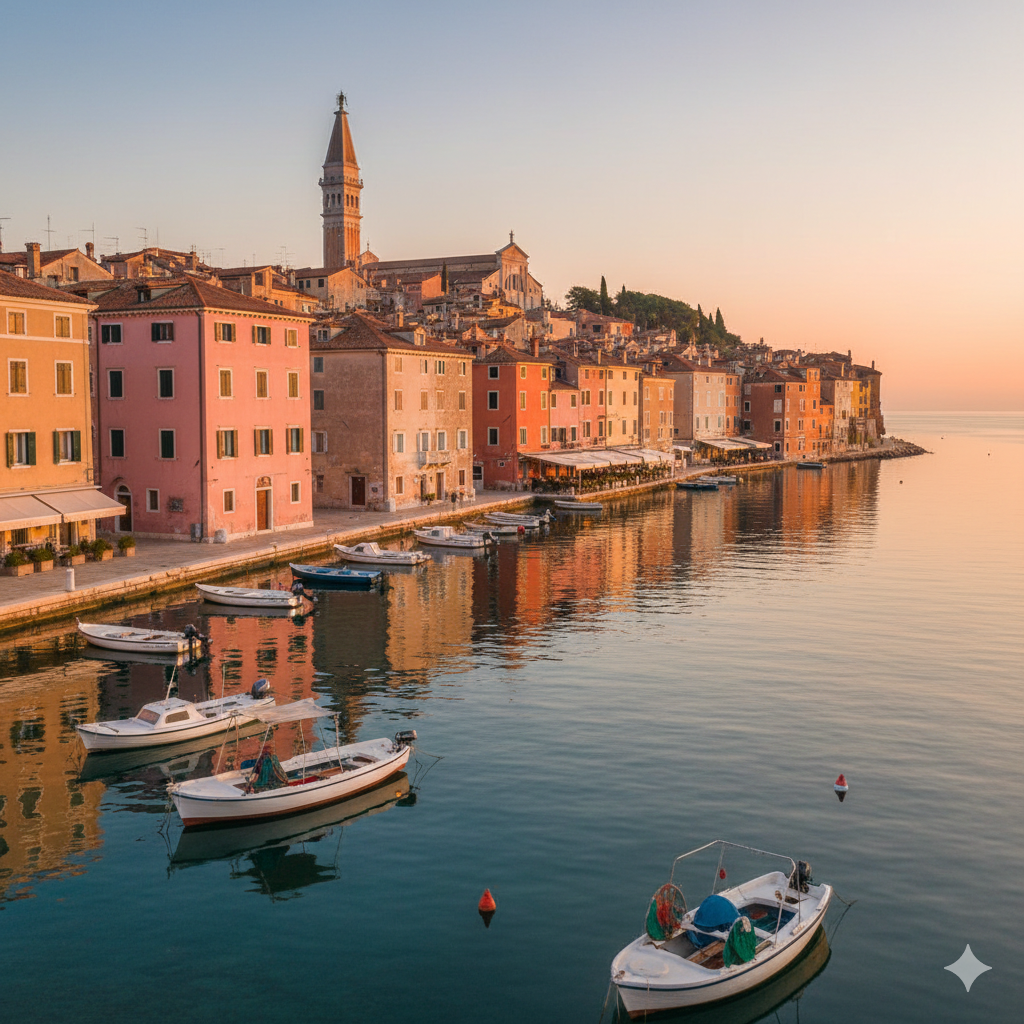
The pastel-colored Venetian-style buildings of Rovinj, Istria, reflecting in the calm harbor waters during a Mediterranean sunset.
7. Rovinj: Istrian Romance
Rovinj is Best for: Photography, Italian influence, truffle cuisine, charming atmosphere
Perfect Time to Visit: May-June, September (warm without summer crowds)
Where Croatia Meets Italy
Istria Peninsula feels distinctly Italian—Venetian architecture, bilingual signs, pasta on every menu. Rovinj, Istria’s jewel, enchants with pastel harbor buildings rising to St. Euphemia’s Church, cobblestone streets climbing hillsides, and cuisine blending Croatian and Italian traditions beautifully.
Historical context: Istria belonged to Italy until 1947, explaining the cultural fusion. You’ll hear Italian spoken alongside Croatian, see Italian influence in architecture and food, feel Mediterranean warmth.
What to Do in Rovinj
Old Town:
- Wander narrow streets winding uphill, discovering art galleries and artisan shops
- Climb St. Euphemia’s bell tower for harbor and Adriatic views
- Explore Grisia Street—artists’ street filled with galleries and studios
Harbor:
- Waterfront promenade perfect for sunset strolls (local evening ritual)
- Fishing boats bobbing in turquoise water—postcard-perfect
- Harbor cafés for people-watching and Aperol spritz
Beaches:
- Lone Bay (Zlatni Rt): Forest park with pebble beaches, pine shade, clear water
- Cuvi Beach: Quieter, less crowded, local favorite
- St. Catherine Island: Short boat ride, peaceful beaches
Activities:
- Bike rental to explore coastal paths and forest park
- Truffle hunting tours in Istrian countryside—memorable experience
- Wine tasting Istrian varieties Malvazija (white) and Teran (red)
Food Experiences:
- Truffle pasta at local konobas (€12-18 versus €30+ in Italy)
- Istrian prosciutto and local cheeses
- Seafood risotto with Malvazija wine
- Italian-style gelato from harbor shops
Where to Stay in Rovinj
Heritage Hostel Histria Restored traditional building in Old Town, intimate atmosphere, female dorms available, helpful staff. Perfect for solo travelers wanting charm on a budget.
Alternative Option:
- Private apartments: Old Town or near beaches (€60-100/night)
Rovinj Solo Tips
Photography Paradise: Every corner of Rovinj’s Old Town is photogenic—pastel buildings, cobblestone streets, harbor views. Early morning or sunset light is magic.
Day Trips: Explore other Istrian towns by bus or rental car—Pula (Roman amphitheater), Poreč (Byzantine mosaics), Motovun (hilltop village), Grožnjan (artist colony).
Budget: Rovinj is moderately priced, cheaper than Dubrovnik or Hvar but not as budget-friendly as Zagreb. Truffle dishes are the splurge worth every euro.
Sample Itinerary: Croatia Solo Travel Routes
14-Day Ultimate Croatia & Istria Itinerary
This two-week route is designed to give you a comprehensive experience, blending the famous coastal “triangle” with the lush, Italian-influenced greenery of the Istria peninsula.
Phase 1: Culture & Waterfalls, Day 1 to 3
- 1–2: ZagrebArrive in the capital. Explore the Upper Town, visit the Museum of Broken Relationships, and lean into the city’s legendary café culture on Tkalčićeva Street.
- 3: Plitvice LakesTake an early bus for a full day of hiking the wooden boardwalks. Return to Zagreb in the evening.
Phase 4: The Adriatic Coast, Day 4 to 7
- 4–5: ZadarHead to the coast. Experience the Sea Organ at sunset and wander the Roman Forum. It’s significantly more budget-friendly than the southern cities.
- 6–7: SplitExplore Diocletian’s Palace and hike Marjan Hill. Use day seven for a quick trip to the medieval town of Trogir or a beach day at Bačvice.
Phase 3: Islands & Icons, Day 8 to 10
- 8: HvarTake the morning ferry. Climb to the Fortica for the best views in Croatia and enjoy the social vibe of the harbor.
- 9–10: DubrovnikFerry or bus to the “Pearl of the Adriatic.” Walk the City Walls at sunrise and take a boat to Lokrum Island to escape the cruise ship crowds.
Phase 4: The Istrian Escape, Day 11 to 14
- 11–12: RovinjTravel north (flight from Dubrovnik to Pula or bus from Split). Get lost in the pastel-colored alleys of Rovinj and indulge in Istrian truffle pasta.
- 13: Pula & Hilltop VillagesVisit the Roman Amphitheater in Pula, then head inland to the medieval hilltop villages of Motovun or Grožnjan.
- 14: DepartureCatch a flight out of Pula airport or take a bus back to Zagreb for your final connection home.
When to Visit Croatia: Month-by-Month Weather & Crowd Guide
| Month | Avg Temp (Coast) | Sea Temp | Crowds | Prices | Best For |
|---|---|---|---|---|---|
| April | 15-19°C (59-66°F) | 14°C (57°F) | Low | Low | Sightseeing, Plitvice, budget travel |
| May | 20-24°C (68-75°F) | 18°C (64°F) | Medium | Medium | IDEAL TIMING – perfect balance |
| June | 24-28°C (75-82°F) | 22°C (72°F) | Medium-High | Medium-High | Excellent weather, warm swimming |
| July | 27-31°C (81-88°F) | 25°C (77°F) | Peak | Highest | Beach clubs, party scene, extreme heat |
| August | 27-32°C (81-90°F) | 26°C (79°F) | Peak | Highest | Maximum crowds, heat, prices |
| September | 23-27°C (73-81°F) | 24°C (75°F) | Medium | Medium-High | BEST VALUE – warm, fewer crowds |
| October | 18-22°C (64-72°F) | 20°C (68°F) | Low | Medium | Budget, autumn colors, peace |
Detailed Monthly Analysis
May: The Sweet Spot
Warm air, tolerable sea temperature, manageable crowds. Prices are reasonable, all businesses are open, wildflowers bloom across islands, landscapes glow green and vibrant.
Verdict: If visiting once in your life, choose late May (May 15-30).
June: Early Summer Bliss
Excellent weather without peak heat, warm swimming temperatures, not yet overwhelming crowds. Lavender blooming in Hvar creates purple hillsides and intoxicating scent.
Perfect for beach + culture balance. Book accommodation 2-3 weeks ahead.
July-August: Peak Intensity
Guaranteed sunshine, warmest sea temperatures, maximum crowds and prices. Heat can be oppressive (35-40°C/95-104°F). Cruise ships overwhelm Dubrovnik. Beach clubs and nightlife thrive.
Avoid August unless you love heat, crowds, and don’t mind premium prices. If you must visit, book months ahead.
September: The Golden Month
Still warm with perfect sea temperature, crowds dissipating as families return for school, prices dropping 20-30%. Grape harvest atmosphere in wine regions, golden light for photography.
Rivals May for perfect timing. Slightly warmer than May but busier. Best overall value.
October: Autumn Appeal
Warm in the south, cooler in the north. Water still swimmable early October. Significantly fewer tourists, lower prices, beautiful autumn light. Some seasonal businesses closing.
Good for budget travelers who don’t mind cooler weather.
November-March: Off-Season
Coastal towns quiet or closed, cold for swimming, shorter days. However: cheapest prices, no crowds, authentic local experience. Zagreb Christmas markets in December are magical.
Best for city exploration (Zagreb, Split), cultural experiences, serious budget travel. Skip if you want beach time.
My Timing Recommendation
Best Overall: May 15-June 15 or September 1-25
Best for Budget: April, October, early November
Perfect for Weather Guarantee: June-August (but accept crowds)
Avoid: August if you dislike crowds; winter if you want swimming
Budget Breakdown: Solo Female Travel Croatia 2026
Accommodation Pricing by Destination
| City | Hostel Dorm | Private Hostel Room | Budget Hotel | Mid-Range Hotel |
|---|---|---|---|---|
| Zagreb | €20-28 | €50-70 | €60-80 | €100-140 |
| Split | €25-35 | €60-75 | €70-100 | €120-160 |
| Dubrovnik | €35-45 | €80-100 | €100-140 | €150-250 |
| Hvar | €30-45 | €70-90 | €90-130 | €150-220 |
| Zadar | €20-30 | €60-80 | €70-90 | €100-140 |
| Rovinj | €25-35 | €70-90 | €80-110 | €120-180 |
Peak season (July-August) prices. Shoulder season 20-30% cheaper.
Daily Budget Estimates
| Travel Style | Daily Cost | What’s Included |
|---|---|---|
| Ultra Budget | €50-70 | Hostel dorm, bakery breakfast, supermarket lunch, konoba dinner, walking/buses, free activities |
| Budget Conscious | €70-100 | Mix hostel/budget hotel, café breakfast, restaurant lunch, konoba dinner, buses, some paid activities |
| Mid-Range Comfort | €100-150 | Private rooms, restaurant meals 2x daily, taxis occasionally, tours, wine |
| Comfortable | €150-200 | Nice hotels, all restaurant meals, organized tours, taxis freely, cocktails |
| Luxury | €250+ | Upscale hotels, fine dining, private tours, no budget constraints |
Two-Week Trip Total Costs
| Travel Style | 14-Day Total |
|---|---|
| Ultra Budget | €700-1,000 |
| Budget Conscious | €1,000-1,400 |
| Mid-Range | €1,400-2,000 |
| Comfortable | €2,000-3,000 |
| Luxury | €3,500+ |
Excludes international flights
Transportation Costs
| Route | Bus | Ferry/Catamaran | Flight |
|---|---|---|---|
| Zagreb – Split | €20-30 (6 hrs) | N/A | €40-80 (1 hr) |
| Split – Dubrovnik | €15-25 (4.5 hrs) | N/A | €50-90 (45 min) |
| Split – Hvar | N/A | €8-18 (1-2 hrs) | N/A |
| Zagreb – Plitvice | €10-15 (2.5 hrs) | N/A | N/A |
| Split – Korčula | €25-35 (bus+ferry) | €15-20 (ferry) | N/A |
Activity & Entrance Fees
Free Activities:
- Beach access (all public beaches)
- Walking tours (tip €5-10)
- Most churches
- Parks and nature walks
- People-watching, window shopping
Paid Activities:
- Dubrovnik city walls: €35 (€25 Nov-March)
- Plitvice Lakes: €10-40 (seasonal)
- Museums: €3-10 average
- Boat tours: €20-50 half-day
- Kayaking: €30-50
- Wine tasting: €10-25
- Game of Thrones tour: €25-35
- Nightlife drinks: €5-15
Budget Meal vs. Splurge Comparison
| Budget Option | Price | Splurge Option | Price |
|---|---|---|---|
| Bakery burek + coffee | €3-4 | Waterfront seafood dinner | €35-50 |
| Supermarket picnic | €6-8 | Fine dining konoba | €40-60 |
| Konoba daily menu | €10-12 | Upscale restaurant | €50-80 |
| Street food ćevapi | €5-7 | International cuisine | €25-35 |
Money-Saving Strategies
Accommodation:
- Book hostels 2-3 weeks ahead for best rates
- Stay in Stari Grad instead of Hvar Town (save 30-40%)
- Choose Lapad instead of Dubrovnik Old Town (save €20-30/night)
- Look for hostels with breakfast included (saves €5-8/day)
Food:
- Breakfast at bakeries, not cafés (save €5-7)
- Big lunch when daily menus are offered (€10-12 versus €20-30 dinner)
- Shop at Konzum, Plodine, or Tommy supermarkets
- Share portions—Croatian servings are huge
- Happy hour drinks 5-7 PM (save 40-50%)
- Some hostels offer free communal dinners
Transport:
- Book bus tickets online in advance (save 10-20%)
- Walk when possible—Croatian cities are compact
- Use local buses instead of taxis (€1.50-2 versus €5-10)
- Split ferry costs with other travelers for island day trips
Activities:
- Free walking tours (tip what you can afford)
- Public beaches—no entry fees
- First Sunday museum free entries in many cities
- Hike instead of paying for viewpoint tours
- Sunset watching costs nothing
Health & Packing Essentials
What to Pack:
Clothing (Summer: June-September):
- Lightweight breathable fabrics (cotton, linen, quick-dry)
- 2-3 sundresses or skirts (easy, comfortable, versatile)
- Shorts (knee-length for church visits)
- Swimsuit + quick-dry cover-up
- Light cardigan/shawl (churches require covered shoulders, evening cool-down)
- One nicer outfit (upscale dinner, theater, feeling fancy)
- Comfortable walking shoes for cobblestones (broken-in, supportive)
- Water shoes for rocky beaches (€10-15 if buying there)
- Sandals for evening strolls
- Sun hat (wide-brim), sunglasses (UV protection)
- rain jacket (summer storms appear suddenly)
Shoulder Season (April-May, Sept-Oct):
- Add light layers, long pants, sweater
- Windbreaker for coastal breezes
- Light scarf (stylish + functional)
Beach Essentials:
- Microfiber towel (hostels don’t provide beach towels)
- Water shoes (CANNOT emphasize enough—sea urchins are real, I stepped on one)
- Reef-safe sunscreen SPF 50+ (regular sunscreen damages marine ecosystems)
- After-sun lotion or aloe vera
- Waterproof phone pouch (€5-10, protects from water/sand)
Tech (Critical for Solo Safety):
- Portable power bank (Anker 20,000mAh recommended)—Croatian days are long, phone drains fast
- Universal adapter (Type C/F European plugs)
- Headphones (buses, ferry rides, hostel noise)
- Kindle/e-reader or book (solo dining, beach time, downtime)
Toiletries:
- SPF 50+ sunscreen (expensive in Croatia—bring from home)
- Insect repellent (summer evening mosquitoes near water)
- Basic first aid: bandaids, pain reliever, anti-diarrhea, motion sickness meds
- Prescription medications in original packaging with doctor’s note
- Tampons/pads (available but bring preferred brand)
Practical Accessories:
- Reusable water bottle (tap water safe throughout Croatia—save €2-3/day)
- Day pack/small backpack (beach days, day trips, city exploring)
- Dry bag for beach electronics (€8-15, waterproof protection)
- Packing cubes (hostel organization, life-changing)
- Small padlock for hostel lockers (combination lock, TSA-approved)
- Eye mask + earplugs (hostel essentials for quality sleep)
Documents:
- Passport (valid 6 months beyond travel dates)
- Travel insurance card/policy details (print + digital)
- Credit cards (Visa and Mastercard widely accepted—notify bank before travel)
- Driver’s license (if renting car/scooter)
- EHIC (European Health Insurance Card for EU citizens)
- Printed accommodation confirmations (backup if phone dies)
- Emergency contact list (physical copy separate from phone)
What NOT to Pack:
- Hair dryer (accommodations provide)
- Excessive clothing (laundry available everywhere)
- Valuable jewelry (security risk, no need)
- More than one pair of heels (cobblestones destroy heels, learned this)
- Beach towel (microfiber towel works, or rent at beaches)
Health Notes
Water:
- Tap water is safe to drink throughout Croatia
- Bring reusable bottle, refill at fountains and accommodations
- Save money (€2-3/day on bottled water adds up)
Pharmacies (Ljekarna):
- Well-stocked throughout country
- Pharmacists often speak English
- Can help with minor health issues, recommend treatments
- Normal hours: 8 AM-8 PM, some 24-hour pharmacies in major cities
Healthcare Quality:
- EU-standard healthcare in cities
- Modern facilities, English-speaking doctors in tourist areas
- Public hospitals accept EHIC for EU citizens (emergency care)
- Private clinics available (higher cost, faster service)
Travel Insurance (Essential):
- Comprehensive coverage mandatory
- Medical emergencies, theft, trip cancellation, evacuation
- World Nomads recommended for Croatia trips
- Cost: €40-80 for two weeks (worth every cent)
Real Healthcare Experiences from Fellow Travelers:
- Friend stung by wasp in Split: Hospital visit smooth, English-speaking staff, €80 bill (insurance reimbursed)
- Traveler sprained ankle in Dubrovnik: Clinic visit, X-ray, €120 total
- Wallet stolen in Zagreb: Police report for insurance claim, helpful officers
Healthcare isn’t as expensive as US, but travel insurance protects against unexpected costs and provides peace of mind.
Cultural Tips & Croatian Etiquette
Language:
English is widely spoken in tourist areas, but learning a few Croatian phrases shows respect and wins hearts:
- Hello: Bok (bohk) – informal, friendly
- Thank you: Hvala (HVAH-lah)
- Please: Molim (MOH-leem)
- Excuse me: Oprostite (oh-PROH-stee-teh)
- Cheers: Živjeli! (ZHEE-veh-lee) – say with enthusiasm
- Good morning: Dobro jutro (DOH-broh YOO-troh)
- Goodbye: Doviđenja (doh-vee-JEH-nyah)
- How much?: Koliko? (KOH-lee-koh)
- Yes: Da (dah)
- No: Ne (neh)
Pro tip: Even butchered Croatian attempts make locals smile. They appreciate the effort.
Etiquette:
Dress Code:
- Croatians dress smartly—avoid beachwear in cities
- Swimwear only at beaches, not restaurants or shops
- Cover shoulders and knees for churches (bring light scarf or cardigan)
- Evening strolls are semi-formal—locals dress up slightly
Tipping:
- Restaurants: 10% if service charge not included (check bill)
- Cafés: Round up or leave €0.50-1 for coffee
- Taxis: Round up to nearest Euro
- Hotels: €1-2 per bag for porters
- Tour guides: €5-10 depending on length and quality
Social Norms:
- Remove shoes when entering someone’s home
- Greet shopkeepers when entering stores (“Dobar dan” or “Bok”)
- Eye contact during conversation shows respect
- Personal space respected—Croatians aren’t as touchy-feely as Italians
- Punctuality is valued—arrive on time for tours, reservations
Dining:
- Wait to be seated at restaurants (don’t just grab table)
- Keep hands visible on table (not in lap) during meals
- Bread is not always free—check before eating
- Sharing food is common and welcome
Photography:
- Always ask before photographing people directly
- Churches may prohibit flash photography
- Respect “no photography” signs in museums
Smoking:
- Widespread in Croatia—outdoor cafés have smoking sections
- Prepare for more smoke exposure than home
- Non-smoking indoor areas exist but outdoor spaces are smoker-friendly
My Cultural Observations:
Croatians are warm but initially reserved—not as immediately effusive as Italians or Spanish. Give interactions time to unfold. Once you connect (shared meal, genuine conversation, showing respect), warmth emerges beautifully.
Solo female travelers receive respectful treatment. I never felt patronized or dismissed. Croatian women are strong, independent, and locals extend that same respect to visitors.
Money Matters & Currency
Currency:
Croatia uses the Euro (€) as of January 1, 2023. This replaced the Croatian Kuna (HRK), making travel easier.
ATMs (Bankomats):
- Widely available in cities and tourist areas
- Accept major international cards (Visa, Mastercard, Maestro)
- Withdraw larger amounts (€100-200) to minimize fees
- Notify your bank before traveling to avoid card blocks
- Use bank ATMs during business hours (safer, easier if card gets eaten)
ATM Fee Strategy:
- Your bank likely charges €3-5 per withdrawal + 1-3% foreign transaction fee
- Withdraw €100-200 at once to minimize per-transaction fees
- Some Croatian banks charge €2-3 ATM fee—accept or decline (declining means trying another ATM)
Credit Cards:
- Widely accepted: Hotels, restaurants, shops, tours
- Visa and Mastercard most common (American Express less so)
- Some small businesses, markets, and konobas are cash-only
- Always carry €50-100 cash as backup
Budget Planning:
Track daily spending to avoid surprises. Croatia is 20-30% cheaper than Western Europe but pricier than Eastern Europe.
My Money Management System:
- Main debit card in wallet (daily spending)
- Backup debit card hidden in luggage (emergency only)
- €100 emergency cash hidden separately (saved me once when ATMs malfunctioned)
- Credit card for large purchases, accommodation bookings
- Notify all banks of travel dates and countries
Apps & Technology for Croatia
Essential Apps:
Navigation:
- Google Maps (download offline maps before arrival—lifesaver when data fails)
- Maps.me (alternative offline maps, hiking trails)
Transportation:
- GetByBus.com (buy bus tickets online)
- Jadrolinija (ferry schedules and bookings)
- Uber/Bolt (taxis in Zagreb, Split, Dubrovnik)
- Rome2Rio (planning routes between cities)
Accommodation:
- Booking.com (hotels, hostels, apartments)
- Hostelworld (hostels with reviews)
- Airbnb (private apartments, local experiences)
Communication:
- WhatsApp (primary messaging app in Croatia—locals use it)
- Google Translate (download Croatian for offline use)
Money:
- Xe Currency or Currency app (Euro conversion)
- Splitwise (tracking shared costs if traveling with others)
General Travel:
- TripAdvisor (restaurant reviews, activity recommendations)
- CruiseMapper.com (check Dubrovnik cruise ship schedules—essential)
- Weather apps (Croatian coast weather changes fast)
Photography:
- VSCO or Lightroom Mobile (photo editing)
- Instagram (find hidden spots, connect with travelers)
Helpful But Not Essential:
- Duolingo (learn basic Croatian phrases)
- Happy Cow (vegetarian/vegan restaurants)
- AllTrails (hiking trail maps and reviews)
My Phone Strategy:
Downloaded offline maps for every city before arrival. Saved €30 on data roaming by using WiFi at accommodations, cafés. When I needed data urgently (navigation, safety), I had eSIM as backup.
Meeting Other Travelers & Combating Loneliness
Where Connections Happen
Hostels (Primary Solo Travel Hub):
Book social hostels with common areas, organized activities, or pub crawls. Female-only dorms create natural connections with other solo women who “get it.”
Best hostel features for meeting people:
- Common areas with communal tables, board games, books
- Organized events: Free walking tours, group dinners, pub crawls
- Kitchen (cooking together creates bonds)
- Bar or terrace (social lubricant)
Tours & Activities:
Small group tours attract solo travelers naturally. Island-hopping, wine tastings, kayaking, cooking classes, Game of Thrones tours—all create easy conversation starters.
“Where are you from? How long are you traveling? Where have you been?” leads to shared meals, sunset drinks, travel friendships.
Free Walking Tours:
Join on your first day in each city. Small groups, mostly solo travelers, lots of interaction. Often leads to lunch or coffee after the tour.
Departs daily from main squares (Split’s Peristyle, Dubrovnik’s Pile Gate, Zagreb’s Ban Jelačić Square).
Beach Clubs & Cafés:
Relaxed atmosphere makes starting conversations easy. Shared tables at cafés, adjacent beach loungers—”Mind if I sit here?” opens doors.
I met travelers at:
- Sea Organ steps in Zadar (sunset brought us together)
- Buža Bar in Dubrovnik (cliff-jumping created instant camaraderie)
- Hvar Town harbor (sunset drinks attracted solo travelers like moths to flame)
Online Communities:
Facebook Groups:
- “Solo Female Travelers Croatia”
- City-specific groups (search “Zagreb Expats,” “Split Digital Nomads”)
- Meetup posts for specific dates
Couchsurfing:
- Not just for free accommodation—weekly meetup events
- “Hangouts” feature connects travelers and locals
- Often draws international crowd in tourist cities
My Connection Experiences:
Spontaneous friendships I made:
- Sharing sunset at Dubrovnik’s Buža Bar with solo traveler from New Zealand—we explored Lokrum together the next day
- Hostel roommates in Split became island-hopping companions—we ferried to Hvar, Brač, Vis together over four days
- Group dinner at Zagreb hostel turned into pub crawl with ten solo travelers from seven countries
- Solo diner at Hvar konoba invited me to join his table—we talked travel, life, dreams until midnight
Solo travel’s beautiful paradox: You’re alone but rarely lonely. The absence of travel companions makes you more approachable, more open, more likely to say yes to spontaneous connections.
When Loneliness Strikes (Because It Will)
Honest moment: Even social solo travelers experience loneliness. It’s normal, temporary, and part of the growth.
My Loneliness Strategies:
When feeling isolated:
- Change environments—leave accommodation, find bustling café or market
- Call home—video chat with family/friends who know you
- Journal feelings rather than suppressing them—writing helps process
- Treat yourself: Nice dinner, massage, sunset wine, something special
- Join group activity: Tour, pub crawl, cooking class—forced socialization helps
- Message hostel group chat: “Anyone want coffee?” (works surprisingly often)
When emotions overwhelm:
- Remember: Loneliness is temporary, connection follows
- Be gentle with yourself—solo travel is brave, challenging, transformative
- Cry if needed (I did, multiple times—growth hurts sometimes)
- Reach out—fellow solo travelers in hostels understand completely
The Honest Moment I Mentioned Earlier:
My third Dubrovnik evening, I felt intensely lonely. Surrounded by couples and families at dinner, I fought tears into my pasta. Felt utterly alone.
Walked to Buža Bar after dinner, sat on cliffs watching sunset. Peace slowly replaced loneliness as colors painted the sky. A fellow solo traveler (woman from Australia) sat nearby, we started talking, shared wine until stars appeared, exchanged Instagram handles.
Loneliness passed. Connection followed. That’s solo travel’s rhythm—solitude and community dancing together.
Croatian Dining Culture:
Croatians understand solo diners—you’ll see locals eating alone, reading newspapers over coffee, enjoying wine in peaceful solitude. It’s completely normalized and comfortable.
Best Solo Dining Spots:
Café terraces with street views—people-watching is entertainment
Markets with communal eating areas—casual, budget-friendly
Wine bars with counter seating—chat with bartenders
Konobas with friendly owners who engage guests
Waterfront restaurants—sunset views distract from solo status
Solo Dining Tips:
If you want “props”:
- Bring book or journal (gives you something to “do”)
- Phone is acceptable (though try to be present when possible)
Best seating:
- Counter or bar seating feels less conspicuous
- Window tables perfect for people-watching
- Outdoor tables blend into street scene
Timing:
- Lunch is often cheaper and busier—easier to blend
- Dinner after 7 PM when restaurants fill up
Order confidently:
- Ask server for recommendations (creates interaction)
- Order local wine (shows adventurousness)
- Take your time—no need to rush
Read our comprehensive guide on how to eat alone with confidence while traveling.
My favorite solo meals:
Morning coffee at Dolac Market, Zagreb: Watching vendors set up, locals haggling over produce, sun rising over colorful umbrellas. Burek and kava for €3.50, perfect contentment.
Sunset dinner on Split’s Riva: Book, local white wine, grilled fish. Occasionally glancing up to watch ferries arrive, families stroll, couples embrace. Never felt lonely—felt peacefully independent.
Gelato on Dubrovnik steps: Ancient stone beneath me, marble streets glowing in evening light, tourists and locals streaming past. Solo but surrounded by humanity’s beautiful chaos.
The solo dining revelation: Eating alone isn’t sad—it’s meditative, present, luxurious. You taste food more deeply, observe life more closely, exist more fully in each moment.
What Solo Travel Croatia Taught Me
After multiple solo trips to Croatia and conversations with hundreds of solo female travelers, I’ve witnessed transformation firsthand—in others and myself.
What You’ll Gain:
Capability Beyond Doubt
Before my first solo trip, I worried: Can I handle ferry schedules? Will I get lost? What if something goes wrong?
Within days, I navigated Split’s bus system, booked same-day ferries to Hvar, found hidden beaches using broken Croatian and hand gestures. Problems arose (missed bus in Zadar, accommodation mix-up in Hvar, mild sunstroke from underestimating heat), and I solved every single one.
You discover capabilities dormant under companions’ comfort. Navigation, problem-solving, trusting instincts, asking for help—all strengthen through solo travel necessity.
Authentic Connection
Ironically, traveling alone fostered deeper connections than group trips ever created. Without companions as buffers, I engaged genuinely with locals and fellow travelers.
Memories that live on:
- The konoba owner in Split who taught me to cook pašticada, her mother’s recipe, insisting I write it down
- At Dolac Market, the grandmother who offered free figs, teaching Croatian phrases while we laughed at my pronunciation
- The hostel roommate who became Hvar island-hopping companion, now a friend I visit in Melbourne
- On Marjan Hill, the artist who shared sunset and life philosophy about why people travel
Solo travel removes social crutches, forcing authentic engagement. Magic lives in that vulnerability.
Comfort in Solitude
I learned to enjoy my own company completely. Sitting alone at sunset without loneliness. Dining solo without self-consciousness. Wandering without destination or companion—these became gifts rather than challenges.
Society conditions us to fear aloneness, to fill silence with noise and solitude with company. Solo travel reveals solitude as freedom.
The shift: From “I’m eating alone because I have to” to “I’m choosing to eat alone because I want to be present with myself.”
Trust in the Universe
Things went wrong regularly. Ferries canceled. Accommodations disappointed. Weather turned stormy. Sunburn hurt. Getting lost frustrated.
Every single time, solutions appeared:
- Locals helped with directions, recommendations, phone calls
- Fellow travelers shared resources, rides, meals
- Plans B emerged better than original plans A
- Detours led to destinations I didn’t know I needed
Croatia taught me to trust the journey. The universe provides when you’re open to receiving.
Relationship with Fear
Solo travel doesn’t require fearlessness—it requires taking the first step despite fear.
Reality:
- Safety: Croatia is remarkably safe; I felt secure throughout
- Loneliness: Temporary moments, not constant state; connection always followed
- Capability: I handled everything, grew stronger with each challenge
- Judgment: Nobody cared; most people admired my independence
Fear loses power when you walk through it. On the other side lies confidence, capability, and joy.
Your Transformation Awaits
That sunset on Dubrovnik’s walls, spontaneous friendships in Split hostels, turquoise coves of Hvar, peaceful Plitvice boardwalks—they’re waiting for you.
Not for the “perfect” version of yourself. Not for the “braver” future you. For you, right now, exactly as you are.
Solo travel doesn’t require:
- Fearlessness (fear is natural, do it anyway)
- Extroversion (introverts thrive solo traveling)
- Travel experience (Croatia is perfect for first-timers)
- Tons of money (budget travelers love Croatia)
As a solo traveler you require:
- Willingness to step outside comfort zone
- Openness to growth and vulnerability
- Basic planning and preparation
- Trust in yourself
You already have everything you need. The capability lives inside you, waiting for permission to emerge.
Ready to Start Planning Your Croatia Solo Adventure?
Your Action Steps
1. Choose Your Destinations
Pick 2-3 cities/islands based on your interests:
- History + beaches: Split, Dubrovnik
- Nature: Plitvice, Krka, Zadar
- Culture: Zagreb, Rovinj
- Social/party: Hvar
- Budget: Zagreb, Zadar, Stari Grad
2. Book Flights
Search Skyscanner or Google Flights for best deals to:
- Zagreb (capital, good for north exploration)
- Split (Dalmatian coast hub, best for islands)
- Dubrovnik (southern coast, stunning but pricier)
Tip: Sometimes flying into one city and out of another is cheaper and more logical.
3. Secure Accommodation
Hostels: Book 2-3 weeks ahead for female dorms
Hotels/Apartments: 1-2 weeks ahead for shoulder season, 4-6 weeks for peak summer
Platforms: HostelWorld, and Booking.com
4. Plan Rough Itinerary
Don’t over-plan—leave room for spontaneity and changing your mind. Rough framework:
- Which cities/islands (2-4)
- How many nights each (2-4 per place)
- Transportation between (bus, ferry, flight)
- 1-2 must-do activities per place
- Rest is flexible
5. Research Transportation
Between cities: GetByBus.com, Jadrolinija (ferries)
Within cities: Walking, local buses, Uber/Bolt
To islands: Ferry schedules, catamaran options
6. Learn Basic Croatian
Download Duolingo or Google Translate
Practice essential phrases (hello, thank you, please)
Locals appreciate effort even if butchered
7. Purchase Travel Insurance
Non-negotiable for solo travelers. Medical emergencies, theft, and evacuation.
My recommendation: World Nomads
8. Pack Smart
Light, versatile clothing for cobblestones and beaches
Water shoes (sea urchins!)
Power bank (Croatian days are long)
Reef-safe sunscreen SPF 50+
Reusable water bottle
9. Download Essential Apps
Offline maps: Google Maps (download Croatia maps)
Translation: Google Translate (download Croatian)
Transport: GetByBus, Jadrolinija
Communication: WhatsApp
Money: Xe Currency
10. Share Itinerary
Send accommodation details, flight info, rough plan to:
- Trusted family member
- Close friend
- Check in regularly (daily or every other day)
Bonus Step: Join Facebook Groups
“Solo Female Travelers Croatia” for questions, tips, meetups
City-specific groups for local insights
Your Adriatic Adventure is Waiting
That sunset on Dubrovnik’s walls, the spontaneous laughter with new friends in a Split hostel, the quiet magic of a turquoise cove in Hvar—these aren’t just moments for “other” people. They are waiting for you.
If you’re feeling that familiar flutter of fear mixed with excitement, take it as a sign. That is exactly the feeling that precedes transformation. After 47 countries, I’ve learned that the best adventures don’t happen when you’re “ready” or “fearless”—they happen when you’re brave enough to book the ticket anyway.
Croatia is safe, it is stunning, and it is ready to welcome you. But more importantly, you are ready to discover just how capable you really are.
I’ll see you out there.
Trust your instincts. Embrace the unknown. Remember: the best adventures happen when you’re brave enough to explore the world on your own terms.
Safe travels, solo adventurer. Croatia is yours to discover.
Have questions about solo female travel in Croatia? The solo travel community is here to help. Your journey inspires others to take their first brave steps toward independence and discovery.
Bookmark this guide. Share it with fellow adventurers. Then go book that flight.
Croatia is calling. Will you answer?
