
I stepped off the train in Lisbon, and that flutter of nervousness that comes with any solo trip—especially your first one crept into my heart. But within an hour of wandering Alfama’s tiled streets, stopping for a coffee I didn’t have to share, and watching the sun turn the Tagus River golden, something shifted. Portugal didn’t just feel safe. It felt like it was designed for exactly this kind of journey.
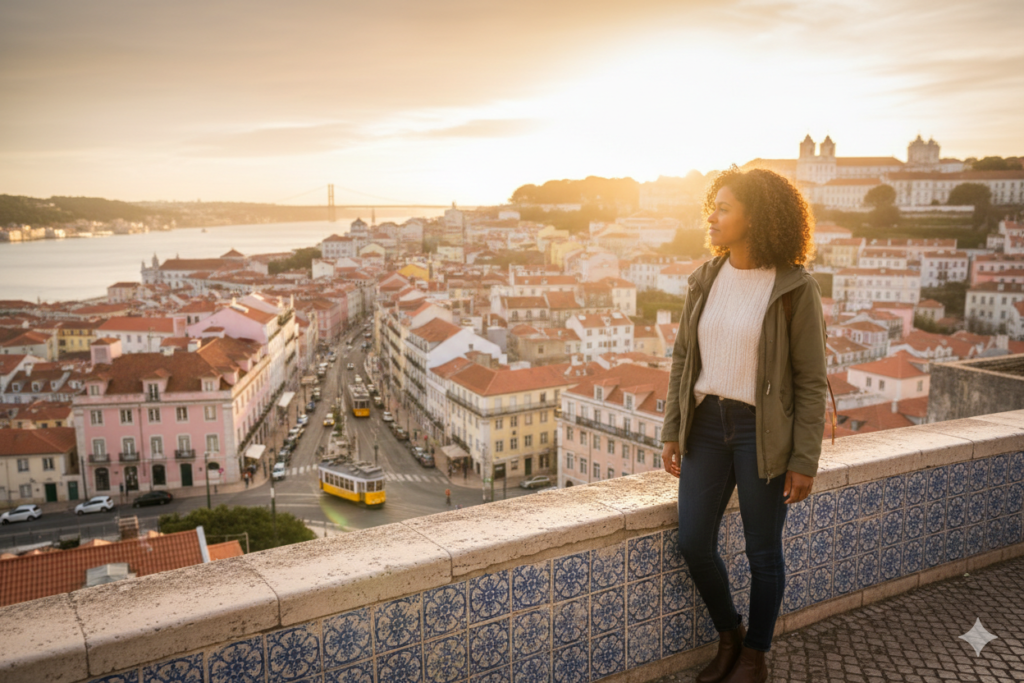
If you’re considering your first solo trip—or your first time traveling alone in Europe—Portugal is one of the gentlest, most rewarding places to start. This guide will walk you through everything you need to feel confident, from the practical safety details to where to eat alone without feeling awkward, to the moments that make solo travel in Portugal absolutely worth it.
Is Portugal Safe for Solo Female Travelers?
Yes. Portugal is one of the safest countries in Europe for solo female travelers. It consistently ranks among the top 10 safest countries in the world on the Global Peace Index, has low violent crime rates, and is classified as a Level 1 destination (“Exercise Normal Precautions”) by major Western travel advisories. Also, solo female travelers are common enough that you won’t attract attention.
That said, “safe” doesn’t mean risk-free.
Pickpocketing exists in Lisbon tourist areas. Tram 28 gets crowded. Nightlife districts can get loud. And if you’re traveling alone for the first time, the nerves are real.
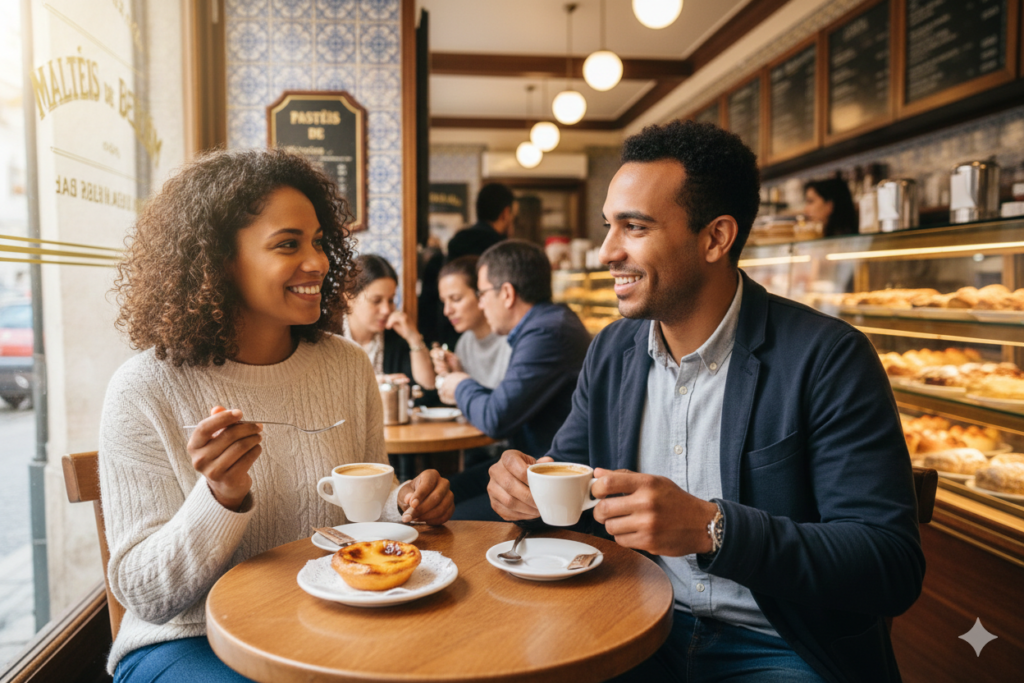
Enjoying Pastel de nata
Why Portugal Beats Spain, Italy, and France for First-Time Solo Travelers
Portugal ranks as the 6th safest country in the world, and you feel that security in everyday moments. Women walk alone at night. Solo diners fill restaurant tables. Locals are polite without being intrusive, and English is widely spoken in cities and tourist areas.
But beyond safety, Portugal has something many destinations lack: a forgiving pace. Trains run on time but aren’t frantic. Cities are walkable but not exhausting. People are friendly but respect your space. If you’re nervous about navigating a foreign country alone, Portugal won’t punish your mistakes—it’ll let you figure things out gently.
It’s also affordable. Your dollar stretches further here than in France, Italy, or Spain, which matters when you’re paying for everything yourself. A meal that costs €40 in Barcelona runs €25 in Porto. Hostel beds are €15-20 instead of €30-35.
Is Tram 28 Actually Safe for Solo Women?
Let’s address this directly because it comes up in every Lisbon forum.
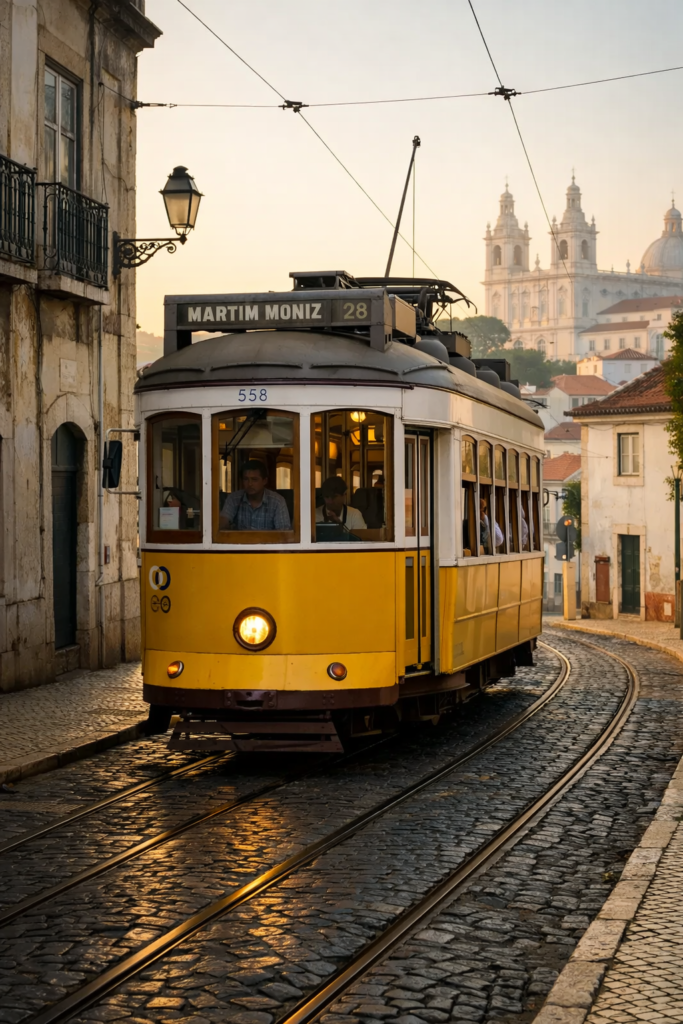
The truth: Tram 28 is a pickpocket magnet. Packed tourists, tight spaces, and distracted sightseers make it perfect for thieves. That said, thousands of solo women ride it daily without incident.
How to ride it safely:
- Go early morning (before 9 a.m.) or late afternoon (after 5 p.m.) when it’s less crowded
- Wear a crossbody bag with zippers in front of you—never a backpack
- Keep your phone in your hand or a zipped pocket, not loose in a bag
- Board at the starting point (Martim Moniz or Campo Ourique) to get a seat
- If it’s packed like a sardine can, just wait for the next one
Alternatives: Tram 12 or 25 cover beautiful routes without the tourist chaos. They’re actual transport, not attractions, so they’re safer and less stressful.
My experience: I rode Tram 28 three times. Once at 8 a.m. (peaceful, got great photos), once at 2 p.m. (nightmare, white-knuckled my bag the whole time), and once I hopped off two stops early because it felt too chaotic. Trust your gut.
Is Portugal Safer Than Spain or Italy for Solo Women?
Yes, but slightly.
Portugal has lower petty crime rates than Barcelona or Rome, and the culture is more reserved—you’ll get less catcalling and street harassment than in Southern Spain or Italy.
The comparison:
- Pickpocketing: Lisbon has pickpockets (mostly Tram 28, Rossio Square), but it’s less intense than Barcelona’s Las Ramblas or Rome’s Termini Station
- Street harassment: Minimal in Portugal. Portuguese men are generally respectful. In contrast, cities like Naples or Madrid can feel more aggressive
- Night safety: Lisbon and Porto feel safe at night in central areas. I felt more comfortable walking alone at 11 p.m. in Bairro Alto than I did in Barcelona’s Gothic Quarter
The reality: All three countries are safe for solo female travelers with normal awareness. Portugal just has a gentler, quieter vibe that feels especially reassuring for first-timers.
Is Portugal Safe at Night for Solo Women?
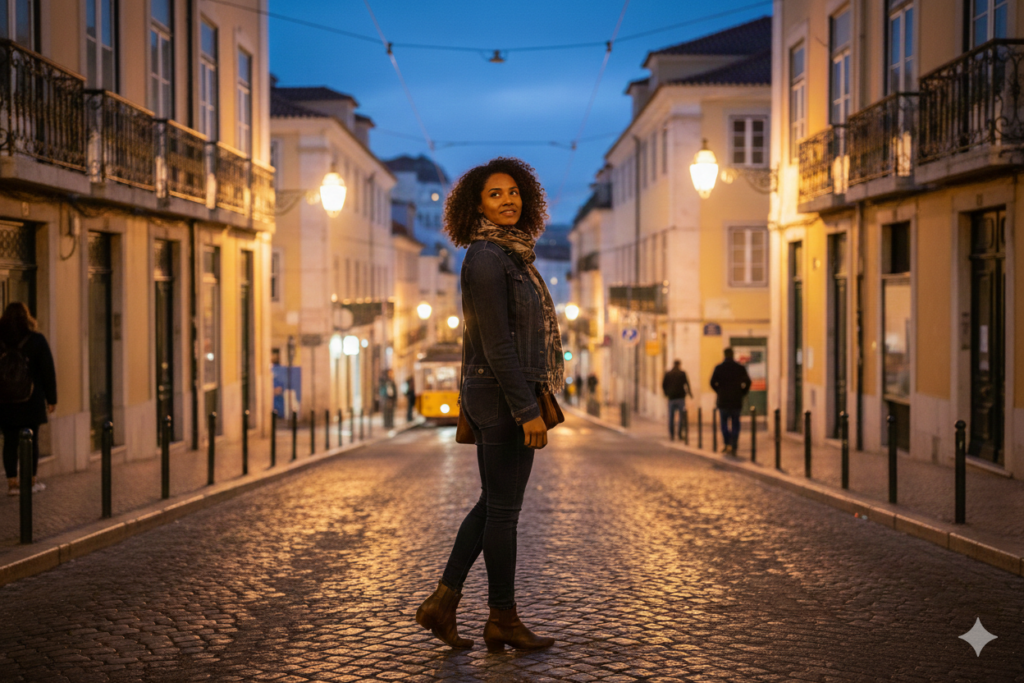
Yes. Portugal is generally safe at night for solo female travelers, especially in central, well-lit areas. Violent crime is low, and it’s common to see women walking alone in Lisbon and Porto after dark.
That said, smart awareness still matters.
Where You’ll Feel Comfortable
Lisbon (Safe at Night in Central Areas):
- Chiado
- Príncipe Real
- Bairro Alto (busy and social, especially on weekends)
- Avenida da Liberdade
Porto (Generally Safe):
- Ribeira (touristy but lively)
- Cedofeita
- Aliados
These areas stay active late and have good lighting, restaurants, and foot traffic.
Areas to Be More Cautious
Not dangerous — just less comfortable late at night:
Lisbon:
- Intendente (improving but can feel rough after midnight)
- Martim Moniz (poor lighting in some areas)
- Cais do Sodré very late (drunk crowds, not unsafe but chaotic)
Porto:
- Very quiet residential streets far from the center after midnight
- Around São Bento Station late when empty
Smart Night Safety Tips
- Stick to well-lit streets with people around
- Use Uber or Bolt after midnight instead of walking long distances
- Don’t leave drinks unattended in nightlife areas
- Trust your instincts — leave if something feels off
My honest experience: I’ve walked alone at 10–11 p.m. in Lisbon without feeling threatened. The vibe feels lively, not predatory — but I still avoid empty alleys and poorly lit shortcuts.
What Happens If Something Goes Wrong?
Portugal is safe — but preparation builds confidence. Here’s what actually happens in worst-case scenarios.
If Your Phone Is Stolen
- Immediately lock it remotely (Find My iPhone / Google Find My Device).
- Go to the nearest police station (“Esquadra”) to file a report.
- Contact your carrier to suspend your SIM.
- Use hotel WiFi to access backups and important documents.
Police reports are usually required for insurance claims.
How to Report Theft
- Dial 112 for emergencies (police, ambulance, fire).
- For non-urgent theft, go to the nearest police station.
- Tourist Police in Lisbon (Praça dos Restauradores) are trained to assist visitors.
English is widely spoken in tourist areas, especially by police handling foreign visitors.
Are Portuguese Police Helpful?
In general, yes.
Portugal has a reputation for professional and calm police response. Officers in Lisbon and Porto are accustomed to tourists and typically speak functional English.
They may not retrieve stolen items (pickpocketing is hard to trace), but they will document incidents properly.
Are Hospitals Good in Portugal?
Yes.
Portugal has modern public and private healthcare systems. Major cities like Lisbon and Porto have well-equipped hospitals and English-speaking staff.
For minor issues, pharmacies (“Farmácia” with a green cross) are excellent — pharmacists are highly trained and can advise on common problems without needing a doctor.
Travel insurance is strongly recommended.
Is English Spoken in Emergencies?
Yes — especially in:
- Lisbon
- Porto
- Algarve tourist areas
You may encounter less English in rural towns, but emergency operators (112) generally have English capability.
Reality Check: Safe Doesn’t Mean Careless
Portugal is safe — but it’s still Europe.
Pickpocketing exists in crowded areas like Tram 28, Rossio Square, and São Bento Station. Alcohol culture is strong in nightlife districts like Bairro Alto and Cais do Sodré. Drunk tourists are more common than actual threats — but never leave drinks unattended, and don’t rely on strangers to get you home.
You don’t need paranoia.
You just need awareness.
Portugal rewards prepared travelers.
Where to Watch Out
Lisbon: Tram 28, Rossio Square, and the Santa Justa Elevator area are pickpocket hotspots. Keep bags zipped and in front of you. Intendente and Martim Moniz can feel sketchy after dark—not because of violence, but because they’re poorly lit and less touristy. Stick to well-lit, populated areas like Bairro Alto, Chiado, and Príncipe Real at night.
Porto: The Bolhão Market area and São Bento Station attract pickpockets. The Ribeira district is safe but gets rowdy late on weekends with drunk tourists—not unsafe, just loud.
Common scams to ignore:
- People offering to help carry your bags (they’ll demand payment)
- Anyone trying to tie a bracelet on your wrist or hand you a “gift”
- “Hashish” or “cocaine” offers near Rossio or Cais do Sodré—just say “não, obrigada” and keep walking. It’s a scam, not a threat
- Taxis at the airport quoting flat rates (use Uber/Bolt or insist on the meter)
What Actually Feels Safe
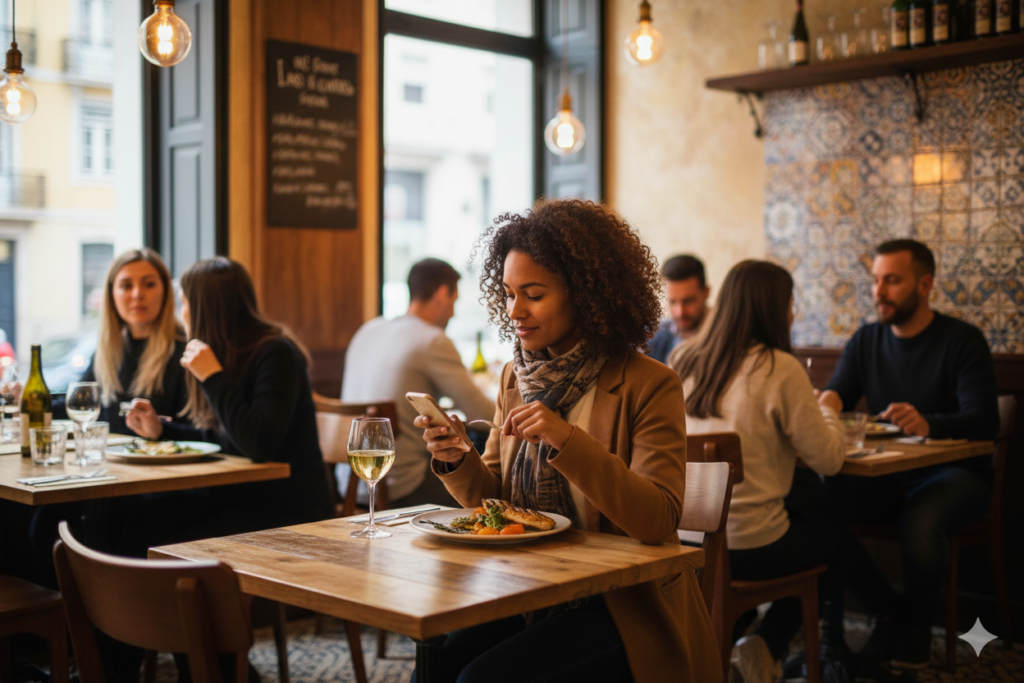
Solo dining is completely normalized. I’ve eaten dinner alone at 9pm in residential neighborhoods and never gotten a strange look. Public transport feels safe—I’ve taken late metro rides without incident, though I stay alert and avoid empty cars.
Portuguese men generally don’t catcall or harass. If someone does bother you, a firm “não” usually ends it. Locals will often step in if they see a woman being bothered.
Emergency numbers: 112 for police/ambulance/fire—English is spoken. British Hospital in Lisbon (+351 21 721 3400) has English-speaking staff. Tourist Police at Praça dos Restauradores (+351 21 342 1623) are trained for visitors. Save these in your phone before you arrive.
Your Digital Safety Net: Emergency Tech & Apps
While Portugal is incredibly safe, having these tools on your phone provides a massive confidence boost for your first solo trip. In 2026, these are the “must-haves” for any woman traveling alone.
1. The “Safety Check-In” Features
- Google Maps Location Sharing: Before I head out for the night, I share my “Live Location” with a trusted friend or family member back home. You can set it for a specific number of hours so they can see exactly where you are if you stop responding to texts.
- Apple Check-In (iOS): If you’re an iPhone user, use the Check-In feature in Messages. It automatically notifies your chosen contact when you arrive at your destination (like your hostel or a restaurant) and alerts them if you don’t arrive on time.
2. Essential Emergency Apps
- 112 Anywhere: This is the official European emergency app. In 2026, it allows you to send your precise GPS coordinates to emergency dispatchers in Portugal with one tap—essential if you’re hiking in the Algarve or lost in a rural village and don’t know the address.
- bSafe: This app has a “Follow Me” timer and a “Fake Call” feature. If you’re feeling slightly uncomfortable in a quiet area, you can trigger a fake phone call to give you an excuse to walk away or look busy.
- Google Lens / Translate: Beyond just menus, use the Instant Camera Translation to read pharmacy labels or safety signage in train stations. Knowing exactly what a sign says prevents that “lost tourist” look that can attract unwanted attention.
3. Personal Safety Tech
- AirTags: I keep one hidden in my daypack and one inside my checked luggage. In the rare event of a “bag snatch” or a lost suitcase on the train, you can track your belongings in real-time.
- A High-Decibel Safety Whistle/Alarm: I carry a small She’s Birdie personal alarm on my crossbody bag. It’s non-violent, legal to carry on planes, and creates a strobe light and siren that would deter any pickpocket in a crowded Lisbon square.
4. Local Emergency Contacts (Save these now!)
- General Emergency: 112 (English-speaking operators available)
- Tourist Police (Lisbon): +351 21 342 1623
- SNS 24 (Health Line): 808 24 24 24 (Call this for non-emergency medical advice before going to an ER)
When to Go to Portugal (And What Each Season Actually Feels Like)
Spring (April–June): Best for first-timers
Temperatures in the 60s-70°F, flowers blooming, fewer crowds. You can walk all day without overheating. Book ahead for Easter week—locals travel then.
Summer (June–August): Beach season but crowded
Lisbon hits 85-95°F. The Algarve is stunning but packed. Trains and hostels fill up. If you’re nervous about traveling alone, the crowds can actually feel reassuring—but book everything in advance.
Fall (September–October): My personal favorite
Still warm (70s-80°F), the ocean is swimmable, tourists thin out, and prices drop slightly. September is ideal—October can be rainy.
Winter (November–February): Budget-friendly but wet
Temperatures in the 50s-60°F, frequent rain, but cities feel authentic. Many Algarve beach towns shut down. Good if you want slow city exploration and don’t mind gray skies. Pack layers—buildings rarely have heat.
2026 Portugal Budget Breakdown: What Will You Actually Spend?
Portugal is still one of Western Europe’s most affordable gems, but inflation and the “digital nomad effect” have pushed prices up slightly in 2026. Here is a realistic daily breakdown based on how you like to travel.
Daily Budget Tiers (Per Person)
| Travel Style | Daily Cost (€) | What This Gets You |
| Budget | €65 – €85 | A highly-rated hostel dorm (€25–€35), 2 tasca meals, metro travel, and free miradouros. |
| Mid-Range | €130 – €180 | A boutique guesthouse or private hostel room (€70–€100), nice dinners with wine, and 1–2 paid tours/museums. |
| Luxury | €350+ | A 5-star historic palace or “pousada” (€200+), fine dining, and private guided day trips to Sintra or Douro. |
My Real-World Price Check
- Espresso (Bica): €0.80 – €1.20 (Stand at the bar for the local price!)
- Pastel de Nata: €1.20 – €1.50
- Glass of House Wine: €3.00 – €5.00
- Prato do Dia (Daily Special): €10.00 – €14.00 (Includes soup, main, and often coffee)
- Uber/Bolt (15 min ride): €8.00 – €12.00
- Lisboa Card (24h): €27.00 (Covers all transit and most major museums—worth it!)
3 Tips to Stretch Your Euro in 2026
- The “Prato do Dia” Rule: Eat your main meal at lunch. Local taverns (tascas) offer incredible 3-course deals for under €15. Dinner is always 30% more expensive for the same food.
- Book Trains 60 Days Out: If you use the CP App, you can snag “Promo” tickets for the Lisbon–Porto route for as low as €15. If you wait until the day of, you’ll pay €40+.
- Free Museum Sundays: Many major sites (like the Belém Tower) have free entry for residents on Sundays. While you might not be a resident, check the local tourism office site; many museums have specific “Open House” evenings for everyone once a month.
What to Pack (From Someone Who Overpacked Her First Trip)
Start with your shoes—seriously
Portugal is all cobblestones and hills. I wore through one pair of sneakers in 10 days. Bring sturdy, broken-in walking shoes with good grip. Cute sandals are fine for dinners but useless for sightseeing.
Your practical packing list:
- Crossbody bag with zipper closures (not a backpack in cities—too easy to slash)
- Lightweight rain jacket (doubling as a windbreaker)
- Layers, not bulky clothes (mornings are cool, afternoons warm)
- One modest outfit for churches (covered shoulders/knees)
- Swimsuit (even in spring—the Atlantic is chilly but doable)
- Small day backpack for beach/hike days
- Electrical adapter (Type C European plug)
- Reusable water bottle (tap water is safe)
What I wish I’d left behind: Three pairs of shoes I never wore, a heavy purse, more than one dress. You’ll be walking 6-8 miles daily. Pack like a backpacker even if you’re staying in hotels.
Toiletries tip: Pharmacies (“Farmácia” with a green cross) are everywhere and cheap. Buy sunscreen there—it’s better quality and half the price.
Getting to Portugal and Around the Country
Flying in:
Most international flights land in Lisbon (LIS). Porto (OPO) has fewer connections but works if you’re starting up north. Faro (FAO) serves the Algarve but mainly European flights.
From Lisbon airport to the city: The metro is easiest (25 minutes to downtown on the Red Line to Alameda or São Sebastião). Uber/Bolt costs €10-15. Skip taxis—they overcharge tourists.
Your First 24 Hours: Airport to Accommodation Without Stress
Step 1: Land and get connected
Before you leave the airport, buy an eSIM (I use Airalo—€4.50 for 1GB, activated instantly on your phone) or grab a physical SIM card at the Vodafone/MEO counter in arrivals (€15 for 10GB). Don’t rely on WiFi—you’ll need data for maps and Uber immediately.
Step 2: Get cash
Hit the Euronet or Millennium BCP ATM in arrivals. Withdraw €40-60 for your first day. Choose “without conversion” when prompted—your bank’s rate is always better.
Step 3: Get to your neighborhood
- Metro to Baixa/Chiado/Bairro Alto: Buy a Viva Viagem card at the ticket machine (€0.50 for the card, then load €1.65 per trip). Take the Red Line to São Sebastião, transfer to Yellow/Blue lines depending on your stop.
- Uber/Bolt: Open the app while still in the terminal. Your driver meets you at the designated rideshare pickup zone (follow signs for “TVDE”). Trip takes 15-25 minutes depending on traffic. Save your accommodation address in Portuguese in your phone notes—drivers appreciate it.
Step 4: Check in and decompress
Most hostels/hotels let you store bags if you arrive before check-in. Drop your stuff, then walk to the nearest pastelaria. Order “um café e um pastel de nata, por favor.” Sit outside, people-watch, and let the jet lag settle. You made it.
Trains: Your best friend
Portugal’s trains are clean, punctual, and affordable. Lisbon to Porto is €30-40 for a 3-hour ride. Book through CP (Comboios de Portugal) or Omio. Tip: Trains don’t always have AC in summer—bring a fan or sit near windows.
Buses: Cheaper but slower
Flix Bus and Rede Expressos connect cities for less. Good if you’re on a tight budget. Not as comfortable as trains.
Within cities:
Lisbon and Porto have metros, trams, and buses. Buy a rechargeable card (Viva Viagem in Lisbon, Andante in Porto) at any station—saves money over single tickets.
Uber/Bolt: Safe, cheap, and drivers don’t expect tips. I used them late at night without issues. Your app shows driver details and tracks the route.
Do you need a car? Not for cities or standard routes. Only rent if you’re exploring rural Alentejo or hidden Algarve beaches—and stick to main roads (Portuguese drivers are… confident).
Porto vs. Lisbon for Solo Women: Which Should You Choose?
Choose Lisbon if:
- You want big-city energy with a small-city feel
- You love hills, viewpoints, and dramatic architecture
- You want easy day trips (Sintra, Cascais, Évora)
- You’re comfortable with crowds and tourist-heavy areas
- Budget: €40-60/day
Choose Porto if:
- You prefer quieter, slower-paced exploration
- You want compact walkability (cover everything in 2-3 days)
- Wine tasting and riverside cafés sound perfect
- You get overwhelmed easily—Porto is less intense
- Budget: €35-50/day
My honest take: If it’s your first solo trip to Europe, start with Lisbon. It’s more forgiving, better connected, and has more accommodation options. Porto is amazing, but it’s better as a second stop once you’ve built confidence.
The Best Places for Solo First-Timers
Lisbon: Where You’ll Build Your Confidence
Lisbon feels like that friend who’s always up for a good time—sunny, colorful, and endlessly welcoming. With historic trams rattling through cobbled streets, it’s walkable, safe, and bursting with personality. (Read my complete Lisbon solo travel guide for a detailed 4-day itinerary).
The Vibe Mid-morning at Pastéis de Belém, a baker showed me how to sprinkle cinnamon and sugar on my pastel de nata while it was still warm. We laughed about my “tourist swirl” as fado music drifted through the air; in that moment, I knew I’d found a solo traveler’s paradise.
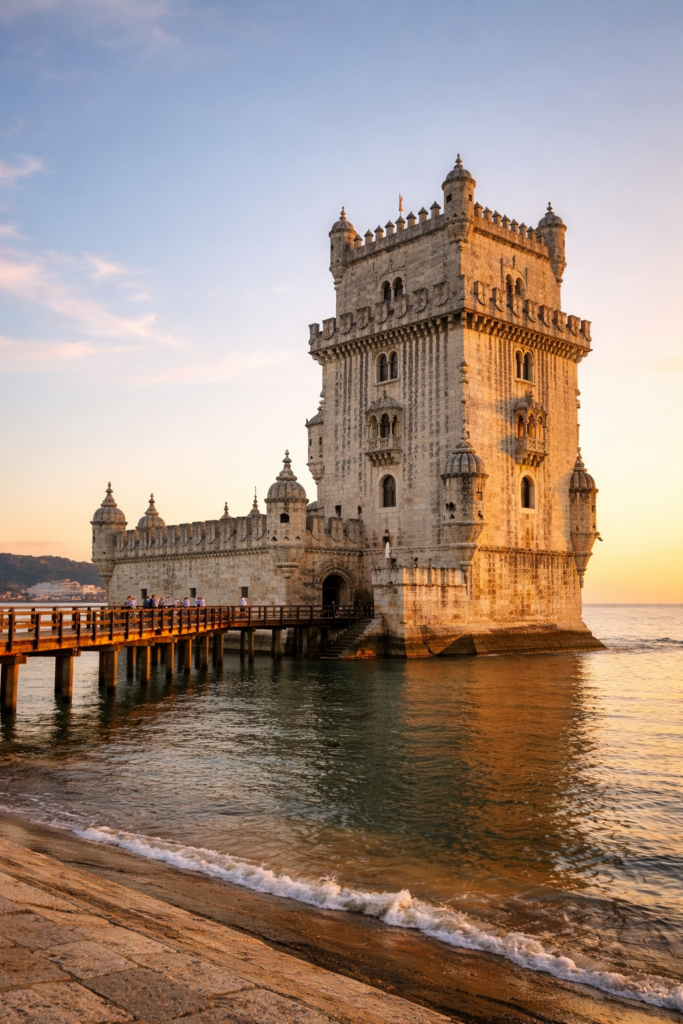
Beyond the sweets, the city is a playground for explorers. I spent hours at the Belém Tower soaking in views of the Tagus River and took full advantage of the park’s walking paths—since walking is my favorite way to find the “soul” of a city. I also carved out time for the LX Factory, where the artsy, industrial vibes and local markets felt like a modern contrast to the city’s historic heart.
A Micro-moment I Loved: I climbed up to Miradouro da Graça just before sunset to watch the light turn golden over the hills. On the way back, I hopped off Tram 28 two stops early to peek into a family-run tasca, where the owner insisted I try her caldo verde. It’s those unplanned stops that turn a trip into an adventure.
Where to stay in Lisbon
I fell in love with Home Lisbon Hostel. They organize Sintra tours, free walking tours, and pub crawls. Every night, the hostel owner’s mother cooks a 3-course Portuguese meal (Mamma’s Dinner) for €10, wine included. You can also try This is Lisbon Hostel in Bairro Alto, a lively neighborhood bursting with cafés and nightlife.
Solo-friendly activities:
- Pastéis de Belém for the original custard tart (arrive around 9 a.m. to beat the rush)
- Belém Tower and Jerónimos Monastery for history
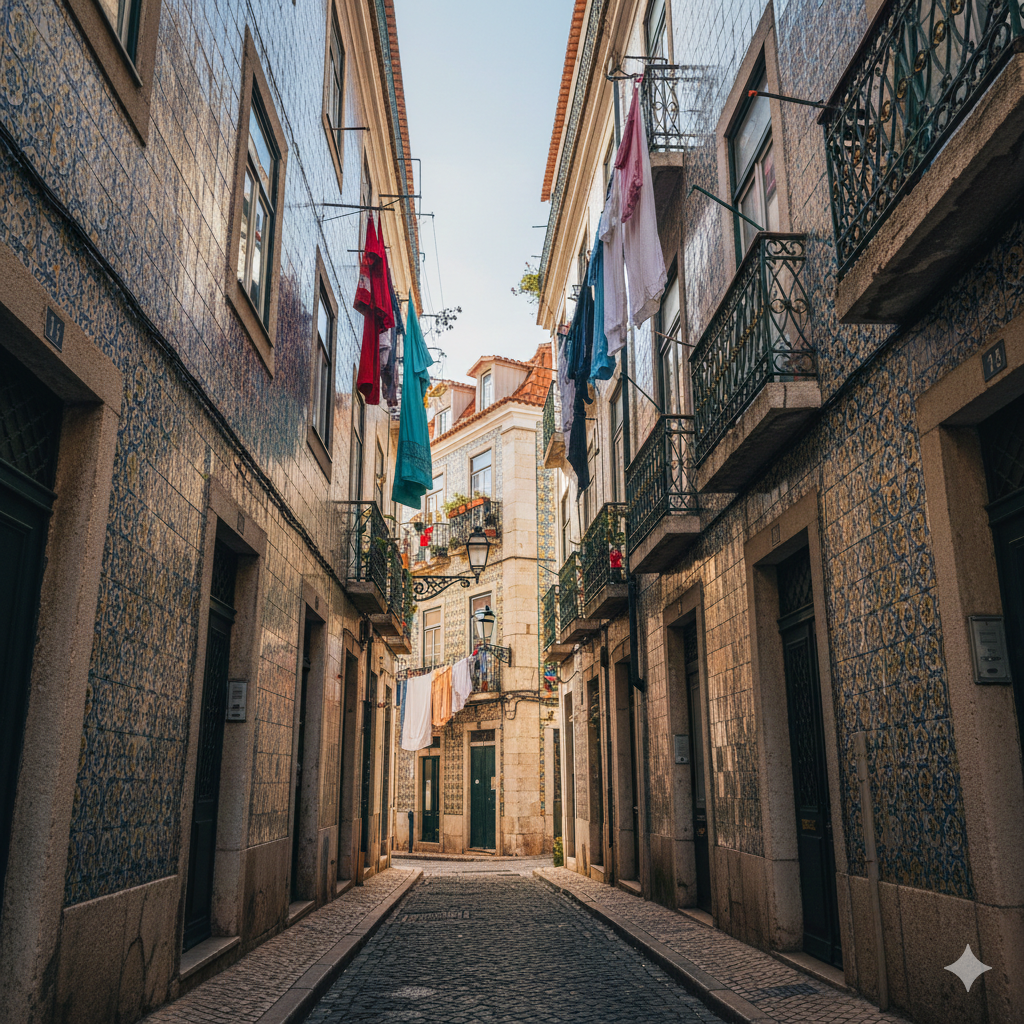
- Getting lost in Alfama’s maze of alleyways
- Riding Tram 28 (go early to avoid crowds and pickpockets)
- LX Factory for artsy vibes and street art
- Sunset at any miradouro—Miradouro da Senhora do Monte and Miradouro das Portas do Sol are my favorites
Day trip to Sintra:
The 40-minute train from Rossio station leaves you feeling like you’ve stepped into a fairy tale. Pena Palace’s candy-colored towers look unreal against the misty hills. Hike down through the forest to Quinta da Regaleira and descend the initiation well—spiraling deeper into the earth until you emerge into secret grottoes. A bus can take you across the mountain range to Cascais, where you can walk along the coastal promenade and feel the Atlantic spray on your face.
Lisbon Pro Tips:
- Grab a Viva Viagem card at the airport’s metro station for cheap trams and buses
- Eat at local tascas instead of tourist restaurants—order the prato do dia (daily special)
- Time Out Market is perfect for solo dining (communal tables, no awkwardness)
- Tram 12 or 25 are better than Tram 28 for actual transport (less crowded)
- Metro runs until 1 a.m. (3 a.m. on Fridays/Saturdays)—use Uber/Bolt after that
- Always validate your ticket when boarding—inspectors check randomly and fines are steep
Is Lisbon safe for solo female travelers?
Yes. Central neighborhoods like Chiado, Príncipe Real, and Alfama are safe with normal awareness. Watch for pickpockets on Tram 28 and around Rossio Square
Porto: Slower, Smaller, Easier
Porto is Lisbon’s calmer cousin. More compact, easier to navigate, slightly fewer tourists. Perfect if Lisbon feels overwhelming.
Where to stay:
- Ribeira: Scenic riverside but touristy and loud at night
- Bolhão/Aliados: Central, authentic, near the metro
- Cedofeita: Artsy neighborhood, great for solo explorers
Solo-friendly activities:
- Livraria Lello bookstore (go early to avoid crowds)
- Port wine tasting in Vila Nova de Gaia (many welcome solo visitors)
- Walking across Dom Luís I Bridge
- Getting lost in side streets between Carmo and Clérigos
- Exploring the Bolhão Market
Honest take: Porto feels less like work than Lisbon. You can cover the highlights in 2-3 days, then just exist—café to café, no pressure.
The Algarve: For When You’re Ready to Relax
The southern coast is dramatic cliffs, golden beaches, and small towns. Less cultural, more chill.
Best towns for solo women:
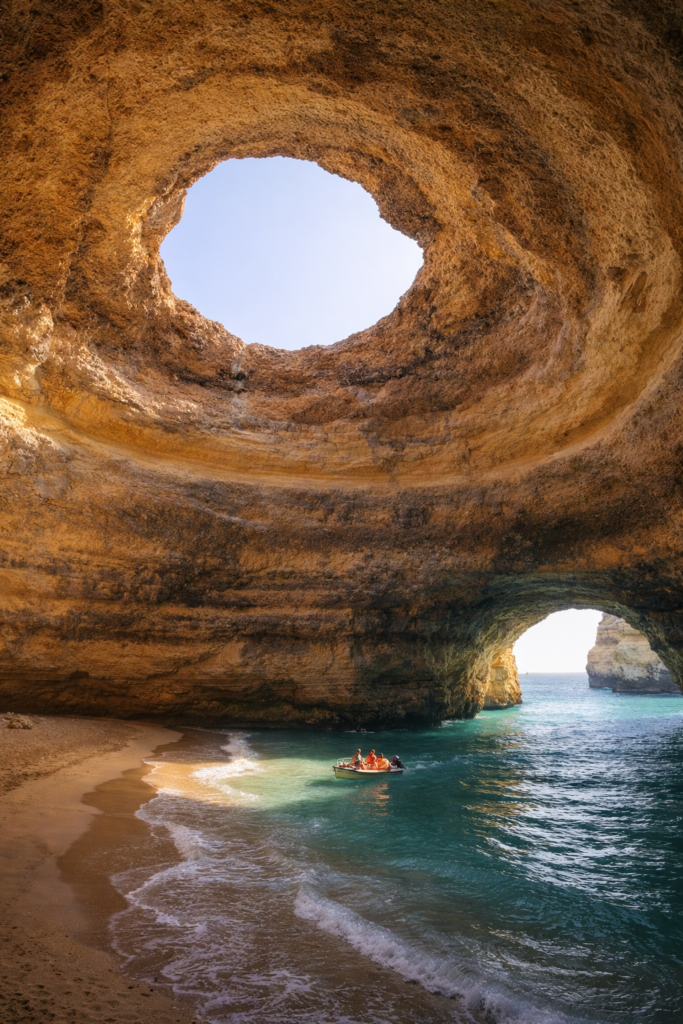
- Lagos: Young, social, surf culture. Easy to meet people in hostels or on boat tours to Benagil Cave
- Tavira: Quiet, pretty, authentic Portuguese life. Good if you want solitude
- Albufeira: Party central. Skip if you want peace
Activities: Boat tours to Benagil Cave, beach hopping, hiking the Seven Hanging Valleys Trail. Many tour groups are solo-traveler-heavy, so you won’t feel out of place.
Reality check: You’ll need more time here than you think. Beach days are slow. Don’t try to cram the Algarve into 2 days—give it at least 4-5.
Solo Dining in Portugal (I Promise It’s Fine)
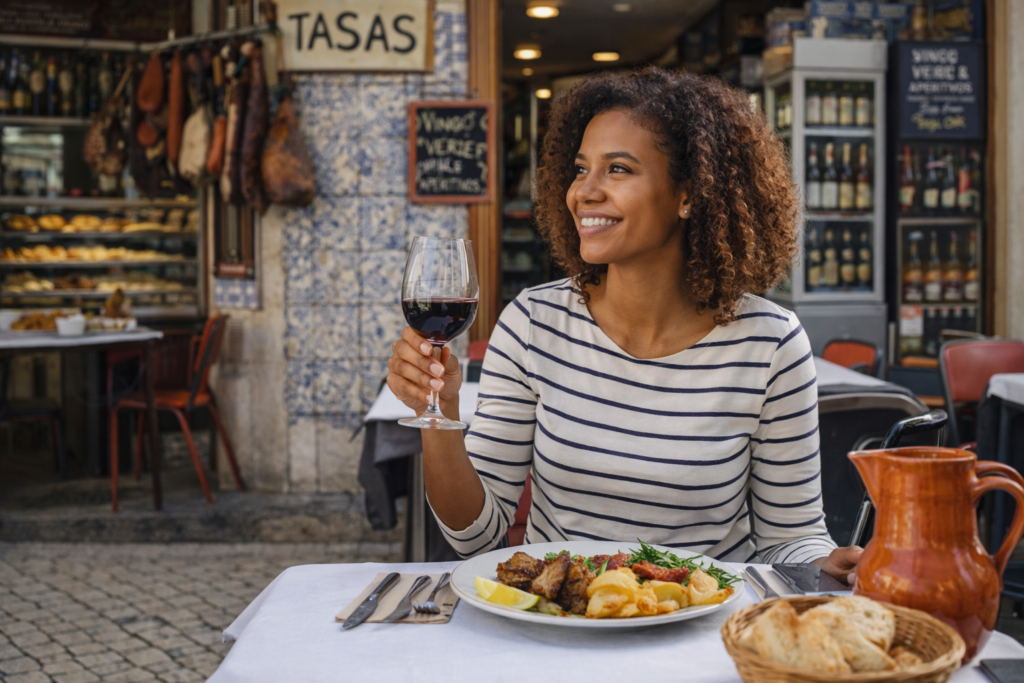
This was my biggest fear on my first solo trip. Turns out, Portuguese cafés and restaurants are perfect for solo diners.
How to Avoid Tourist Traps
Red flags:
- Photo menus in multiple languages
- Servers standing outside trying to pull you in
- Prime location but empty tables
Good signs:
- Locals eating there (especially families)
- Menu only in Portuguese (Google Translate works fine)
- No English signage
What to Order
Must-tries:
- Pastel de nata (custard tart—get them at Pastéis de Belém in Lisbon or Manteigaria)
- Bacalhau (salted cod—try bacalhau à brás, shredded with eggs and potatoes)
- Caldo verde (kale and sausage soup, comfort in a bowl)
- Grilled sardines (summer only, absolutely worth the smell on your hands)
- Francesinha (Porto’s famous artery-clogging sandwich—not elegant but delicious)
Budget: €8-12 for lunch, €15-25 for dinner. Wine is cheap (€3-5 per glass).
Solo Dining Logistics
You don’t wait to be seated at casual spots—grab a table and flag someone down. At nicer restaurants, wait at the entrance.
Awkward moment to expect: They’ll bring bread, olives, and spreads automatically. It’s NOT free—you’ll be charged (couvert). You can decline it, but honestly, just budget €2-3 and enjoy it.
Servers won’t rush you. Bring a book or journal if you want, but honestly, people-watching is entertainment enough.
Your solo dining strategy:
- Lunch at tascas: Order the prato do dia and sit at the bar with locals. Family-run spots make solo eating feel normal
- Time Out Market for variety: Order from different stalls, grab a communal table, and chat with strangers. No awkwardness, just good food
- Bring a book or journal: Cafés like A Brasileira and Nicolau are perfect for solo brunching. Locals linger alone too—it’s very normal
- Counter seating is your friend: At places like Cervejaria Ramiro, sit at the bar and watch the chefs work. Staff will chat with you between orders
- Learn “para um” (for one): Waiters won’t bat an eye—Portuguese people eat alone all the time
Meeting People (If You Want To)
Solo doesn’t have to mean lonely. Portugal makes connection easy without forcing it.
Natural ways to meet fellow travelers:
- Free walking tours (SANDEMANs and Lisbon Chill-Out are popular—you’ll chat with others during breaks)
- Hostel activities (Home Lisbon Hostel organizes pub crawls and Sintra tours led by Tiago, who has this magical ability to make a group of strangers feel like old friends within an hour)
- Cooking classes (several in Lisbon/Porto, usually small groups)
- Day tours (boat trips in the Algarve, wine tours in Douro Valley)
- Co-working cafés if you’re working remotely
Honest take: You’ll naturally chat with people at breakfast tables, on trains, waiting for tours. Don’t force it—but if you want company, Portugal delivers.
Cultural Notes So You Don’t Feel Like a Rude Tourist
Greetings matter: Say “bom dia” (good morning) or “boa tarde” (good afternoon) when entering shops or cafés. “Obrigada” (thank you—if you’re female) goes a long way.
Meal times: Lunch is 1-3pm, dinner starts at 8pm. Restaurants aren’t rude if you show up at 6pm—they just might not be open.
Shop hours: Some shops close 1-4pm. Museums often close Mondays.
Tipping: Not expected but appreciated. Round up or leave 5-10% for good service. No need to tip taxis or cafés.
Pace of life: Things move slower. Don’t expect efficiency—expect courtesy. If someone’s late or a shop’s closed unexpectedly, it’s just Portugal.
Dress: Casual is fine everywhere except high-end restaurants. Dress casually but neatly—sundresses, linen pants, and sneakers work perfectly. Cover shoulders and knees in churches.
Practical Stuff: Visas, Money, Phones
Visas: US, Canada, Australia, UK citizens get 90 days visa-free (Schengen). Check your passport expiration—it needs 6 months validity.
Money: Euro (EUR). Cards (Visa/Mastercard) work everywhere, but carry €20-40 cash for small cafés, markets, and tipping. ATMs are everywhere—use bank ATMs, not standalone ones (fees).
Your bank: Tell them you’re traveling so they don’t freeze your card. Get a no-foreign-transaction-fee card (like Chase Sapphire or Charles Schwab debit).
Phones: The easiest option is an eSIM like Airalo (€4.50 for 1GB, activated instantly on your phone before you even land). If your phone doesn’t support eSIMs, buy a physical SIM at the airport—Vodafone, MEO, or NOS counters in arrivals sell them for around €15 for 10GB. Don’t rely on WiFi—you’ll need data for maps and Uber from the moment you arrive.
Outlets: Type C plug (two round prongs). Bring an adapter.
What I Wish I’d Known Before My First Trip
Portugal involves A LOT of walking. Like, 20,000+ steps daily. Your feet will hurt. Bring blister pads and ibuprofen.
Trains don’t always have AC. Summer trips can be sweaty. Bring a small fan or sit near windows.
Dinner is late, but you can eat early. If you’re starving at 6pm, hit a pastelaria for snacks or go to touristy spots that open earlier.
The Atlantic is COLD. Even in summer, it’s bracing. The Algarve is slightly warmer but still not bathtub-warm.
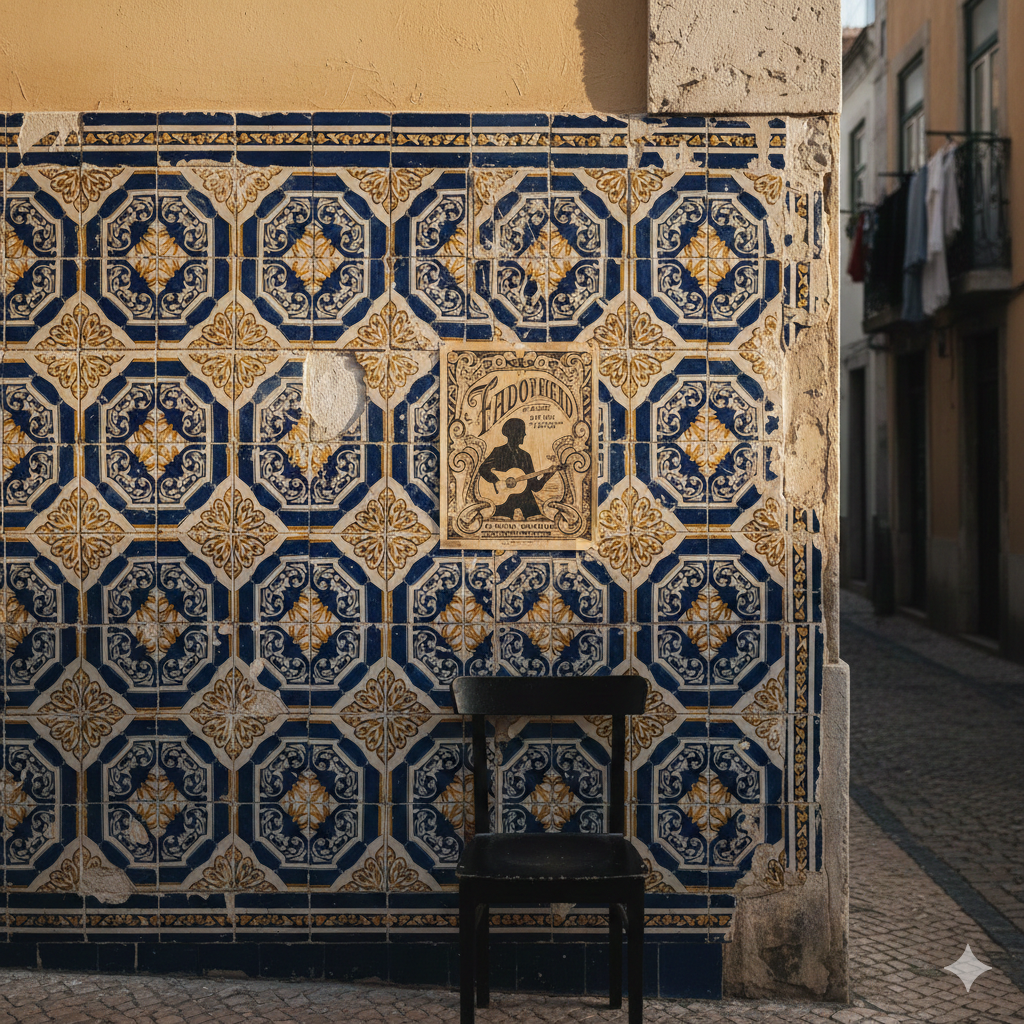
Fado music is worth experiencing. It’s soulful Portuguese folk music. Go to a fado house in Lisbon’s Alfama or Bairro Alto—emotional even if you don’t understand the lyrics. Authentic venues start around €15.
Portuguese people are reserved but kind. They won’t chat you up on the street, but if you ask for help, they’ll go out of their way.
Save your accommodation address in Portuguese in your phone notes—taxi drivers and emergency services will need it.
You’ll want to come back. Portugal has a way of getting under your skin gently. By the end, you’ll already be planning your next trip.
Sample Itineraries for First-Timers
5 Days: Lisbon + Sintra
- Day 1-3: Lisbon (Alfama, Belém, Bairro Alto, Time Out Market, walking tour)
- Day 4: Sintra day trip (Pena Palace, Quinta da Regaleira, optional Cascais)
- Day 5: More Lisbon exploring or relaxing at a miradouro
7 Days: Lisbon + Porto
- Day 1-3: Lisbon
- Day 4: Sintra
- Day 5-7: Porto (include a Douro Valley wine tour day trip)
10 Days: The Classic Loop
- Day 1-3: Lisbon
- Day 4: Sintra
- Day 5-6: Porto
- Day 7-10: Algarve (Lagos or Tavira, beach days, Benagil Cave tour)
14 Days: Slow Travel
Add Évora (medieval walled city), Coimbra (university town), or extra time to just exist in each place without rushing.
You’ve Got This
If you’re reading this and feeling that mix of excitement and nerves—good. That’s exactly where I was before my first solo trip to Portugal.
Here’s what I learned: Portugal doesn’t demand bravery. It rewards curiosity. You don’t have to be fearless or extroverted or fluent in Portuguese. You just have to show up, pay attention, and trust that you’re more capable than you think.
There will be a moment—maybe sipping coffee overlooking the Douro River, or getting lost in Alfama’s streets, or watching the sun set from São Jorge Castle—when you’ll realize you’re not just traveling alone. You’re traveling well. Confidently. On your own terms.
And that feeling? It changes everything.
Portugal is waiting. Your first solo adventure starts now.
Ready to dive deeper into Lisbon? Check out my complete 4-day Lisbon itinerary for day-by-day details, hidden spots, and more solo dining tips. And if you’re planning other European destinations, explore my guides to solo travel in Spain, France, and Croatia.
