I landed in Reykjavik, and I didn’t expect the air to smell like geothermal steam. I didn’t expect the volcanic hills to look so close, or the sky to feel so wide. But what I really didn’t expect was how quickly I’d stop thinking about being alone—and start thinking about everything else.
Iceland is the kind of place where solo travel feels like the most natural thing in the world. It’s safe in the ways that actually matter. The landscapes are vast. And the culture treats solo travelers—especially women—like we’re just people doing a normal thing. Because here, we are.
This guide covers everything you need to know about solo female travel in Iceland. I’ve been to Iceland five times across every season, and I’ve stayed in everything from KEX Hostel dorms to farm guesthouses in the Westfjords. I’ve learned which “pro tips” actually work—safety considerations, where to stay, what things cost, and how to move through Iceland without second-guessing yourself.
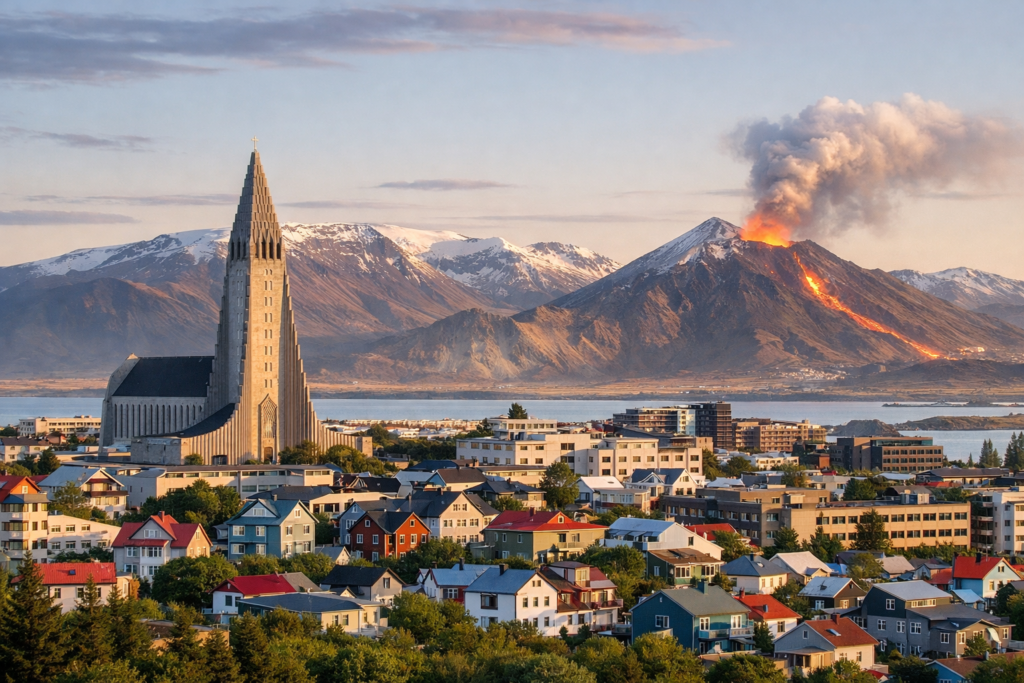
2026 Iceland Update: Volcanic Activity & Travel Impact
Iceland is volcanically active—that’s what makes the hot springs and dramatic landscapes possible. As of early 2026, the Reykjanes Peninsula (southwest of Reykjavik, near Grindavík) has experienced intermittent volcanic activity since late 2023.
What this means for your trip:
- Reykjavik is completely safe and unaffected—the eruptions are localized to specific areas
- Blue Lagoon occasionally closes during active phases (check status when booking)
- The famous “Sky Lagoon” remains open and accessible
- Road closures around Grindavík/Reykjanes are clearly marked
How to stay informed:
- Check safetravel.is before and during your trip (official safety portal)
- Download the 112 Iceland app (sends real-time alerts)
- Monitor IMO.is (Icelandic Met Office) for eruption forecasts
- Check gas forecasts on SafeTravel.is if you have asthma or respiratory issues—even “safe” viewing distances can get smoky when wind shifts
- Tour operators cancel/reschedule affected tours with full refunds
I was there during one of the 2024 eruptions. Reykjavik felt completely normal—restaurants full, tours running, locals going about their lives. The eruption sites are spectacular if viewing areas are open, but they’re managed carefully. Follow official guidance, don’t try to get clever with restricted zones, and you’ll be fine.
Bottom line: Iceland’s volcanic activity is monitored constantly. It rarely impacts tourism beyond specific localized areas, and when it does, Iceland’s infrastructure handles it professionally.
Why Iceland Works for Solo Female Travelers
The safety thing
Iceland ranks #1 on the Global Peace Index. It’s held that spot for over 14 years, and the ranking is measurable. Violent crime is virtually non-existent. Street harassment isn’t part of the culture. I’ve walked Reykjavik alone at 2 AM in the middle of summer’s midnight sun and again in winter’s pitch dark. Both times felt safer than most cities I know.
The bigger risk here isn’t the people. It’s the weather and the waves. It’s forgetting that nature doesn’t care how good your camera is.
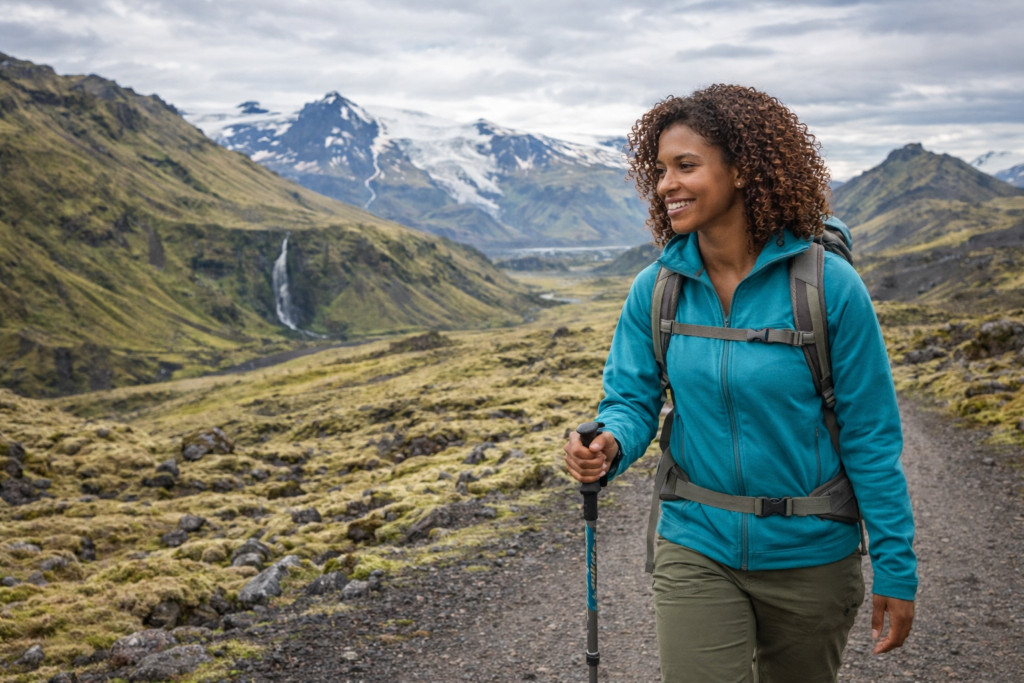
Hiking alone on Icelandic trail
Gender equality isn’t theoretical here
Iceland tops the World Economic Forum’s Gender Gap Index every single year. What that means in practice: women are everywhere in leadership, business, and public life. Solo female travelers aren’t unusual or noteworthy. You’re not “brave” for being here alone—you’re just another person getting coffee or booking a glacier hike.
No one stares. No one comments. You exist in public spaces the same way everyone else does.
English is genuinely everywhere
Over 98% of Icelanders speak English fluently. Menus, bus signs, museum displays, tour guides—it’s all in English. Asking for help doesn’t require hand gestures or translation apps. It just works.
The solo-friendly infrastructure
Hostels here are built for meeting people if you want to, and giving you space if you don’t. Tours are full of other independent travelers. Cafés are designed for sitting alone with a book. Dining solo is so normal that no one even notices.
You can be as social or as solitary as you want, and both feel equally natural.
When to Go to Iceland
Your ideal timing depends on what you’re actually looking for.
Summer (June–August): The midnight sun months
What you experience:
- 20-24 hours of daylight
- Never walking in darkness
- Best weather for driving and hiking
- Puffins at coastal cliffs
- Easier road conditions
The tradeoffs:
- Peak pricing—expect 40-60% higher costs than 2024 (inflation hit Iceland hard)
- Crowds at major sites
- Book accommodations 3-6 months ahead
Solo perspective: The endless daylight eliminates every “walking alone after dark” concern. At midnight in June, it looks like 4 PM. That constant light makes everything feel safer, even though Iceland is safe regardless.
Midnight sun sleep hack: Hostel curtains often don’t block light completely. A local trick I learned from my third trip: Buy cheap aluminum foil at Bónus, and tape it over window gaps. Works better than eye masks alone when it’s bright as noon at 2 AM.
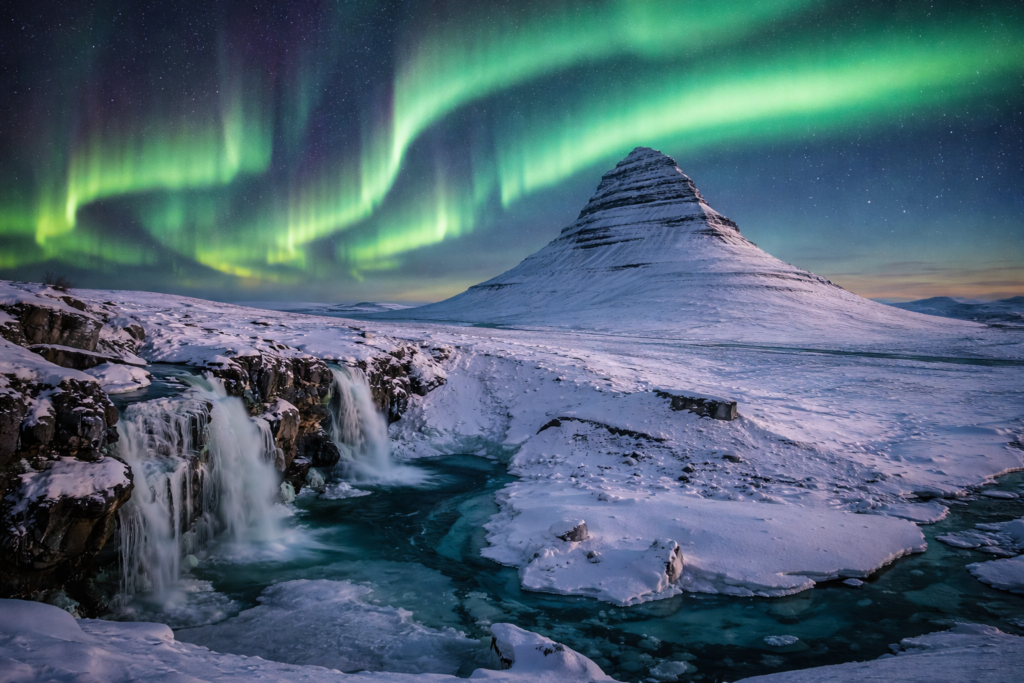
Winter (November–March): Northern Lights season
What you get:
- Northern Lights viewing (if skies cooperate)
- Snow-covered volcanic landscapes
- Ice cave access (November-March only)
- 30-50% lower prices
- Far fewer tourists
The tradeoffs:
- 4-5 hours of daylight in December
- Harsh weather—tours cancel frequently
- Driving not recommended for most
- Some roads close entirely
Solo perspective: Join organized Northern Lights tours rather than hunting them alone. You get expert guides who chase clear skies, plus company during those long dark evenings. The short days didn’t affect my safety in Reykjavik—the city stays lit and active.
Winter essential: Carry a headlamp, not just your phone flashlight. If you slip on ice or need to change a tire in the dark, you need your hands free. Also, phone flashlights die fast in cold.
Shoulder seasons (April–May, September–October): The sweet spot
Why these months work:
- 20-30% below summer pricing
- 12-16 hours of daylight
- Fewer crowds
- Good weather probability
- Possible Northern Lights (September–October)
Best choice: September balances everything—summer weather lingers, Northern Lights season begins, tourists thin out, and prices drop. I’ve visited in both May and September; September wins for the combination of accessibility and atmosphere.
What Iceland Actually Costs in 2026
Iceland earned its expensive reputation honestly. Prices jumped another 8-10% in 2025, so budget accordingly.
Budget: 15,000-20,000 ISK/day ($110-145)
- Hostel dorm bed
- Grocery shopping ( you’ll have to cook most of your meals)
- One affordable day tour or free activities
- Public buses
To make this work: Stay in dorms, shop at Bónus, cook at your hostel, focus on free waterfalls and hikes, and travel shoulder season.
Mid-range: 25,000-35,000 ISK/day ($182-255)
- Private hostel room or budget hotel
- Mix of cooking and restaurants
- One major tour daily
- Occasional taxis
This level: More privacy, restaurant meals when you want them, no budget stress on popular tours. This is where I usually land—I book tours 2-3 weeks out and got 15% off my South Coast trip that way. The small-group tour only had 8 people vs. the 40-person buses I saw clogging up Seljalandsfoss.
Comfortable: 40,000-60,000 ISK/day ($291-436)
- Nice hotel
- Regular restaurant meals
- Multiple tours and experiences
- Rental car or frequent taxis
Money-saving strategies that actually work
Shop at Bónus or Krónan. The yellow pig logo marks Bónus—Iceland’s cheapest supermarket chain. When I’m trying to keep my daily spend under $150, I always hit the Bónus near my hostel first thing and stock up on rye bread (400-600 ISK), skyr (200-300 ISK), cheese, and pasta. Cook at your hostel when you want to save—I’ve made solid dinners for under 1,500 ISK while other travelers dropped 6,000+ ISK at restaurants.
Get the Reykjavik City Card if you’re hitting museums, pools, and using buses. It pays for itself in two museum visits plus pool access. I used mine for four pools, two museums, and unlimited bus rides over three days—saved about 4,000 ISK.
Skip Blue Lagoon for local pools. Laugardalslaug costs 1,050 ISK vs. Blue Lagoon’s 10,000+ ISK. You get the same geothermal water and actual Icelanders who’ll chat with you in the hot tubs.
Book tours 2-4 weeks ahead.
Online advance booking saves 10-15% vs. last-minute prices. I saved 2,000 ISK on a Golden Circle tour just by booking three weeks out instead of the day before.
Hit duty-free at Keflavik Airport BEFORE leaving baggage claim. This is critical and most people miss it. Iceland’s alcohol tax is brutal—a bottle of wine costs 3,500+ ISK ($25+) in Reykjavik stores vs. 1,700 ISK ($12) at airport duty-free. A cocktail in downtown bars runs 2,500-3,500 ISK ($18-25). If you want wine, beer, or spirits during your trip, buy them at the airport. One bottle of wine and a six-pack of craft beer saved me about 4,000 ISK over what I’d have paid in the city.
Never buy bottled water. Iceland’s tap water is literally pristine glacial melt—better than any bottled water. Bring a collapsible water bottle to save luggage space, refill everywhere for free.
Download Appy Hour app for Reykjavik bar deals. Tracks which bars have happy hour specials. This is how you socialize without spending $20 on a pint of Gull. I found 2-for-1 deals and 1,000 ISK beers instead of the usual 1,400-1,600 ISK.
Eat the hot dogs. Bæjarins Beztu Pylsur near the harbor—500 ISK, and genuinely good. Locals line up too. It’s not just tourist kitsch.
Staying Connected: SIM Cards & Data for Solo Safety
You need mobile data in Iceland. Not just for Instagram—for actual safety. The 112 Iceland app requires data to send your GPS location during emergencies. Weather alerts, eruption notifications, real-time road conditions, and Google Maps navigation all need connectivity.
Your options:
Local SIM at Keflavik Airport (my recommendation):
- Síminn or Vodafone counters right after baggage claim
- Tourist data packages: 3,000-5,000 ISK for 5-10GB lasting a week
- Works immediately, no setup complexity
- Best network coverage across Iceland
eSIM (if your phone supports it):
- Airalo Iceland eSIM: Activate before your flight
- 3GB for 7 days: around $12 USD
- Convenience of not swapping physical SIM
- Coverage can be spottier in remote areas
International roaming:
- Check your carrier’s Iceland rates first
- Often expensive ($10/day or more)
- Only worth it for very short trips
What I do: Buy a Síminn SIM at the airport. 5,000 ISK gets me 10GB, which lasts easily for a week even with heavy map use, constant weather checking, and sharing photos. The peace of mind knowing I can call 112 or check eruption alerts anywhere is worth every króna.
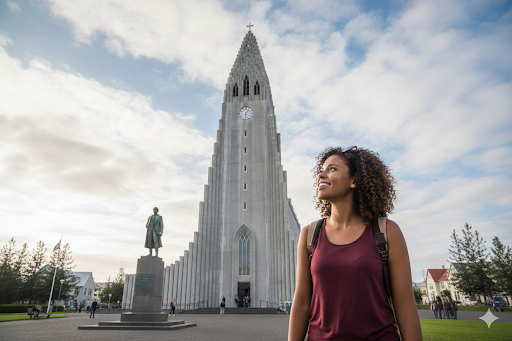
Hallgrímskirkja church
5-Day Iceland Itinerary for Solo Travelers
This itinerary uses Reykjavik as your base. It balances guided tours with independent exploration, social opportunities with solo time.
Day 1: Reykjavik arrival
Morning: Take the Flybus from Keflavik Airport to your accommodation (45 minutes, shared shuttle lets you meet other travelers early).
CRITICAL FIRST STOP: Airport duty-free before baggage claim. Buy your alcohol and luxury snacks here—it’s the only place in Iceland with reasonable prices. I typically grab a bottle of wine and a six-pack of Icelandic craft beer, saving about 4,000 ISK vs. city prices.
After landing:
- Pick up SIM card if you didn’t get eSIM (Síminn or Vodafone counters)
- Take Flybus to accommodation
Afternoon:
- Check into your hostel
- Walk Laugavegur Street—main shopping corridor
- Climb Hallgrímskirkja tower for city views (1,000 ISK)
- Wander the Old Harbour
Evening: Grab dinner at Sægreifinn at the harbor. Communal picnic tables make solo dining easy. Order the lobster soup (2,200 ISK). The setup feels like a casual fish shack—you order at the counter, grab a spot at long tables, and end up chatting with whoever’s next to you.
Join your hostel’s evening activity if they’re running one. KEX and Loft both host events—quiz nights, movie screenings, walking tours.
Day 2: Golden Circle
Book a small-group tour. The Golden Circle covers 300km—letting someone else drive means you can actually see things without white-knuckling around single-lane bridges.
What you’ll hit:
- Þingvellir National Park—walk between tectonic plates where North American and Eurasian plates are literally pulling apart
- Geysir geothermal area—watch Strokkur erupt every 5-10 minutes, shooting boiling water 20-30 meters up
- Gullfoss waterfall—massive glacial cascade that you hear before you see
Tour cost: 12,000-15,000 ISK for 7-8 hours
Why tours work: You meet other solo travelers naturally. On my last Golden Circle tour, six of us were traveling alone and ended up grabbing dinner together that night. Guides handle navigation and timing. You can relax into the scenery without road stress or worrying about parking.
Evening: Back in Reykjavik around 6-7 PM. Hit Sundhöllin pool (1,050 ISK) to soak out the tour-bus stiffness. Bring your swimsuit and small towel (or rent one there).
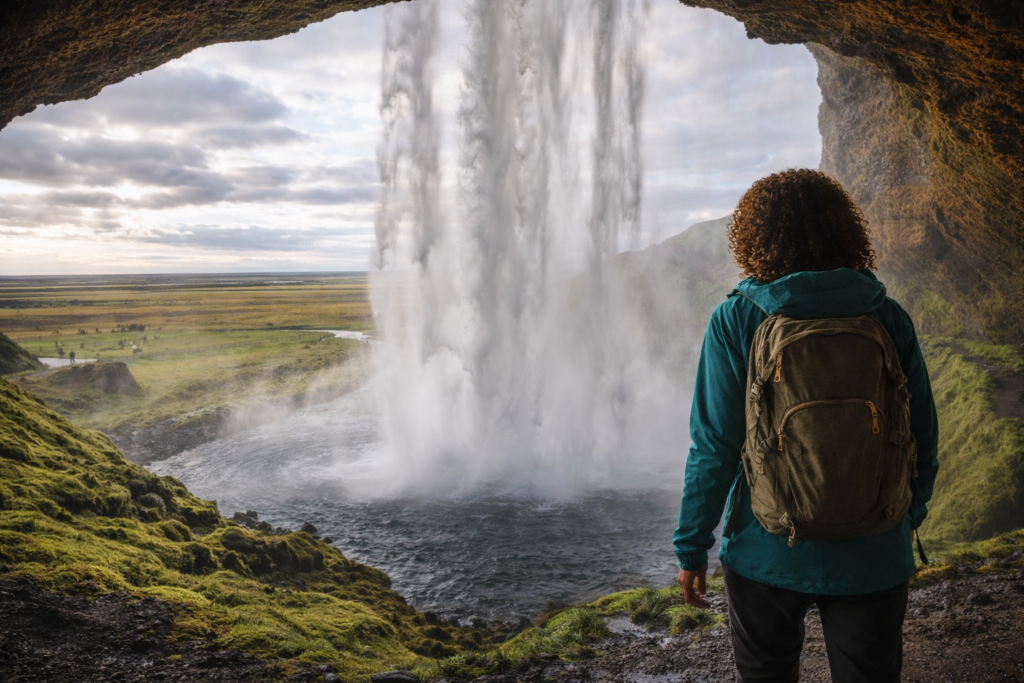
Seljalandsfoss waterfall
Day 3: South Coast
This full-day tour showcases Iceland’s dramatic coastline. It’s long but worth every hour.
Highlights:
- Seljalandsfoss—walk behind the 60-meter waterfall (you will get absolutely soaked, waterproof jacket essential)
- Skógafoss—climb 527 steps for top-down views or photograph from below as mist creates rainbows
- Reynisfjara black sand beach—hexagonal basalt columns, offshore rock formations, massive waves
- Vík—southernmost village, lunch stop with coastal views
Critical safety note: Reynisfjara has killed people through sneaker waves. These aren’t just big waves—they’re structurally different, surging far higher than the others without warning. I stay at least 30 meters back from the waterline even when it looks calm. I watched a wave sweep 15 meters past where tourists were standing—everyone scattered. Stay behind barriers. Never turn your back on the water. No photo is worth it. Tour guides will repeat this; listen to them.
As of February 2026, the South Coast has seen increased storm activity. Before visiting, check SafeTravel.is for beach alerts. If it’s at Yellow or Red warning, stay on the cliffs and skip the beach entirely.
Tour cost: 15,000-20,000 ISK for 10-11 hours
You’ll return exhausted but in that good way where you’ve seen things that recalibrate your sense of scale. Grab easy dinner near your hostel and rest.
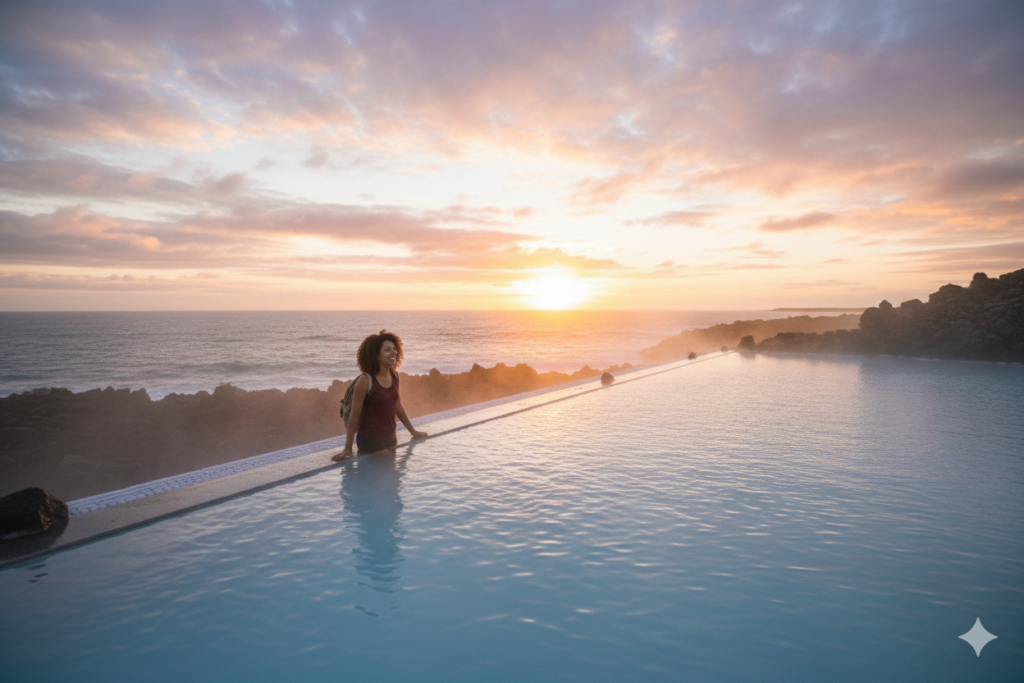
Day 4: Reykjavik + geothermal spa
Morning—explore the city:
- Harpa Concert Hall (free, stunning glass architecture that changes color)
- Sun Voyager sculpture along the waterfront
- National Museum of Iceland (2,000 ISK) for comprehensive history
- Coffee and cinnamon bun at Braud & Co (get there early—lines form by 9 AM)
Lunch: Reykjavik Food Hall (Grandi Mathöll) has multiple vendors under one roof. Grab whatever looks good, sit at communal tables, people-watch.
Afternoon—pick your spa experience:
| Feature | Blue Lagoon | Sky Lagoon | Local Pools |
|---|---|---|---|
| Cost | 10,000-17,000 ISK | 10,000-15,000 ISK | 1,050 ISK |
| Location | 45 min from city | 15 min from city | Throughout Reykjavik |
| The Vibe | Iconic, crowded, bucket-list | Edgy ocean-view infinity | Authentic, social, local |
| Solo-Friendly | Medium (touristy) | High (great ritual) | Very High (meet locals) |
| Water | Milky silica blue | Clear geothermal | Clear geothermal |
| Crowds | Heavy | Moderate | Light |
| Authenticity | Low | Medium | Very High |
| Booking | Weeks ahead essential | 1-2 weeks ahead | Walk in anytime |
Blue Lagoon (45 minutes away, 10,000-17,000 ISK): Iceland’s famous milky-blue geothermal spa. Book weeks ahead—it sells out. Tourist-focused but genuinely beautiful. The silica mud masks are included. Can feel a bit “bucket list” and touristy but worth experiencing once if crowds don’t bother you.
Sky Lagoon (15 minutes away, 10,000-15,000 ISK): Newer ocean-side infinity lagoon with seven-step ritual (cold plunge, steam, scrub). Less crowded than Blue Lagoon, more intimate atmosphere. The best “treat yourself” day—that infinity edge with ocean views is spectacular. My pick if you’re only doing one tourist spa.
Local pools (1,050 ISK): Laugardalslaug or Vesturbæjarlaug. Where actual Icelanders swim. Multiple hot tubs at different temperatures (38°C to 42°C), cold plunge pools, steam rooms. Don’t be intimidated by the communal shower requirement—everyone does it, it’s same-gender only, and after the first time it’s completely normal. Best for meeting locals and experiencing authentic Icelandic culture. Go every single day if you can.
My Experience
I hit Sky Lagoon once for the infinity pool experience, then spent the rest of my trip rotating through local pools. Vesturbæjarlaug became my evening ritual—1,050 ISK for 90 minutes soaking with Reykjavik locals who’d chat about everything from Icelandic politics to the best hiking trails.
Evening: Reykjavik’s nightlife is safe and vibrant if you want it. Bars on Laugavegur fill up around 11 PM-midnight (Icelanders start late). People are friendly—I’ve been pulled into conversations at Kaffibarinn more times than I can count. Use the Appy Hour app to find happy hour specials and avoid paying 1,600 ISK for beers. Stick to main streets, watch your drinks like you would anywhere, use registered taxis via the Hreyfill app for late-night rides.
Day 5: Choose your adventure
Northern Lights hunt (September-March): Small-group tours chase clear skies using real-time weather forecasts and aurora predictions. 8,000-12,000 ISK for 3-5 hours. Guides know the best spots, bring hot chocolate, and help with camera settings.
Success rate varies—60-80% depending on season, solar activity, and weather luck. I saw them on my third attempt over two trips. Patience matters. But standing under dancing green curtains while guides explained the science and the Norse mythology—that’s the kind of moment that justifies the whole trip.
Download the “Aurora Forecast” app to check KP index yourself (3+ is good for Iceland).
Snæfellsnes Peninsula (summer/shoulder): Full-day tour hitting Kirkjufell Mountain (Iceland’s most photographed peak), black pebble beaches, Saxhölshellir lava cave, coastal cliffs, and Snæfellsjökull glacier. Iceland’s diversity compressed into one peninsula. 18,000-23,000 ISK for 10-12 hours.
Slow Reykjavik day:
- Sleep in (you’ve earned it)
- Perlan Museum (3,990 ISK) with ice cave exhibition and planetarium
- Lunch at Reykjavik Food Hall
- Shop for Icelandic wool sweaters (genuine ones, not tourist junk—look for “Handprjónasambandið” certification)
- Final pool soak at your favorite local spot
- Farewell dinner somewhere memorable (I like Matur og Drykkur for modern Icelandic cuisine)
Where to Stay: Hostels by Age & Vibe
Not all hostels are created equal. Age matters—the scene at a party hostel when you’re 22 is different from when you’re 33.
For 20s / Social Party Vibe
Kex Hostel
- Vibrant common areas, on-site bar-restaurant that gets lively
- Regular events, live music some nights
- Mixed-age but skews younger
- Female dorms, mixed dorms, private rooms
- 6,000-8,000 ISK dorm bed
- Social but not chaotic—more “beer and conversation” than “shots at 2 AM”
- Walking distance to everything downtown
Loft Hostel
- Cinema room, rooftop terrace, spacious kitchen
- Younger international crowd
- Regular walking tours and pub crawls
- 5,500-7,500 ISK dorm bed
- Good energy without being overwhelming
For 30s+ / Chill Social Vibe
Galaxy Pod Hostel
- Modern privacy pods with curtains, personal outlets and reading lights
- Quiet hours actually enforced after 11 PM
- Common area for socializing but pods for real sleep
- Tends to attract slightly older independent travelers
- 7,000-9,000 ISK pod
- Perfect if you want social opportunities but value sleep
Bus Hostel
- Converted hostel in quieter part of downtown
- Mixed ages but more low-key atmosphere
- Good kitchen, comfortable common room
- 5,500-7,000 ISK dorm bed
- Meet people without the party pressure
Hostel tips for solo women:
- Book female dorms if that makes you more comfortable (usually same price)
- All reputable Reykjavik hostels have lockers—use them
- Bring earplugs and eye mask for summer’s midnight sun (or grab aluminum foil at Bónus)
- Use kitchen facilities to slash food costs—I’ve cooked with other solo travelers and it turned into natural dinner groups
- The 30+ crowd tends to gravitate toward Galaxy Pod and guesthouses
Mid-range options
Reykjavik Residence Hotel: 18,000-25,000 ISK. Apartment-style with kitchenettes, washing machines, quiet residential area but walkable downtown. Good for when you’re done with hostel life but want self-catering options.
Sandhotel: 20,000-28,000 ISK. Minimalist Scandinavian design, excellent breakfast included, right near Hallgrímskirkja.
For Ring Road trips
Book guesthouses 1-2 nights ahead in summer. Farm stays (like Fosshotel or independent farms) offer home-cooked breakfasts and authentic experiences. Many have shared kitchens—buy groceries at local Bónus to save money. I stayed at a sheep farm outside Vík where the owner made homemade rye bread and told stories about Icelandic folklore over breakfast.
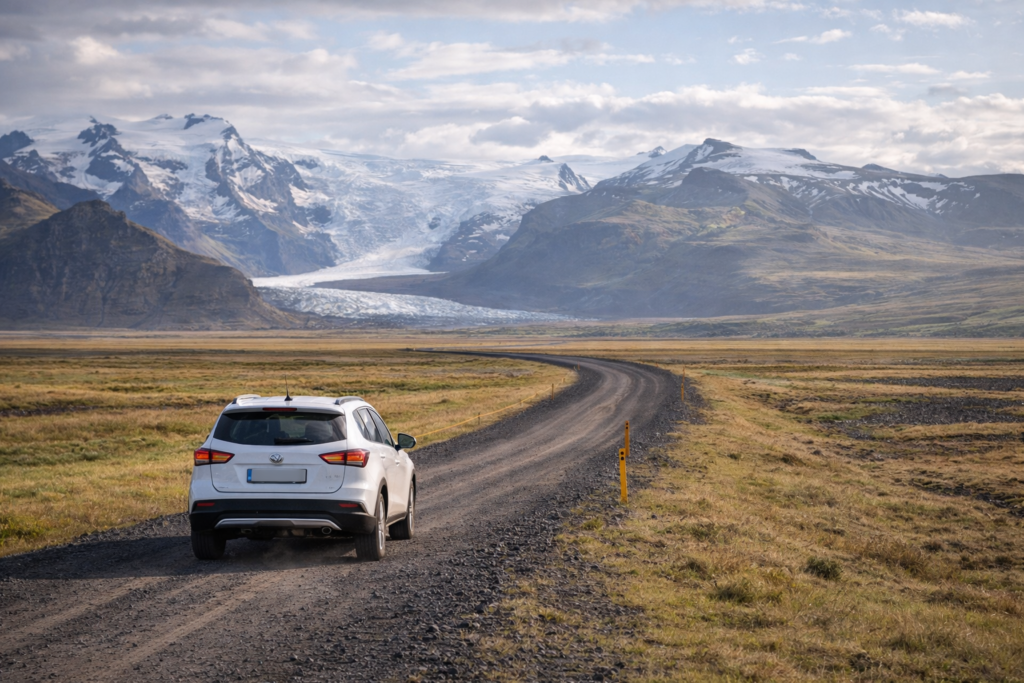
Getting Around Iceland
In Reykjavik
Walk. Central Reykjavik is compact. Most attractions are 20-30 minutes on foot. I walked everywhere except when it was pouring sideways rain.
Strætó buses: Cover city and suburbs. Single ride 490 ISK (exact change or card). Google Maps integration works perfectly. Runs roughly 7 AM-11 PM weekdays, reduced weekends.
Renting a car: The complete insurance guide
Consider renting if:
- Staying 7+ days
- Want complete flexibility
- Confident driving challenging conditions (single-lane bridges, gravel roads, wandering sheep)
- Can afford 6,000-15,000+ ISK/day plus fuel
Skip it if:
- First Iceland trip
- Only 3-5 days (tours are more efficient)
- Uncomfortable with gravel roads or winter conditions
- Traveling alone and can’t split costs
Understanding Iceland car rental insurance
Iceland car rental insurance is complicated and expensive, but skipping coverage can cost you thousands. Standard credit card insurance often fails here because it doesn’t cover “Acts of Iceland”—sand, wind, gravel, and ash.
CDW (Collision Damage Waiver): Mandatory and usually included in base price. BUT the deductible (what you pay out-of-pocket for damage) can be 300,000-500,000 ISK ($2,200-3,600). You’re liable for all damage up to that amount.
SCDW (Super CDW): Reduces your deductible to zero or near-zero. Costs 3,000-5,000 ISK per day but essential. Without this, one cracked windshield costs more than the insurance for your whole week.
Gravel Protection (GP): Covers windshield and paint damage from flying rocks. Iceland still has gravel sections even on parts of Ring Road. I’ve seen multiple tourists arguing with rental companies over 100,000+ ISK windshield damage they thought was covered by CDW but wasn’t. Get this. 2,000-3,000 ISK per day. Non-negotiable.
Sand and Ash Protection (SAAP): Covers damage from volcanic sand storms. With 2026’s volcanic activity, ash is a real risk especially near Vík and Reykjanes Peninsula. High winds can literally sandblast paint off cars on the South Coast. 1,000-2,000 ISK per day. Worth it.
Theft Protection (TP): Iceland is safe, but most comprehensive packages include this. Usually about 500-1,000 ISK per day for peace of mind.
The hidden exclusions nobody mentions
Even “full coverage” typically excludes three things that trip up solo travelers:
Water damage: Drive through a river or stream? Insurance voids immediately. Never cross water—Icelandic rivers and streams are deeper than they look and destroy engines. Your entire rental cost becomes your problem.
The “wind door”: If wind catches your car door and bends the hinge, most insurance doesn’t cover it. I watched a rental agent at Keflavik show a tourist photos of their destroyed door hinge—6,000 ISK charge. Iceland’s wind regularly exceeds 60 km/h and will rip doors off hinges. Always park into the wind direction (check flags or grass) and hold doors with both hands when opening.
Undercarriage damage: Scrape the bottom on a rock or high-center on rough roads? You’re paying for it. Most insurance excludes undercarriage entirely.
Recommended car rental companies for solo travelers
Avoid the cheapest brokers without airport offices—you don’t want to wait for shuttles alone at 1 AM.
Blue Car Rental: Local favorite. Includes most extra insurance in base price. Offers contactless pickup—perfect for introverted solo travelers. Good reputation for transparent pricing.
Lava Car Rental: Similar to Blue Car. Comprehensive insurance packages. No hidden fees. Excellent customer service when things go wrong.
Lotus Car Rental: Often has the best “Platinum” packages that actually cover things like tires and towing. Check their all-inclusive options.
The solo driver inspection protocol
Since you don’t have a passenger to help spot damage, be meticulous at pickup:
Take a slow 360-degree video of the entire car before driving off—include roof, glass, all sides, and undercarriage if you can see it. This is your evidence if disputed damage comes up at return.
Check tire sidewalls for bubbles or damage. Solo driving on a flat in a lava field is no fun.
Double-check fuel type: Diesel or 95 octane gasoline? Putting wrong fuel in is a $5,000+ mistake that no insurance covers. The fuel cap or dashboard will specify—take a photo of it.
Test all doors and locks before leaving the lot.
Money-saving car rental tips
Get a prepaid gas card (N1 or Olís) at your first gas station. Load it with cash for the amount you’ll need. This prevents the $200+ authorization holds that Icelandic pumps sometimes put on international credit cards that can tie up your money for days.
Download the Parka app for easy parking payments in Reykjavik and tourist areas. Saves you from finding coins and dealing with parking meters.
Budget an extra 5,000-8,000 ISK per day for comprehensive insurance. Yes, it nearly doubles your rental cost. No, you don’t want to be liable for 500,000 ISK because a rock hit your windshield on Route 1.
Solo driver reality: Cars give freedom but you can’t share costs. Fuel runs 250-300 ISK/liter (about $1.80-2.20/liter). A week of driving Ring Road uses 60-80 liters—that’s 15,000-24,000 ISK just in fuel. Add rental (42,000-100,000 ISK/week) and insurance (35,000-56,000 ISK/week), and you’re looking at 90,000-180,000 ISK total.
Compare that to booking 4-5 tours from Reykjavik at 12,000-20,000 ISK each (60,000-100,000 ISK total) where you don’t worry about navigation, weather, or wrecking a windshield.
Tours from Reykjavik
Why they work for solo travelers:
- Zero driving stress—sit back and watch scenery
- Expert guides provide geological and historical context
- Meet other travelers naturally (tours are full of solo people)
- Better value for single days
- Run even when self-driving would be dangerous (tours have proper vehicles and experienced drivers)
Reliable companies I’ve used:
- Reykjavik Excursions: Largest operator, affordable, reliable
- Gray Line Iceland: Good small-group options (8-19 people)
- Troll Expeditions: More personalized, knowledgeable guides
- Arctic Adventures: Best for adventure activities (glacier hiking, ice caving)
Safety—The Real Concerns
Iceland is statistically the safest country on Earth. Local Icelanders are incredibly helpful. That said, nature can be unpredictable. Before I leave my accommodation each morning, I run through three quick checks—it’s become automatic after my second trip when weather closed roads I didn’t know about.
My daily safety routine
1. Check SafeTravel.is: The ultimate authority for road closures, weather alerts, and volcanic activity. This is Iceland’s official safety portal and it’s updated constantly.
2. Submit a travel plan: If you’re hiking solo or driving the Ring Road, submit your itinerary on SafeTravel.is. Takes 2 minutes. If you don’t check back in as expected, search and rescue gets automatic notification. It’s like telling someone your plans, but with Iceland’s professional rescue system backing you up.
3. Use the 112 Iceland app check-in: The app has a “check-in” feature that sends your GPS coordinates to authorities without calling them. It creates a breadcrumb trail of your location. Perfect for solo hikers—quick “I’m safe” signal while on trails.
Weather changes fast
Iceland’s weather shifts from sunshine to sideways rain to snow flurries to sunshine again in 45 minutes. I’ve experienced all four seasons in a single afternoon on the South Coast.
What to do:
- Check vedur.is every morning (not Apple or Google Weather—they’re not accurate enough for Iceland; Vedur gives wind-chill and precipitation forecasts that locals actually use)
- Download Vedur (weather) and SafeTravel (conditions/alerts) apps
- Pack emergency layers in your daypack even for “nice day” forecasts
- If conditions deteriorate while hiking, turn back—the trail will be there tomorrow
- Never hike alone in remote areas during storms or low visibility
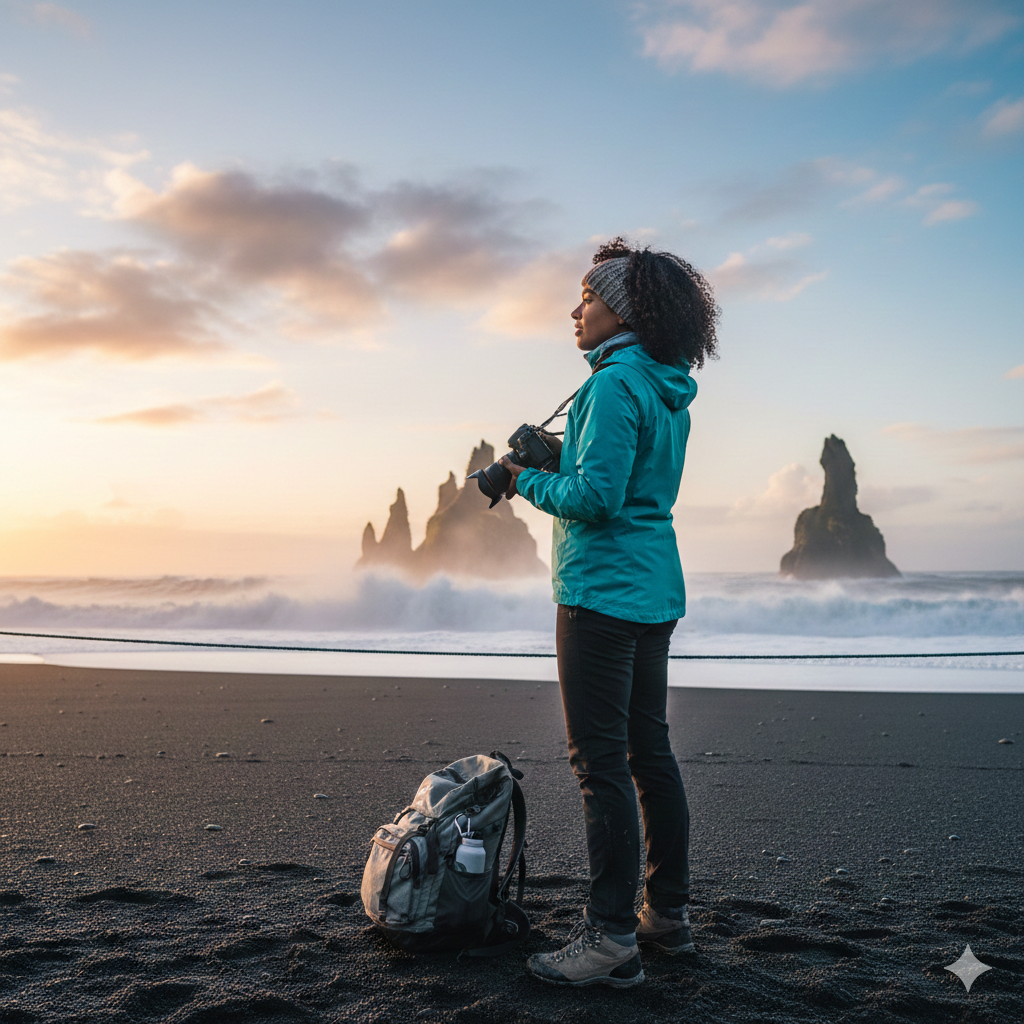
Water dangers
Sneaker waves: Reynisfjara and other South Coast beaches. These aren’t just big waves—they’re structurally different, surging far higher than others without warning. Unexpected surges reach far beyond normal waterline. People have died here—not hypothetically, actually died in recent years. I stay at least 30 meters back from the waterline even when it looks calm. Never turn your back on the ocean. Stay well back from the waterline. Respect barriers and warning signs. I watched a wave sweep 15 meters past where tourists were standing and everyone scattered screaming. It’s not paranoia—the ocean here is genuinely dangerous.
Cold water: Ocean temperature stays 6-10°C (43-50°F) year-round. Falling in means minutes until hypothermia, not hours. Even strong swimmers can’t function in water that cold.
Driving risks
Single-lane bridges appear suddenly on two-lane roads—you need to yield based on road markings. Sheep wander onto roads without warning (they have zero traffic awareness). Gravel sections reduce traction dramatically. Wind regularly blows cars off roads or into other lanes—and catches car doors, bending hinges. Ice forms on roads even in summer mornings in higher elevations.
Safe driving tips:
- Rent appropriate vehicle (4×4 for F-roads and winter travel)
- Drive 10-20 km/h below posted limits
- Always park into the wind (check flags or grass direction) and hold doors firmly with both hands
- Pull into designated pullouts to let faster traffic pass (Icelanders drive fast on familiar roads)
- Check road.is (or call +354 1777 for real-time updates) before each day’s drive
- Never drive tired after international flights—sleep first, drive the next day
- F-roads (mountain roads) are illegal without 4×4 and closed most of the year
Geothermal dangers
Boiling water causes severe burns. Geysir area erupts at 100°C (212°F). Steam vents hide in grass and can scald exposed skin.
Rules:
- Stay on marked wooden paths at all geothermal areas
- Never touch water unless signs explicitly say it’s safe
- Test natural hot spring temperature before entering (stick hand in first)
- Watch for steam rising from unexpected ground spots
Emergency contacts you actually need
112 – Emergency services (police, medical, mountain rescue): Universal emergency number. Works everywhere, even without normal cell signal by connecting through any available carrier.
Download 112 Iceland app (official emergency app): Sends your exact GPS location to emergency services with one button press. Works offline using phone’s GPS. Has check-in feature for solo hikers. Absolutely essential.
1717 – Red Cross Helpline: 24/7 free anonymous helpline with English-speaking volunteers. Not just for emergencies—if you’re feeling overwhelmed, lonely, or need someone to talk to while traveling solo, they’re there. I’m including this because solo travel has hard moments and it’s okay to reach out.
+354 1777 – Road.is phone line: Real-time road condition updates. Essential if you’re chasing Northern Lights in winter or planning Ring Road driving.
Tell someone your plans when heading into nature. Share route and expected return time with your hostel staff, hotel reception, or a friend back home. Submit the detailed plan on SafeTravel.is—Iceland’s search and rescue teams are excellent but they need to know where to look.
SafeTravel.is is your bible. Official portal for conditions, alerts, safety info. Check it daily. The travel plan feature is genuinely useful—I submitted one before a solo day hike in Thórsmörk and felt infinitely more secure knowing someone would notice if I didn’t check back in.
What to Pack For Iceland as a Solo Traveler
Layering system (non-negotiable)
Base layer: Thermal underwear (top and bottom), wool or synthetic t-shirts. Never cotton—cotton kills when wet. It holds moisture, won’t dry, and sucks heat from your body. Technical fabrics or merino wool only.
Mid layer: Fleece jacket or wool sweater, warm leggings or hiking pants (NOT jeans).
Outer layer: Waterproof windproof jacket with hood (single most important item you’ll pack), waterproof pants.
Why this matters: I watched someone shiver miserably at Gullfoss wearing a cotton hoodie and jeans while I stayed comfortable in wool base, fleece mid, and hardshell outer. When the rain hit (and it always hits), she soaked through in minutes. My shell kept me dry. She left after 10 minutes. I stayed for an hour watching rainbows form in the mist.
Footwear
Waterproof hiking boots. Non-negotiable. Iceland is wet, muddy, rocky, and icy depending on season.
Requirements:
- Ankle support for uneven volcanic terrain
- Actually waterproof (not water-resistant—there’s a difference)
- Broken in BEFORE your trip—blisters destroy travel plans
- Good tread for slippery moss-covered rocks
I wore Merrell Moab waterproof boots every day for two weeks and they performed perfectly.
Backup shoes: Comfortable sneakers or casual boots for Reykjavik streets and hostel wear.
Essentials
- Warm layers—the weather changes fast (I wore gloves in July at a glacier)
- Waterproof jacket and sturdy boots
- Warm gloves and hat, even summer (glaciers and mountains get cold)
- Buff or scarf (protects neck from wind)
- Swimsuit for hot springs (don’t forget this—you’ll regret it)
- Eye mask for summer’s midnight sun (essential for sleep in June/July)
- Aluminum foil (buy at Bónus for 200 ISK to cover window gaps if hostel curtains don’t block light)
- Microfiber towel (pools often don’t provide them; hostels do but it’s convenient)
- Reusable water bottle (Iceland’s tap water is pristine glacial runoff—better than bottled)
- Universal adapter Type F European plug
- Portable charger (long tour days and photo-taking drain batteries)
- Headlamp for winter (hands-free essential if you slip on ice or need to change a tire in the dark)
- Small dry bag for protecting phone/camera from waterfall spray
Essential apps to download before you go
The Big Three:
- SafeTravel Iceland: Most important app. Check volcanic activity, road closures, submit travel plans
- 112 Iceland: Official emergency app with GPS check-in feature
- Vedur: Accurate Icelandic weather forecasts (don’t trust Apple/Google Weather)
Useful additions:
- Appy Hour: Reykjavik bar happy hour deals
- Parka: Easy parking payments
- Aurora Forecast: Northern Lights KP index predictions
Skip packing
Hair dryer (every accommodation provides them), too many outfit changes (wear same clothes multiple days—nobody cares), dressy clothes (Reykjavik is extremely casual), heavy guidebooks (use phone), full-size toiletries (buy in Iceland or bring travel sizes).
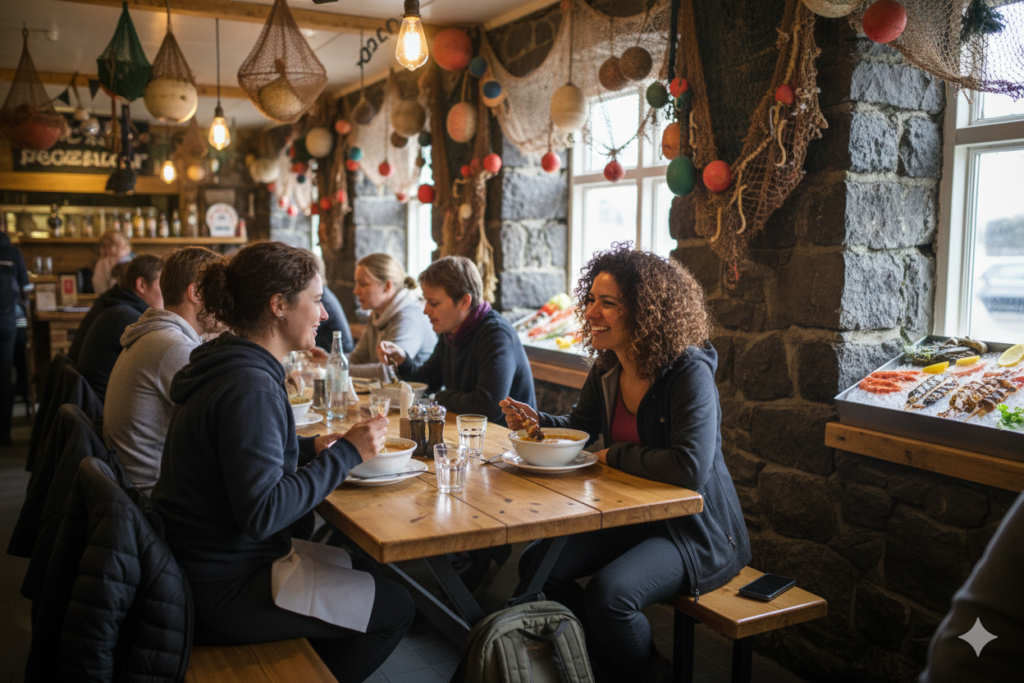
communal seating in Saegreifinn Sea Baron Reykjavik
Solo Dining: No “Solo Tax,”
The culture
Icelanders eat alone frequently. Cafés are full of people reading, working on laptops, enjoying pastries solo. Restaurants have counter seating designed for one. Servers are professional but not chatty (Icelandic style). No one rushes you. No one makes it weird. Tipping isn’t expected—service is included in prices.
The “solo tax” question: Iceland doesn’t charge extra for solo diners like some countries do. Portions are sized for one person anyway—you won’t feel like you’re wasting food or paying couple prices. The real solo advantage: you get the best window seats and counter spots for people-watching.
Where to eat in Iceland
Budget wins:
- Bæjarins Beztu Pylsur (hot dog stand at harbor): 500 ISK, order “eina með öllu” (one with everything). Locals line up too—it’s not just tourist kitsch. Bill Clinton ate here.
- Hlölla Bátar (food truck, Grandi area): Lobster soup 1,500 ISK, fish and chips 1,800 ISK
- Icelandic Street Food (downtown): Soup served in bread bowls 1,750 ISK, filling and warming
- Bónus prepared foods section: Pre-made sandwiches, salads, hot dishes 800-1,200 ISK
Mid-range solo-friendly:
Sægreifinn (Sea Baron): Lobster soup 2,200 ISK, grilled fish skewers 1,800-2,400 ISK. Communal picnic-style seating makes solo dining not just easy but social. I ended up sharing a table with a couple from Germany and a solo guy from Japan, all of us comparing our Golden Circle photos. Best solo spot: End of the long table near the kitchen—watch them grill the fish.
Messinn: Fish dishes served in pans (pan-fried cod, arctic char, salmon) 3,500-4,500 ISK. Has counter seating along the open kitchen. Best solo spot: Counter seats—watch chefs work, feels natural sitting alone, perfect for people who like the energy of a restaurant without awkward solo table vibes.
Gló: Healthy bowls, salads, vegetarian/vegan options. Build-your-own bowls 2,200-2,800 ISK. Casual counter ordering, lots of solo diners with laptops.
Cafés for people-watching:
Reykjavik Roasters: Excellent coffee 650-850 ISK, pastries 500-800 ISK. Best solo spot: Window counter seats on Kárastígur—perfect view of Laugavegur foot traffic. I’ve spent hours here with coffee and a book.
Sandholt Bakery: Breakfast pastries 500-800 ISK, excellent bread. Gets crowded but counter seating turns over quickly.
Braud & Co: Famous cinnamon buns 600 ISK. Lines form by 9 AM. Minimal seating but perfect for takeaway to eat by the harbor.
What to order
Traditional dishes worth trying:
- Lamb: Iceland’s specialty (lamb soup/kjötsúpa, slow-roasted lamb)
- Arctic char or cod: Fresh, simply prepared, not overdone
- Skyr: Icelandic cultured milk product (like thick yogurt but technically not yogurt)
- Rúgbrauð: Dense, sweet rye bread traditionally baked underground using geothermal heat
- Plokkfiskur: Comforting fish stew with potatoes and béchamel
Skip for value:
- Puffin and whale (expensive, ethically questionable, often mediocre quality aimed at tourists)
- Fermented shark/hákarl (traditional Viking food that tastes like ammonia—acquired taste is an understatement)
- Imported produce and meats (crazy expensive due to shipping)
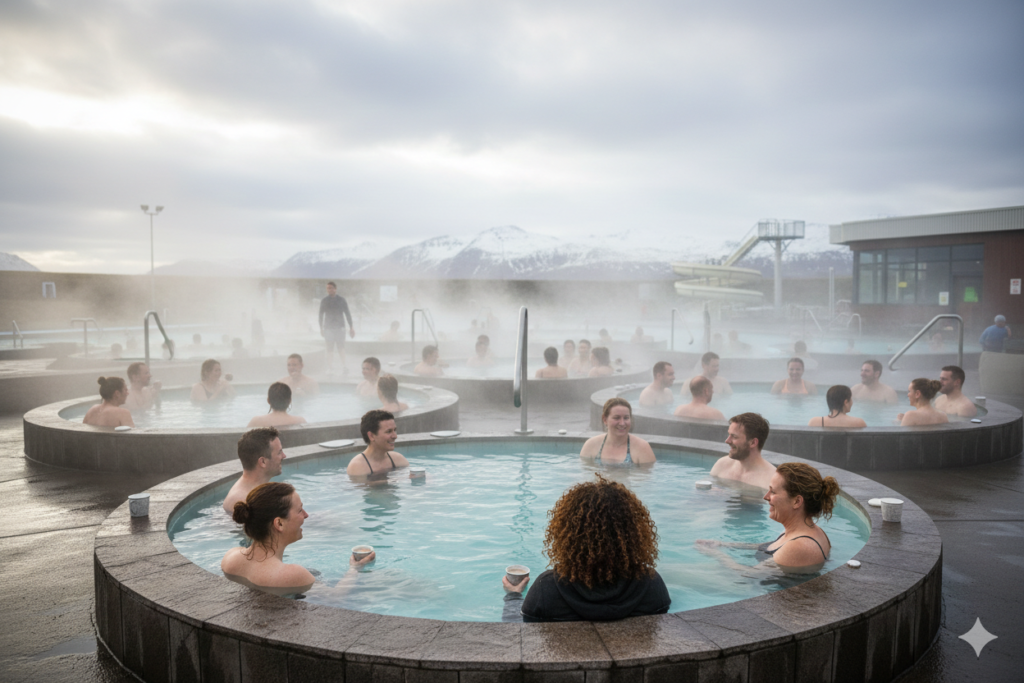
Public pool hot tub social culture
How to Actually Connect with Icelanders
There’s a persistent myth that Icelanders are cold and unfriendly. That’s not accurate—they’re just not performatively chatty like Americans or Italians.
The real dynamic: Icelanders won’t make small talk with strangers at bus stops or grocery stores. They value personal space and privacy. They won’t comment on your outfit or ask where you’re from unprompted.
But: When you genuinely need help, they go out of their way. When I looked confused at a bus schedule outside Hallgrímskirkja, three separate Icelanders stopped to help before I even asked. One pulled out his phone to show me the Strætó app. Another explained which bus I needed. The third told me about a better route.
Where to actually meet and talk with locals:
Swimming pools (hot tubs specifically): This is THE place. Icelanders are chatty in hot tubs. The combination of warm water and casual atmosphere breaks down the reserved exterior. I’ve had genuine conversations at Vesturbæjarlaug about everything from Icelandic politics to the best secret hiking spots to recommendations for books by Icelandic authors. Local pools are where community happens.
How it works: Sit in a hot tub (there are usually 3-5 at different temperatures). Don’t force conversation, but if someone’s there regularly, a simple “This is my favorite pool” or comment about the temperature often opens things up. Icelanders appreciate directness and genuine interest, not fake enthusiasm.
Avoid: Trying to chat up Icelanders in bars unless they’re already in social mode. Reykjavik nightlife is social, but approaching random Icelanders on the street or in shops feels intrusive to them.
The key: Icelanders help when help is needed and socialize in appropriate contexts (pools, organized settings). They’re not unfriendly—they’re just not casually chatty. Respect that boundary and you’ll find them warm, helpful, and genuinely interesting.
Unique Features That Matter
The midnight sun phenomenon
Summer nights never truly get dark. In June, midnight looks like 4 PM with full daylight. It’s perfect if you’re hesitant about nighttime exploration. You can wander Reykjavik at 1 AM in broad sunshine.
The weird part: Your circadian rhythm gets confused. I’d look at my watch thinking it was 6 PM based on light levels, and it would be 11:30 PM. Bring an eye mask for sleep—your brain won’t produce melatonin when it’s bright outside your window. The aluminum foil trick really works if eye masks aren’t enough.
Most Icelanders speak excellent English
Communication is effortless. Menus, signs, museum displays, asking for help—it all works seamlessly in English. I never needed a translation app or phrasebook once.
Useful Icelandic phrases anyway:
- Takk (tahk) – Thanks
- Góðan daginn (GO-than DIE-yin) – Good day
- Afsakið (AHF-sak-ith) – Excuse me
Icelanders appreciate the effort even if you butcher pronunciation.
Solo-friendly culture is genuinely real
Eating alone, traveling alone, exploring alone—completely normalized here. No one comments. No one gives you pitying looks. Restaurant staff don’t ask “just one?” with surprise. You’re just another person doing a thing.
This sounds small but it matters. I’ve traveled solo in countries where dining alone gets weird looks or servers try to seat you in corners. Iceland treats solo travelers like the default, not the exception.
The community mindset
Iceland has 380,000 people total. Everyone’s connected within a few degrees. That creates a culture where helping strangers is automatic. Icelanders look out for each other, and that extends to tourists.
Example: I dropped my credit card at a gas station outside Vík. Didn’t notice for two hours. When I called the station, they’d already set it aside with my name on it (from the card). “Yes, we have it. We figured you’d call.” That’s standard Iceland.
Frequently Asked Questions
Is Iceland safe for solo female travelers?
Yes. Iceland consistently ranks as the world’s safest country with extraordinarily low crime rates, strong gender equality, and a culture that respects solo travelers. The primary risks come from weather and nature, not people.
I’ve traveled through Iceland solo five times across different seasons, and I’ve walked Reykjavik alone at 2 AM in summer and winter. I’ve hiked trails solo, and I’ve never experienced harassment, catcalling, or felt personally unsafe from people. The dangers are environmental—weather, waves, driving conditions—not criminal.
What’s the best time to visit Iceland for first-time solo travelers?
September offers the ideal balance: moderate pricing (20-30% below summer), 12-15 hours of daylight (enough to explore comfortably without feeling rushed), fewer crowds at major sites, good weather probability, and early Northern Lights season begins.
Second choice: May for spring landscapes, lengthening days, and shoulder season pricing. I’ve visited in both; September edges ahead for the combination of autumn colors and aurora possibilities.
How much does a week in Iceland cost for a solo traveler?
Budget (hostel dorms, cooking, affordable tours): 105,000-140,000 ISK ($765-1,020) for 7 days
Mid-range (private rooms, mix of cooking/restaurants, popular tours): 175,000-245,000 ISK ($1,275-1,785)
Comfortable (nice hotels, regular dining out, multiple premium tours, rental car): 280,000-420,000 ISK ($2,040-3,060)
These exclude international flights but include accommodation, food, activities, and local transport. Solo travelers can’t split accommodation or car costs, which increases per-person spending compared to couples.
Do I need to rent a car in Iceland?
Not for first visits under 7 days. Reykjavik-based day tours efficiently cover Golden Circle, South Coast, and major highlights without driving stress, insurance complexity, or weather concerns.
Rent a car if:
- Staying 7+ days and want Ring Road flexibility
- Confident driving challenging conditions (gravel, single-lane bridges, sheep, wind)
- Can afford 6,000-15,000+ ISK/day plus fuel plus insurance (total: 90,000-180,000 ISK/week)
Take tours if:
- First Iceland visit
- 3-5 day trip
- Uncomfortable with difficult driving conditions
- Want to meet other travelers
- Prefer letting guides handle navigation and weather decisions
For solo travelers specifically, tours often provide better value and social opportunities unless you specifically want solitary road trip time.
Can I see the Northern Lights in Iceland?
Yes, but only September through March when darkness returns (you need 3+ hours of true darkness). Peak viewing is December-February with longest nights.
Success requires:
- Clear skies (weather is the biggest variable)
- Minimal light pollution (leave Reykjavik)
- Solar activity (KP index 3+ is good; download Aurora Forecast app)
- Patience (average 3-4 attempts to see them)
My experience: I saw them on my third attempt across two trips. First two nights: clouds. Third night: dancing green curtains across the entire sky while our guide explained Norse mythology about the aurora being Valkyrie armor reflections.
Book Northern Lights tours (8,000-12,000 ISK) with guides who actively chase clear skies and know backup locations. Most offer free rebooking if you don’t see auroras.
What should I pack for Iceland?
Critical items:
- Waterproof, windproof jacket with hood (most important single item)
- Waterproof hiking boots, broken in before arrival
- Layering system: thermal base, fleece mid-layer, outer shell (NO COTTON)
- Fitting pants (waterproof)
- Warm gloves, hat, buff/scarf (even summer—I wore gloves in July)
- Swimsuit for hot springs and pools
- Eye mask for summer’s midnight sun
- Aluminum foil (buy at Bónus for blocking window light)
- Reusable water bottle
- Universal adapter (Type F European plug)
- Portable phone charger
- Headlamp (essential for winter, useful year-round)
Don’t pack: Cotton clothing (deadly when wet), too many outfits (repeat clothes), dressy items (Iceland is casual), hair dryer (provided everywhere).
Can I drink the tap water?
Absolutely—Iceland’s tap water is pristine glacial melt that tastes better than any bottled water. Bring a reusable bottle (collapsible ones save luggage space) and refill everywhere for free. Never buy bottled water in Iceland—it’s literally the same water from the tap.
Note: Hot water sometimes has slight sulfur smell from geothermal heating. It’s completely safe but smells like eggs briefly. Let it run 10 seconds or just use cold tap for drinking.
Will I feel isolated traveling Iceland solo?
Only if you want to. Iceland offers both profound solitude and easy social connection.
For social interaction:
- Stay at hostels like KEX or Loft with common areas and events
- Join small-group tours (full of other solo travelers)
- Visit local swimming pools (Icelanders chat in hot tubs)
- Sit at restaurant counters or communal tables
- Use hostel kitchens—cooking often turns into group dinners
For solitude:
- Book private accommodation
- Self-drive less-traveled areas
- Hike early mornings when trails are empty
- Skip organized tours
I’ve done both. Some trips I stayed social (hostel dorms, multiple tours, made friends). Other trips I craved quiet (private guesthouse, self-drive, solo hikes). Iceland accommodates whatever you need.
Do I need travel insurance for Iceland?
Yes, absolutely. Iceland’s medical care is excellent but expensive for non-EU citizens without coverage.
Insurance should cover:
- Medical emergencies and hospital care
- Emergency evacuation (helicopter rescue from remote areas costs thousands)
- Trip cancellation/interruption (weather causes frequent tour cancellations)
- Lost or delayed baggage
Iceland’s remote nature and unpredictable weather mean evacuation insurance isn’t paranoia—it’s practical. I use World Nomads for solo travel but compare options.
How do I handle Iceland’s expensive alcohol?
Buy at Keflavik Airport duty-free BEFORE leaving baggage claim. This is critical and most people miss it.
Iceland has massive alcohol taxes. Wine/beer costs 2-3x normal prices in stores (3,500+ ISK for basic wine vs. 1,700 ISK at duty-free). A cocktail in downtown bars runs 2,500-3,500 ISK ($18-25). You can buy alcohol only at:
- Airport duty-free (cheapest, best selection)
- Vínbúðin state liquor stores (limited hours, expensive)
What I do: Buy 1-2 bottles at airport duty-free on arrival. One bottle of wine and a six-pack of craft beer saves about 4,000 ISK vs. city prices. Use Appy Hour app to find bar happy hour specials (2-for-1 deals, 1,000 ISK beers instead of 1,600 ISK).
My Iceland Lessons
Standing at Reynisfjara as waves crashed against basalt columns, wind everywhere, I felt small in the best way. Connected to something that’s been here far longer than me and will remain long after. It recalibrated my sense of scale and reminded me why I travel solo—to have space for those moments without filtering them through someone else’s experience.
But it wasn’t just the epic landscapes. It was walking midnight streets under summer sun without fear. It was the easy conversations with other solo travelers on tours, sharing awe at Strokkur’s eruptions. The Icelandic woman at Vesturbæjarlaug pool helped me understand the shower etiquette, and we ended up chatting for 45 minutes about her hiking recommendations.
Iceland rewards curiosity, demands respect for nature, and welcomes people traveling alone. You don’t need extensive solo travel experience to visit—in fact, it’s ideal for first solo trips precisely because it’s measurably safe, easy to navigate, and built for independent explorers.
Book the flight. Hit the duty-free for wine before you leave baggage claim. Buy the SIM card. Pack the waterproof jacket and aluminum foil. Download the apps: 112 Iceland, SafeTravel, Vedur, Appy Hour. Submit your travel plan if hiking solo. Check SafeTravel.is daily. Trust yourself. Iceland is ready.
The only question: are you?