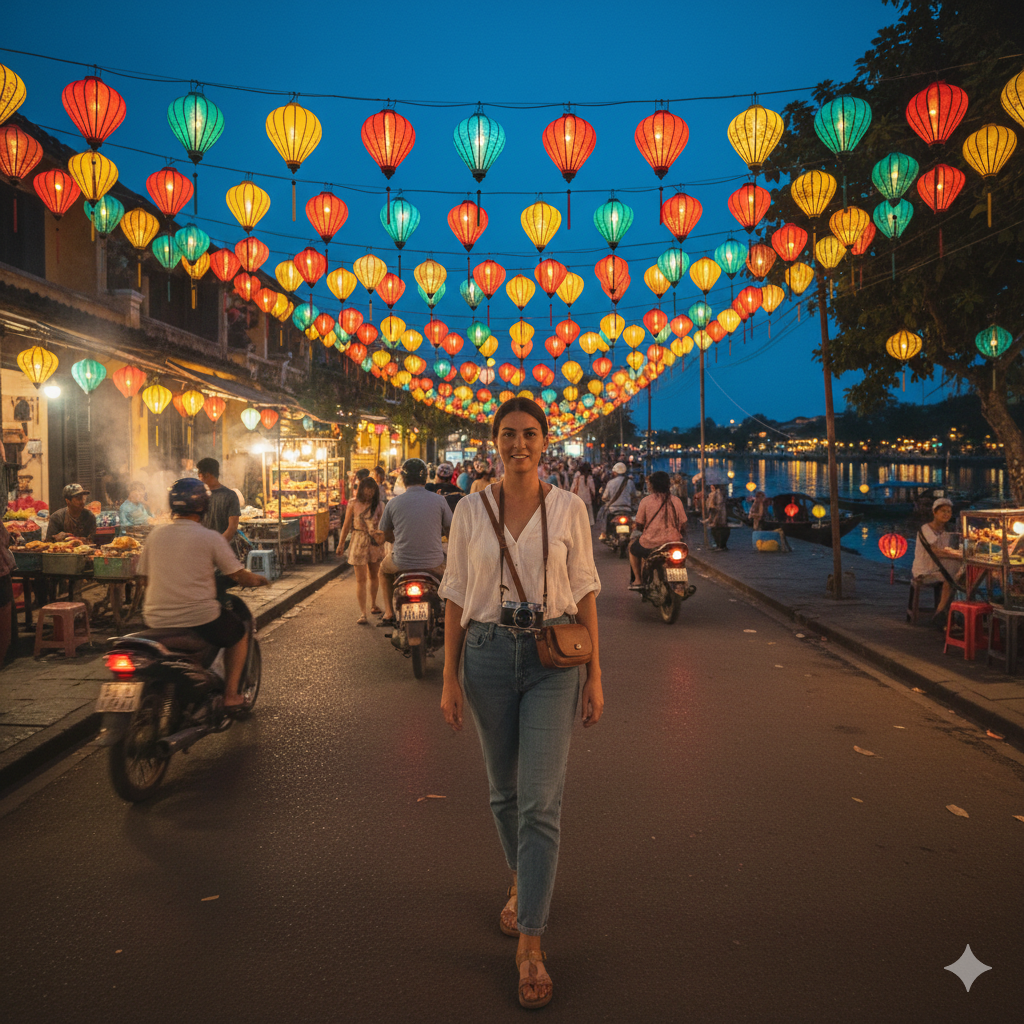

I landed at Tan Son Nhat Airport in Ho Chi Minh City just after midnight. The humidity hit the second the airport doors slid open; that thick, warm air that makes your clothes cling in minutes. A motorbike taxi driver quoted 300,000 dong for a ride to District 1. I knew it should be closer to 150,000, but I was exhausted, and the difference was roughly six dollars.
Twenty minutes later I was weaving through late-night traffic: motorbikes everywhere, constant horns, and almost no visible traffic rules. I was equal parts terrified and fascinated.
Three weeks later, I’d eaten my way through six cities, gotten weirdly comfortable crossing those same chaotic streets, learned which scams to ignore and which to push back on, and generally had a great time. Vietnam wasn’t always easy, but it was interesting, affordable, and rewarding like my previous Southeast Asian trips
Well, this is what the guide won’t do:
- It won’t tell you Vietnam will “change your life.”
- It won’t shame you for preferring easier destinations.
Instead, it will help you decide whether Vietnam fits your travel style.
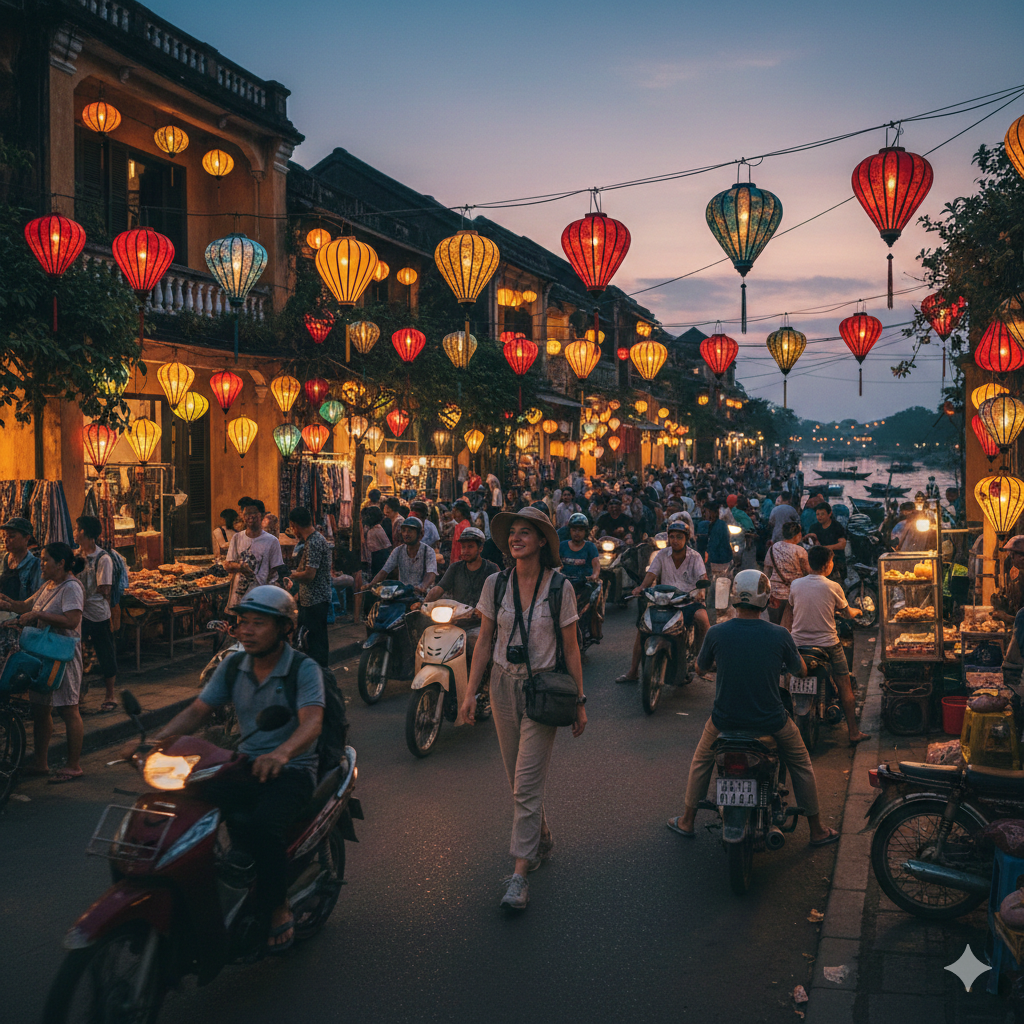
Walking through a busy street in Vietnam at night
How Vietnam Compares to Other Southeast Asian Destinations
Having explored Singapore, Malaysia, and Thailand before arriving in Vietnam, I quickly realized that while they share a region, the solo travel experience in each is beautifully distinct.
Coming from Singapore and Malaysia, where English is widely spoken, and navigation is effortless, or even Thailand, where the tourist trail is well-worn and friendly, Vietnam felt like a step into the deep end. It requires a bit more problem-solving. English is less common in the north, and the infrastructure isn’t quite as intuitive as its neighbors.
You’ll also notice a shift in energy on the streets: while Thai vendors are famously persistent but smiling, interactions in Vietnam tend to be more direct and the bargaining harder. It’s a place that is well-developed in the main hubs but a bit patchier in places like the rugged northern areas (Ha Giang Loop, remote, ethnic minorities with amazing scenery), demanding a little more patience but rewarding you with a raw, authentic complexity.
What this means in practice:
Vietnam usually requires:
- More advance planning.
- More patience with communication barriers.
- Clearer boundaries with vendors.
So, What Makes Vietnam Feel Different?
1. Bargaining is part of daily life. Many prices are flexible. Initial tourist quotes can be 3–5x the local price. You’ll negotiate everything from souvenirs to some taxi rides (if not using apps).
2. Communication is more direct. Short, to-the-point responses and minimal small talk are normal. It’s not hostility—it’s just the style.
3. The food is phenomenal. Think: pho, banh mi, fresh spring rolls, regional specialties. If you like to eat, Vietnam will spoil you.
4. Your money goes far. Even as a Western traveler, you can splurge on nice hotels or mid-range tours and still keep your overall budget reasonable.
5. The war is recent history. The “American War” ended in 1975. And, Museums, the Cu Chi Tunnels, and DMZ sites are powerful, and the history is still within living memory for many people. (I’ll talk more about the war as we continue).
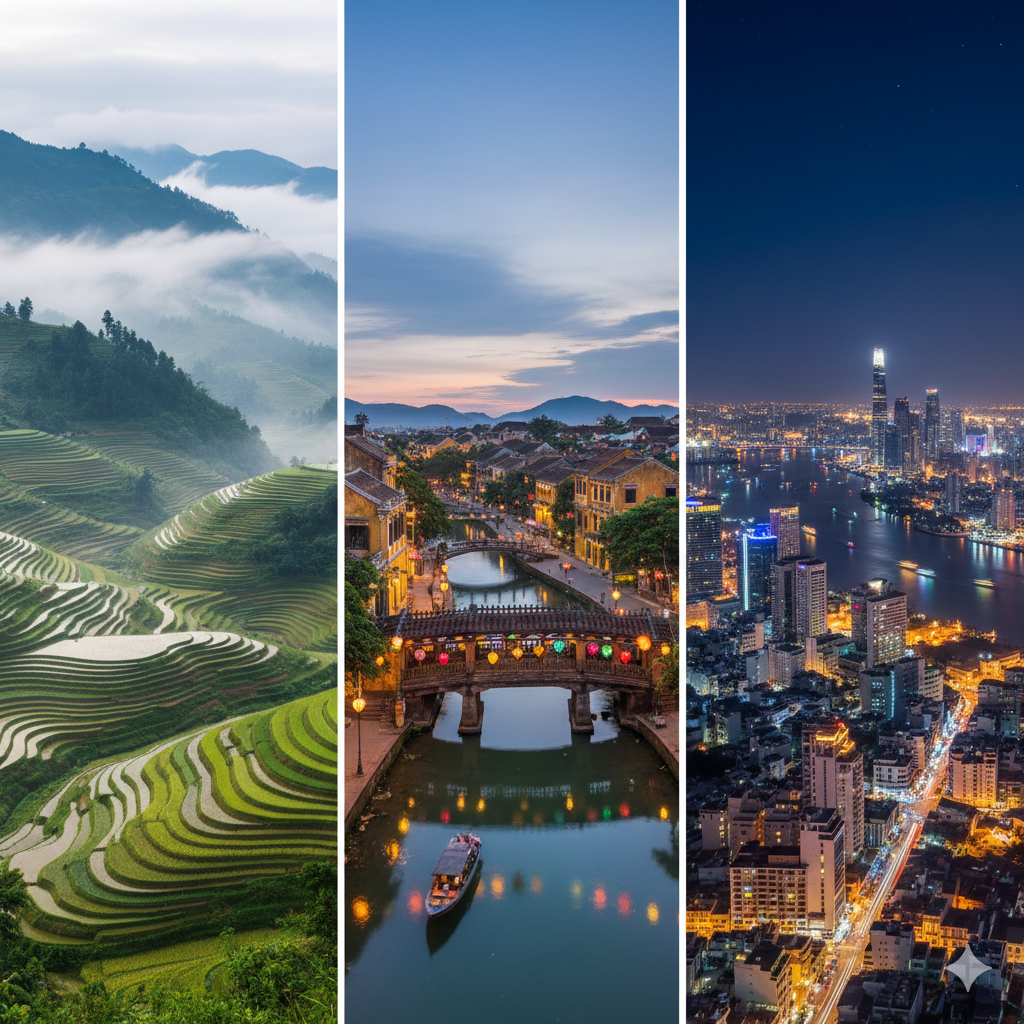
Landscapes of Vietnam
Essential Vietnam Facts
Let’s talk about the geography of Vietnam, which is long and skinny. About 1,600 kilometers from north to south. It features diverse terrains, vast forests and a long coastline on the South China Sea. Its topography creates distinct regions with different climates and rich vibes:
- North: Hanoi, Ha Long Bay, Sapa, Ninh Binh
- Central: Hue, Hoi An, Da Nang
- South: Ho Chi Minh City (HCMC), Mekong Delta, Mui Ne, Phu Quoc
But, you can’t “do it all” in one short trip. Accept that you’ll have to choose when and what region to tour.
What are the Best Times to Go?
- North: October–December (cool and dry).
- Central: February–May (drier). October
- South: December–April (dry)
You can visit year-round, but if you’re chasing good weather, timing matters.
Here’s what you need to know on Visas
Most nationalities need a visa.
- E-visa is widely used and straightforward for many travelers:
- Apply online through the official Vietnam National Electronic Visa system, at least 3+ days before departure
- Valid for up to 90 days for single or multiple entries and accepted at numerous designated entry points
- Print the approval letter and carry it with you
- Apply online through the official Vietnam National Electronic Visa system, at least 3+ days before departure
Note: Always double-check your specific nationality’s requirements before you book flights.
Currency in Vietnam
Vietnam uses the Vietnamese Dong (VND), and you’ll need a moment to get used to the big numbers. About 23,000–24,000 VND is equivalent to $1 USD. So, don’t be surprised when you find yourself holding a bright-blue 500,000-dong note worth roughly $21.
However, some shops and hotels will accept USD, but they always give change in dong at a rate that isn’t in your favor. It’s easier (and cheaper) to just pay in VND. Luckily, ATMs are everywhere, so withdrawing local currency is never a hassle.
Language
Vietnamese is tonal and challenging for English speakers.
Have a look at the English proficiency by region:
- Hanoi: Limited outside tourist zones.
- Hoi An / Hue: Better due to tourism.
- HCMC: Generally the most English-friendly.
To save you constantly, just download offline Vietnamese on Google Translate and use the camera function to read menus.
Before You Go, Is Vietnam Right for You?
Choose Vietnam if you:
- Want an affordable, culturally rich trip.
- Love to eat and don’t mind planning your days around food.
- Are curious about recent history and want to see it up close.
- Can tolerate language barriers and problem-solving.
- Enjoy varied landscapes: mountains including the Fansipan , cities, rice paddies, bays.
- Can handle some discomfort and chaos.
- You’re okay with plans changing and buses being late.
Maybe skip Vietnam (for now) if you:
- Need smooth, English-friendly travel at all times.
- Hate aggressive sales tactics or bargaining.
- Want a purely beachy escape (there are easier options in Southeast Asia).
- Need perfect weather and zero chance of disruption.
- Prefer everything pre-packaged and simple.
Vietnam won’t be for everyone, and that’s okay.
For me, it was challenging, sometimes frustrating, occasionally exhausting, but absolutely worth it. I didn’t come home as a new person. I came home with more tools for handling uncomfortable situations, a thicker skin for bargaining, and a long list of meals I still dream about.
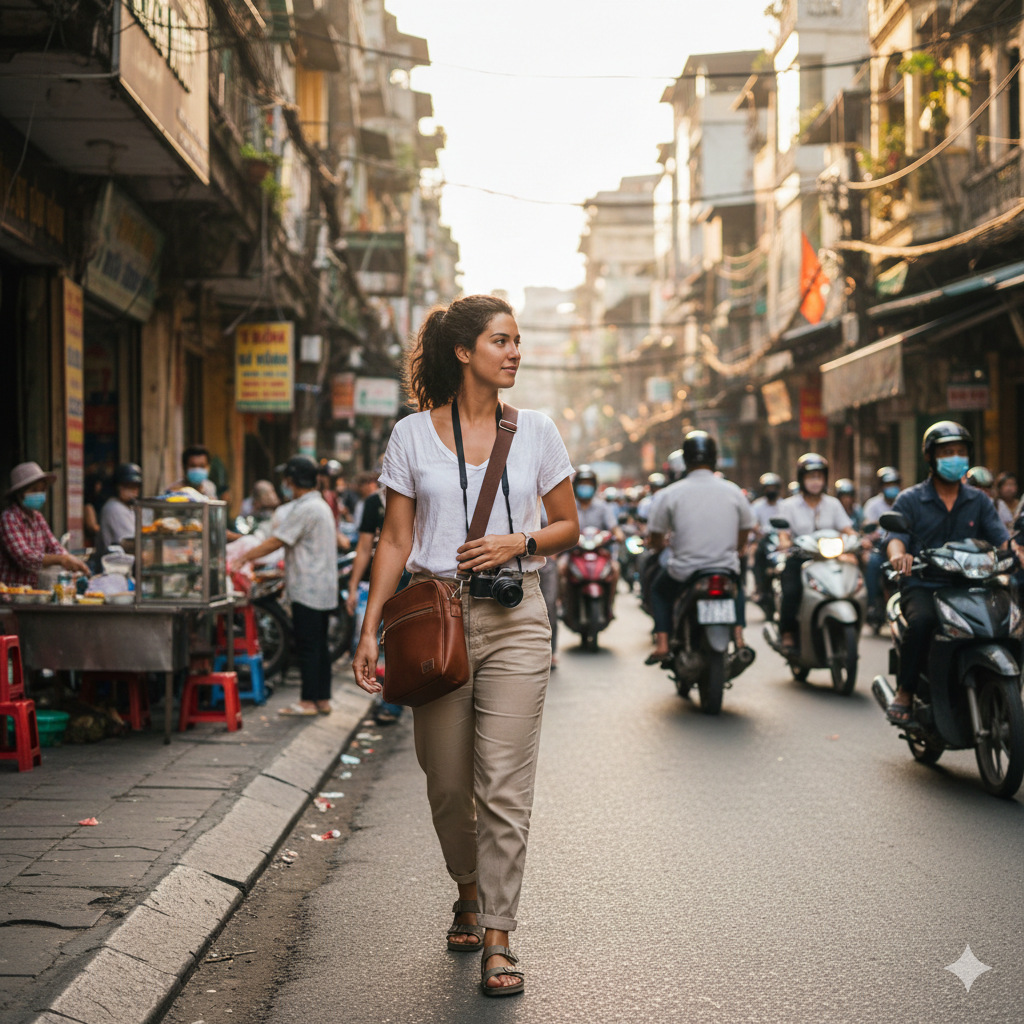
Walking in Vietnam with a crossbody bag in a busy city street
Safety: What Actually Happens to Solo Travelers in Vietnam
Vietnam is generally safe for solo female travelers. Violent crime against tourists is rare and the issues you’re more likely to encounter are:
Common annoyances:
- Bag and phone snatching (especially in HCMC)
- Overcharging and haggling fatigue
- Persistent vendors
- Taxi and tour scams
- Minor traffic accidents
- Food-related stomach issues
- Motorbike taxis following you to offer rides
My experience:
I felt comfortable walking alone during the day and moderately cautious at night in busy areas like HCMC’s District 1. It’s more “constant awareness” than “constant fear.”
Though, I often felt:
- Annoyed by hard-selling vendors
- Tired of always watching my bag
- Mentally drained by constant bargaining
How to reduce the risk of Bag Snatching (Especially in HCMC)
Someone on a motorbike can grab your bag or phone and be gone in seconds.
- Use a crossbody bag and wear it across your chest.
- Walk on the building side of the sidewalk, not at the curb.
- Don’t hold your phone loosely near the street.
- Be extra alert in HCMC’s District 1, especially at night.
If it happens, recovery is unlikely. File a report and rely on travel insurance.
Traffic and Crossing Streets
Vietnamese traffic looks like chaos but works on a kind of group instinct. Motorbikes move around you as long as you’re predictable.
How to cross:
- Watch how locals do it.
- Step into the street slowly.
- Keep a steady pace—don’t stop, don’t suddenly run.
- Let bikes flow around you.
- When in doubt, shadow locals crossing.
Start on quieter streets until you build confidence. The first few crossings will spike your adrenaline as it gets easier.
Renting a Scooter
Many travelers get injured on scooters in Vietnam so consider whether convenience is worth the risk.
If you decide to rent:
- Make sure you have a proper license plus an international driving permit.
- Confirm your insurance covers scooter accidents.
- Always wear a helmet.
- Start somewhere calm (e.g., Hoi An countryside), not in Hanoi or HCMC.
I rented once in Hoi An for the countryside and skipped it entirely in big cities. But the risk/benefit ratio in urban traffic wasn’t worth it.
Accommodation Safety
- Read recent reviews, preferably from solo female travelers.
- Check that doors and windows lock properly.
- Use lockers or room safes for passports and backups of cards.
- Avoid ground-floor rooms in noisy or sketchy areas when possible.
- If a place feels off when you arrive, switch accommodations. It’s worth the hassle.
Nights Out
- Stick to well-lit, busy streets.
- Use Grab instead of random taxis.
- Avoid walking alone in unfamiliar, empty areas very late.
- Keep your drink with you; drink spiking is rare but possible.
- Charge your phone and know your accommodation’s name and address.
Higher caution areas:
- HCMC’s District 1 late at night
- Bui Vien Street (backpacker party street)
- Empty side alleys after dark
Places that felt very safe:
- Hoi An Ancient Town
- Ha Long Bay cruises
- Busy restaurant and café districts
Common Scams and How to Handle Them
Vietnam has its fair share of little travel scams. Not dangerous. Think of them as part of the travel learning curve.
Taxi Scams
A few tricks you might run into include rigged meters, “broken” meters with suspiciously high flat rates, or drivers insisting the fare is in USD instead of VND.
The easiest fix: Just use Grab. It eliminates almost every taxi-related problem.
If you do need a regular taxi, stick to Mai Linh or Vinasun, and still keep an eye on the meter.
“Your Hotel Is Closed” Scam
A driver may tell you your hotel is closed, full, or under renovation. Later they conveniently suggest a “friend’s” hotel.
What should you do?
- Call your hotel while you’re still in the cab.
- Ask directly whether they’re open.
- Tell the driver to take you there anyway.
I had this happen once, and a quick phone call shut the whole thing down immediately.
Restaurant Bill Padding
Sometimes you’ll order two beers and a meal, only to get a bill that mysteriously includes extra items or higher prices than the menu listed.
How to handle it:
- Look over the bill line by line.
- Keep the menu at your table until you’re ready to pay so you can compare.
- Calmly point out any differences.
Most of the “mistakes” disappear as soon as you question them.
Motorbike “Student Tours”
Friendly “students” offer free motorbike tours so they can practice English. The tour often ends at shops where you’re pushed to buy things at inflated prices.
Solution: Decline unsolicited tours politely and book through your hostel or a reputable company instead.
Too-Cheap Tours (Especially Ha Long Bay)
Street agencies advertise Ha Long Bay cruises at unbelievably low rates. You’ll likely end up on an overcrowded boat with bad food and a bait-and-switch itinerary.
Do these instead:
- Book through your accommodation or a well-reviewed agency.
- Read recent reviews.
- Remember: if it’s much cheaper than everything else, there’s a reason.
Street Money Exchange
Unlicensed money changers may use sleight of hand or mix old, worthless bills with new ones.
The best thing you can do is use ATMs and If you must exchange, do it at banks or clearly official counters.
Cultural Considerations in Vietnam
Communication Style
Vietnamese communication tends to be more direct and less padded with pleasantries than North American and European norms. Short answers don’t mean rudeness. It means efficiency.
Don’t take small talk personally. You’re in a culture where speed and clarity often matter more than warmth in everyday transactions.
Bargaining
Outside of fixed-price stores, expect to do lots of bargaining.
- Start around 30–40% of the initial price.
- Be polite but firm.
- Don’t be afraid to walk away; often that’s when prices drop.
It can be exhausting at first but if you don’t bargain, you will overpay in the beginning. Consider it tuition in “Market Negotiation 101.”
War History
The Vietnam War (the “American War” here) is very recent history.
When visiting sites like the War Remnants Museum or Cu Chi Tunnels:
- Be respectful and be mindful of the powerful, often jarring, history.
- Listen to Vietnamese perspectives, even if they challenge what you learned at home.
- Avoid jokes or flippant comments about the war.
- Carry cash (Vietnamese Dong) for extras like food and audio guides.
- Go early morning or late afternoon to avoid big crowds and intense heat.
- The sites are intense, so prepare for graphics and upsetting content that focus on the American war in Vietnam, including Agent Orange and atrocities.
Temples and Pagodas
Basic etiquette:
- Cover shoulders and knees.
- Remove shoes where indicated.
- Don’t touch statues.
- Don’t point your feet at altars.
- Keep your voice low.
- Ask before taking photos.
Hill Tribe Photography (Sapa)
- Always ask permission.
- Be prepared to pay or buy something if you’re taking close-up portraits.
- Don’t photograph children without parent permission.
- Respect a “no.”
Emergency Basics
Save this info somewhere accessible offline.
Emergency numbers:
- Police: 113
- Ambulance: 115
- Fire: 114
Major international-standard medical facilities
Hanoi:
- Hanoi French Hospital: +84 24 3577 1100
- Family Medical Practice: +84 24 3843 0748
Ho Chi Minh City:
- Family Medical Practice: +84 28 3822 7848
- FV Hospital: +84 28 5411 3333
Da Nang / Hoi An:
- Family Medical Practice Da Nang: +84 236 3582 699
Add:
- Your embassy’s main and after-hours numbers.
- Embassy address in Hanoi.
- Your insurance emergency line.
Travel Insurance
Non-negotiable. Look for coverage that includes:
- Medical emergencies and evacuation
- Theft and loss
- Trip cancellation
- Motorbike accidents (if you plan to ride)
I used World Nomads in Vietnam and had no issues with claims.
Getting Around Vietnam
Vietnam is long, and you’ll likely use a mix of planes, buses, and trains.
Flights Between Cities
- Fastest option for long distances (e.g., Hanoi ↔ HCMC).
- Airlines: VietJet, Bamboo Airways, Vietnam Airlines.
- Book directly or via Skyscanner.
- Budget carriers charge for checked bags.
- For domestic flights, arriving 60–90 minutes before departure is usually enough.
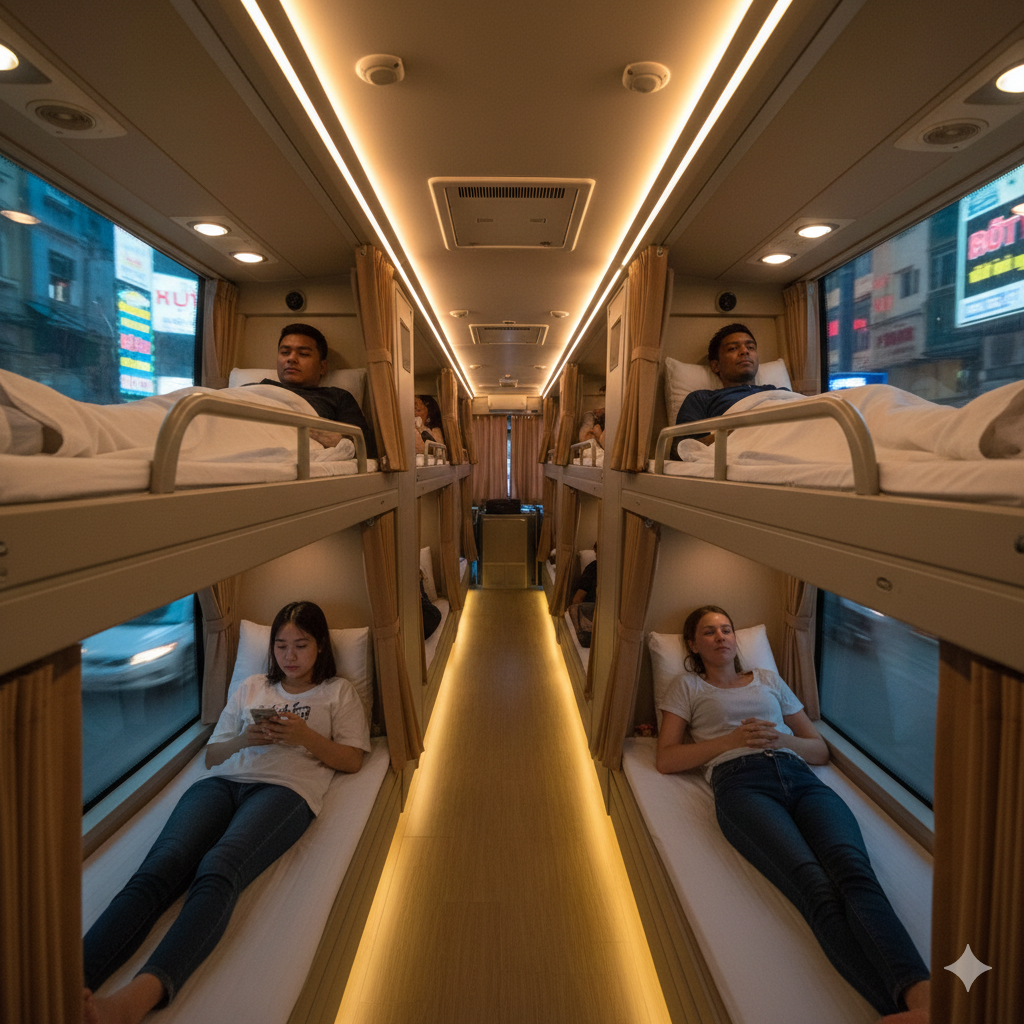
Sleeper Buses
- Great for 6–12 hour routes.
- Semi-reclining bunks, varying comfort levels.
- Overnight buses save a night’s accommodation.
- Reliable brands: Futa Bus, Hanh Cafe.
- Expect loud music or movies—bring earplugs and an eye mask.
Trains
- Slower than buses for some routes but more spacious.
- Options: hard seat, soft seat, hard sleeper, soft sleeper.
- Book via Baolau.com, other online sites, or at the station.
- The full Hanoi–HCMC ride is 30+ hours; break it into segments.
- The Reunification Express is the main line along the coast.
My rule of thumb:
- Flights for journeys over 12 hours.
- Sleeper buses for 6–10 hour stretches.
- Trains when I want scenery and have time.
Within Cities use Grab
- Works like Uber.
- Offers motorbikes (GrabBike) and cars (GrabCar).
- Prices are shown upfront and drivers can’t change routes or meter.
- This app eliminates nearly all taxi drama.
Motorbike Taxis (Xe Om)
- Everywhere, especially in cities.
- You must negotiate the price.
- As a tourist, you’ll usually pay more than locals.
- Grab is easier, safer, and less stressful.
Cyclos (Bicycle Rickshaws)
- Mostly a tourist experience now.
- Fun for a short scenic ride, but over-priced compared to other options.
Walking
- Best for compact areas like Hanoi’s Old Quarter and Hoi An Ancient Town.
- Expect blocked sidewalks and occasional motorbikes driving where you’re walking.
- Heat and humidity can make long walks exhausting.
Renting Motorbikes (Logistics)
Best places: Hoi An, Mui Ne, rural stretches.
Most stressful: Hanoi, HCMC, Da Nang.
Rental basics:
- Ask your accommodation for a reputable shop.
- Expect to leave a copy of your passport or a cash deposit.
- Check brakes, lights, horn.
- Photograph existing scratches.
- Clarify what’s included (helmet, basic insurance).
Your Accommodation Strategy
After spending quite a bit of time hopping from bed to bed across the country, here is what I’ve learned about finding a place to rest your head.
Picking Your Vibe
Hostel Dorms: These are fantastic if you’re looking to make friends instantly. The energy is usually high, but I’ll be honest—cleanliness can be a roll of the dice. Pro tip: Always read the last few reviews, and for the love of sleep, pack good earplugs and an eye mask.
Private Rooms in Hostels (My “Sweet Spot”): My favorite way to travel. You get the privacy of your own sanctuary, but when you open your door, you’re still part of the social community. It’s often cheaper than a budget hotel and much livelier.
Book the Little Charm Hanoi Hostel that offers a more stylish, art-deco feel while maintaining a great social environment. Very close to Hoan Kiem Lake.
Budget Hotels: These give you the basics; private bath, AC, maybe a simple breakfast. The quality varies wildly, so don’t book blindly. Read the reviews to avoid musty rooms.
Mid-Range Hotels: Sometimes, you just need a “reset” button. Spending a little extra for a pool, a fluffy duvet, and a killer breakfast buffet is the best way to recover from travel fatigue.
Where to Book:
I usually toggle between Booking.com and Agoda. Agoda often has the edge on pricing in Asia. If I’m strictly looking for hostel vibes, Hostelworld is the way to go. Just a heads up: if it’s a holiday or peak season, try to lock things in a few days early.
A Neighborhood Cheat Sheet
Location changes the entire feel of a city. Here is my take on where to drop your bags.
Hanoi
- Old Quarter: This is the chaotic, beating heart of the city. It is incredibly atmospheric, but it is loud.
Hanoi Buffalo Hostel offers a pool (a huge plus in the city heat!), free beer hour, and free breakfast
- Hoan Kiem: You are right near the lake. It feels very central and convenient for walking everywhere.
- Tay Ho (West Lake): If you want to breathe a bit, come here. It’s quieter, filled with expats and cafes, but you are a bit removed from the main tourist sights.
Ho Chi Minh City (Saigon)
- District 1: The main tourist center. It is convenient, but it is intense and busy.
Book the MEANDER Saigon Sweet Spot” Hostel. This is a great choice if you’re a digital nomad or need a clean, contemporary space, as it offers comfortable private rooms and a co-working space vibe.
- Pham Ngu Lao: This is the backpacker hub inside D1. It’s cheap, loud, and the party spills onto the street.
- District 3: I really like it here. It feels more “local” and slightly quieter, but you can still get to the action easily.
Hoi An
- Near Ancient Town: You can walk to the lanterns and markets, which is magical. The downside? It’s pricier and can get noisy.
- An Bang Beach: Perfect for a chill, seaside few days, but you will need a taxi, Grab, or motorbike to get into the actual town.
Da Nang
- My Khe Beach: This is all about resort vibes and relaxation.
- City Center: Good for a quick overnight stop or if you need to be near the airport/train station.
The “Non-Negotiables”
Over time, I created a mental checklist before booking anything. Trust me on these:
- Strong AC: If you are visiting in the hot season, this isn’t a luxury; it’s survival.
- Hot Water: Surprisingly important! Northern Vietnam gets genuinely chilly in the winter.
- The “Solo Female Traveler” Check: I always scan reviews specifically from solo women. If they felt safe and welcomed, I know I’m good to go.
- Security: Look for mentions of secure lockers and solid door locks.
- The Staff Factor: A helpful front desk is worth its weight in gold, especially when you need to book a tour or figure out the local bus system.
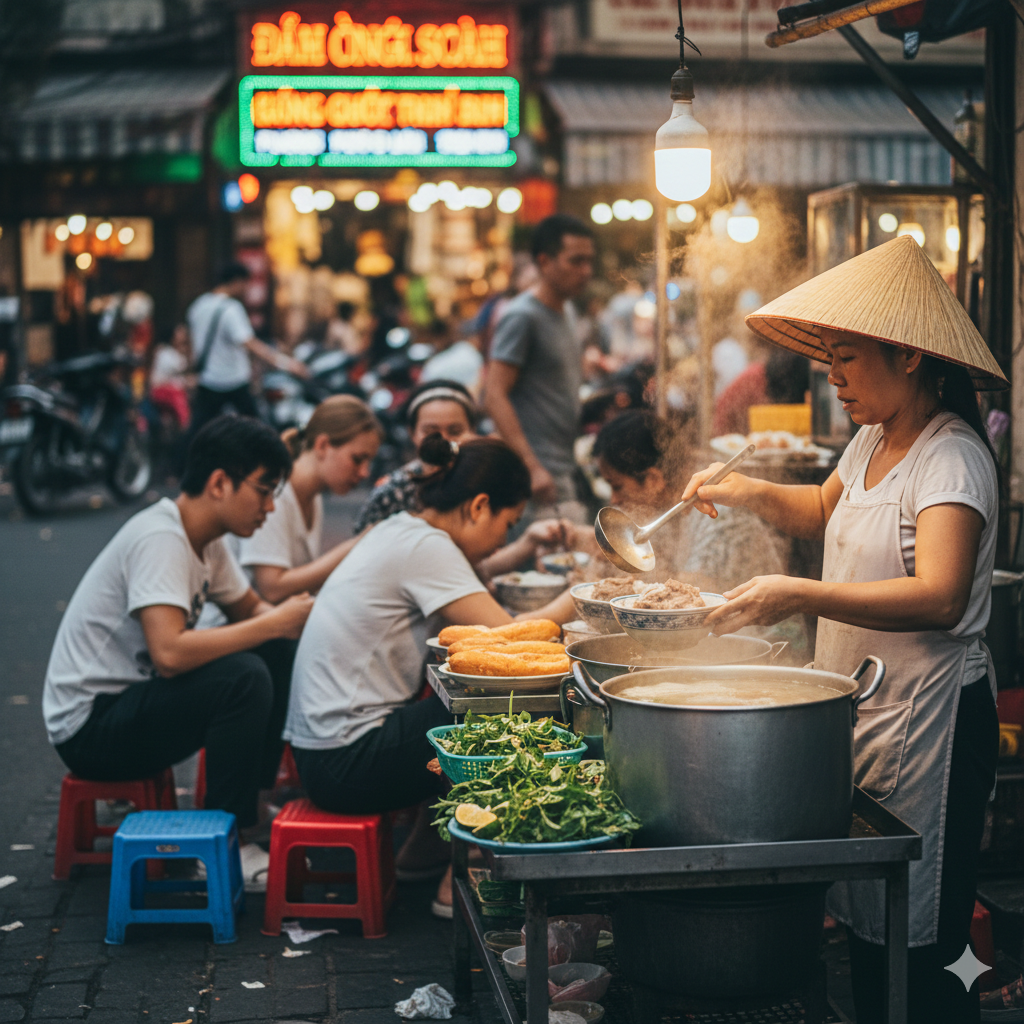
Busy Vietnamese street food stall preparing pho
Food: What and Where to Eat
Vietnam’s food scene is the main reason to go. It’s an adventure on a spoon, and frankly, I dream about it when I’m home. After countless meals enjoyed on tiny plastic stools, I’ve settled into a rhythm for navigating it.
The Lineup of Essential Dishes
If you only try a handful of things, please make it these. They are the bedrock of Vietnamese cooking, often tasting different in every region.
- Pho: I always start my day with this soothing rice noodle soup, usually featuring slow-cooked beef or chicken. It truly defines a Vietnamese morning.
- Banh Mi: This is the world’s most perfect sandwich. The crispy, light baguette, a legacy of French influence, is stuffed with creamy pâté, grilled meat, fresh herbs, and crunchy pickled vegetables. I could live on these alone.
- Bun Cha (Hanoi): Up North, I seek out this iconic dish. It’s smoky grilled pork served swimming in a tangy dipping sauce, accompanied by delicate rice noodles and a huge pile of fresh herbs. It’s truly special.
- Com Tam (Saigon): Down South, my go-to is broken rice, which has a wonderful texture. It’s topped with perfectly grilled marinated pork and a fried egg. Comfort food at its best.
- Cao Lau (Hoi An): I find this dish endlessly fascinating because the legend says the thick, unique noodles can only be made with water from one specific local well. It’s served with tender pork, greens, and crunchy fried toppings.
- Banh Xeo: I love the drama here. It’s a massive, crispy rice crepe, beautifully yellow from turmeric, filled with shrimp, pork, and bean sprouts.
- Goi Cuon (Fresh Spring Rolls): These refreshing rolls are a light lunch, made of rice paper wrapped around shrimp, pork, and bright herbs.
Choose Where to Eat in Vietnam
My strategy is simple: follow the crowd, and sit where the food is being made right in front of me.
Street Food Stalls: This is where the magic (and the lowest prices) happens. I always look for a stall that is absolutely slammed with locals. It’s my sign that the food is phenomenal and the turnover is fast. Just grab a tiny plastic stool, embrace the chaos, and point at what looks good.
Local Restaurants: These are a slight step up in terms of physical comfort, maybe with slightly bigger seats and fans. They are still incredibly affordable. The trick here is that menus might not be translated, so be prepared to use translation apps or mimic the dishes being served at the next table.
Tourist Restaurants: I reserve these for nights when I’m completely exhausted and need the convenience of an English menu and perhaps a little air conditioning. They are safer and easier, though the flavors are often toned down.
Nice Restaurants (The Splurge): I love setting aside one night in a new city for a proper splurge. This usually means a meal that costs around $6–13, features lovely plating, air conditioning, and a longer menu to explore.
My personal rhythm settled into street food for a quick, cheap breakfast and lunch, then a mix of local and nicer spots for dinner, depending on my energy levels.
Navigating Food Safety
I’ve learned to be observant without being paranoid. Minor stomach issues are common as your system adjusts to new oils and spices, so I never travel without Imodium and rehydration salts.
- High Turnover is Key: If a restaurant is empty during peak meal times (12 PM, 7 PM), I simply walk past it. High turnover means the ingredients are fresh.
- Watch the Process: I feel safest ordering food that I can watch being grilled or boiled right there on the spot. I’m a bit more cautious with things like pre-cut fruit sitting out or raw vegetables in very localized, small stalls.
Solo Dining
I never feel awkward eating alone here. Meals are casual and quick, especially on the street, and locals often eat alone too. If you’re nervous, a food tour early in the trip is a brilliant way to ease into the culture while making quick friends.
Vegetarian/Vegan
Being vegetarian is totally possible, but you must be clear. I find myself having to repeatedly explain “ăn chay” (vegetarian) and “không thịt” (no meat) because they often default to a little pork or fish sauce. Vegan is significantly harder since fish sauce and eggs are staples, so I recommend looking up dedicated vegan restaurants ahead of time.
Gluten-Free
I stick to dishes where rice is obviously the base, like pho or com tam. I try to avoid sauces where I can’t confirm the ingredients, as soy sauce is a hidden source of gluten. Learning “không bột mì” (no wheat) is a big help.
Regions and Cities
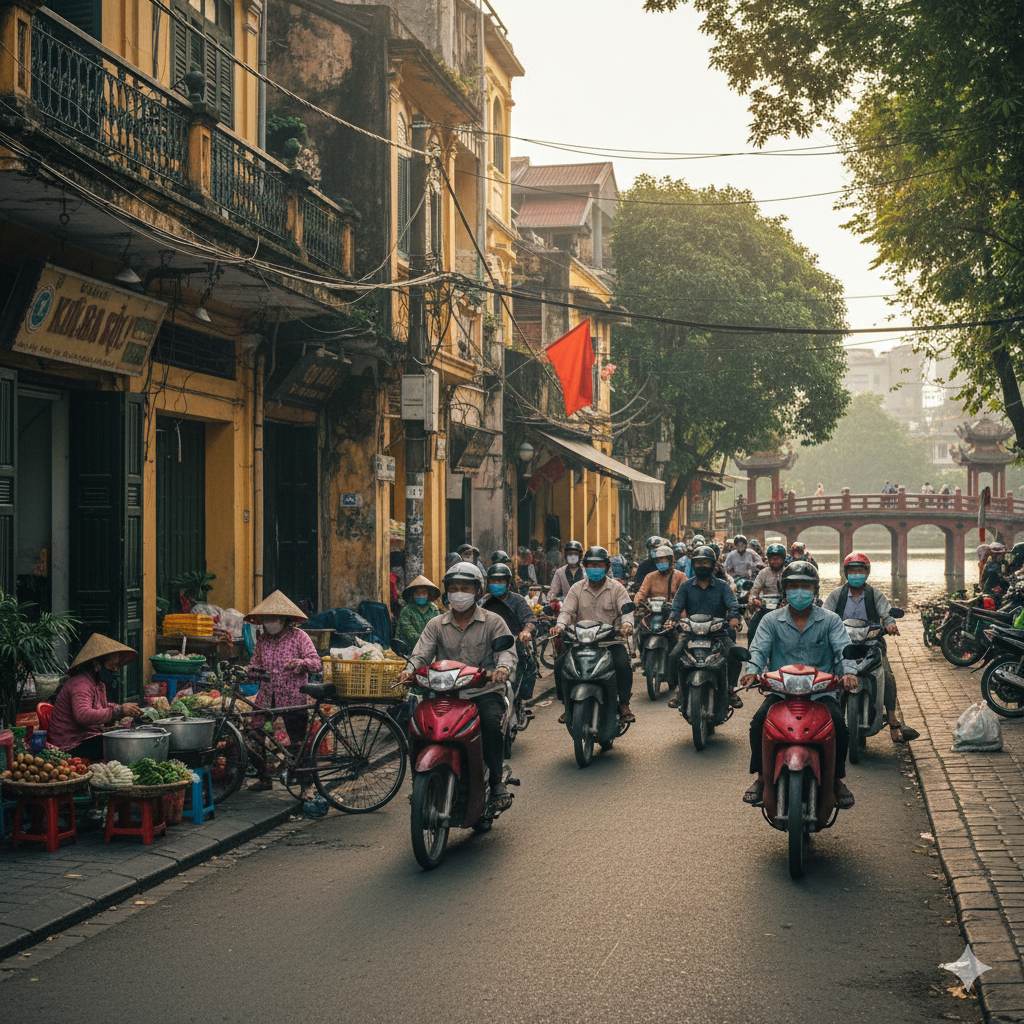
Hanoi Old Quarter street with vendors and motorbikes
Hanoi (3–4 Days)
Hanoi hit me like a beautiful kind of chaos. A swirl of history, street food smells, and a constant stream of motorbikes that somehow move in perfect disorder. It’s loud, colorful, and incredibly alive.
My Highlights
Old Quarter: I spent hours wandering the maze of narrow streets, stopping for egg coffee and learning to cross the road with absolute confidence. Watching daily life unfold here felt like stepping into Hanoi’s heartbeat.
Hoan Kiem Lake: When I needed a break from the noise, I’d escape to this peaceful lake. Early morning and sunset walks were my favorite. Don’t miss the little red bridge to Ngoc Son Temple.
Temple of Literature: A serene pocket of history. Vietnam’s first university is calm, green, and worth the small fee.
Hoa Lo Prison: A sobering look at both French colonial rule and wartime history. Heavy but important.
Water Puppet Show: It’s quirky, traditional, a little cheesy—and honestly, I enjoyed it.
Train Street: Fascinating to see how close the trains come to people’s homes. It’s very commercial now, but still worth a look. Just stay aware that real trains pass through.
Day Trips from Hanoi
Ha Long Bay, Ninh Binh, and Perfume Pagoda are the classic escapes. Each offers a different slice of nature: karsts, temples, rice paddies, misty mountains.
Logistics & Vibe
The Old Quarter is noisy but incredibly convenient, so bring earplugs. English is more limited here, and winters are colder and damper than you might expect. The coffee culture is fantastic—egg coffee, coconut coffee, you name it. Air pollution is noticeable at times, so masks are normal.
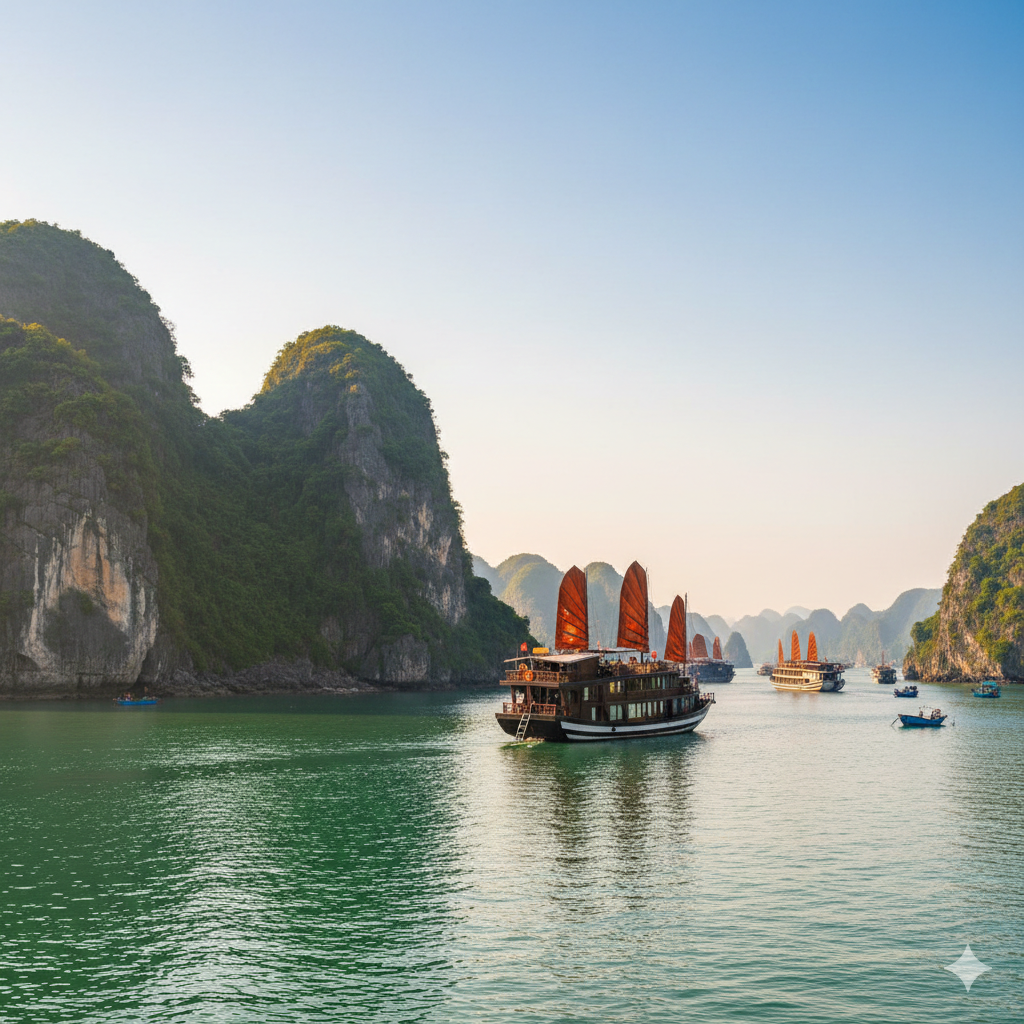
Limestone karsts and boats in Ha Long Bay, Vietnam
Ha Long Bay (2–3 Days)
Ha Long Bay felt like stepping into a postcard. Jagged limestone mountains rising from emerald water—it really is as dreamy as the photos.
Cruise Options
Budget boats get you the experience at the lowest cost. Mid-range cruises are the sweet spot with private cabins, better food, and smaller groups. Luxury cruises feel like floating hotels.
Typical cruises include transport from Hanoi, all meals, kayaking, cave visits, and sometimes sunrise tai chi on deck.
Things to Know
Most boats travel similar routes, so don’t stress too much about “secret” areas. Weather can change everything; fog can hide the views and rain can cancel swims. Some routes, like Bai Tu Long and Lan Ha Bay, are less crowded.
I did a mid-range two-day cruise, and we lucked out with clear skies and quiet evenings on the water. Waking up surrounded by limestone peaks was worth every dollar.
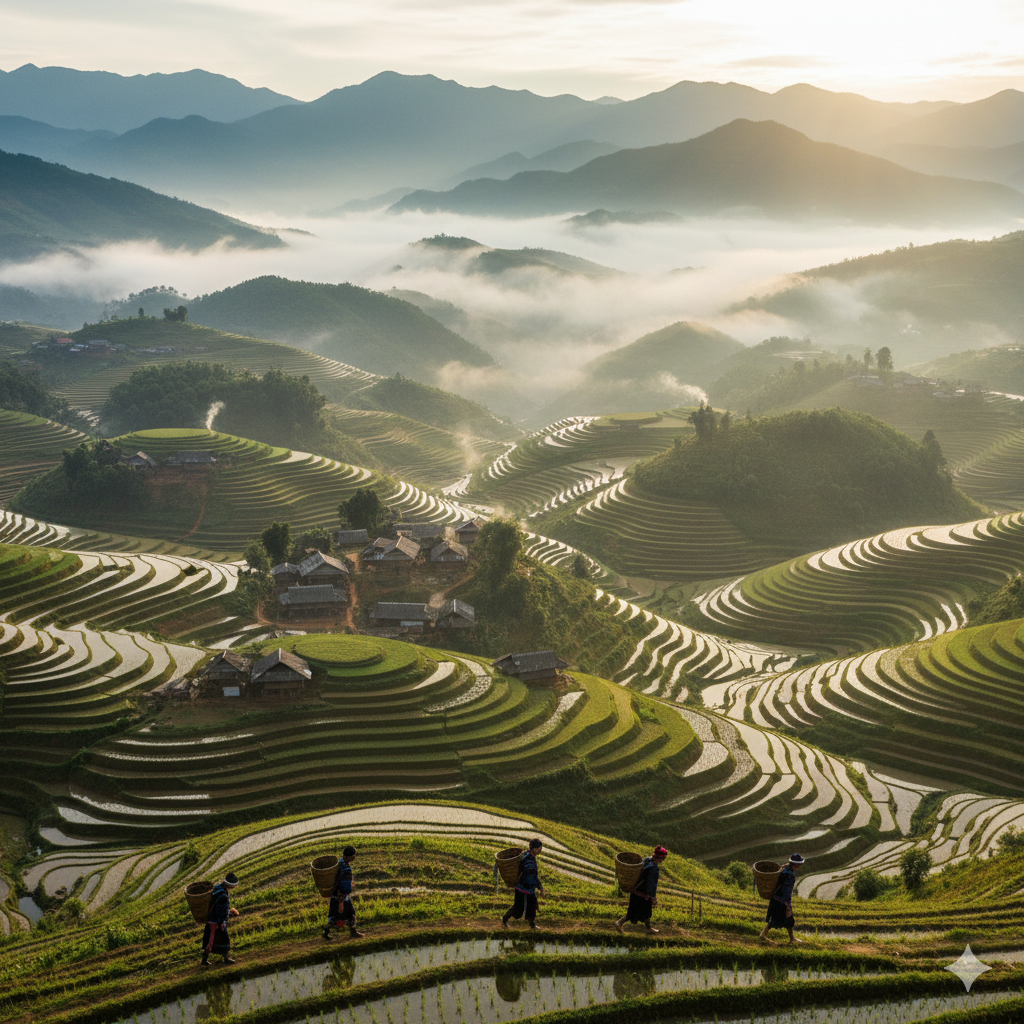
Rice terraces and mountain villages in Sapa, northern Vietnam
Sapa (2–3 Days)
Sapa brought a completely different mood—cool mountain air, terraced rice fields, and villages tucked between misty hills.
When to Go
September to November is the golden season, when the rice terraces glow. Winter is cold and foggy. Spring is mild, and summer is green but rainy.
What to Do
Trekking is the main draw. You can do anything from a gentle half-day walk to multi-day treks through Hmong, Dao, and Tay communities. Cat Cat Village is easy to reach though very touristy. Fansipan, Vietnam’s highest peak, can be conquered by trek or cable car.
Trekking & Homestays
Your guesthouse or local guides can arrange everything. Homestays are simple—mats, blankets, shared spaces—but welcoming. Photography etiquette matters here; if you’re taking portraits, expect to contribute in some way.
Getting There
Sleeper buses from Hanoi take around six to seven hours. Bring layers, a waterproof jacket, and good shoes. Mud is practically part of Sapa’s identity.
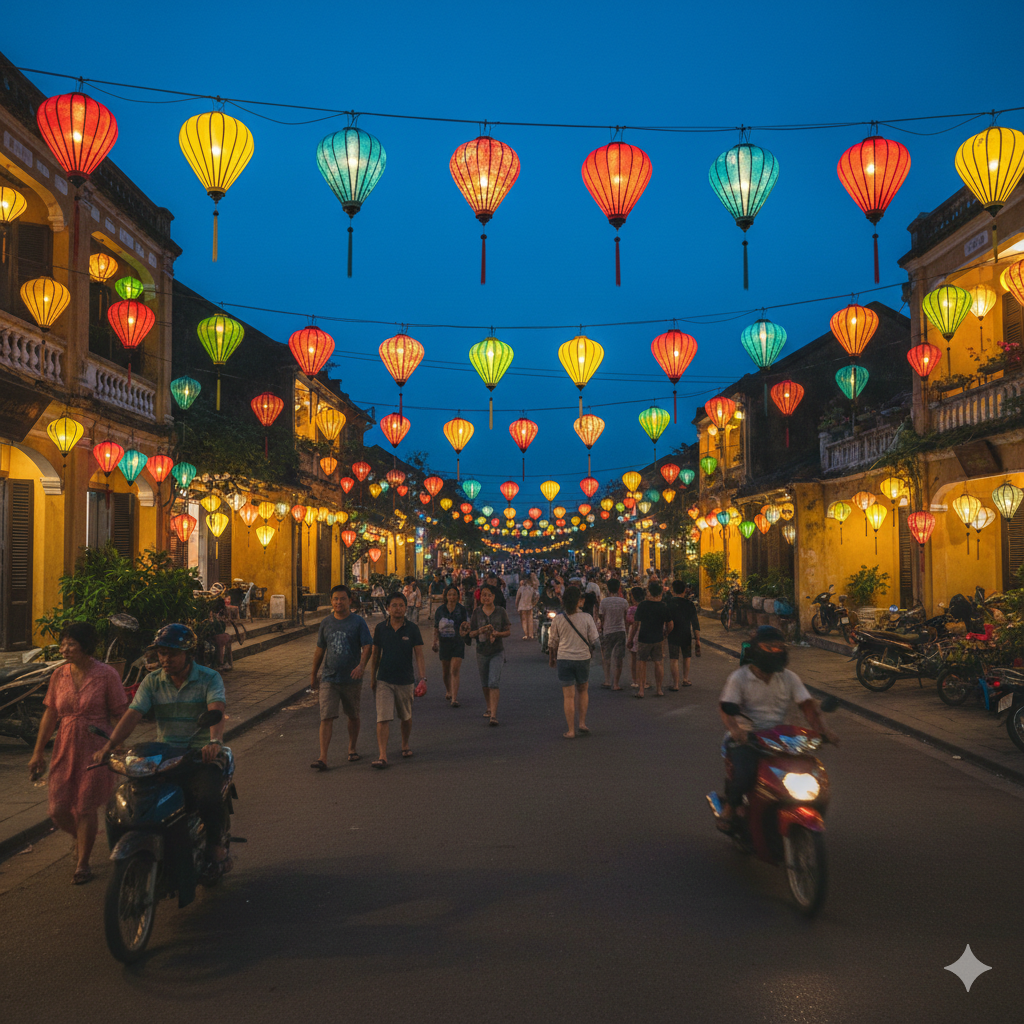
Lantern-lit streets of Hoi An Ancient Town at night
Hoi An (3–5 Days)
Hoi An is one of those places where you plan to stay three days and somehow stay six. It’s gentle, charming, and ridiculously photogenic.
Why It’s So Easy to Love
Ancient Town: Lanterns, yellow shopfronts, and riverside cafés. It feels like stepping into a watercolor painting.
Lantern Nights: Yes, they’re Instagram famous. They’re also genuinely magical.
Tailors: I had clothes made here, and the speed and quality are impressive. Bring inspiration photos.
Cooking Classes: A fun way to learn Vietnamese flavors.
Beaches: An Bang and Cua Dai make for easy day trips.
Countryside Biking: Flat, scenic, peaceful—rice paddies and quiet villages all around.
Day Trips
My Son Sanctuary offers atmospheric Cham ruins. Marble Mountains provides cave temples and sweeping views.
For many travelers, Hoi An becomes the reset button of their Vietnam trip.
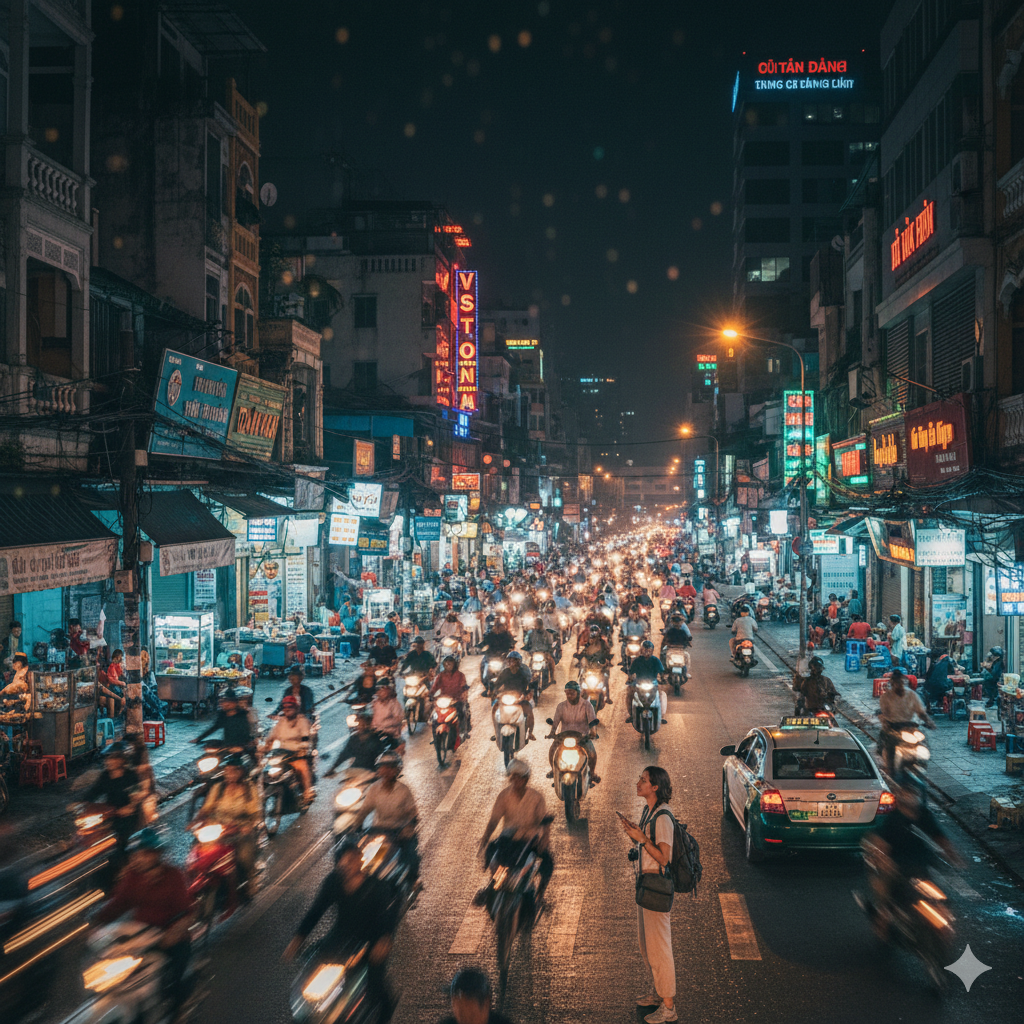
Nighttime street traffic in Ho Chi Minh City with motorbikes and neon lights
Ho Chi Minh City / Saigon (3–4 Days)
HCMC is the opposite energy of Hoi An.The city is louder, faster, more modern, and endlessly stimulating. It took me a day to adjust, then I fell in love with its edge and energy.
Key Sites
War Remnants Museum is heavy but important. Cu Chi Tunnels are structured but insightful. Notre Dame Cathedral and the Central Post Office offer striking architecture. Ben Thanh Market is chaotic fun if you’re ready to bargain. Reunification Palace feels frozen in time. Rooftop bars make sunset views unforgettable.
Day Trips
The Mekong Delta is lush and winding, but experiences vary widely from authentic to very staged. Checking reviews helps.
Vibe & Practical Notes
Most travelers stay in District 1. Bag snatching is more common here, so keep things close. English is widely spoken. The food is incredible—com tam, banh xeo, and countless noodle soups. Sidewalks double as parking lots, so walking is an adventure.
Other Destinations Worth Considering
Hue is perfect for a short two-day stop, especially if you love history. As Vietnam’s former imperial capital, it’s filled with grand palaces, royal tombs, and peaceful pagodas, and walking around the old citadel really gives you a sense of the country’s past.
Da Nang works well for one day, often as a convenient base or transit stop. It’s a modern coastal city with long, clean beaches and some of the best seafood I had in Vietnam. It doesn’t demand a lot of time, but it’s comfortable and easy, especially if you’re moving between Hoi An and Hue.
Mui Ne
Mui Ne is a great choice if you’re craving a laid-back beach vibe without the chaos of a big city. Spending two to three days here lets you enjoy the famous red and white sand dunes, watch or try kitesurfing, and just relax by the sea. It feels slower and more chilled, which can be a nice contrast to Vietnam’s busier destinations.
Phu Quoc is ideal if you’re looking for an island escape. With three to five days, you can enjoy beaches, snorkeling, and sunsets, though it’s worth knowing that the island is becoming more resort-heavy each year. It’s beautiful, but it feels more developed compared to some of Vietnam’s quieter spots.
Ninh Binh is one of those places that quietly blows you away. Even with just one or two days, the dramatic limestone karsts, boat rides through caves, and viewpoints like Mua Cave make it unforgettable. It’s often compared to Ha Long Bay on land, and honestly, it lives up to that reputation.
Da Lat offers a completely different side of Vietnam. Set in the mountains, it’s cooler and greener, with coffee farms, waterfalls, and pine forests. Spending two to three days here feels refreshing, especially after the heat and humidity of the coast and cities.
I traveled for about three weeks, and went south to north: Ho Chi Minh City to Mui Ne, then Hoi An, Hue, Phong Nha, Hanoi, Ha Long Bay, and finally Sapa. I chose this route mainly because flights onward from Ho Chi Minh City were cheaper, but it also worked beautifully in terms of pacing and seeing how Vietnam gradually changes as you move north.
Budget: Things That Cost More Than You Expect
- Tours (especially if you choose quality operators)
- Last-minute domestic flights
- Western food
- Alcohol in tourist bars
- “Just one night” in a nicer hotel… that turns into three
Things That Cost Less Than You Expect
- Street food
- Local buses and short-distance transport
- Tailored clothes in Hoi An
- Massages and spa treatments
- Basic accommodation
Where to Save vs. Splurge
Save on:
- Eating mostly local food
- Staying in dorms or simple private rooms
- Using buses and trains where possible
- Skipping the absolute cheapest tours that look sketchy
Splurge on:
- A mid-range Ha Long Bay cruise
- Occasional “nice” hotels to reset
- A good cooking class
- Well-reviewed tours over rock-bottom options
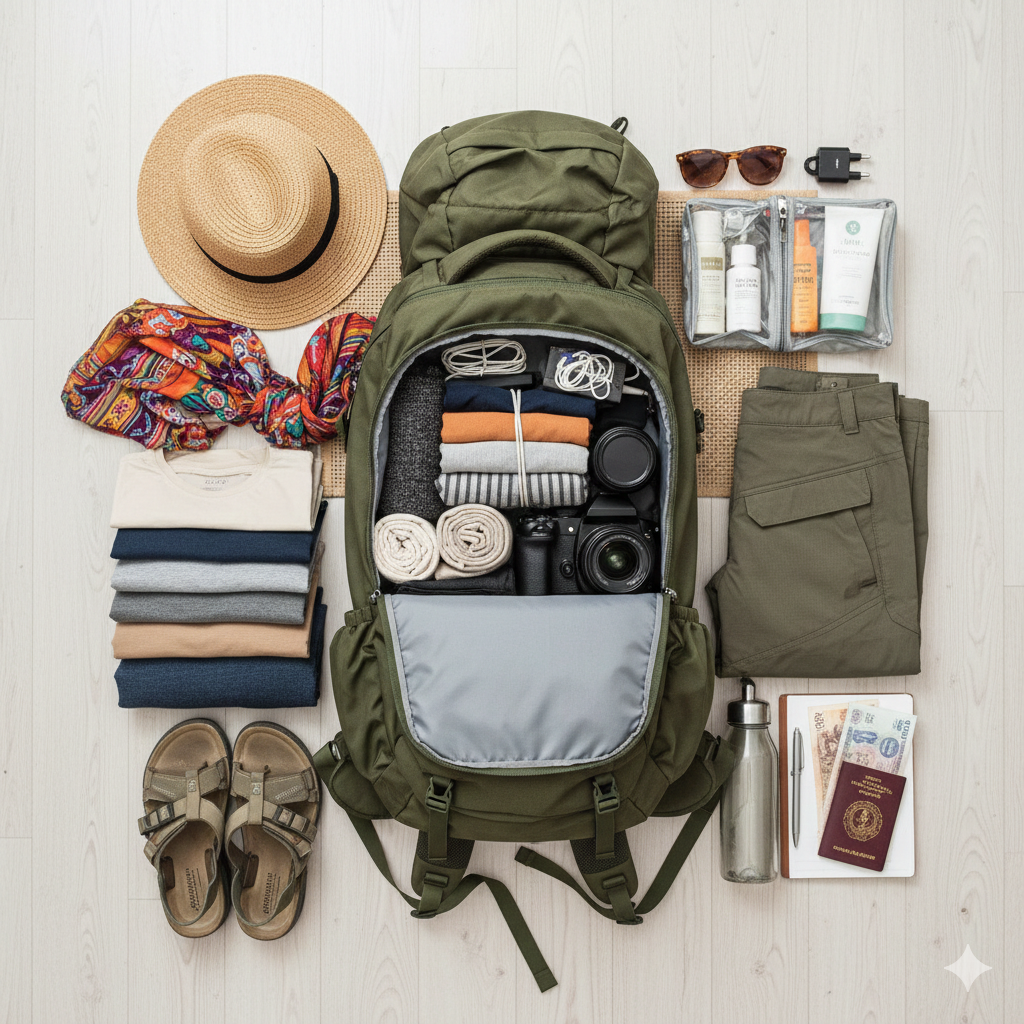
Backpack packing essentials for solo female travel in Vietnam
Packing for Vietnam
Clothes
You’ll sweat. A lot. Pack light and plan to do laundry.
What worked for me:
- 3 t-shirts
- 2 tank tops
- 1 long-sleeve shirt (temples, sun, or chillier evenings)
- 2 pairs of shorts
- 1 pair of long pants
- 1 casual dress or skirt
- Swimsuit
- Sandals for daily wear
- Sneakers or good walking shoes (especially for Sapa)
- Light jacket/hoodie (for AC-heavy buses and cooler north)
Laundry is cheap and easy to find: around 15,000–30,000 VND per kilo ($0.65–1.30).
What I wish I’d had: better walking shoes and more layers for northern Vietnam in winter.
Essentials
- Daypack
- Crossbody bag (worn in front)
- Portable charger
- Universal adapter (Vietnam uses a mix of plug types)
- Headlamp or small flashlight
- Earplugs
- Eye mask
- Microfiber towel (for basic hostels/homestays)
- Reusable water bottle
- Ziplock bags for electronics and organization
Toiletries & Meds
- Sunscreen (better to bring from home)
- Bug spray
- Hand sanitizer
- Toilet paper (for buses/public toilets)
- Wet wipes
- Basic first aid
- Imodium and basic pain relievers
- Any prescription meds (enough for your whole trip + extra)
Electronics
- Phone
- Chargers + cables
- Camera if you want one (phone is fine for most people)
- E-reader or downloaded books
- Headphones
Documents
- Passport (6+ months validity)
- Printed visa approval
- Travel insurance details
- Accommodation confirmations
- Copies (physical and digital) of passport and key documents
- Emergency contact list
You do not need: multiple pairs of fancy shoes, full-size toiletries, or a hair dryer.
Staying Connected
SIM Cards
Buying a local SIM is straightforward and cheap.
- Major providers: Viettel, Vinaphone, Mobifone
- Cost: around 200,000–300,000 VND ($8–13) for 30 days with several GB of data
- You’ll need your passport.
- Airport counters are easiest; city shops are cheaper.
Wi-Fi
Free Wi-Fi is common in accommodations, cafés, and restaurants, though speeds can be hit or miss.
Helpful Apps
- Grab – transport and sometimes food delivery
- Google Maps – download offline maps
- Google Translate – download offline Vietnamese
- Maps.me – fully offline maps
- XE.com – currency conversion
Health and Medical
Vaccinations (Ask Your Doctor)
Often recommended:
- Routine vaccines (MMR, tetanus, etc.)
- Hep A
- Typhoid
- Hep B (for longer trips or potential medical care)
- Japanese Encephalitis (for longer rural stays)
- Rabies (if you’ll be around animals or trekking remotely)
Mosquito-Borne Illness
- Malaria is not a major concern in typical tourist areas.
- Dengue is present throughout the country, especially in rainy season.
Use bug spray, wear long sleeves at peak mosquito hours, and sleep under nets when provided.
Drinking Water
- Don’t drink tap water.
- Use bottled or filtered water. Many guesthouses provide refill stations.
- Ice in touristy spots is usually made from purified water; in very local areas, be more cautious.
Air Quality and Heat
- Hanoi and HCMC can have poor air quality at times; if you’re sensitive, consider a mask.
- Heat and humidity can be intense. Hydrate more than you think you need and take breaks indoors.
Medical Care
See Chapter 9 for hospital details. In short:
- International clinics in big cities are good but expensive without insurance.
- Pharmacies are everywhere, but stick to reputable ones and bring any critical meds from home.
Meeting People and Solo Dining
Meeting Other Travelers
- Hostels: Still the easiest place to make friends quickly.
- Tours: Ha Long Bay cruises, cooking classes, and day tours provide built-in social time.
- Backpacker Zones: Pham Ngu Lao (HCMC), Hanoi’s Old Quarter, Hoi An’s Ancient Town.
- Facebook groups: “Vietnam Backpacker” and similar groups often host meetups.
I met most people in Hoi An and on Ha Long Bay. Hanoi felt more rushed; HCMC was a mixed bag.
Connecting with Locals
Language barriers make deeper friendships harder, but you’ll still have plenty of nice micro-interactions:
- Guesthouse staff
- Guides
- Café owners
- People sitting next to you on buses
What I Wish I’d Known Before Going
- Start in the south if you’re nervous. HCMC has more English and infrastructure. Hoi An is the easiest landing spot overall.
- Plan extra days for Hoi An. Most people wish they had.
- The first 3–4 days are the hardest. After that, the chaos feels more manageable.
- Grab is a game changer. It cuts out so much stress.
- You don’t need to pre-book everything. Outside of major holidays and peak periods, booking a few days ahead is enough.
- You’ll mess up bargaining at first. It’s okay. We’re talking a few extra dollars, not catastrophic losses.
- Street food is worth the risk. It’s how you’ll eat some of the best meals of your life.
- Good shoes matter. Especially in Sapa and on long sightseeing days.
- Sleeper buses are uncomfortable but fine. Bring layers, earplugs, and low expectations.
- Vietnamese coffee is rocket fuel. In the best way. Try it iced with condensed milk.
- You will get frustrated some days. It doesn’t mean you’re failing at travel.
- You’ll probably get at least a little sick once. Have meds and a flexible schedule.
- You don’t have to see everything. Rest days are not wasted days.
- The unplanned moments are the best ones. Leave space for them.
- You’re more capable than you think. Vietnam will prove that to you, gently or loudly.
Apps
- Grab – rides
- Google Maps / Maps.me – navigation
- Google Translate – language
- XE.com – currency
Community
- Facebook: “Vietnam Backpacker” and city-specific groups
- Recent trip reports and blogs (aim for posts from within the last 6–12 months)
Final Note
This guide reflects my three weeks in Vietnam. Yours will be different.
Use what’s useful. Ignore what doesn’t fit your style. Trust your instincts, leave room for mistakes, and don’t be afraid to change your plans mid-trip.
Vietnam will frustrate you some days and delight you on others. If you decide to go, you’ll come home with stories no glossy brochure could have prepared you for.