
A scooter accident in Chiang Mai. A fractured wrist in Kyoto. A medical evacuation from a Vietnamese island. A straightforward motorbike accident in Northern Thailand — the kind that happens to a few travelers every week — can result in a hospital stay that costs $5,000 to $15,000. None of these are catastrophic events—unless you’re uninsured.
The five countries in the complete Asia solo female travel guide — Singapore, Japan, Thailand, Malaysia, and Vietnam — are not dangerous destinations. The hospitals in Singapore and Japan are world-class. The streets are genuinely safe by global standards. The risks are modest.
The number that reframes the decision: a medical evacuation from a remote island or rural area to a major hospital can cost $75,000 to $200,000. That’s before a single day of treatment. It’s a number that makes a ~$61/month premium feel less like an expense and more like basic math.
This guide isn’t about fear-mongering; it’s about the math of solo travel. I’m breaking down the providers that actually pay out, the solo-female clauses you didn’t know you needed, and how to ensure your ‘dream trip’ doesn’t end in a financial nightmare.
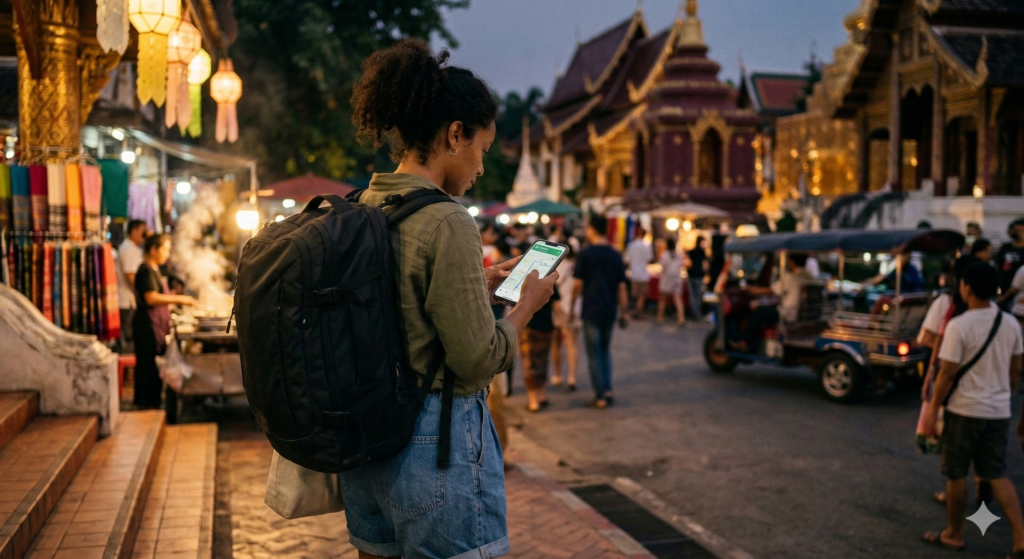
A solo female traveler consulting her phone at a Southeast Asian market, planning her route
Is travel insurance required to enter Asia?
I highly recommend, and mandatory for specific Visas or countries.
As of early 2026: Singapore, Malaysia, Vietnam, and Japan have no mandatory travel insurance requirement for standard tourist entry. Japan’s Visit Japan Web portal now includes insurance prompts during digital entry registration — having your policy PDF or QR code ready before arrival speeds up the process.
Thailand introduced a Tourist Entry Fee in 2025–2026 that includes a nominal medical contribution. This is not a replacement for private travel insurance — the coverage limits are set for catastrophic death or disability scenarios only and will not cover a broken wrist, appendix surgery, or medical evacuation. Purchase your own policy regardless of the fee.
Some longer-stay visa types across all five countries may require proof of insurance as part of the application. Always verify current requirements before travel.
The Single Most Important Thing to Know
Your domestic health insurance — including US Medicare, UK NHS abroad coverage, and most national health plans — does not cover medical care in these five countries. You are not insured once you board the plane. You are paying out of pocket for everything, at local private hospital rates, until you have travel insurance in place.
The good news: covering a 12-week multi-country Asia trip properly costs between $150 and $450 depending on your age, activities, and provider — less than a single night in a mid-range hotel. It is, by every reasonable measure, the best value purchase in your trip budget.
The “$61 Sleep Better” Tax
Think of insurance not as a “just in case I die” plan, but as a “I don’t want to call my parents crying for $10k” plan. It’s the price of your independence. Every solo female traveler who’s ever been in a rural Thai clinic at midnight — alone, in pain, with no idea what anything costs — wishes she’d thought of it that way before she left.
Provider Quick Comparison
| Provider | Best For | Medical Limit | Motorbike Covered? | Solo-Female Perks | Price (monthly, under 40) |
|---|---|---|---|---|---|
| SafetyWing | Budget / Long-term | $250,000 | ✓ Add-on ($10/mo) | Telehealth support | ~$62* |
| World Nomads | Adventure / Gear | $100k–$250k | ✓ Explorer plan | Assault care + Solo supplement + Fly-to-bedside | ~$120–180 (trip-based) |
| Genki | High medical limits / EU travelers | €1,000,000+ | ✓ Varies by plan | No upper age limit | ~€45–75 |
| Tin Leg Gold | Pre-paid trip costs (US only) | $500,000 | ✓ 150+ activities | Solo supplement + strong cancellation | 5–8% of trip cost |
*Prices current as of March 2026, 18–39 age bracket. Rates increase at ages 40 and 60. Always get a live quote — rates change annually and vary by home country and trip length.
What’s Different About Travel Insurance for Women Traveling Alone
Most travel insurance guides are gender-neutral — and mostly that’s fine, because the core coverage needs (medical, evacuation, cancellation) are the same for everyone. But there are specific scenarios where solo female travelers face distinct insurance considerations that most articles don’t address.
Solo Supplement Coverage
If you’re traveling with a companion and they have to cancel due to illness or a covered emergency, some policies cover the single supplement cost — the extra charge hotels impose when a shared room becomes a solo room. If you’ve pre-booked shared accommodation expecting to split costs, this coverage is worth verifying. World Nomads and Tin Leg Gold both include this; SafetyWing does not.
Medical Coverage After Assault
Some travel insurance policies explicitly include emergency medical costs resulting from assault, including sexual assault — covering hospital treatment, emergency contraception, and STI testing. This is not universal. When comparing policies, look for assault listed as a covered medical event. World Nomads explicitly includes this under emergency medical. If this coverage matters to you, verify it before purchasing, not after.
Mental Health Emergencies
Long solo trips can surface or intensify anxiety and depression — particularly when navigating healthcare systems alone in a foreign country. Some policies now cover acute mental health emergencies requiring hospitalization. SafetyWing’s newer plans include limited mental health coverage. World Nomads covers psychiatric emergencies. This matters more than most insurance guides acknowledge.
Trip Interruption for Family Emergencies
Women traveling solo are statistically more likely to be primary caregivers in family structures — which makes trip interruption coverage for a family member’s serious illness or death particularly relevant. Ensure the policy lists which family relationships qualify. Most do: parent, sibling, spouse/partner, child. Some are more restrictive. Check before you commit.
Beyond insurance specifics: the safety guide in this series covers the behavioral and logistical habits that reduce the chance you’ll need to make a claim in the first place. Insurance is the financial backstop. Good habits are the first line of defense.
Solo Female Insurance Checklist — Before You Buy
- Companion Fly-to-Bedside benefit — If you’re hospitalized alone for more than a set number of days, will your insurer fly a family member or friend out to be with you? World Nomads includes this. Check explicitly for any provider.
- Emergency sexual assault care — Is emergency medical treatment following assault explicitly listed as a covered event? Verify this in writing, not just in sales copy.
- 24/7 line with translation services — Can the emergency line communicate in Japanese, Thai, and Vietnamese? A line that only works in English is only half useful at 3 AM in rural Japan.
- Mental health emergency coverage — Is acute psychiatric care covered? SafetyWing and World Nomads both include limited coverage. Verify terms for your specific plan.
- Solo supplement coverage — If a travel companion cancels, does the policy cover single-room surcharges on pre-booked shared accommodation?
- Trip interruption for family caregiver scenarios — Which family relationships qualify for trip interruption? Confirm it covers the relationships relevant to you.
Related Guide How to Stay Safe as a Solo Female Traveler in Asia
What Actually Matters vs. What You Can Skip
Travel insurance policies bundle a lot of different coverage types together — some genuinely essential, some padding. Here’s the honest breakdown for a solo backpacking trip across these five countries.
The Non-Negotiables
| Coverage Type | Why It Matters for Asia | Minimum Limit |
|---|---|---|
| Emergency Medical | Japan and Singapore are expensive for uninsured foreigners. Vietnam and Thailand are cheaper but costs accumulate fast with serious injury. | $100,000+ |
| Medical Evacuation | If you’re injured on a Thai island, in rural Vietnam, or in Japan’s countryside, getting to a quality hospital may require air ambulance transport. This is where the real money is. | $500,000+ or unlimited |
| Repatriation | Covers a medically supervised flight home if required. Included with most evacuation policies. | Included |
| 24/7 Emergency Assistance | You need a number to call at 2 AM in Chiang Mai when you don’t know which hospital to go to or how to handle billing. This separates real insurance from a piece of paper. | Must be included — no exceptions |
Important but Not Always Necessary
| Coverage Type | Honest Assessment |
|---|---|
| Trip Cancellation | Worthwhile if you’ve pre-paid significant non-refundable costs — a Ha Long Bay cruise, a Japan rail pass, a cooking retreat. Less critical if you’re booking as you go. |
| Trip Interruption | Covers cutting your trip short due to illness or family emergency. Useful for longer trips with significant pre-paid costs. Especially relevant for solo female travelers who are primary family caregivers. |
| Travel Delay | Useful during Asia’s monsoon season (June–October) when flight cancellations are more common. Most policies pay $100–200/day after a qualifying delay. |
| Baggage Loss | Valuable if you’re carrying a good camera or laptop. Less critical if backpacking light. Note: most policies cap per-item limits at $500–1,000 — rarely enough to cover a MacBook. |
| Solo Supplement | If your travel companion cancels, covers the single-room surcharge on pre-booked shared accommodation. Worth checking if traveling with a companion initially. |
What You Can Probably Skip
| Coverage Type | Why You Can Often Skip It |
|---|---|
| Cancel for Any Reason (CFAR) | Adds 40–50% to policy cost. Only reimburses 50–80% of trip costs. Useful only if you have a specific, genuine reason you might cancel. |
| Airline-sold insurance | Sold at checkout at roughly 7% of ticket price. Poor coverage limits, difficult claims. Buy your own policy instead. |
| Credit card travel insurance | A useful supplement but rarely sufficient as primary coverage. Medical limits tend to be low, and evacuation coverage is often absent or capped too low for Asia. |
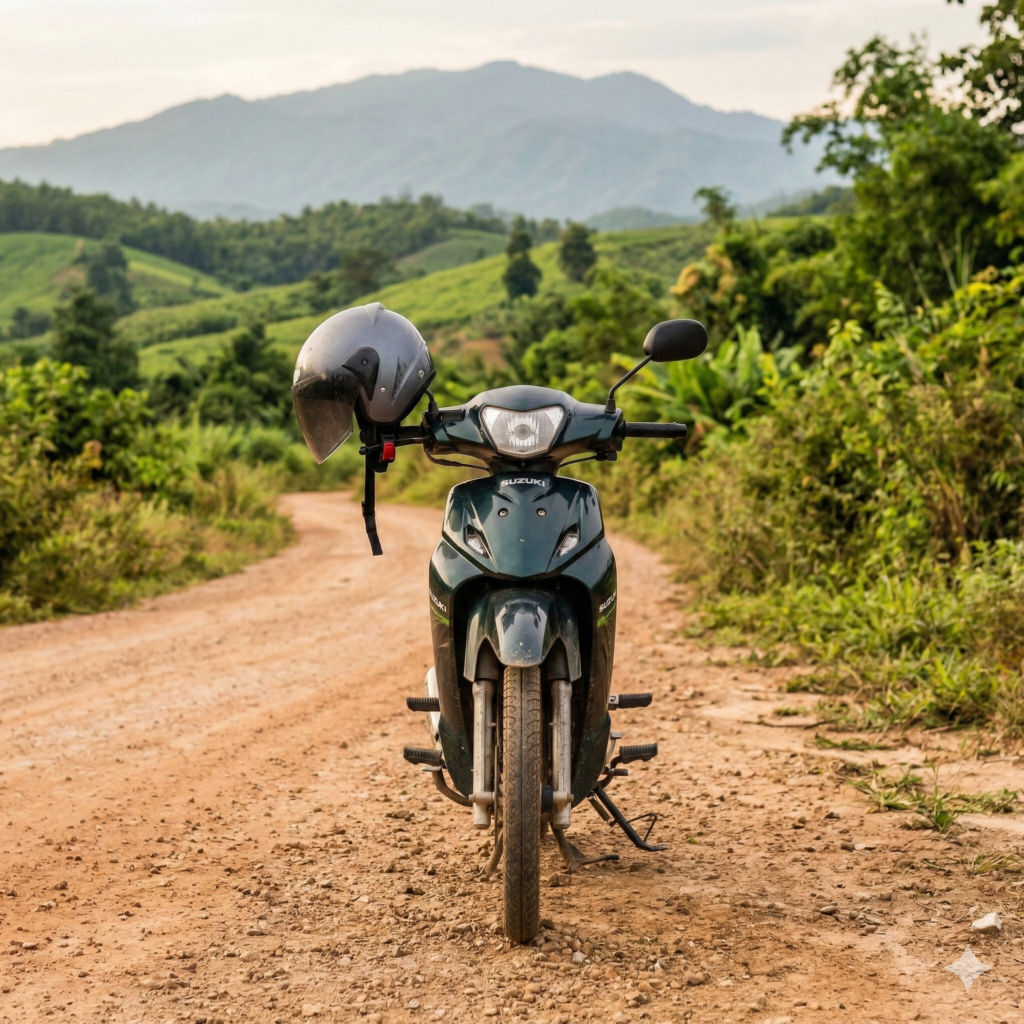
Motorbike parked on a rural road in Pai, northern Thailand
Adventure Activities: The Critical Exception
Standard travel insurance policies exclude a surprisingly long list of activities under “adventure sports.” This matters for Asia specifically, because many things travelers routinely do here — riding a motorbike or scooter, scuba diving, kayaking, elephant trekking, zip-lining — are often excluded from basic policies.
Read This Before You Rent a Scooter in Thailand
Scooter and motorbike riding is one of the most common activities in Southeast Asia and one of the most commonly excluded from standard travel insurance. If you rent a scooter in Pai, Koh Phi Phi, or anywhere in Thailand or Vietnam without checking your policy’s activity coverage, you may be entirely uninsured if you crash. Always verify before you ride.
Both World Nomads (200+ activities on Explorer plan) and SafetyWing (30+ activities with $10/month add-on) explicitly cover motorbike riding with a valid license when the add-on is included. This is one of the most important policy differences to check before choosing a provider.
Hard Truth — Vietnam Scooter Licensing
In Vietnam, a common misconception is that an International Driving Permit (IDP) is sufficient for motorbike coverage. It isn’t — not cleanly. For engines over 50cc (which covers almost every rental scooter), Vietnamese law technically requires a Vietnamese motorcycle license or an IDP issued under the specific Category A motorcycle endorsement. Most travelers ignore this. Most insurers know it — and use this loophole to deny claims. If you don’t have a motorcycle endorsement on your home license AND an IDP with the correct category, your scooter coverage is likely void in Vietnam regardless of which add-on you’ve purchased. Verify with your provider in writing before you ride.
The Four Providers Worth Serious Consideration
The travel insurance market is enormous, and most policies are adequate for basic needs. These four have consistently earned strong reputations among long-term solo backpackers in Southeast Asia — and they differ in ways that matter depending on your trip length, budget, and activity plans.
| Feature | SafetyWing | World Nomads | Tin Leg Gold | Genki Traveler |
| Best For | Long trips & budget nomads | Adventure & short trips | High-value trip protection | EU-based long-term travel |
| Price (Est.) | ~$61 / 4 weeks | ~$180–$350 (12 wks) | 4–8% of trip cost | ~€35–65 / month |
| Medical Limit | $250,000 | $125,000–$250,000 | $500,000 | €1,000,000 |
| Evacuation | $100,000 | Unlimited | $500,000 | Included |
| Telehealth | ✓ Included | ✓ Included | ✗ Not included | Varies by plan |
| Adventure | +$10/mo add-on | 200+ activities | 150+ activities | Varies by plan |
| Solo Supp. | No | ✓ Yes | ✓ Yes | No |
| Buy Mid-Trip? | ✓ Yes | ✓ Yes | ✗ No | ✓ Yes |
| Special Note | Subscription-based | Best for gear/theft | US Residents only | No upper age limit |
Deep Dive: Which One Fits Your Trip?
SafetyWing (Nomad Insurance 2.0) — Set it and forget it. The subscription auto-renews every 4 weeks, which means no fixed end date and no awkward mid-trip coverage gaps if your plans shift. Incredibly affordable, and the built-in telehealth consultation (“Screen Share” in their app) is genuinely useful for a quick “is this infected?” opinion without navigating a foreign clinic. The limitation worth knowing: the $100,000 evacuation limit is thin for serious island-hopping in Thailand or remote trekking in Vietnam. Adequate for most scenarios, but not all.
World Nomads (Explorer Plan) — The adventure gold standard. Covers 200+ activities including scuba diving to 30m and scooter riding, and — critically for solo female travelers — explicitly includes emergency medical care resulting from assault and the single-room supplement if your travel companion cancels. More expensive than SafetyWing, and the interface feels a little dated compared to newer insurtech apps, but the coverage depth for adventure-heavy itineraries is unmatched.
Genki Traveler — European-style “health first” coverage. Where most travel insurance focuses on trip delays and cancellation, Genki is closer to international health insurance. No limit on time abroad, no upper age limit. The trade-off: trip cancellation protection is limited — Genki is for the traveler who’s already on the road and cares most about top-tier hospital care if something goes seriously wrong.
Tin Leg Gold — The safety net for expensive bookings. If you’ve spent $2,000+ on a Japan Rail Pass, boutique stays in Singapore, and a Ha Long Bay cruise, this policy protects those non-refundable costs better than any nomad plan. The catch: you must purchase before you leave home, US residents only, and it prices as a percentage of total trip cost rather than a flat monthly fee.
Telehealth: The Underrated Feature for Solo Travelers
Many 2026 policies now include telehealth access — video consultations with licensed doctors, available in English, 24 hours a day. For a solo female traveler this is quietly one of the most useful features on the list.
If you wake up in Hanoi with severe stomach pain, a 40°C fever, or symptoms you can’t identify, the choice between “find a clinic alone at midnight” and “video call a doctor from your guesthouse in 15 minutes” is not a close one. Telehealth doesn’t replace emergency care — but it triages it, tells you whether you need to go in, and keeps you from making that walk alone at 2 AM when you don’t have to.
SafetyWing and World Nomads both include telehealth consultations in their 2026 plans. Tin Leg Gold does not. If you’re traveling solo and spending significant time in countries where finding an English-speaking clinic is difficult (rural Vietnam, northern Thailand), weight this feature accordingly.
The Quick Decision Framework
Find your situation below.
“I’m on a tight budget, staying in hostels for 3 months, open itinerary.”SafetyWing + Adventure Add-onMonthly subscription, $213 for 12 weeks, buy before you leave
“I’m renting a scooter in Thailand and diving in Vietnam.”World Nomads ExplorerUnlimited evac, 200+ activities, assault coverage, solo supplement
“I’ve pre-booked $5,000 of tours, a JR Pass, and boutique hotels.”Tin Leg GoldTrip cancellation protects what you’ve already spent. US travelers only.
“I’m over 45 and want the best medical coverage possible.”Genki Traveler€1M+ medical, no upper age limit, EU-regulated, no trip end date
“I’m planning to use my credit card’s travel insurance.”ReconsiderMedical and evacuation limits are almost always inadequate for Asia
What comparison sites won’t tell you
The cheapest policy that covers your activities and has a working 24/7 emergency line beats the most expensive policy you struggle to use in a crisis. Before choosing, call or chat the emergency assistance number of any provider you’re considering. How quickly and clearly they respond tells you everything about what a 3 AM hospital call will look like. 05 — Real-World Scenarios
What These Numbers Actually Mean on the Ground
Abstract coverage limits are hard to evaluate. Here’s what the same scenarios look like with and without travel insurance across these five countries.
Scenario 1: Scooter accident, rural Chiang Mai, Thailand
Gravel on a mountain road near Pai. Low-speed fall. Fractured wrist, road rash, one night hospital observation.
Without insurance Private hospital treatment for a foreigner in northern Thailand: $2,000–$5,000. Evacuation to Bangkok if surgery required: $15,000–$40,000.
With SafetyWing + adventure add-on File claim with photos and hospital receipts. Reimbursement within 2–4 weeks. Out-of-pocket: deductible only (~$250). Only covered if adventure add-on was active.
Scenario 2: Appendix rupture, Da Nang, Vietnam
Sudden abdominal pain escalating over 12 hours. Emergency surgery required.
Without insurance Emergency surgery at a Vietnamese private hospital: $8,000–$20,000. Medical evacuation to Singapore for post-surgical care: $75,000–$150,000.
With World Nomads Explorer 24/7 assistance line arranges hospital admission and direct billing. Evacuation coordinated if needed. Out-of-pocket: deductible only. This is where SafetyWing’s $100k evac limit vs World Nomads’ unlimited most matters.
Scenario 3: Flight cancellation, monsoon season, Bangkok
Typhoon disrupts flights across Southeast Asia for 3 days.
Without insurance Three nights accommodation + meals: $150–$400. Rebooking fees for onward flights: $0–$300 depending on airline policy.
With travel delay coverage Most comprehensive policies pay $100–200/day after a qualifying delay period. Note: if the typhoon was already in the news when you bought the policy, it may be excluded as a “known event.”
Scenario 4: Pre-trip cancellation, Japan non-refundable bookings
Family medical emergency two weeks before departure. Trip cannot proceed.
Without insurance JR Pass: ~$500 non-refundable. Hostel deposits: $200. Cooking retreat booking: $300. Total loss: ~$1,000+.
With Tin Leg Gold 100% reimbursement of non-refundable pre-paid trip costs for covered reasons including family medical emergency. Trip cancellation coverage is most valuable when you have significant non-refundable costs booked in advance.
Scenario 5: Travel companion cancels last minute
A friend’s illness means you’re now traveling solo, with shared accommodation pre-booked throughout Japan.
Without solo supplement coverage Single room surcharge across 14 nights of pre-booked shared rooms: $200–$600 in additional costs, paid out of pocket.
With World Nomads or Tin Leg Gold Solo supplement coverage reimburses the additional single-room cost when a travel companion cancels due to a covered reason. SafetyWing does not include this coverage.
The question isn’t whether something will go wrong. It’s whether you can absorb the cost if it does. For most solo travelers, the honest answer is no. 06 — Country Notes
Insurance Considerations by Destination
The same policy covers all five countries — you don’t need separate insurance for each. But the risk profile and healthcare quality varies significantly, which affects which coverage limits matter most where.
| Country | Healthcare Quality | Most Relevant Risk | Insurance Priority |
|---|---|---|---|
| Singapore | World-class | Cost — Singapore private hospitals are among the most expensive in Asia for uninsured foreigners | High medical coverage limits; evacuation less critical given local quality |
| Japan | Excellent | Cost and language barrier — navigating Japan’s healthcare system without 24/7 assistance is genuinely difficult. Japan’s Visit Japan Web portal now prompts for insurance info on digital entry forms — having your policy PDF or QR code ready speeds up immigration. | 24/7 emergency assistance line is essential; decent medical limits; save policy QR to your phone before landing |
| Thailand | Good in cities, limited rurally | Adventure activity injuries (scooters, water sports) and evacuation from islands or northern mountains | Adventure add-on critical; high evacuation limits for remote areas |
| Malaysia | Good in KL and Penang | Urban bag theft and standard medical emergencies | Standard comprehensive coverage adequate; check baggage limits for electronics |
| Vietnam | Variable — good in HCMC/Hanoi, limited elsewhere | Medical evacuation from rural areas; street traffic incidents; food-related illness | Strong evacuation coverage most important; 24/7 assistance for navigating local hospitals |
Thailand Tourist Fee — 2026 Update
Thailand’s long-discussed mandatory visitor insurance has evolved into a “Tourist Entry Fee” system. As of early 2026, the fee includes a basic medical contribution — but the coverage limits are extremely low, designed primarily for catastrophic death or disability. It will not cover your $5,000–$15,000 hospital bill from a broken wrist or scooter accident. It is not a replacement for private travel insurance. Purchase your own policy regardless.
Related Guide Asia Visa Guide: Requirements for All 5 Countries
What Changes as You Get Older — and What to Do If You Have Pre-Existing Conditions
A significant portion of solo female travelers are in their 40s, 50s, and beyond — but most travel insurance guides focus almost entirely on the 18–35 bracket. Here’s what actually changes.
How Age Affects Pricing
Travel insurance premiums typically jump at three thresholds: 40, 60, and 70. The difference can be substantial. SafetyWing’s monthly rate for a 45-year-old is roughly 1.5× the rate for a 30-year-old. World Nomads’ pricing becomes less competitive above 65 and they cap coverage at 70 for new policies. Genki Traveler has no upper age limit, which makes it uniquely valuable for older travelers.
If you’re over 40 and comparing providers, always run actual quotes rather than relying on the benchmark prices shown in comparison tables — the differences matter at this age bracket.
Pre-Existing Medical Conditions
Disclose Everything at Purchase
This is not optional. Non-disclosure of a pre-existing condition — even one you consider minor — is one of the most common reasons travel insurance claims are denied. Most conditions can be covered with proper disclosure. Non-disclosure voids claims entirely. When in doubt, disclose and ask what the implications are; don’t omit and hope it doesn’t come up.
Most providers offer a pre-existing condition waiver if you buy within a specific window of your first non-refundable trip payment — typically 14–21 days. This waiver means conditions that would otherwise be excluded (a managed heart condition, a history of migraines, a previous knee surgery) become covered for trip cancellation purposes. Miss the window and you lose that protection permanently for that trip.
For ongoing medical coverage (not just trip cancellation),
Pre-existing conditions are more complex. SafetyWing and World Nomads both exclude ongoing treatment of pre-existing conditions but cover acute, sudden flare-ups of disclosed conditions. Genki Traveler’s approach is more nuanced and worth reading in detail if you have a managed chronic condition.
If you have a significant medical history, consider calling a provider’s underwriting team before purchasing — not just reading the fine print. Thirty minutes on the phone can clarify exactly what is and isn’t covered for your specific situation.
Timing Your Purchase (It Matters More Than You Think)
When you purchase travel insurance, it affects what it covers — specifically for pre-existing conditions and “known events” like approaching storms or political unrest.
Buy on the Day You Make Your First Non-Refundable Booking
This is the standard advice for a reason. Most comprehensive policies include the pre-existing condition waiver only if you buy within a specific window of your first trip deposit — typically 14–21 days. Miss the window and you lose that protection permanently for that trip.
For Open-Ended Trips: Buy Before You Leave
SafetyWing allows you to purchase mid-trip, which is useful if you forgot. But there’s a waiting period of typically 10–14 days before coverage kicks in for illness. Start your policy the day before departure to avoid gaps.
Known Events Rule
If you buy travel insurance after a typhoon, political protest, or other disruptive event is already in the news, any claims related to that specific event will likely be excluded. During Asia’s monsoon season (June–October), this is worth knowing before you click “purchase.”
Cashless vs. Reimbursement: The Reality on the Ground
Both World Nomads and SafetyWing advertise direct billing — meaning the insurer pays the hospital directly and you don’t pay out of pocket. In practice, this works reliably at major private hospitals in Bangkok, Tokyo, Singapore, and Hanoi.
At rural clinics in northern Thailand, small hospitals in Da Nang, or any facility that hasn’t worked with your insurer before, you will likely be asked for a credit card upfront regardless of your insurance. The hospital will not wait while your insurer processes paperwork.
The practical implication: As a solo female traveler, you should have a credit card with at least a $2,000–$3,000 available limit accessible before a medical emergency. Not because your insurance won’t pay — it will — but because “cashless” fails at 3 AM in rural Thailand more often than the brochures suggest. You pay, you document everything, you get reimbursed. That’s the reality for a significant proportion of claims outside major cities.
Your Digital Emergency Folder — Set This Up Before You Leave
Create a shared folder in Google Drive or Dropbox, set to Available Offline on your phone, containing:
- Policy Certificate (PDF) — The 1-page summary with your policy number and the 24/7 international emergency number highlighted
- Passport & visa scans — High-res photos of your ID page and e-visas for all five countries
- Ownership gallery — Photos of your MacBook, phone, and camera with the serial number visible. Claims for electronics are routinely denied without proof of possession before the trip.
- Proof of departure — PDF of your outbound flight confirmation. Insurers need this to verify you didn’t purchase coverage after you’d already arrived.
- Pre-trip receipts — Scans of all non-refundable bookings: JR Pass, accommodation deposits, tours, cruises
- Emergency contact list — Insurer 24/7 line, one family contact, your doctor at home
- Medical notes — Blood type, medications, and if you have a pre-existing condition, a doctor’s note (dated within 30 days of travel) confirming you were fit to travel
Three solo traveler upgrades worth doing:
- The Emergency Lock Screen — Screenshot your insurance policy number and emergency hotline number. Set it as your phone’s lock screen wallpaper. If someone finds you injured and your phone is locked, they don’t need your passcode to know who to call.
- The Laminated Backup — Old school, but effective. Print your 1-page policy summary, laminate it, and tuck it in the bottom of your bag or money belt. Physical doesn’t die when your battery does.
- The Trusted Proxy — Share the folder link with one person at home and give them Editor access. If you’re incapacitated, they can upload documents or access your information on your behalf.
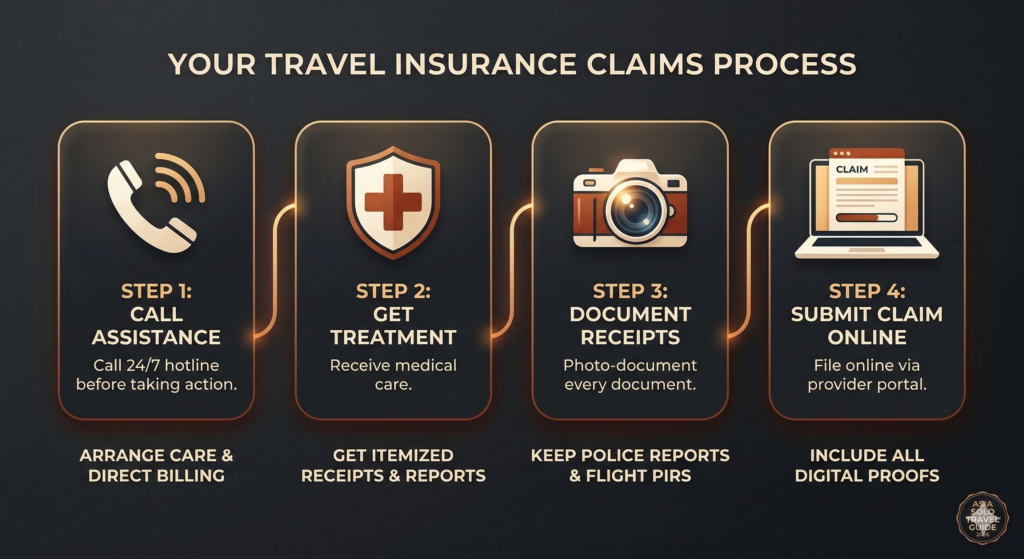
Four-step travel insurance claims process
How to Actually Use Your Insurance in an Emergency
The steps below look obvious when you’re calm at home. They’re much less obvious when you’re alone, unwell, and in a country where you don’t speak the language. Read this once before you go.
Step 1 — Call First
Call the 24/7 assistance line before doing anything else. They arrange care, liaise with hospitals directly, and set up direct billing where possible.
Step 2 — Treatment
Get treated. If direct billing fails, pay upfront with your credit card. Do not leave without itemized receipts.
Step 3 — Document
Photo every receipt, every medical report, every prescription. File a police report immediately for theft. Notify your insurer within 24–48 hours of a major event.
Step 4 — Claim
Submit via the provider’s app or web portal as soon as possible. Fresh details, complete documentation, and prompt filing all improve outcomes.
Telehealth First — Before You Go to a Clinic
If your symptoms aren’t an obvious emergency (high fever, stomach illness, minor injury), use your insurer’s telehealth service first. A 15-minute video call with an English-speaking doctor from your guesthouse room can tell you whether you need to go in, what to ask for, and whether what you’re experiencing is likely to require evacuation. SafetyWing and World Nomads both offer this in 2026. Use it.
The 24-Hour Evidence Window
If something goes wrong, you have roughly 24 hours to gather evidence that will make or break your claim. Once you leave a location, most of this disappears.
Three pieces of evidence most travelers miss
The PIR (Property Irregularity Report): If an airline loses your bag, do not leave the airport without a Property Irregularity Report from the airline desk. A verbal “we’ll call you” is not sufficient for a claim. Get the paper.
The police report: For theft, most 2026 policies require a report filed within 24 hours. In Japan or Thailand, ask specifically for a “Receipt of Report” or “Acknowledgment of Complaint” if they won’t provide a full English translation — that document is what your insurer needs.
The itemized medical bill: In Vietnam or Thailand, a receipt that says “Medical Services — $500” will be rejected. Before you leave any clinic or hospital, ask for an itemized receipt showing every procedure, medication, and consultation individually. This is not standard practice in all facilities — you have to ask for it explicitly.
The Most Common Insurance Mistakes Solo Travelers Make
| Mistake | The Consequence | How to Avoid It |
|---|---|---|
| Assuming activities are covered without checking | Denied claim after a scooter accident because motorbikes weren’t in the standard policy | Read the activities list before booking. If scooters, diving, or trekking are on your itinerary, confirm coverage explicitly. |
| Choosing the cheapest policy without checking evacuation limits | $100,000 evacuation limit sounds large until you’re airlifted from a remote island and the bill is $160,000 | For remote areas and islands, prioritize unlimited or very high evacuation coverage. |
| Forgetting to save the emergency assistance number offline | In crisis, no signal, insurance card was in the checked bag | Screenshot the emergency number and save it to your phone’s contacts before you leave. |
| Not disclosing pre-existing conditions | Claim denied for a condition that was pre-existing but not declared | Disclose everything at purchase. Most conditions are covered with declaration. Non-disclosure voids claims. |
| Buying after a “known event” started | Flight cancellation due to typhoon that was already forecast when you bought the policy: not covered | Buy before you depart and before specific events are in the news. |
| Relying solely on credit card insurance | Medical emergency generates $30,000 bill. Credit card coverage caps at $5,000. | Use credit card coverage as a supplement, not a primary policy. Most don’t include adequate medical or evacuation coverage for Asia. |
| Assuming any policy covers assault-related medical costs | Emergency medical claim denied because assault wasn’t listed as a covered event | Verify explicitly that emergency medical from assault is included. World Nomads confirms this; verify for any other provider before purchasing. |
Related Guide: What to Pack for Solo Female Travel in Asia
What Decent Coverage Actually Costs for a 12-Week Trip
The cost of travel insurance for Asia is influenced by your age, trip length, home country, and activity level. These are realistic benchmarks for a standard 12-week multi-country trip for travelers under 35. Costs increase for older travelers — see the age and conditions section above for guidance.
| Provider & Plan | Coverage Type | Estimated Cost (12 Weeks) |
| SafetyWing Nomad 2.0 | Medical + basic travel (no adventure sports) | ~$183 |
| SafetyWing + Adventure | Includes scooters, diving, and trekking | ~$213 |
| World Nomads Standard | Strong medical, basic activities, solo supplement | $200 – $280 |
| World Nomads Explorer | Unlimited evacuation, 200+ activities, assault care | $280 – $380 |
| Tin Leg Gold (US) | Based on ~$3,000 total pre-paid trip cost | $120 – $240 |
| Genki Traveler (EU) | Basic long-term medical plan | ~€105 – €195 |
To put these numbers in context: a single Ha Long Bay overnight cruise costs $80–200. One mid-range hotel night in Tokyo costs $80–150. The right insurance policy costs less than two nights of accommodation and protects against bills that could exceed your entire trip budget.
Frequently Asked Questions
Can I buy travel insurance after I’ve already left home?
Yes — SafetyWing and World Nomads both allow mid-trip purchases. However, there’s typically a waiting period of 10–14 days before illness coverage kicks in for policies purchased after departure. Injuries from accidents are usually covered immediately.
For trip cancellation and pre-existing condition waivers, buying mid-trip means you’ve already lost those protections. If you’re currently traveling without insurance, buy SafetyWing immediately — it’s available in most countries — and supplement with a stronger policy for your next trip from departure day.
Does travel insurance cover visa rejections or denied entry?
Most standard travel insurance policies do not cover visa rejection or denied entry at the border as a trip cancellation reason. CFAR (Cancel for Any Reason) policies would cover this, since you can technically cancel for any reason — but CFAR adds 40–50% to the policy cost and only reimburses 50–80% of costs.
The better approach is to ensure your visa is secure before purchasing non-refundable travel. For the five countries in this guide, visa requirements are relatively straightforward — see the Asia visa guide for current requirements.
What if I have a pre-existing medical condition?
Disclose it at purchase. This is the only correct answer. Most conditions are coverable with disclosure — the specific terms vary by condition and provider.
For trip cancellation: buying within 14–21 days of your first deposit typically triggers a pre-existing condition waiver, meaning the condition is covered for cancellation purposes. Miss this window and it’s excluded.
For ongoing medical coverage abroad: most providers cover acute, sudden flare-ups of disclosed conditions but exclude routine or ongoing treatment. If you have a significant medical history, call the provider’s underwriting team for explicit written confirmation of what is and isn’t covered for your specific situation before purchasing.
Does travel insurance cover theft from a hostel?
Usually yes, with conditions. Most comprehensive policies cover theft of personal belongings, but with per-item limits (typically $500–1,000) and aggregate limits that may not fully cover expensive electronics. Hostel theft typically requires: a police report filed within 24 hours, evidence of the items’ value (receipts or photos), and proof that reasonable precautions were taken (items were in a locked locker, for example).
Check your policy’s “unattended baggage” clause — some policies exclude theft from bags left unattended in public spaces, which can include hostel common areas.
What’s the difference between medical evacuation and repatriation?
Medical evacuation covers the cost of transporting you from where you are to the nearest adequate medical facility — this could mean an air ambulance from a Thai island to a Bangkok hospital. Costs can reach $75,000–$200,000.
Repatriation covers the cost of transporting you back to your home country for ongoing treatment, typically via a medically supervised flight. This is a separate, additional expense and is usually only relevant for serious, extended medical situations.
Most comprehensive policies include both. Always confirm both are present — not just one.
I’m traveling solo over 40. What changes for me?
Pricing is the main change — premiums jump meaningfully at 40 and again at 60. Always run actual quotes rather than relying on the under-35 benchmarks shown in most comparison guides.
Provider selection matters more: World Nomads caps coverage at 70 and becomes less competitive in pricing above 65. Genki Traveler has no upper age limit and is worth pricing directly. SafetyWing remains competitive through the 40s and 50s.
Pre-existing conditions become more relevant as a consideration — see the age and conditions section above for the full picture. If you have any managed health conditions, the 30 minutes you spend calling an underwriter is among the best-invested time in your trip planning.
Does insurance cover scooter rental — and does it matter whether I have an IDP or local license?
Yes, it matters enormously — and the rules differ by country.
Thailand: Local law requires a Thai motorcycle license or an IDP endorsed for motorcycles (Category A). An IDP with motorcycle endorsement typically satisfies SafetyWing and World Nomads requirements. A car-only license does not. Verify with your provider before renting.
Vietnam — Hard Truth: For engines over 50cc (which covers nearly every rental scooter), Vietnamese law technically requires either a Vietnamese motorcycle license or an IDP issued specifically with a Category A motorcycle endorsement. A standard IDP is not sufficient. Most travelers ignore this. Insurers know it — and use it to deny claims. If you don’t have a motorcycle endorsement on your home driving license and an IDP with the correct category, your scooter coverage is likely void in Vietnam regardless of which policy or add-on you’ve purchased. Get written confirmation from your provider before riding.
Which providers include telehealth, and when should I use it?
As of 2026, SafetyWing and World Nomads both include telehealth video consultations in their standard plans. Genki Traveler offers telehealth on some plan tiers. Tin Leg Gold does not.
Telehealth is the right first step for: stomach illness, fever without obvious cause, mild injury, skin reactions, and any situation where you’re unsure whether you need in-person care. A doctor can tell you in 15 minutes whether your symptoms warrant a clinic visit — saving you from navigating a foreign healthcare system alone at midnight when it turns out you just need rest and fluids.
Telehealth is not a replacement for emergency care. If you’re in severe pain, having difficulty breathing, experiencing chest pain, or have a significant injury, call the emergency assistance line and go to a hospital. Do not wait for a video call.
Final 2026 checklist
If you’ve made it this far, you’re already more prepared than 90% of the travelers on your flight. Before you click “purchase,” run this final 2026 checklist:
- Activity Check: Does your policy explicitly name scooters or scuba diving?
- Evacuation Check: Do you have at least $500k (or unlimited) for remote transport?
- Solo Check: Does it cover a “companion fly-to-bedside” if you’re hospitalized alone?
Travel insurance is the only thing you’ll buy for your trip that you hope you never use. But if you do need it, it will be the most valuable thing in your backpack.
Last updated March 2026. Policy details change — always verify current coverage terms directly with your provider before purchasing.
