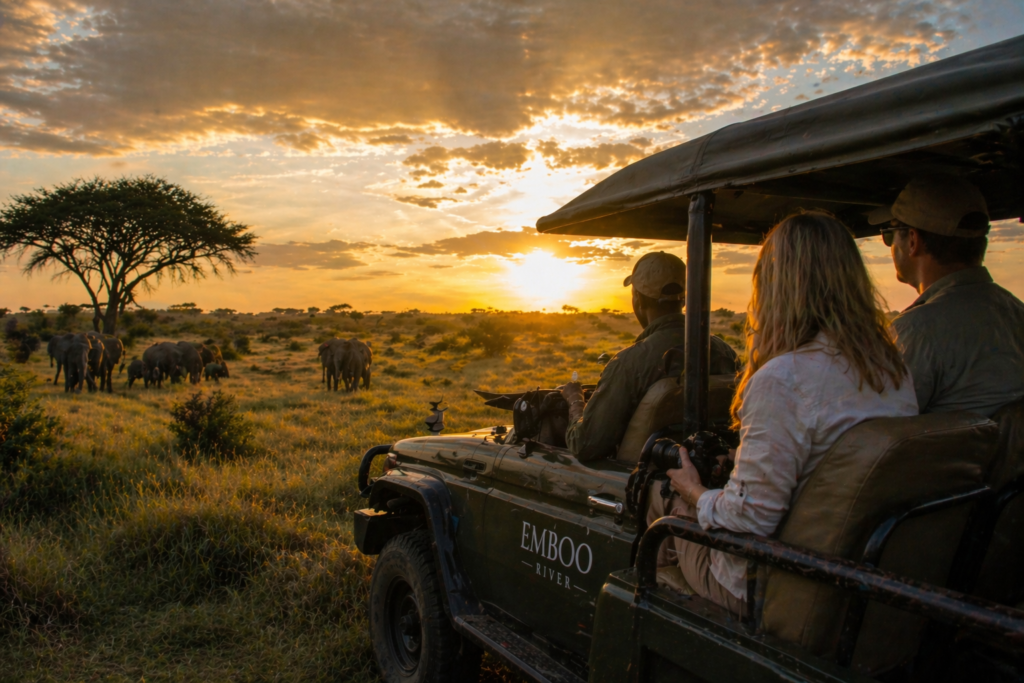

Close your eyes and picture a classic Kenyan game drive. You probably imagined the rumble of a diesel engine — the shudder as the Land Cruiser climbs a ridge, the mechanical clatter drowning out everything else. Now delete all of that.
I. The End of the Diesel Rattle
What remains is the sound of Africa: wind through acacia grass, the low exhale of an elephant, the stuttered alarm call of a go-away bird flagging a predator you haven’t spotted yet. That is what an electric safari Kenya sounds like. And in 2026, it’s rapidly becoming the standard at the country’s most serious conservation camps.
The shift isn’t just what you see. It’s what you finally get to hear.
Kenya has become the hub for African e-mobility. Nairobi-based Roam Electric — originally founded to convert diesel safari vehicles to electric — launched the Roam Air Gen 3 on April 17, 2026, with a battery built specifically for African road realities: IP67-rated water resistance, integrated GPS fleet tracking, and the fastest charging on the continent at more than one kilometer of range per minute. That same engineering DNA is already in the bush. Ranger teams across the Maasai Mara run silent anti-poaching patrols on Roam Air bikes. Conservancies from the Chyulu Hills to Laikipia are retiring their diesel fleets.
The case for the switch is direct: silence changes animal behavior. Predators don’t bolt. Birds stay perched. A cheetah mid-stalk continues her approach without flattening her ears. You stop watching wildlife. You start witnessing it.
At a Glance: Kenya’s 2026 Electric Safari
| Feature | Details |
| What it is | Silent, solar-powered game drives in battery-electric vehicles (EVs). Zero diesel, zero engine noise. |
| Tech Hub | Roam Electric (Nairobi). Named FT Africa’s fastest-growing e-mobility company. |
| The 2026 Edge | Roam Air Gen 3 (Released April 17, 2026). Features IP67-rated batteries, GPS tracking, and 1km+ range per minute of charge. |
| New for 2026 | Wilderness Mara (Opening June 2026). 12 luxury tented suites on the iconic former Little Governors’ Camp site in the Mara Triangle. |
| Top Destinations | Maasai Mara: Emboo River, Kicheche, Wilderness Mara Chyulu Hills: Campi ya Kanzi Laikipia: Lewa Wilderness, Ol Pejeta |
| Wildlife Benefit | Silence reduces animal stress. Predators (lions, leopards, cheetahs) maintain natural hunting and social behaviors around vehicles. |
| Investment | $750 – $1,500+ per person, per night (All-inclusive luxury). |
| Best Timing | July–October: Migration river crossings. January–March: Calving season with lower vehicle density. |
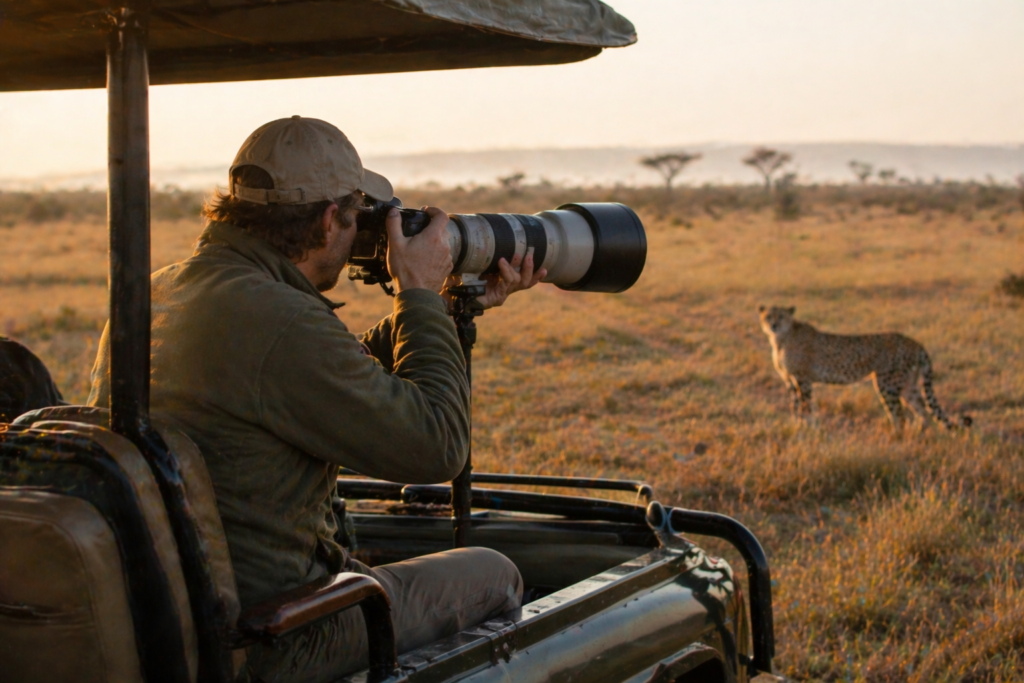
Wildlife photographer using a telephoto lens from a stable electric safari vehicle during an early morning game drive
II. Diesel vs. Electric: The Side-by-Side
The table below captures the structural difference between the two experiences. The gap has widened every year as electric technology matures and solar infrastructure scales across Kenya’s conservancies.
| Traditional Diesel Safari | Regenerative Electric Safari | |
| Sound environment | Engine noise ~80 dB; drowns ambient wildlife sound | Near-silent — birdsong, grass, and animal breath audible |
| Wildlife behavior | Animals habituate but stay alert; predators often bolt | Natural behavior continues; predators hold position, sightings run longer |
| Carbon per game drive | ~8–12 kg CO₂ per drive (diesel 4×4) | Zero tailpipe emissions; charged by on-site solar array |
| Operating cost | High — fuel, engine maintenance, regular oil changes | 3–4× cheaper to operate; far fewer moving parts |
| For photographers | Engine vibration limits long-lens sharpness | Zero vibration — full advantage at 400–500mm |
| Conservation alignment | Indirect — lodge fees may support conservation | Direct — carbon credits, ranger patrol integration, community revenue |
| 2026 innovation | Legacy infrastructure; no significant recent change | Gen 3 battery tech; GPS fleet tracking; new camps opening |
III. What’s Your Safari Style?
Not all electric safari experiences are the same. The right camp depends entirely on what you’re optimizing for. Pick your profile below and use it to anchor your conversation with a travel specialist.
| The Photographer | The Quiet Luxury Seeker | The Conservation Financier |
| Camp: Emboo River, Mara North Edge: Zero vibration at 500mm+ Shot: Pre-dawn predator on open grass Ask for: Exclusive vehicle booking | Camp: Kicheche Mara — EV1 exclusive Edge: One group, one guide, no radio chatter Moment: A leopard that doesn’t move Ask for: Full silent day drive | Camp: Campi ya Kanzi (carbon-negative) Edge: Auditable credits — Apple & Netflix buy them Metric: CO₂ saved per stay, on departure report Ask for: MWCT project visit |
▶ How to use this: Tell your travel specialist which column fits your priorities. A photographer and a conservation financier will have completely different conversations with the same lodge — and both will be right.
IV. The Pioneers: Kenya’s Best EV-Integrated Camps
Not every camp that markets ‘sustainability’ has made the structural investment. These five have — and each sits in a different ecosystem with a different conservation model. Here’s what separates them.
Emboo River Camp — Mara North Conservancy
Emboo River holds a significant distinction: the first full fleet of electric safari vehicles in East Africa. Every vehicle charges via an on-site solar station; each ESV carries over 35 kilowatt-hours — enough for a full day of game drives across Mara North without touching diesel. The camp sits in a private conservancy adjacent to the main reserve, which means lower vehicle density, guides who can linger at sightings, and the kind of quiet the main reserve rarely delivers.
For wildlife photographers, this is the anchor camp on the list. See Section VII for the technical case.
▶ Photographer’s Note: Zero engine vibration = full control at 500mm. Book an exclusive vehicle for dawn drives and plan to stay stationary at predator sightings. The EV does the work.
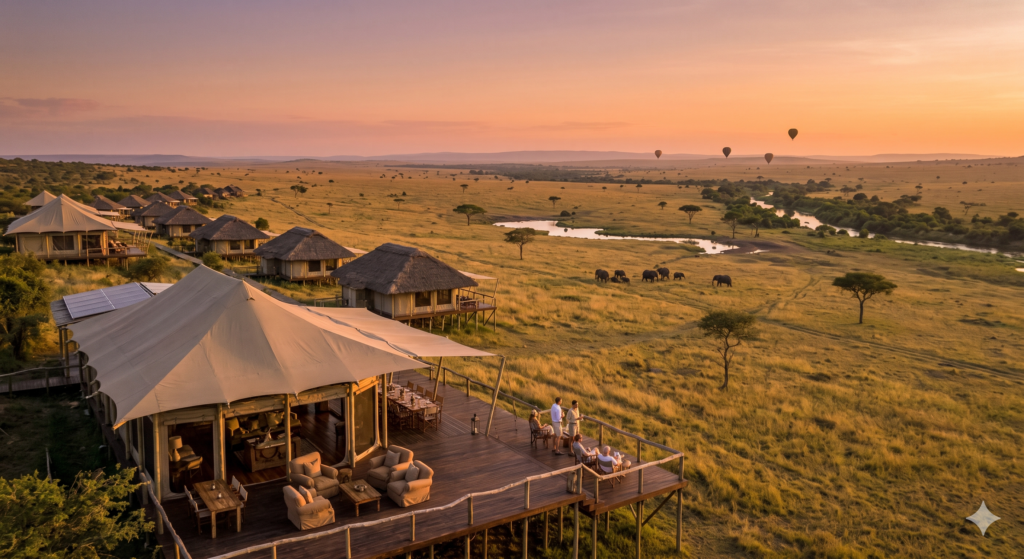
Luxury tented safari camp in the Mara Triangle overlooking the savanna during golden hour
Wilderness Mara — Mara Triangle (Opening June 2026)
The freshest entry on Kenya’s electric safari map, and the one with the most immediate booking urgency. Wilderness Mara opens in June 2026, rebuilt on the site of the legendary Little Governors’ Camp at the base of the Oloololo Escarpment. Twelve tented suites, a spa, gym, and an in-camp photographic studio sit in the Mara Triangle — one of the most wildlife-dense and least crowded corners of the greater Mara ecosystem.
The Triangle operates under a strict limited-lodge model managed by the Mara Conservancy: only two permanent camps inside the boundary. The camp’s position offers access to both sides of the Mara River, which means river-crossing sightings during the Great Migration are a realistic expectation, not a lottery. Wilderness Mara Villas — the exclusive-use sister property on a secluded Mara River bend, formerly Governors’ Private Camp — opened in February 2026 for groups wanting total privacy.
▶ Booking window: Wilderness Mara opens just as the wildebeest herds arrive. If you’re planning a July trip, you have a narrow window to be among the first guests in Africa’s newest conservation-forward luxury camp — before anyone else has written about it.
Campi ya Kanzi — Chyulu Hills
Africa’s first carbon-negative lodge. That’s not a marketing line — it’s a verified financial structure. Carbon credits from the Chyulu REDD+ Project are purchased by Apple, Netflix, Tiffany, and Gucci. A 320kW photovoltaic array charges eight vehicles simultaneously.
Rivian R1T trucks donated by the manufacturer handle anti-poaching patrols and Maasai firefighter logistics. Every dollar of tourism revenue flows to the Maasai Wilderness Conservation Trust, funding schools, healthcare, and wildlife patrols across the surrounding community.
The HNWI traveler who arrives and asks to see the impact data — carbon tonnage offset, school enrollment figures, patrol coverage maps — will not be disappointed. This is one of the few lodges in Africa where the sustainability story is auditable, not aspirational.
Kicheche Mara Camp — Lemek Conservancy
Kicheche’s EV1 is the quietest single game drive available in the Mara ecosystem. The camp’s 6,600-watt solar array charges the vehicle for exclusive booking — one group, one guide, zero radio coordination with competing vehicles.
The Lemek location keeps you off the main reserve roads entirely, in a conservancy where the guide’s decisions aren’t shaped by traffic or timing pressure. When the motor cuts and the guide says nothing, the only sound is whatever the Mara decides to offer.
Lewa Wilderness — Laikipia
Inside the Lewa Wildlife Conservancy — a UNESCO World Heritage Site on the northern slopes of Mount Kenya. The conservancy holds black rhino populations that have recovered from near-extinction and the world’s largest population of Grevy’s zebra. Photovoltaic panels power the entire camp and charge the electric game drive fleet.
Three vehicles maximum at any sighting — enforced, not aspirational. The combination produces a game drive that feels genuinely exclusive: no queues, no diesel, no one else competing for the same leopard.
V. The Tech Behind the Magic: Nairobi’s Engineers in the Bush
The Roam Air Gen 3: What Changed in April 2026
On April 17, 2026 — four days before this article published — Roam Electric unveiled the Roam Air Gen 3, the latest evolution of the motorcycle platform now deployed across Kenya’s conservation landscape. The headline upgrade is charging speed: the Gen 3 delivers more than one kilometer of range per minute, enabling a 20% to 80% charge in under 40 minutes.
For ranger teams running multi-circuit anti-poaching patrols, this effectively eliminates the downtime problem that slowed earlier electric deployments.
The Gen 3 battery carries an IP67 water resistance rating — fully submersible, tested against Laikipia rainy-season conditions and Mara river crossings. The aluminum die-cast casing is drop-proof, and integrated GPS tracking enables both theft recovery and real-time fleet health monitoring via the Roam app.
The 100,000-kilometer battery guarantee changes the economics for lodge fleet operators: capital costs amortize predictably, and replacement cycles can be planned.
▶ The safari implication: The same GPS fleet-monitoring technology keeping boda boda riders productive in Nairobi is now in the bush. Lodge operators can check vehicle range in real time before a full-day drive. The ‘range anxiety’ objection to EVs in remote terrain is being steadily engineered out of the equation.
Roam’s Origin Story: Why This Technology Is Built Here
Most international coverage of Kenya’s electric safari frames it as a story about Western brands entering Africa — Rivian trucks, European investment, imported battery packs. That framing consistently misses the origin point.
Roam Electric was founded in 2017 with one goal: pull the diesel engine out of a safari 4×4 and replace it with electric. That first conversion happened in a Nairobi workshop. The engineers who solved the problem — how do you build an EV that survives corrugated Laikipia roads, volcanic dust, river crossings, and the specific load demands of a fully loaded game vehicle on a 10-hour drive — are the same people behind the Gen 3 motorcycle.
Roam Park, East Africa’s largest EV manufacturing facility, operates with a 39% female workforce and localizes over 40 components per vehicle, qualifying under Kenya’s Duty Remission Scheme for domestic manufacturers.
When a camp in Mara North needs to service its EV fleet, the expertise exists in Kenya. When a component fails on a game drive, the supply chain is continental. The electric safari wasn’t imported. It was built here, specifically for the conditions here.
▶ The Nairobi Tech Connection: The engineers building electric boda bodas on Mombasa Road are the same innovation chain that electrified the Mara’s game drives. This is a technology export — designed in Nairobi, tested on African roads, deployed in African wilderness.
How Off-Grid Solar Powers an Entire Camp
The question American travelers ask most consistently: if there’s no power grid in the Chyulu Hills, how do the vehicles actually charge? The answer is the solar micro-grid — a self-contained power system that’s more reliable than most people expect.
A camp like Campi ya Kanzi runs on a 320kW photovoltaic array that feeds energy into large lithium-ion battery banks throughout the day. The battery bank is sized to cover the camp’s complete overnight demand — induction cooking, air conditioning, lighting, water pumping, and vehicle charging — with no diesel backup.
Inverters convert stored DC current to the AC electricity that runs appliances. Vehicles charge during off-peak overnight hours and return to service fully loaded each morning. Over the vehicle’s operating life, costs run three to four times lower than a comparable diesel fleet.
What This Means for You on the Ground
The practical guest experience is straightforward: you arrive for a 5:30 AM game drive and your vehicle is fully charged, silent, and ready. There’s no warm-up idle, no diesel smell on your jacket, no engine competing with the dawn chorus. When the guide cuts the motor at a lion sighting, the silence is complete. That is the product.
Some guests arrive skeptical about range. In practice, a 35+ kWh ESV covers a full day of Mara driving — typically 80 to 120 kilometers of mixed terrain — with charge to spare. The lodges featured here have been operating these vehicles long enough to have routing figured out. Range anxiety is the objection of people who haven’t done it yet.
VI. The 10-Day Silent Safari Itinerary
Chyulu Hills → Maasai Mara → Laikipia | All game drives electric
This itinerary is built for depth. Each location represents a different ecosystem, a different conservation model, and a different relationship between the land and the communities living on it. Light aircraft transfers keep road time minimal and maximize time in the field.
Days 1–3: Chyulu Hills at Campi ya Kanzi
Fly from Wilson Airport to Ol Kiombo in a light charter — roughly 45 minutes over the Athi Plains and into the hills. The first thing you notice on arrival is what’s missing: no diesel pickup idling on the airstrip, just a retrofitted Land Rover waiting in the shade, running on Chyulu sunlight.
The Chyulu Hills are volcanic, moss-green, and geologically young — some of the youngest volcanic terrain in Africa. Hemingway called them the ‘green hills of Africa,’ and the quality of otherworldliness holds. On clear mornings, Kilimanjaro appears on the southern horizon like something from a painting.
Elephants moving between Tsavo and Amboseli use this corridor, so sightings tend to be unhurried and intimate — nothing like the orchestrated queue you might find near a waterhole in a busier park.
Plan time with the MWCT conservation team: school visit, community clinic, carbon project site. These aren’t add-ons — they’re the financial logic of the lodge, and understanding them changes what you’re looking at when you drive out across the conservancy.
- Elephant, wild dog, buffalo; lion from the volcanic ridgeline Best sightings:
- Sundowner on the ridge with Kilimanjaro behind you, lit by the last flat equatorial light Don’t miss:
- Pre-sunrise fog in the lower hills — soft, backlit, no crowds For photographers:
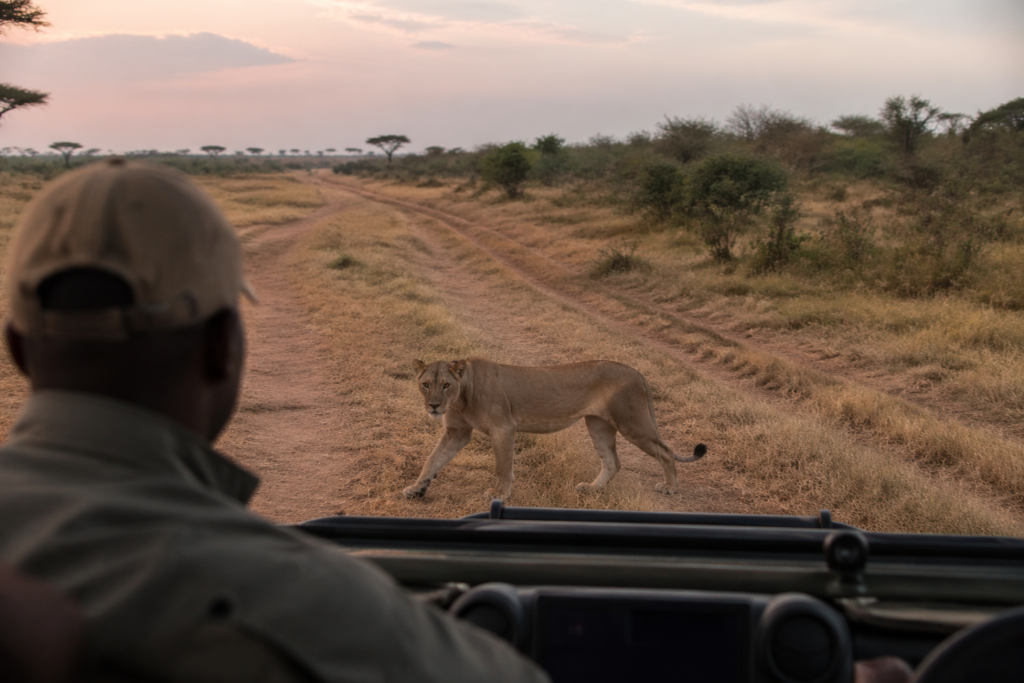
A lioness crosses a quiet savanna track at dusk in Kenya’s Maasai Mara, viewed from a safari vehicle as the guide cuts the engine, capturing a rare moment of stillness and natural sound.
Days 4–7: Maasai Mara — Emboo River Camp or Wilderness Mara
A charter flight drops you into the Mara ecosystem, and the landscape shifts completely: open, golden, enormous. If you’re traveling in June or July, Wilderness Mara is the call — it opens just as the wildebeest herds begin building at the river, and you’d be among its first guests. If the Migration isn’t your priority, Emboo’s full electric fleet in Mara North delivers the most technically controlled game drive experience in the country.
The electric vehicle difference becomes most apparent here. The Mara is not a quiet landscape — it’s full of sound. What changes is that the engine no longer competes with it. You hear the wildebeest before you see them. When the guide cuts the motor, the silence arrives all at once.
I was at Emboo on an early morning drive when a lioness crossed the track maybe thirty meters ahead. The guide cut the motor — not for strategy, just because there was nothing left to remove. She paused, looked back once, and kept walking. You could hear her paws on the dry grass. Nobody spoke. That moment lasted maybe forty seconds. In a diesel vehicle, half of it disappears into engine noise.
The conservancy locations keep vehicle numbers genuinely low — a different experience than the crowded main reserve. Unlike the bumper-to-bumper traffic documented in our Maasai Mara vs. Serengeti guide, a private conservancy gives your guide the freedom to stay as long as the sighting holds.
- Mara North lions (highest density in Kenya), cheetah on open grassland, river crossings July–October Best sightings:
- July–October for crossings; January–March for calving season, fewer vehicles Migration window:
- Dawn drives — the Mara at first light, in silence, is the experience the whole trip builds toward Request specifically:
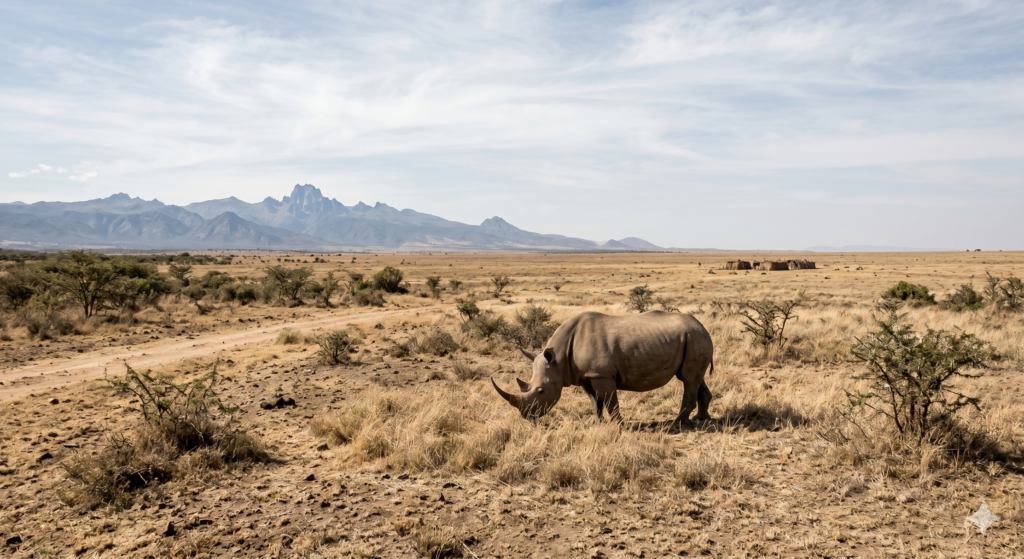
Black rhino grazing in Laikipia conservancy
Days 8–10: Laikipia at Lewa Wilderness
Fly north and the landscape changes again — higher altitude, drier, more open, and conservation-dense in a way that takes a day to fully register. This is where Kenya’s endangered rhino population made its most dramatic recovery. You will drive past black rhinos in silence. You will hear them exhale before the vehicle gets close enough to see them clearly.
Laikipia also holds one of the healthiest Grevy’s zebra populations on Earth — a species with fewer than 3,000 animals globally. The Grevy’s is larger than the common zebra, with narrower stripes and distinctive large rounded ears. Watching a herd from a stationary, silent vehicle, hearing their low vocalizations without engine noise masking them, is the kind of moment that makes the rest of the itinerary feel like it was prologue.
The three-vehicle-per-sighting rule at Lewa is real and enforced. Combined with electric vehicles and Laikipia’s open terrain, it produces a game drive that is genuinely solitary in the best sense — no diesel haze, no queues, no one else.
- Black rhino, Grevy’s zebra, reticulated giraffe, Beisa oryx, cheetah Key species:
- Join the rhino monitoring team for a morning — a rare, accredited field experience that most guests don’t know to ask for Conservation add-on:
- 360-degree open horizons; best light 6–8 AM; zero diesel haze on long focal lengths For photographers:
VII. The EV Photography Advantage
Why Engine Vibration Is the Hidden Enemy
Most wildlife photographers who switch to electric game drives report the same thing: their hit rate at long focal lengths changes immediately. At 400mm or 500mm, even low-frequency vibration from an idling diesel engine introduces motion blur that separates a publishable frame from a discard. It’s not dramatic — it’s subtle enough that many photographers never trace the root cause. But it’s consistent.
When the motor is off in an electric vehicle, that source of vibration is gone entirely. The platform becomes a stable base. You can open the shutter slightly longer in low light without blur risk from the vehicle itself. Pre-dawn drives — the single most productive window for feline behavior on the Mara — become viable at focal lengths that would be unreliable in a diesel vehicle.
The Compounding Advantage
The second-order effect is behavioral. Because a silent vehicle produces less stress in wildlife, subjects hold position longer. A leopard in a fig tree doesn’t shift. A pride of lions doesn’t drift away from the road. You get more frames at each sighting, not just sharper ones.
The combined effect: electric vehicle + stationary motor + no vibration = roughly 1 to 2 stops of effective ISO advantage at 400–500mm. At 6 AM on the Mara with a cheetah at 80 meters, that is the difference between a clean capture and a missed shot.
▶ Practical recommendation: Bring your longest lens. Request exclusive vehicle booking at Emboo or Kicheche. Ask your guide for stationary positioning at sightings — EV guides are already trained for this, but the request signals that you’re serious and changes how they drive for you.
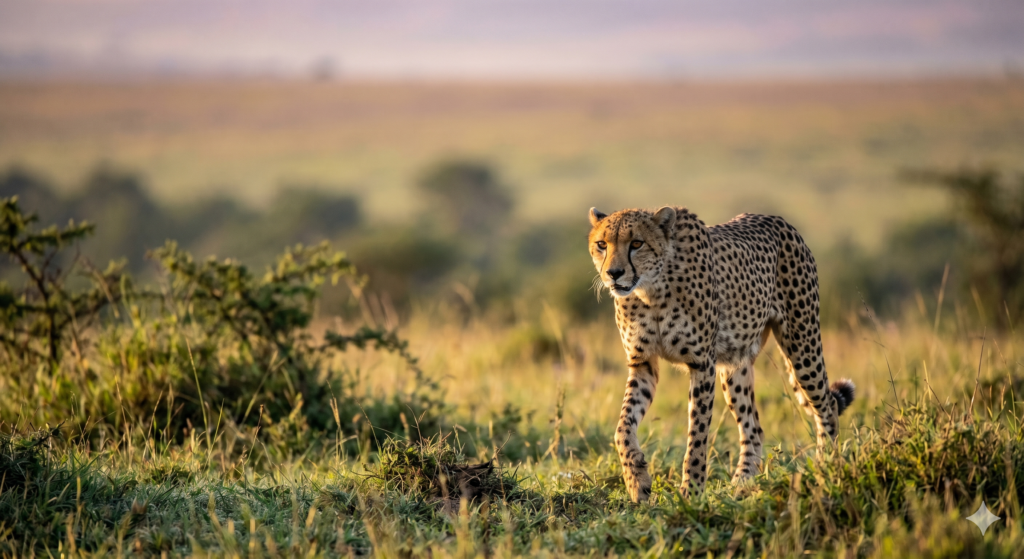
A sharp telephoto image of a cheetah taken from a vibration-free electric safari vehicle at dawn in Maasai Mara National Park
VIII. The Regenerative Future: What Luxury Means in 2026
Luxury on safari used to mean isolation — the remote camp, the private vehicle, the game drive without another tourist in sight. That definition still holds, but in 2026 it’s been joined by something more precise: immersion. The electric safari gives you both. The silence is its own kind of solitude — not separation from other people, but from the industrial layer that diesel has always imposed between traveler and ecosystem.
Regenerative travel asks a harder question. Not whether your visit caused less harm, but whether it generated active good. Campi ya Kanzi — carbon-negative, community-owned, funding Maasai schools and healthcare through verified credits — clears that bar.
Wilderness Mara, opening this June with low-impact architecture in one of Kenya’s most conservation-managed wildlife areas, clears it differently. The electric vehicle is the mechanism. The conservation model is the meaning.
Kenya is not catching up to someone else’s sustainability agenda. It is building the infrastructure that the next decade of conservation travel will run on.
▶ Ready to hear the wild? Ask your travel specialist one question before you book: does this camp operate a full electric fleet, or a mixed one? The honest answer will tell you more about the operation’s actual commitment than any certification. The camps in this guide will answer clearly.
FAQ: Electric Safari Kenya
What is an electric safari in Kenya?
An electric safari uses battery-powered vehicles instead of diesel 4x4s for all game drives. Vehicles charge via on-site solar arrays at the lodge. The primary benefit is near-silence — predators don’t startle, birds stay perched, and wildlife behaves more naturally around the vehicle. Operating costs run three to four times lower than diesel; tailpipe carbon output is zero.
Which Kenyan camps offer electric game drives?
The established options: Emboo River Camp (Mara North — first full electric fleet in East Africa), Wilderness Mara (Mara Triangle — opening June 2026), Campi ya Kanzi (Chyulu Hills — Africa’s first carbon-negative lodge), Kicheche Mara Camp (Lemek Conservancy — exclusive EV1 booking), Lewa Wilderness (Laikipia — rhino conservation), and Ol Pejeta Bush Camp (Laikipia — northern white rhino).
What is the Roam Air Gen 3 and why does it matter for safari?
Launched April 17, 2026, the Roam Air Gen 3 is the latest electric motorcycle from Nairobi-based Roam Electric — Africa’s fastest-growing e-mobility company. It charges at 1+ km of range per minute, carries IP67 water resistance, and integrates GPS fleet tracking via the Roam app.
For safari: ranger teams in the Maasai Mara use Roam Air bikes for silent anti-poaching patrols, and the fleet-monitoring architecture is informing how lodges manage their vehicle charge cycles in remote terrain.
Can electric vehicles handle off-road safari conditions?
Yes — with planning. Purpose-built and retrofitted electric safari vehicles handle dust, mud, and river crossings well. Electric motors excel at the low-speed torque demands of off-road driving. The practical constraint is range: lodges manage this through route planning and overnight solar charging. For long cross-country transfers between parks, some operators continue to use diesel — but within a conservancy, the EV handles everything.
When is the best time for an electric safari in Kenya?
The Maasai Mara is best July–October for Great Migration river crossings, and January–March for calving season with lighter vehicle traffic. Laikipia and Lewa are year-round destinations. The Chyulu Hills are most atmospheric in the short rains (November) when the volcanic hills turn intensely green against Kilimanjaro.
How much does an electric safari in Kenya cost?
The camps featured in this guide are positioned at the upper end of Kenya’s market — not because EVs are expensive to run (they’re significantly cheaper than diesel), but because these operations invest heavily in solar infrastructure and run in private conservancies with genuinely low vehicle density. Budget $750–$1,500+ per person per night, all-inclusive. For first-time visitors comparing options, our Kenya Safari Planning Guide breaks down what each price tier actually delivers.