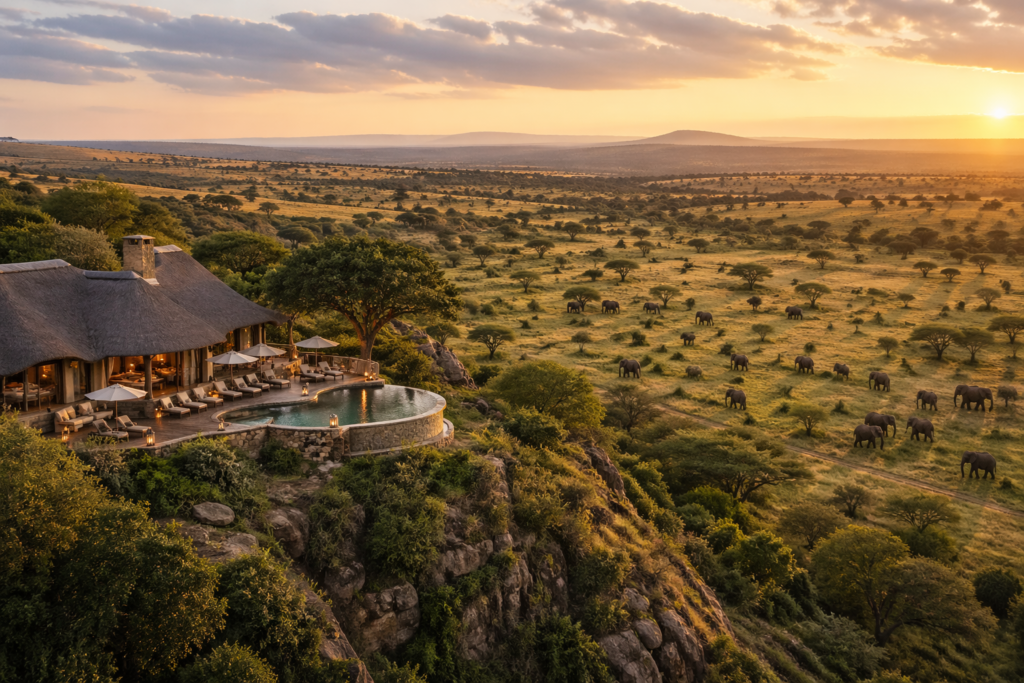

When an American traveler spends $1,200 a night at a luxury lodge in the Maasai Mara, the transaction looks simple: accommodation, meals, game drives. But in 2026, a growing cohort of impact investors, family foundations, and conservation-minded HNWIs are asking the harder question their financial advisors would ask about any investment — where does that money actually go, and what does it protect?
Tourism already contributes $168 billion to Africa’s GDP annually, according to the ICRT white paper launched at WTM Africa 2026 in Cape Town. But that same report issues a direct warning: over-dependence on photographic tourism leaves communities and conservation systems dangerously fragile. COVID-19 proved it in real time.
When borders closed in 2020, lodges that had built single-stream revenue models collapsed within weeks. Wildlife areas that depended entirely on bed-night fees lost their anti-poaching budgets overnight. Poaching rates climbed.
I. The Question Behind the Binoculars
To understand why this matters now, consider the context UNEP’s State of Finance for Nature 2026 report published in January of this year: for every dollar the world invests in protecting nature, thirty dollars are spent on activities that degrade it.
NbS investment reached $220 billion in 2023 — but the target by 2030 is $571 billion annually, a 2.5-times increase. The gap is not closing fast enough. Africa’s wildlife economy is one of the largest operational proof-of-concepts for closing it.
The response now visible across Kenya, South Africa, Namibia, and Rwanda is a structural restructuring of what the wildlife economy means — from passive consumption to active beneficiation. This article covers how that restructuring works, who is doing it well, and what it means for the traveler whose itinerary should function as an investment.
The shift isn’t from ‘paying for a room’ to ‘saving the animals.’ It’s more precise: from single-stream fragility to diversified, verifiable, community-anchored conservation finance.
At A Glance: Africa’s Wildlife Economy in 2026
| Metric / Pillar | Data Point & Strategic Context |
| Economic Scale | Tourism contributes $168B to Africa’s GDP annually. It serves as a vital operational proof-of-concept for the global reallocation of nature-based capital. |
| The Investment Gap | Global NbS investment sits at $220B—far short of the $571B annual target required by 2030 (UNEP State of Finance for Nature, Jan 2026). |
| Capital Imbalance | For every $1 invested in nature protection, $30 is still spent on activities that degrade it. Africa’s conservancies are the frontline for reversing this ratio. |
| Investor Shift | Movement from “paying for a room” to “funding a landscape.” HNWIs and family offices are applying Return on Impact (ROI) frameworks to safari itineraries. |
| Community Equity | !Xaus Lodge (SA) generates ZAR 2M+ in verified annual direct community benefits. This is the 2026 benchmark for “beneficiation” and shared governance. |
| Revenue Resilience | Multi-stream models: The ICRT 2026 White Paper advocates for 5+ revenue streams (Carbon, Honey, Game Meat, Live Sales) to prevent “COVID-style” budget collapses. |
| Impact Disclosure | Operators like Singita and Campi ya Kanzi publish third-party audited data (ranger hours, CO₂ offsets) that is traceable per bed-night. |
| Ground Truth | Campi ya Kanzi (Kenya): A stay directly funds verifiable patrol hours via the Maasai Wilderness Conservation Trust, with offsets purchased by Apple, Netflix, and Tiffany. |
II. The 2026 Wildlife Economy: Beyond the Binoculars
The table below maps the five structural pillars of Africa’s wildlife economy and what happens when each is under-funded. This is the framework the ICRT white paper presented at WTM Africa 2026, and it’s the one serious operators are building their financial models around. The ‘Silent Infrastructure’ pillar links directly to Section VI.
| Economic Pillar | Role of Luxury Tourism | 2026 Key Metric | Case Study | Risk if Neglected |
| Land-Use Competition (Transition Asset) | Makes wildlife-based land more profitable than agriculture or extractive industry — the foundational economic argument for conservation | $168B annual GDP from African tourism (ICRT/WTM Africa 2026). NbS must reach $571B globally by 2030 — African tourism is the largest operational model for that transition | Kenya Maasai conservancies: one acre earns more from bed-night fees than from livestock grazing — by a measurable margin | Wildlife loses the land-use competition by default; habitat fragments within a generation |
| Community Equity & Beneficiation | Pays direct dividends to landowners and communities; builds stewardship incentives that outlast donor funding | ZAR 2M+ annual verified community benefit at !Xaus Lodge, South Africa (ICRT white paper 2026) | !Xaus: community-owned, community-governed, financially auditable — ownership, not just employment | Benefits leak to external operators; communities lose economic reason to protect wildlife |
| Revenue Diversification | Funds non-photography revenue: carbon markets, honey, coffee, game meat, live animal sales | ICRT white paper advocates 5+ revenue streams per operation; COVID demonstrated single-stream fragility in real time | Mount Etjo, Namibia: photo-tourism + game meat + live animal sales = resilient through COVID-19 | One pandemic, drought, or security event collapses funding — including anti-poaching |
| Conservation Finance | Direct funding for anti-poaching, veterinary care, rewilding, and dMRV-verified citizen science | $10K–$50K per excursion for ultra-luxury conservation immersion experiences; Singita publishes audited ranger-hours annually | Singita: professional-grade annual impact report — species recovery, school graduates, carbon offset tonnage | Under-funded anti-poaching rebounds within 12–24 months of funding loss |
| Silent Infrastructure | EV fleets, solar micro-grids, and dMRV tech reduce costs and environmental load — see Section VI | Electric fleets run 3–4× cheaper than diesel (same as Electric Safari Kenya Guide); Roam Air Gen 3 GPS fleet management live April 2026 | Campi ya Kanzi: 320kW solar, Rivian R1Ts, carbon-negative — credits traceable to Apple, Netflix, Tiffany | Diesel dependency: cost volatility, noise impact on wildlife, carbon liability as ESG reporting tightens |
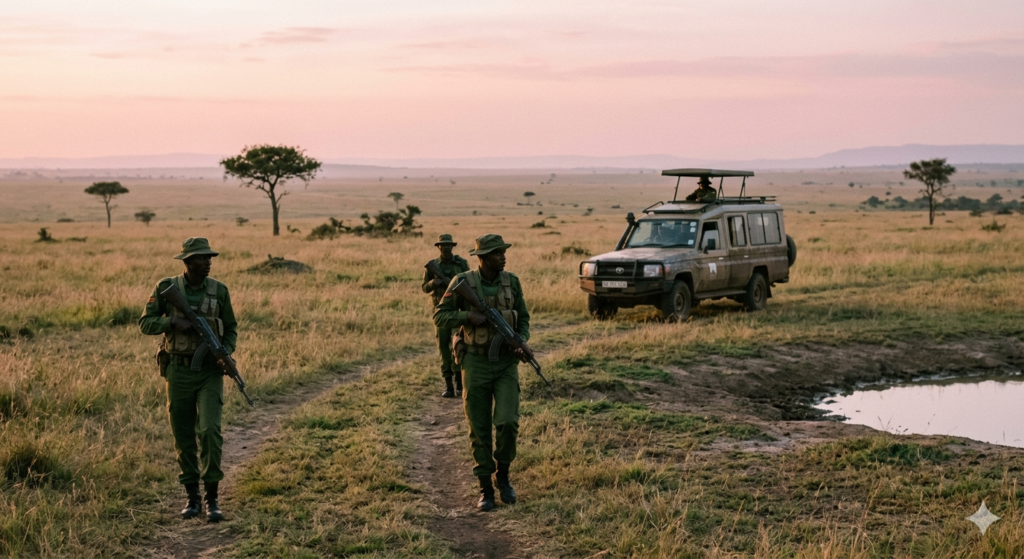
Wildlife ranger Patrol in Murchison Community Conservancy, funded by tourism revenue and conservation finance
III. The Financial Case: Wildlife as a Transition Asset
Winning the Land-Use Competition
Wildlife-based land use needs to be more profitable than the alternative — that’s the whole argument. Not more virtuous. More profitable. In East Africa, the alternative is livestock grazing, small-scale agriculture, and increasingly, extractive industry. A Maasai landowner who can earn more per acre from conservation fees than from cattle makes a rational decision to protect wildlife. Remove the economic advantage, and that decision reverses.
Luxury tourism — specifically high-value, low-volume models — is the most effective counter-argument the conservation sector has. A single bed in a well-run Kenyan conservancy generates more revenue per acre than any alternative land use while simultaneously producing the community employment and infrastructure that make conservation politically defensible. Wildlife, in this framework, is not a constraint on development. It’s a transition asset — one that appreciates when managed, and collapses when treated as background scenery.
The UNEP context sharpens this: $7.3 trillion in global finance is currently flowing into nature-negative activities annually. Against that, $220 billion reaches nature-based solutions — a 30:1 ratio against conservation. Africa’s wildlife economies are operating against that current every day. The ones winning are the ones that have made conservation the most profitable option on the landscape.
The $571 Billion Gap and What Africa’s Conservancies Represent
UNEP’s State of Finance for Nature 2026 sets the target at $571 billion in annual NbS investment by 2030 — equivalent to 0.5% of global GDP, a modest reallocation compared to what’s currently flowing the wrong way. Current investment is $220 billion. The gap is $351 billion annually, and it is not closing at the pace required.
Africa’s wildlife economy is not peripheral to this story. The continent holds a disproportionate share of the world’s biodiversity, operates some of the most advanced community-conservation models in existence, and has the land and governance structures to scale NbS rapidly — if the financial architecture supports it. The $168 billion tourism contribution is the entry point. Carbon markets, biodiversity credits, and blended capital structures are the growth trajectory.
▶ The investor framing: Any American family foundation or impact fund asking ‘where should we deploy nature-positive capital’ needs to understand that Africa’s conservancies are not charity cases. They are the functioning proof-of-concept for the financial model UNEP is asking the world to scale to $571 billion.
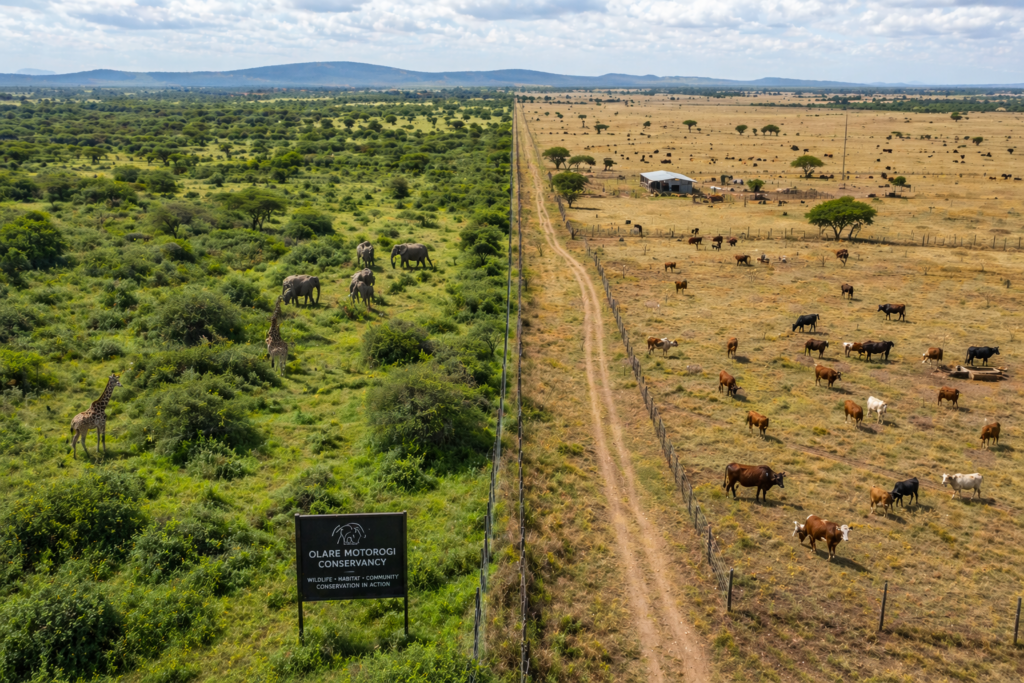
Comparison of wildlife conservancy land and livestock grazing land in East Africa economic land use competition
The Diversification Imperative: Moving Beyond Single-Stream Vulnerability
The ICRT white paper advocates a minimum of five revenue streams per operation. In practice: photographic tourism, carbon credits, sustainable agricultural products (honey, coffee, wild herbs), community enterprise fees, and in appropriate contexts, game harvesting or live animal sales. The goal is a wildlife economy that survives a crisis in any single vertical without hollowing out the conservation infrastructure everything else depends on.
Namibia’s community conservancy framework — operating since 1996 — is the most documented proof that this works. Wildlife populations have grown measurably in communal conservancies since diversification became standard. The economic model is what drove the conservation outcome, not the other way around. Mount Etjo’s COVID resilience (covered in Section IV) is the specific case that made this argument in financial, not philosophical, terms.
IV. Case Studies in High-Value Beneficiation
‘Beneficiation’ is the WTM Africa 2026 white paper’s deliberate term for the process by which a raw resource — wildlife, landscape — gets transformed into higher-value products that reach local communities directly. The gap between what a traveler spends and what a community receives must be measured, not assumed. These three operations are the current benchmarks.
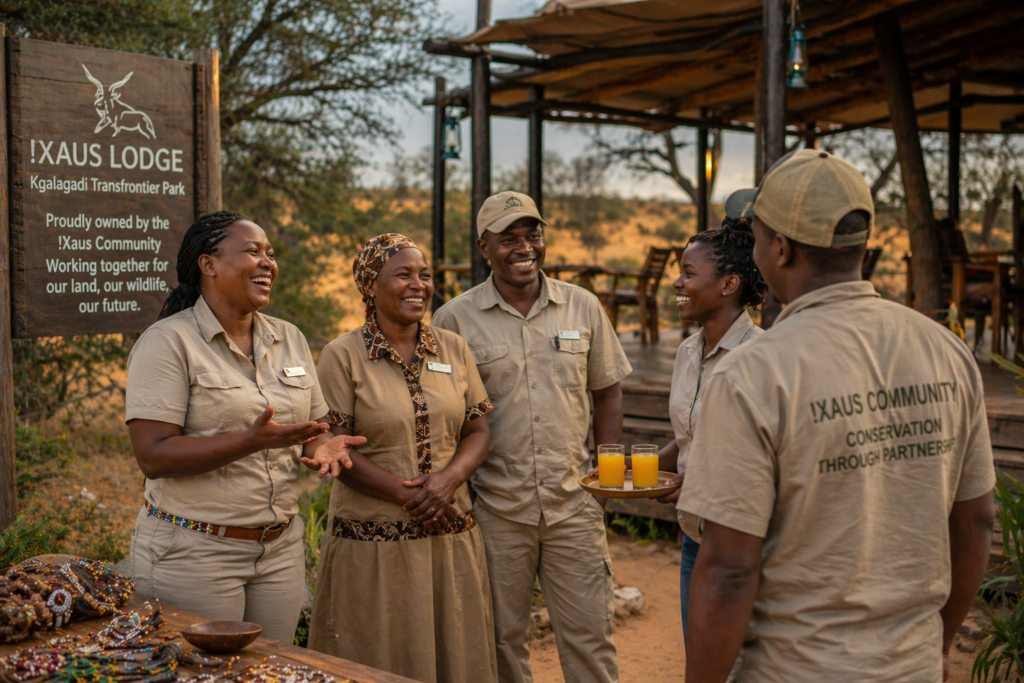
Community-owned safari lodge staff in Africa benefiting from conservation tourism revenue model.
!Xaus Lodge — South Africa (Community Ownership)
Located in the Kgalagadi Transfrontier Park, !Xaus Lodge is jointly owned by two South African San and Mier communities. Every financial decision — from staffing to supplier selection to profit distribution — sits with the community governance structure.
The lodge generates more than ZAR 2 million in direct annual community benefits, a figure the ICRT white paper cites as a benchmark for what community-led models can produce at scale. That number covers salaries, training, community development programs, and equity distributions.
The governance model is the lesson here. !Xaus didn’t become a community benefit story by accident or philanthropy — it was structured as one from the beginning. Ownership, not just employment, is what produces durable financial and social returns.
For American travelers asking ‘where does my money go?’: at !Xaus, the answer is documented, distributed, and auditable.
Singita — Rwanda & South Africa (Professional-Grade Impact Reporting)
Singita operates across six African countries, managing over one million acres of wilderness under conservation concession. What separates Singita from the broader luxury safari sector is not the quality of its lodges — it’s the quality of its reporting.
Each year, Singita publishes conservation and community impact data that meets the standards institutional investors expect: ranger hours deployed, species population trends, community school enrollment funded, culinary school graduates placed, carbon sequestration measured. The Long Run, Singita’s sustainability partner, audits each property annually.
In 2025, 22 students completed their final Prue Leith Culinary School exams at Singita campuses — bringing total graduates to 231. That number is in the public domain, tied to a named school, tied to a specific lodge concession. That is what auditable impact looks like.
For the impact investor or philanthropic HNWI who has spent a decade reading ESG disclosures, Singita’s reporting is immediately legible. It speaks the same language as a corporate sustainability report — because that is exactly what it is.
Mount Etjo Safari Lodge, Namibia
The Global Benchmark for a Multi-Stream Wildlife Economy
- Financial Resilience via Diversification: Mount Etjo operates four distinct revenue streams from the same wildlife population: photographic tourism, game meat production, regulated hunting, and live animal sales.
- The 2020 Proof of Concept: When global borders closed and photographic tourism collapsed, Mount Etjo’s alternative revenue streams provided the financial floor necessary to keep the operation, staff salaries, and conservation programs intact.
- The 1996 Conservancy Framework: This model sits within Namibia’s established legal framework, where local communities hold the rights to wildlife. This ensures communities have a direct economic stake in the health of the entire ecosystem, not just “photogenic” species.
- Proven Biodiversity Recovery: Since the program’s inception 28 years ago, wildlife populations in Namibia’s communal conservancies have grown significantly. The data proves that economic incentives—not just philanthropy—drive conservation outcomes.
- Outcompeting Traditional Agriculture: For international investors, Mount Etjo is the world’s most documented example of how wildlife-based land use outcompetes livestock ranching economically while simultaneously producing measurable biodiversity gains.
- Mitigating Existential Risk: The primary takeaway of the ICRT 2026 White Paper is that a photography-only model is structurally exposed. Mount Etjo’s multi-stream approach is the “real-time” financial argument for long-term landscape survival.
V. Impact Dashboards & dMRV
What Judy Kepher-Gona and STTA Identified as the Benchmark
Judy Kepher-Gona — founder of Sustainable Travel & Tourism Africa (STTA) and Honorary Professor of Sustainable Tourism at Nottingham University Business School since August 2025 — published STTA’s Africa Sustainable Tourism Trends 2026 in January of this year. Her appointment bridges 18 years of East African field practice with global academic frameworks: it’s why American investors should treat her assessment as credible rather than local.
One of the report’s central arguments: the traveler who wants to verify impact now has the tools — but the industry hasn’t standardized how that data is presented. An ‘Impact Dashboard’ showing how bed-night fees translate into specific conservation outcomes is moving from aspiration to expectation at the top end of the market.
Campi ya Kanzi already issues guests a carbon impact summary on departure, verified against the Chyulu REDD+ Project. Singita publishes annual impact accounts. The gap is the middle of the market, where claims are made and verification is absent.
The Rise of dMRV: Digital Monitoring, Reporting, and Verification
The 2026 industry term for what the blockchain section of this article is pointing toward is dMRV — Digital Monitoring, Reporting, and Verification. For finance professionals, this is the infrastructure that makes conservation claims investable. It means satellite monitoring of land-cover change, sensor-based carbon measurement, GPS-verified ranger patrol records, and mobile-money-linked community payment systems — all feeding into a digital ledger that any buyer or auditor can interrogate.
Anyone can say they’re sustainable. The difference is whether you can trace your $1,200 night to a specific ranger’s salary — or not. dMRV is the system being built to make that trace possible at scale.
Kenyan tech companies — operating out of the same Nairobi innovation corridors that produced Roam Electric and M-Pesa — are applying this infrastructure to carbon credit verification in community conservancies. A conservancy in Laikipia that has adopted dMRV can go from first measurement to first credit sale faster, at lower cost, and with a verifiable audit trail that meets the standards of both Verra and institutional buyers.
This is early-stage. But it is the direction, and it is directly tied to whether the diversified wildlife economy model the ICRT white paper advocates can reach the scale UNEP requires.
What ‘Verifiable’ Actually Means — and Why It Matters for Bookings
The distinction between ‘reported’ and ‘verifiable’ is not semantic. Reported means a lodge produced a document. Verifiable means a third party audited it, the methodology is documented, the outcomes are expressed in measurable units tied to named programs, and the chain of custody from your bed-night fee to the outcome is traceable.
Singita’s Long Run audits meet that standard. Campi ya Kanzi’s REDD+ credits are third-party verified with named buyers. The STTA assessment framework provides a methodology smaller operators can build toward. Before the middle of the market catches up, the traveler’s job is to ask the question directly: does your lodge publish a verified impact report? The ones that do will say yes without hesitation and send it that day.
▶ The ‘proof of work’ question: The high-net-worth traveler who has done one safari is increasingly asking: what did my last trip actually fund? Lodges that can answer with specific numbers — not philosophy — are capturing the repeat booking and the philanthropic referral. The ones that can’t are losing both.
VI. The Nairobi Tech Connection: Infrastructure for the Wildlife Economy
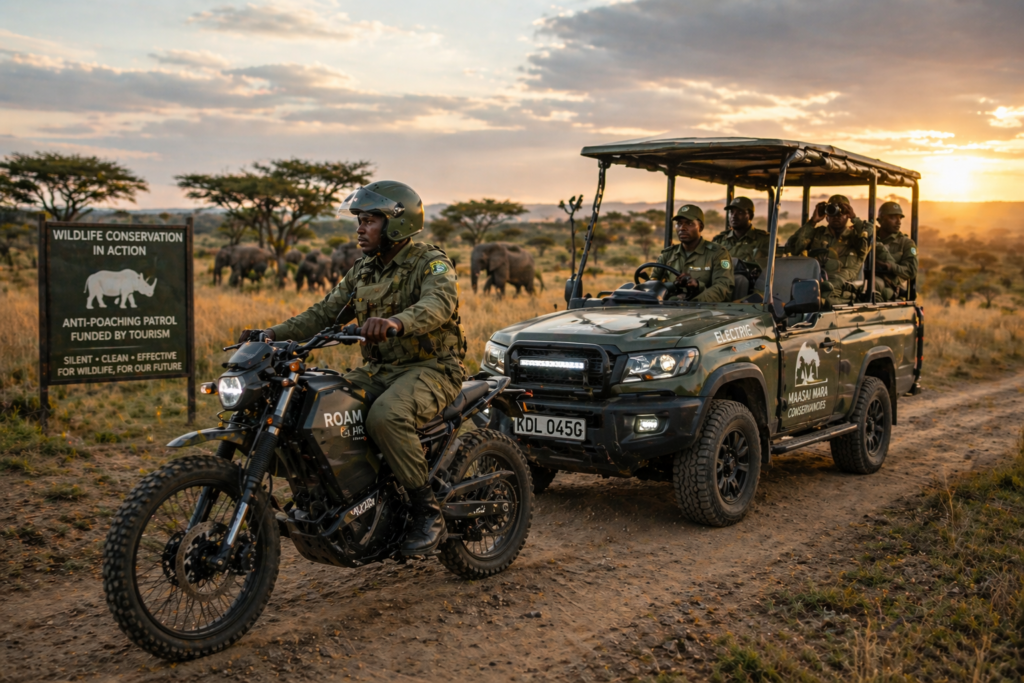
Electric safari vehicle and ranger motorbike used for anti-poaching patrols in Kenya conservation areas
From Boda Bodas to Anti-Poaching Patrols
The wildlife economy’s financial model depends on infrastructure most travel articles never discuss: how do rangers track poachers across 100,000 acres at night? How do lodges cut fuel costs enough to make remote operations economically viable? How do carbon credits generated in the Chyulu Hills reach a buyer in California with a verifiable audit trail?
In 2026, a significant share of the answers are being built in Nairobi. Roam Electric — founded in 2017 to convert diesel safari vehicles to electric, now East Africa’s largest EV manufacturer — launched the Roam Air Gen 3 motorcycle on April 17, 2026. Ranger teams in the Maasai Mara now run silent anti-poaching patrols on Roam Air bikes: lower operating cost, zero emissions, and no engine noise broadcasting the patrol’s position.
The GPS fleet management architecture tracking boda boda riders in Nairobi’s morning traffic is the same system helping lodge managers check vehicle battery life before a full-day game drive. This isn’t green branding. As noted in the ‘Silent Infrastructure’ pillar in Section II, electric fleets reduce fuel-related operational risk by 75% compared to diesel — and that cost reduction is what funds the rest of the conservation model.
dMRV, Blockchain, and the Digital Carbon Trail
Carbon credit verification is one of the most operationally complex pieces of a diversified wildlife economy. A community conservancy wanting to sell carbon offsets needs to measure its sequestration, get it independently verified, register credits on Verra or Gold Standard, and find buyers — a process that previously took years and significant external consultant spend before the first dollar arrived.
Nairobi-based startups are applying dMRV infrastructure — satellite monitoring, sensor arrays, GPS-verified data — to compress this cycle. The underlying logic: immutable digital records allow credit issuance, transfer, and retirement to be verified without centralised brokers. For a community conservancy in Laikipia selling offsets to an American corporate buyer, faster payment, lower transaction cost, and a traceable audit trail are the difference between a viable revenue stream and an aspirational one.
This is early-stage and the specific market remains fragmented. But the direction is confirmed, and it sits at the intersection of the two things Nairobi does exceptionally well: mobile-money infrastructure and engineering for African terrain. The wildlife economy benefits from both.
The strategic link
The traveler who books a carbon-negative lodge in Kenya in 2026 is participating in a financial architecture that — if it scales — makes wildlife-based land use economically dominant across East Africa. Nairobi’s engineers are part of that architecture. That’s a supply chain.
VII. A Framework for the American Impact Traveler
American HNWIs and family foundations are among the fastest-growing segments of conservation-led luxury travel. The profile: already traveled, already passionate about wildlife, increasingly asking the question their financial advisors ask about any capital deployment — what is the return, and how do I verify it?
The Impact Traveler’s Checklist: 2026 Edition
Use these criteria to evaluate a property before booking. If an operator cannot answer these questions clearly, your spend may be “consumptive” rather than “regenerative.”
- Revenue Model: Is the operation single-stream (photography only) or diversified? COVID-19 demonstrated that single-stream models collapse in crises; ask if they have secondary revenue like carbon credits or sustainable ranching.
- Community Equity: Are local communities owners, employees, or neither? Ownership—not just employment—is the only structure that produces durable financial returns and long-term land stewardship.
- Impact Reporting: Does the lodge publish a third-party verified impact report? Request this document before booking. Operators with “integrity” will send their audited data (like The Long Run or STTA assessments) without hesitation.
- Carbon Structure: Is the property carbon-negative, carbon-neutral, or carbon-unrated? Carbon-negative (verified structural reduction) is the gold standard; offset-based “neutrality” is often a baseline. These are not interchangeable claims.
- Conservation Specificity: Can they name the specific species, landscape, and anti-poaching program your bed-night fee funds? Vague commitments like “supporting wildlife” are not verifiable impact.
- Tech Infrastructure: Does the lodge utilize EV vehicles, solar micro-grids, or dMRV (digital Monitoring, Reporting, and Verification) tools? This signals a structural investment in sustainability rather than cosmetic marketing.
- The Survival Question: If tourism stopped tomorrow, what would keep this place alive? The best lodges have a resilience plan involving carbon revenue, community enterprise, or research partnerships. That resilience is what you are actually funding.
| Three Red Flags Before You Book 1. ‘100% community benefit’ with no audited dividend trail. If a lodge claims this but cannot show you a third-party verified distribution report, treat it as a marketing claim, not a financial one. 2. ‘Carbon neutral’ based solely on purchased offsets. Carbon-neutral via credits and carbon-negative via structural reduction are different in the same way a diet pill and actual fitness are different. Ask which one applies. 3. Conservation ‘partnerships’ with no named programs. ‘We support local conservation’ is not a verifiable claim. ‘We fund 480 Maasai Wilderness Conservation Trust patrol hours per month’ is. The difference is accountability. |
▶ For camp-by-camp analysis of Kenya’s electric safari lodges — including which properties have full EV fleets and which are still mixed diesel — see our Electric Safari Kenya Guide
VIII. What ‘Luxury’ Means When the Ledger Is Open
There is a version of this story that ends with a feel-good paragraph about elephants. This is not that version.
The wildlife economy argument is a financial argument. It runs on the same logic as any other capital allocation decision: wildlife-based land use needs to produce better returns than the alternatives, spread those returns to the people who control the land, and prove the numbers with documentation robust enough to survive scrutiny.
When that’s true, conservation wins the land-use competition. When it’s not, the land goes to the highest alternative bidder — which, at the current 30:1 ratio of nature-negative to nature-positive global finance, usually means extractive industry.
The operations in this piece have figured it out
Diversified revenue, community ownership, audited impact reporting, and infrastructure investment that compounds over time. Most of the luxury safari sector hasn’t. The gap between the two is what a well-placed booking fills — and what a poorly-placed one fails to address regardless of the room rate.
Strip everything else away and the question is simple: would this landscape still have funding if you didn’t show up? The best lodges in Africa can answer yes. That’s what you’re actually paying for.
In 2026, the traveler who asks hard questions before booking is the most valuable customer the conservation-led tourism sector has. They come back. They refer their networks. They fund the next generation of infrastructure through repeat spend and targeted philanthropy. The wildlife economy doesn’t need more passive visitors. It needs more informed ones.
▶ Ready to invest in the landscape? Start with the checklist in Section VII. Ask your travel specialist which camps can answer every question on it without hesitation and with documentation. The ones that can are the ones worth your itinerary.
FAQ: Africa Wildlife Economy
What is the African wildlife economy?
The combined system of revenues generated by wildlife-based land use: photographic tourism, carbon markets, game harvesting, live animal sales, sustainable agriculture, research partnerships, and community enterprise.
Tourism contributes $168 billion to Africa’s GDP annually (ICRT/WTM Africa 2026). The total wildlife economy, including non-tourism streams, is substantially larger — and substantially under-capitalized against the $571 billion annual NbS target set by UNEP for 2030.
What is ‘beneficiation’ in African conservation?
The process by which raw resources — wildlife and landscape — are transformed into higher-value products that benefit local communities directly. In practice: measuring, minimizing, and reporting the gap between what a traveler spends and what a community receives. !Xaus Lodge’s ZAR 2M+ verified annual community benefit is the current benchmark.
What is dMRV and why does it matter?
Digital Monitoring, Reporting, and Verification — the infrastructure layer that makes conservation claims investable. Satellite land-cover monitoring, GPS-verified ranger records, sensor-based carbon measurement, and mobile-money-linked community payments feeding into a digital ledger any auditor can interrogate.
For Africa’s conservancies, dMRV is the difference between a carbon credit that a California corporate buyer trusts and one they won’t touch.
What is Return on Impact (ROI) in conservation travel?
The framework impact investors and philanthropic travelers use to evaluate whether their spend produces measurable outcomes: ranger hours funded, species populations stabilized, community school places created, carbon sequestered. It applies the logic of financial ROI — what went in, what came out, how do I verify — to non-financial metrics. Singita and Campi ya Kanzi are among the operations that publish this data in auditable form.
What is the UNEP State of Finance for Nature 2026?
Published January 2026, UNEP’s ‘Nature in the Red: Powering the Trillion Dollar Nature Transition Economy’ tracks global finance flows to nature-based solutions and finds that $7.3 trillion flows annually into nature-negative activities — 30 times the $220 billion currently reaching NbS.
To meet global climate, biodiversity, and land restoration targets, NbS investment must increase 2.5 times to $571 billion annually by 2030. Africa’s wildlife economy is one of the largest operational models for deploying that capital effectively.
Who is Judy Kepher-Gona and why does her analysis matter?
Founder and lead consultant of Sustainable Travel & Tourism Africa (STTA), Honorary Professor of Sustainable Tourism at Nottingham University Business School since August 2025. Her appointment bridges 18 years of East African field practice — Kenya Wildlife Service, first African eco-certification scheme, GSTC board — with global academic frameworks.
STTA’s Africa Sustainable Tourism Trends 2026 (January 2026) is the practitioner foundation the ICRT white paper’s recommendations sit on. For American investors and designers, her work is the on-the-ground verification layer for every claim this article makes about community-led conservation in East Africa.
What is the ICRT/WTM Africa 2026 white paper?
A major report by the International Centre for Responsible Tourism (ICRT Global), launched at WTM Africa 2026 in Cape Town. It argues Africa’s wildlife is a globally significant economic asset whose potential is under-realized because too many operations rely on single-stream photographic tourism. It calls for diversified revenue models, community stewardship structures, and tourism practices integrating local supply chains. Case studies: !Xaus Lodge (South Africa), Mount Etjo (Namibia), Foxes Safaris (Tanzania).