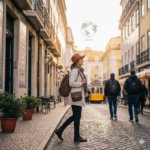

From safari sunrises to beach sunsets, ancient cultures to wildlife wonders—here’s how I explored two incredible East African countries as a solo woman traveler.
Africa isn’t one place—it’s 54 countries, thousands of cultures, landscapes that range from snow-capped mountains to endless deserts, from tropical beaches to savannahs teeming with wildlife. As a solo female traveler, I found warmth, safety (with smart precautions), adventure, and a sense of freedom I’d never experienced before.
Watching the moonrise over the Indian Ocean in Diani, where the white sands feel like silk and the turquoise fades into starlight, I understood that some places don’t just welcome you—they remind you how to breathe.
This guide covers my journey through two extraordinary East African countries: Kenya and Tanzania. Each offered something unique, and together, they painted a picture of Africa’s incredible diversity.
Also, related to this guide is my journey through Botswana and Namibia in Southern Africa.
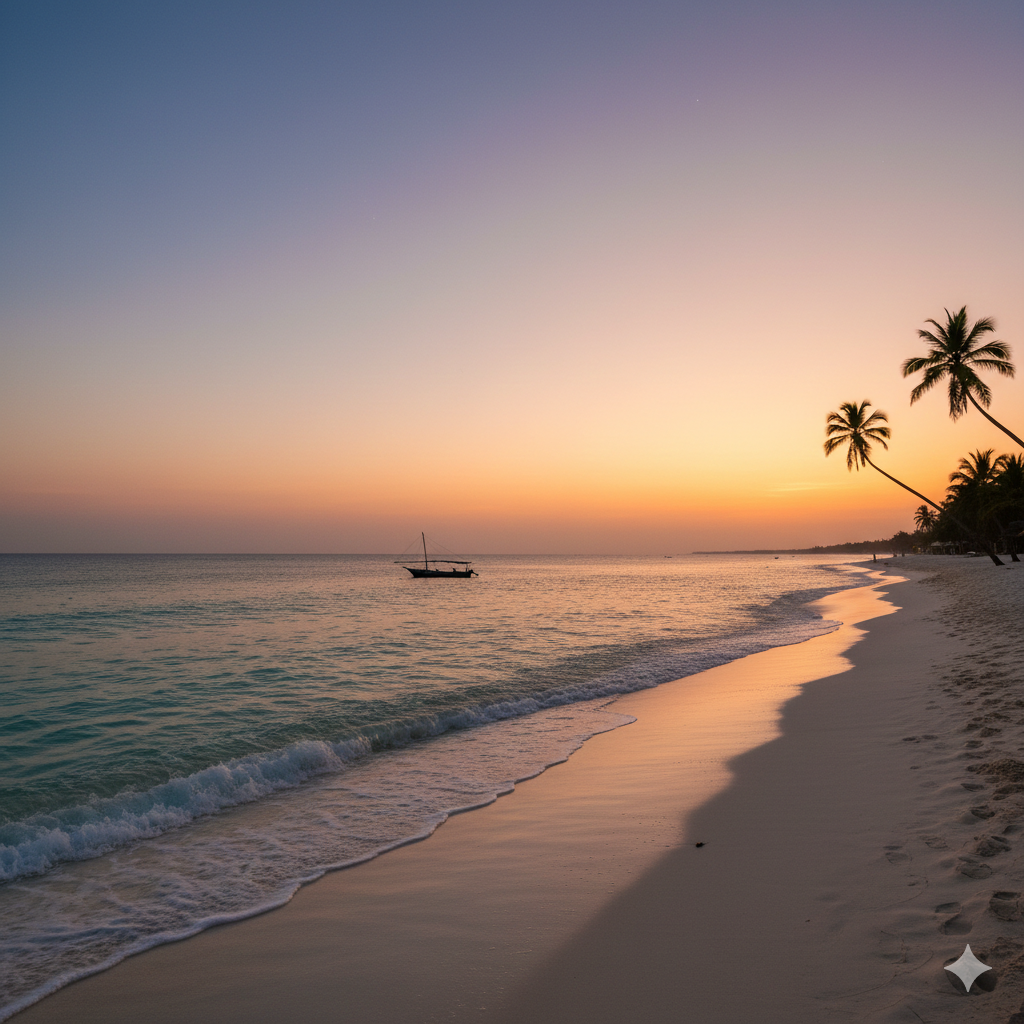
Diani Beach Kenya at sunset
What You’ll Experience:
- Close encounters with lions, elephants, and giraffes
- Summiting Africa’s highest peaks
- Pristine beaches and turquoise waters
- Ancient cultures and modern cities
- Friendliest people you’ll ever meet
Whether you’re feeding giraffes in Nairobi, summiting your first mountain, snorkeling with sea turtles, or simply watching the sun melt into the Serengeti, East Africa is waiting to remind you how big the world is—and how capable you are of exploring it.
The adventure of a lifetime isn’t something you find. It’s something you decide to live.
Is Africa Safe for Solo Female Travelers?
Yes—with the right precautions. I’ve traveled solo through all five countries and felt safer than I did in some European cities. Here’s what I learned:
- Research is your best friend
- Trust your instincts always
- Stay in reputable accommodations with good reviews from other solo female travelers
- Use registered taxis or ride-sharing apps
- Dress modestly in conservative areas
- Join group tours for safaris and treks
- Keep valuables secure and out of sight
- Avoid walking alone after dark in cities
- Connect with other travelers—solo doesn’t mean lonely
Now, let’s dive into the adventure.
Kenya: Wildlife & Wonder
Kenya is Best for: Safari lovers, wildlife photographers, beach seekers, mountain trekkers, Maasai culture enthusiasts.
Travel tip: Always use a travel company and be more vigilant, since some locals may take advantage to overcharge you.
Perfect Time to Visit:
- Safari (Maasai Mara): July-October (Great Migration), January-February (calving season)
- Beach (Diani): December-March, June-October
- Mount Kenya: January-February, August-September
Visa: eVisa, Electronic Travel Authorization (eTA) required ($35 USD), apply online before arrival
The Kenya Vibe
Kenya is where Africa’s wild heart beats loudest. This is the land of the Great Migration, Big Five safaris, Maasai warriors in vibrant red shukas, and some of East Africa’s most beautiful beaches. From the bustling streets of Nairobi to the endless plains of Maasai Mara, from the white sands of Diani Beach to the glaciers of Mount Kenya, this country offers diversity that’s hard to match.
Kenya also has a thriving expat and tourism community, driven by its economic, cultural, and natural attractions, making it one of the easiest African countries for first-time solo travelers. English is widely spoken, the infrastructure is solid, and there’s a well-established backpacker trail.
My Kenya Journey
I spent three weeks in Kenya, dividing my time between Nairobi’s urban energy, Maasai Mara’s wildlife spectacle, Diani Beach’s coastal paradise, and a challenging trek up Mount Kenya.
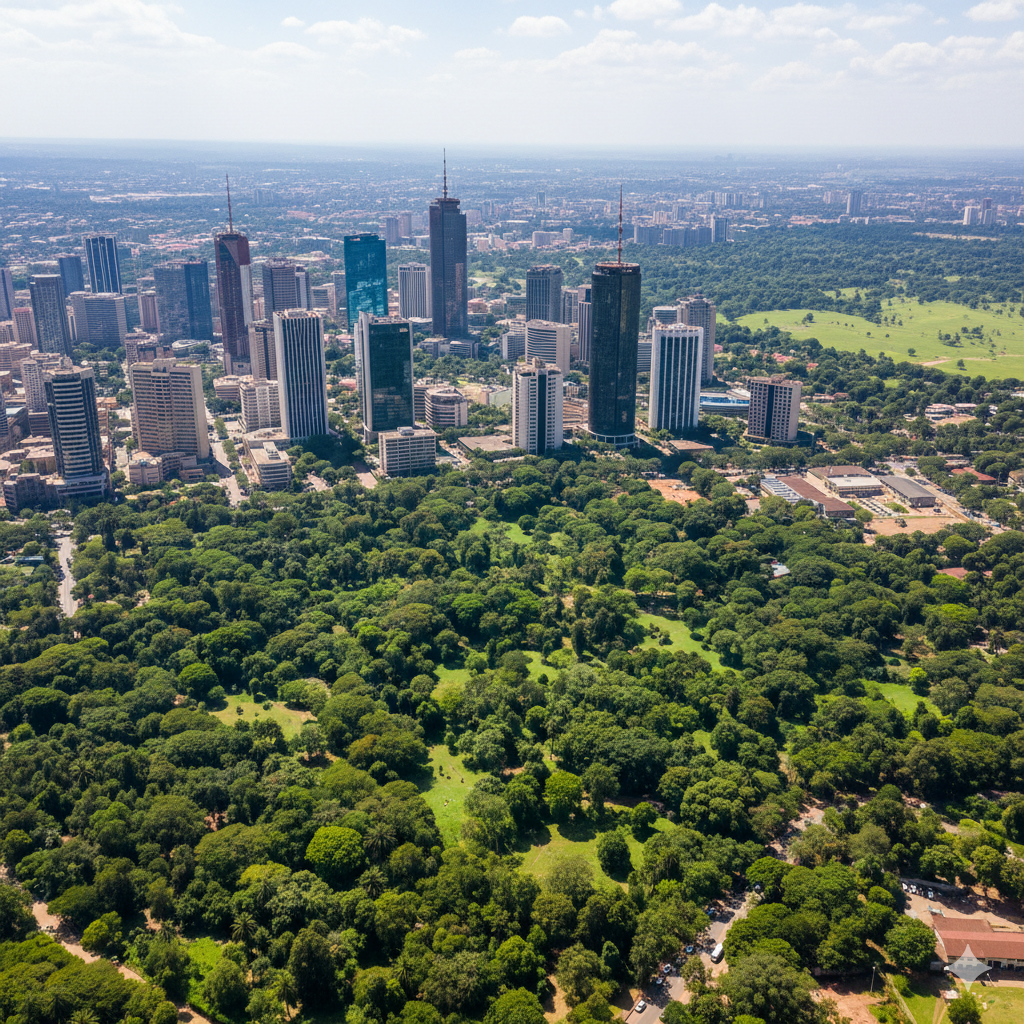
Nairobi City skyline
Nairobi: The Green City in the Sun
Nairobi is Best for: Urban explorers, giraffe lovers, museum buffs, safari launch points
Where I Stayed: Wildebeest Eco Camp in Karen—a safe, social hostel in Nairobi’s leafy suburbs, 24/7 security, organized safaris, and a cozy fireplace lounge. It’s about 30 minutes from downtown but worth it for the peace, safety, and proximity to Giraffe Centre and Karen Blixen Museum.
Day 1 in Nairobi – Giraffes, History, and Urban Energy
I arrived at Jomo Kenyatta International Airport around noon, cleared customs (eVisa made it smooth), and took an Uber to Wildebeest Eco Camp. First impression? Nairobi is loud, chaotic, and alive.
After settling in, I headed straight to the Giraffe Centre in Karen. Feeding Rothschild giraffes from a raised platform—their long purple tongues tickling my palm—was pure joy. These gentle giants leaned in close, their eyelashes impossibly long, and I couldn’t stop giggling like a kid.
Standing eye-to-eye with a giraffe, feeling its gentle breath on my face—that’s the moment Kenya became real for me.
Next door, I visited the Karen Blixen Museum, the colonial farmhouse where the author of Out of Africa lived. The gardens are serene, and the museum offers a complex look at Kenya’s colonial history. I spent about an hour there, reflecting on the intersection of beauty and painful history.
Lunchtime
Lunch was at The Talisman Restaurant, a garden oasis serving farm-to-table cuisine. The avocado and feta salad was divine, and dining solo felt completely comfortable with attentive, but not intrusive service.
In the afternoon, I joined a Nairobi City Walking Tour with Nairobi Urban Adventures—a small group of eight led by James, a local guide with infectious enthusiasm. We explored downtown Nairobi, visited the colorful Maasai Market (where I bargained for beaded bracelets), and learned about Kenya’s independence at Uhuru Park.
I ended my day at the Sarova Stanley Hotel’s Thorn Tree Café, famous for its acacia tree where travelers once left messages. I journaled over Kenyan coffee as the sun set, feeling both exhilarated and slightly overwhelmed by the city’s energy.
Safety Note: Nairobi requires street smarts. Locals joke about “Nai-robbery,” and while it’s exaggerated, petty theft is real. I used Uber and a travel company, kept my phone hidden, left jewelry at the hostel, and avoided walking downtown after dark. The Karen and Westlands neighborhoods felt much safer.
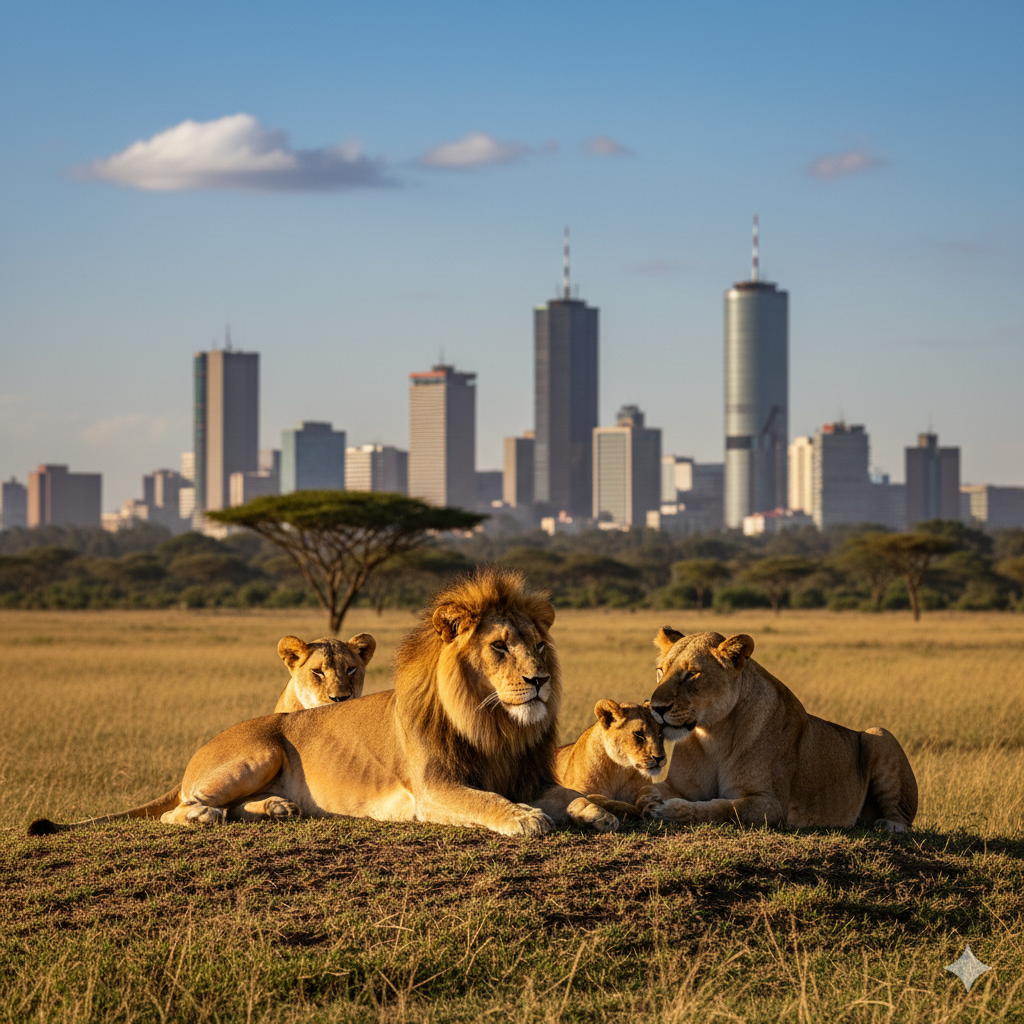
My experience in Nairobi National Park
Day 2 – Safari in the City and Baby Elephants
I woke before dawn for a game drive in Nairobi National Park—the only wildlife park within a capital city in the world. Our van departed at 6 AM, and within 20 minutes of entering the park, we spotted lions lounging under acacia trees with Nairobi’s skyline glittering behind them. Surreal.
We also saw giraffes, zebras, buffalo, and—most thrilling—a black rhino grazing in the distance. My guide, Daniel, explained the challenges of protecting wildlife so close to urban sprawl. It was a powerful reminder of Kenya’s conservation efforts.
Seeing lions with skyscrapers in the background felt like nature and civilization made a truce, just for a moment.
Back at the hostel by 11 AM, I freshened up and headed to the David Sheldrick Wildlife Trust, an elephant orphanage that rehabilitates baby elephants who’ve lost their parents to poaching. The one-hour public viewing (11 AM-12 PM daily) was heartwarming—watching the tiny elephants play, splash in mud, and drink from giant bottles made my heart swell.
I “adopted” an elephant named Maktao for $50/year, which supports her care and reintroduction into the wild.
Lunch at Carnivore Restaurant was a Nairobi institution—endless platters of nyama choma (grilled meat), though vegetarian options were available. The lively, communal atmosphere made solo dining fun.
That evening, I explored the Kazuri Beads Workshop in Karen, where local women craft beautiful handmade pottery and jewelry. I bought a ceramic bowl, feeling good about supporting fair wages and women’s empowerment.
Dinner was at Mama Oliech Restaurant in Hurlingham—famous for fried tilapia fish and ugali (cornmeal staple). The no-frills spot was packed with locals, and a Kenyan family invited me to share their table. That’s the warmth of Kenyan hospitality.
Day 3 – Markets and Departure Prep
My last morning in Nairobi, I visited the Maasai Market at Village Market shopping center (it rotates locations daily—check online). I bargained for Maasai shukas (traditional blankets), beaded jewelry, and carved wooden animals. Bargaining is expected; I started at 50% of asking price and met somewhere in the middle with a smile.
Lunch at Java House, a Kenyan coffee chain with reliable food and fast Wi-Fi, was perfect for planning my Maasai Mara safari.
I also visited the Nairobi National Museum to dive deeper into Kenya’s history, from ancient fossils to contemporary art. The Snake Park next door was a quirky bonus.
That evening, I packed for my safari, mentally preparing for the adventure ahead.
Nairobi Quick Hits:
Must-Do Experiences:
- Feed giraffes at Giraffe Centre
- Safari at Nairobi National Park (lions with skyline views!)
- Visit baby elephants at David Sheldrick Wildlife Trust
- Breakfast at Giraffe Manor (book months ahead)
- Shop at rotating Maasai Markets
Cultural Stops:
- Karen Blixen Museum (Out of Africa history)
- Bomas of Kenya for traditional dance performances
- Nairobi National Museum
Where to Eat:
- Nyama choma at Carnivore or local joints
- Fried tilapia and ugali at Mama Oliech
- Fresh juices at roadside stands (passion fruit is divine)
- Kenyan coffee at Thorn Tree Café
Nairobi Pro Tips:
- Use Uber or Bolt apps (safer and cheaper than street taxis)
- Eat at local spots for authentic meals under $5
- Book safari tours through your hostel for group discounts
- Stay in Karen or Westlands for safety
- Emergency: 999 or 112
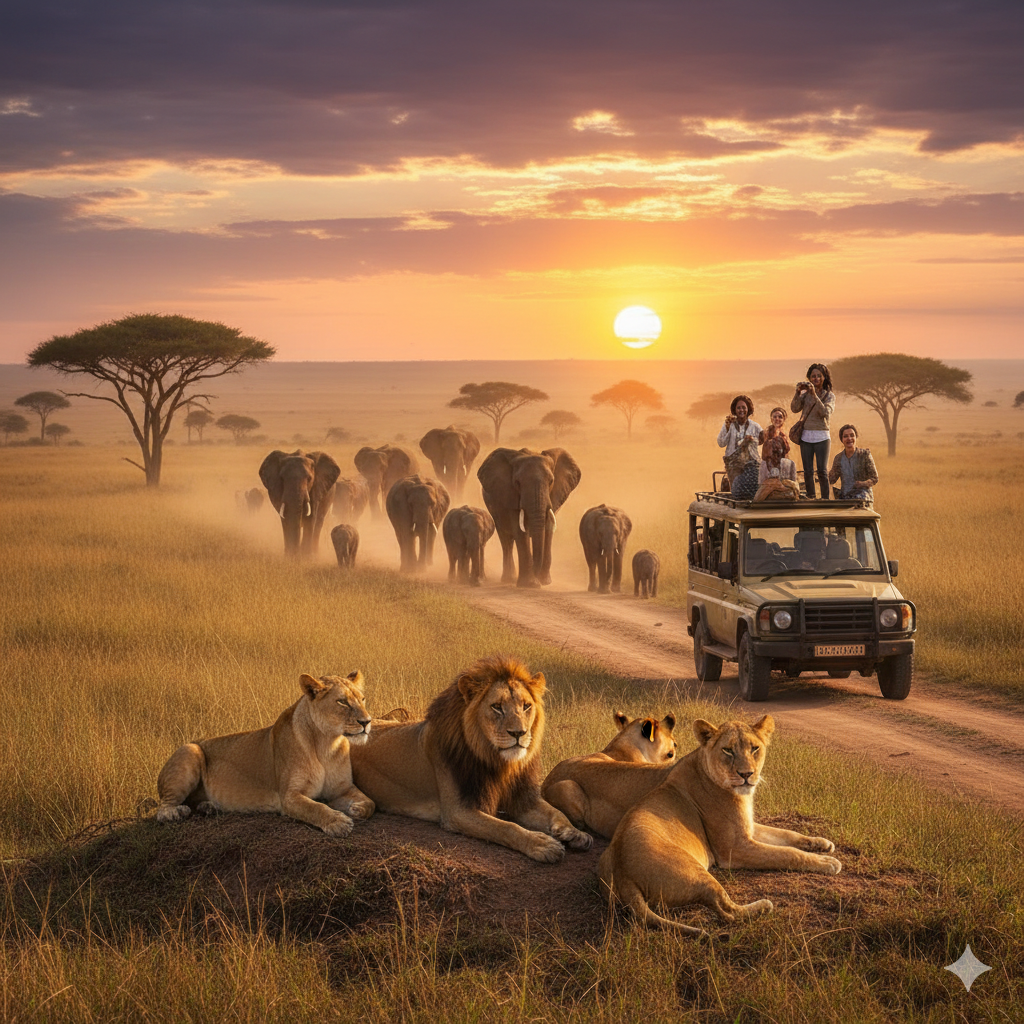
Safari experience in Maasai Mara with a lion pride and elephants crossing the plains
Maasai Mara: Africa’s Greatest Wildlife Show
Maasai Mara is Best for: Safari enthusiasts, Great Migration witnesses, Big Five spotters, photographers
Where I Stayed: Mara Explorers Camp—a mid-range tented camp along the Talek River with comfortable beds, hot showers, and delicious buffet meals. Solo travelers are warmly welcomed.
I booked a 3-day/2-night safari package through Wildebeest Eco Camp ($350 USD all-inclusive: transport, accommodation, meals, game drives). Sharing a safari vehicle with other solo travelers kept costs down and made the experience social and fun.
Day 1 – Journey to the Mara
At 7 AM, our safari van departed Nairobi for the 5-hour drive to Maasai Mara. The journey—bumpy roads, stunning Rift Valley views, roadside stops—was an adventure itself.
We arrived at Mara Explorers Camp around 1 PM for lunch, then departed for our first game drive at 3:30 PM.
The moment we entered the reserve, time stopped. A herd of elephants crossed the road, babies tucked safely between their mothers. I held my breath.
Within the first hour, we spotted giraffes, impalas, topis, and a leopard lounging in a tree, tail hanging lazily. I clicked photos until my camera battery died.
As the sun melted into the horizon, painting the savannah gold and amber, our guide Joseph stopped the van. We sipped sundowners (gin and tonics) while zebras grazed nearby. Surreal.
Dinner at camp was served under the stars, with a bonfire crackling. The night sounds—hippos grunting, hyenas cackling, lions roaring—were both thrilling and terrifying. But I felt safe, surrounded by armed guards and fellow travelers.
Day 2 – Lions, Cheetahs, and River Crossings
We woke at 5:30 AM for a sunrise game drive. The Mara at dawn—soft light, active animals, profound peace—is a photographer’s dream.
Within 20 minutes, Joseph spotted a pride of lions feasting on a fresh wildebeest kill. We watched, mesmerized, as cubs playfully tugged at the carcass. Circle of life in real-time.
Watching a lioness lick her bloodied paws while her cubs tumbled nearby—it’s brutal and beautiful and humbling all at once.
Later, we witnessed a cheetah stalking gazelles. The tension was palpable as she crept low through the grass, muscles coiled. Though the hunt failed, her speed and grace were breathtaking.
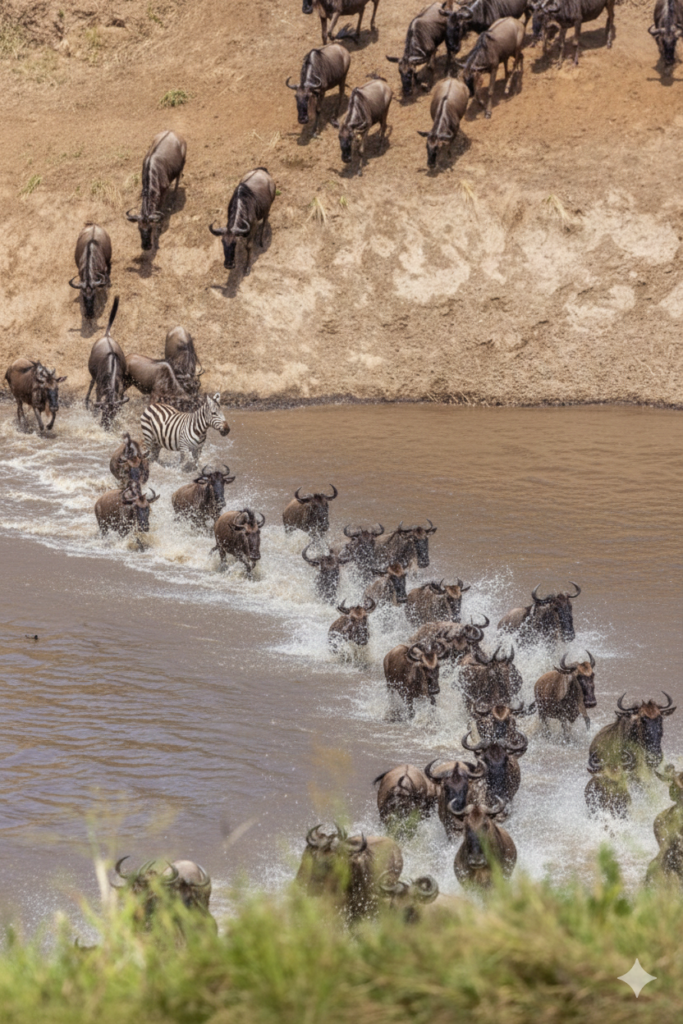
Around mid-morning, we reached the Mara River, famous for Great Migration crossings. Though it was early September and most wildebeest had passed, a few hundred still lingered. After an hour, a brave wildebeest plunged in, triggering a chaotic stampede. Crocodiles lunged, some wildebeest didn’t make it, others scrambled up the opposite bank triumphant. Chaotic, emotional, unforgettable.
We returned to camp for lunch and siesta. I napped while hippos splashed in the river below.
The afternoon drive brought more wonders: elephants with tiny calves, a tower of giraffes, and a leopard kill stashed high in a tree.
That evening, we visited a Maasai village. The warriors, dressed in vibrant red shukas, welcomed us with traditional jumping dances. We toured their bomas (mud and cow dung huts), learned about their semi-nomadic lifestyle, and I tried (and failed) to start a fire with sticks. The visit felt respectful and educational, with a portion of fees supporting the community. I bought a handmade beaded necklace from a Maasai woman named Naserian.
Day 3 – Final Drive and Return
Our last game drive started at 6 AM. Joseph’s mission: find a rhino. After an hour, we spotted two black rhinos grazing in thick bush—distant but unmistakable. Prehistoric and powerful.
We also found a coalition of male cheetahs lounging together, rare and beautiful.
By 10 AM, we returned to camp, packed up, and began the journey back to Nairobi. I dozed in the van, replaying the magic in my mind.
Maasai Mara Quick Hits:
Must-Do:
- Great Migration (July-October)
- Spot Big Five (lion, elephant, buffalo, leopard, rhino)
- Sundowner game drives
- Maasai village visit
- Hot air balloon safari (splurge—$450 USD)
Safari Pro Tips:
- Book group safaris (cheaper than private)
- Mid-range tented camps offer great value ($200-350 for 3 days all-inclusive)
- Pack neutral colors (khaki, olive, beige—avoid bright colors/black)
- Warm layers for early morning drives
- Good camera with zoom lens
- Power bank (limited charging)
- Listen to your guide—they know the wildlife
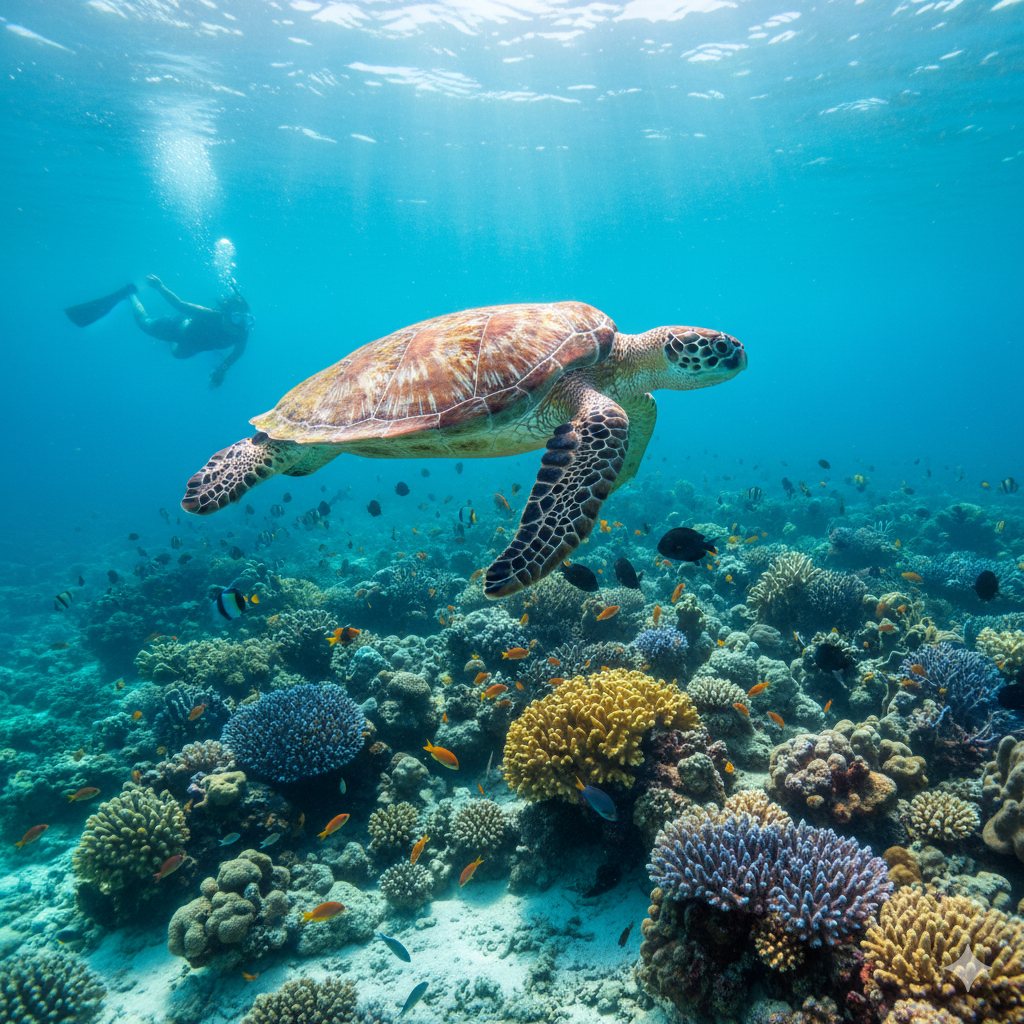
Snorkeling with sea turtles at Kisite Mpunguti Marine Park Kenya
Diani Beach: Coastal Paradise
Diani Beach is Best for: Beach lovers, water sports enthusiasts, post-safari relaxation, snorkeling
Where I Stayed: Stilts Backpackers—a colorful, beachfront hostel with female-only dorms, beach bar, yoga classes, and pool. Treehouse vibes, friendly staff, and literally steps from the beach.
I flew from Nairobi to Mombasa (1 hour, $60 USD with Jambojet), then took a taxi to Diani Beach (1.5 hours).
Day 1 – Arriving in Paradise
I arrived around noon, checked in, and immediately hit the beach. The Indian Ocean was impossibly blue, the sand soft as flour. I spent the afternoon swimming, sunbathing, and chatting with a Dutch solo traveler learning to kitesurf.
Lying on Diani’s white sand, listening to the waves, I felt every ounce of safari dust wash away.
Lunch was fresh grilled fish and coconut rice at a beachside spot. That evening, I joined hostel friends for sunset cocktails at Forty Thieves Beach Bar, a legendary spot built on stilts over the ocean. Passion fruit mojitos and pink skies.
Day 2 – Snorkeling with Turtles
I joined a snorkeling trip to Kisite-Mpunguti Marine National Park (booked through hostel, $80 USD including transport, guide, gear, lunch). The boat ride took an hour, and we anchored near coral reefs teeming with life.
I dove in and was immediately surrounded by parrotfish, angelfish, clownfish darting among anemones. Our guide pointed out a green sea turtle gliding gracefully, and I swam alongside it for a few magical minutes. Dolphins leaped in the distance on the boat ride back.
Lunch was served on Wasini Island, a tiny, car-free island where we feasted on Swahili seafood—grilled lobster, coconut crab curry, spiced rice. Heaven.
Back at Diani, I treated myself to a beachside massage ($20 for an hour). Pure relaxation.
Day 3 – Adventure and Chill
I tried stand-up paddleboarding in Diani’s calm waters (fell in more than I’d like to admit). I also visited the Colobus Conservation Center, a sanctuary for endangered Angolan colobus monkeys. The black-and-white monkeys swung through trees around Diani.
For lunch, I ate at Yul’s Restaurant for Swahili coconut beans, chapati, and mango juice.
That afternoon, I lounged on the beach with a book, occasionally dipping into the warm ocean. Sometimes the best travel moments are the quiet ones.
As the sun set, I joined a beach bonfire at Stilts. We roasted marshmallows, played guitar, and swapped travel stories under the stars. Summer camp for adults.
Day 4 – Kitesurfing Farewell
My last day, I tried kitesurfing—a bucket list item. Diani’s consistent winds and shallow waters make it ideal for beginners. I took a 2-hour lesson with H2O Extreme ($100 USD), and while I spent most of the time face-planting into the ocean, I stood up on the board for a few glorious seconds. The rush was incredible.
After a final swim and lazy lunch, I packed up for my flight to Zanzibar.
Diani Beach Quick Hits:
Must-Do:
- Snorkel at Kisite-Mpunguti Marine Park
- Swim with sea turtles and dolphins
- Try kitesurfing or SUP
- Colobus Conservation Center
- Sunset cocktails at Forty Thieves
Pro Tips:
- Stay at hostels (dorms $15-25/night)
- Eat at local spots away from resorts
- Reef-safe sunscreen
- Avoid walking alone on deserted beaches at night
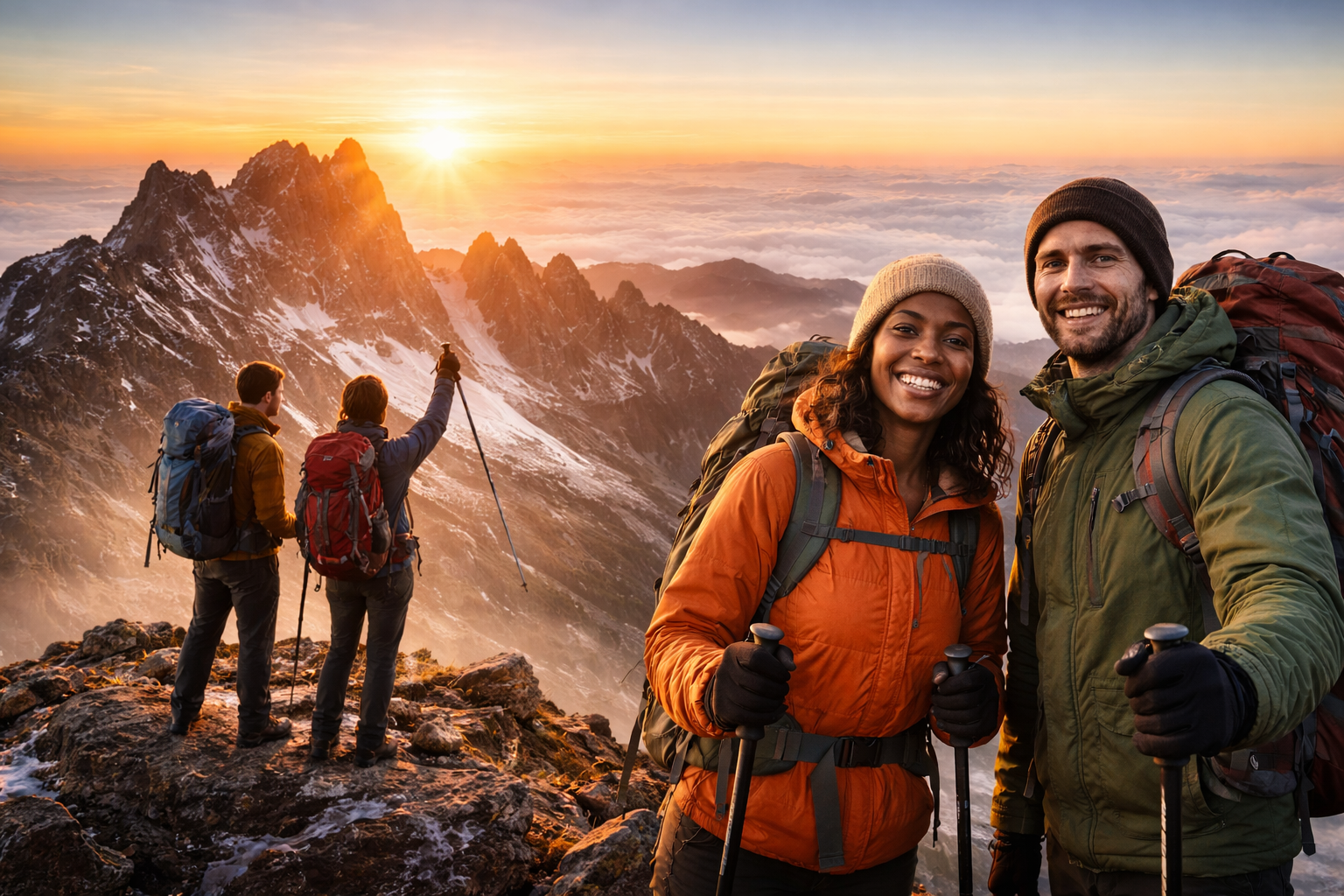
Mount Kenya Point Lenana sunrise trek
Mount Kenya: Africa’s Second Roof
Mount Kenya (5,199m / 17,057 ft)
Best for: Trekkers, high-altitude adventurers, UNESCO World Heritage lovers
Difficulty: Moderate to challenging
Perfect Time: January-February, August-September
I opted for the Sirimon-Chogoria Route (5 days, $800 USD including guides, porters, park fees, meals, camping gear). Solo trekkers must hire guides—it’s required and safer.
The Trek
Forest Trails & Acclimatization: Trekked through bamboo forests and moorlands to Old Moses Camp (3,300m). Altitude noticeable; drank lots of water.
Climbing Higher: Slow ascent to Shipton’s Camp (4,200m) with stunning glacier views. Altitude headache kicked in, but ginger tea helped.
Standing on point Lenana: Summit day! We woke at 3 AM and climbed Point Lenana (4,985m), the third-highest peak and the highest trekking peak. Reaching the summit at sunrise, watching the sun paint the glaciers gold, was one of my proudest moments.
Standing on Point Lenana, the world spread out below, I felt small and infinite all at once.
The Descent: Descended via the stunning Chogoria Route—you see waterfalls, alpine lakes, and giant groundsels. My legs were jelly, but the views made every step worth it.
Mount Kenya Tips:
- Acclimatize in Nairobi before climbing
- Pack warm layers (freezing at altitude)
- Diamox for altitude sickness (consult doctor)
- Hire reputable guides (Savage Wilderness, Mountain Rock Safaris)
- Female trekkers welcomed; some outfitters offer female guides
Kenya Budget Breakdown (3 weeks)
- Accommodation: $15-30/night hostels = $315-630
- Safari (3 days): $350
- Mount Kenya trek (5 days): $800
- Flights (Nairobi-Mombasa): $70
- Food: $10-20/day = $210-420
- Activities: $200-300
- Transport: $100-150
Total: $2,045-2,720 USD
Tanzania: Spice Islands & Summits
Tanzania is Best for: Kilimanjaro climbers, Serengeti safaris, Zanzibar beach lovers, culture seekers
Perfect Time to Visit:
- Safari: June-October, January-February
- Kilimanjaro: January-March, June-October
- Zanzibar: June-October, December-February
Visa: eVisa ($30 USD) or on arrival
The Tanzania Vibe
Tanzania is Kenya’s quieter, slightly more expensive neighbor. It makes up for epic landscapes and experiences. From the endless Serengeti plains to the Ngorongoro Crater’s wildlife-packed caldera, from Kilimanjaro’s snowy summit to Zanzibar’s spice-scented streets, Tanzania feels like Africa distilled to its essence.
Tanzania also feels more “untouched” than Kenya—fewer tourists, more wilderness, a slower pace.
My Tanzania Journey
I spent two weeks in Tanzania: one week summiting Kilimanjaro and exploring Arusha, and one week in Zanzibar.
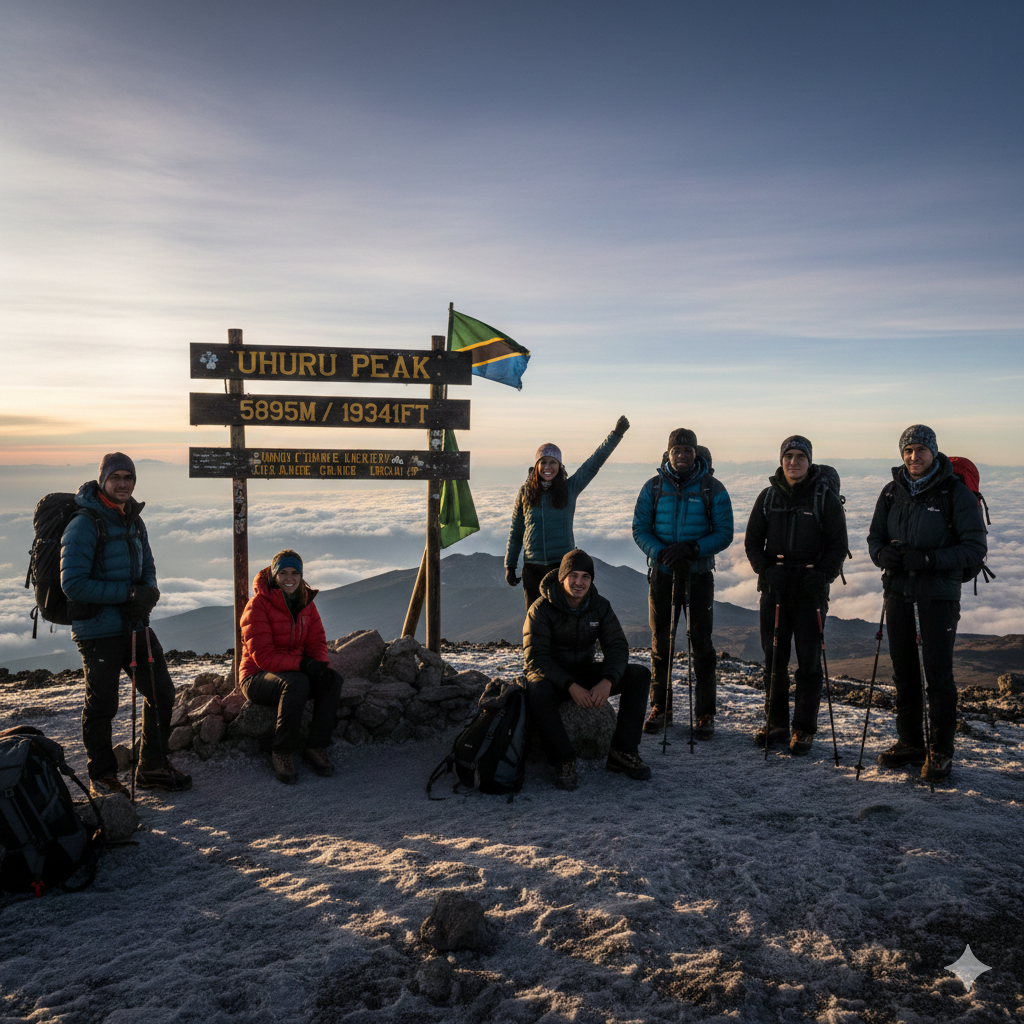
At Mount Kilimanjaro Uhuru Peak summit
Mount Kilimanjaro: Roof of Africa
Mount Kilimanjaro (5,895m / 19,341 ft)
Best for: Bucket-list climbers, endurance seekers, bragging rights
Difficulty: Challenging (altitude, not technicality)
Perfect Time: January-March, June-October
Kilimanjaro is Africa’s highest peak and one of the Seven Summits. It’s non-technical (no climbing gear needed), but the altitude is brutal. I chose the Machame Route (7 days), known as the “Whiskey Route” for its challenging terrain.
I booked through Tusker Trail ($2,500 USD for 7 days, all-inclusive). Solo climbers join group treks or hire private guides.
The Climb
The climb begins: Trekked through rainforests to Shira Camp (3,850m). Monkeys chattered overhead; the air smelled of moss and earth.
Acclimatization Days: “Climb high, sleep low” days to acclimatize. We hiked to Lava Tower (4,600m), then descended to Barranco Camp (3,960m). Altitude exhaustion was real.
Next Day: Tackled the Barranco Wall—a steep scramble requiring hands and feet. Terrifying and exhilarating.
Preparing for the Summit: Moved to Barafu Camp (4,673m), our base for the summit push. I barely slept—too nervous, too cold.
Uhuru Peak Sunrise: Summit night! We left at midnight, trekking by headlamp through scree and snow. Every step felt like moving through molasses. At sunrise, I reached Uhuru Peak (5,895m)—the Roof of Africa.
Standing on Uhuru Peak, tears freezing on my face, I realized I was capable of so much more than I ever imagined.
Descended to Mweka Camp, utterly destroyed but triumphant.
Kilimanjaro Tips:
- Book ethical operators (fair wages for porters)
- Train beforehand (cardio + hiking with weighted pack)
- Pole pole (slowly slowly)—the Swahili mantra
- Pack: sleeping bag rated to -10°C, thermal layers, trekking poles, snacks
- Solo women common; guides professional and respectful
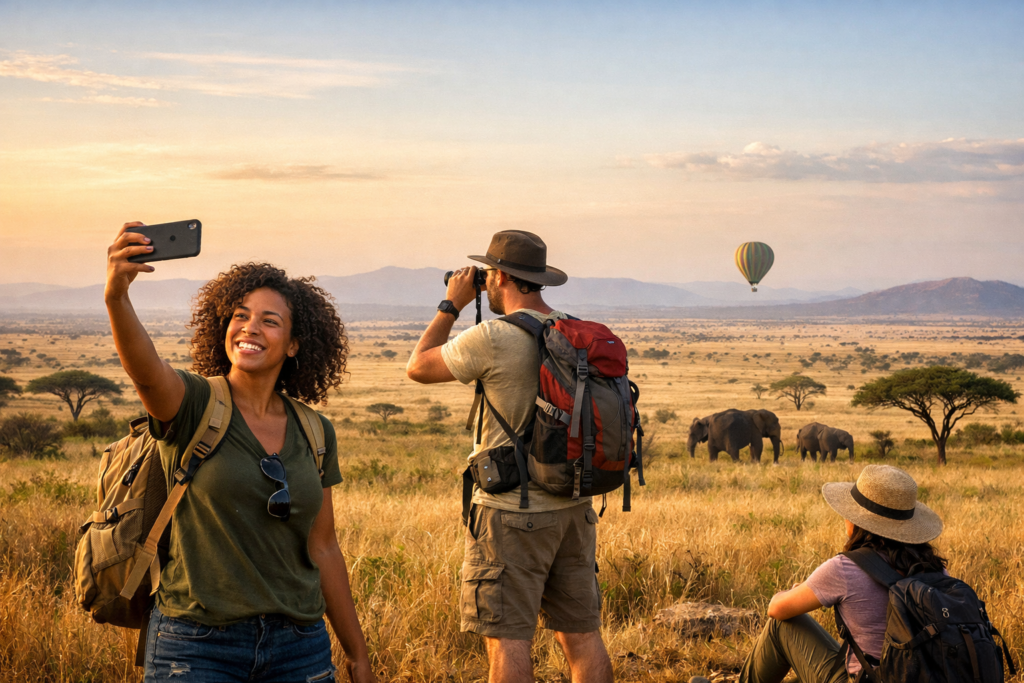
Serengeti plains stretching into the horizon
Serengeti National Park: The Endless Plains
Serengeti is Best for: Safari purists, Great Migration, predator sightings, solitude
I added a 4-day/3-night Serengeti safari after Kilimanjaro ($600 USD through budget operator). The Serengeti is larger and less crowded than Maasai Mara.
Highlights:
- Witnessed hundreds of thousands of wildebeest during migration
- Spotted a leopard draped over a tree at sunset
- Watched a pride of 12 lions lounging in the shade
- Saw cheetahs hunting in the golden grasslands
- Camped under the stars listening to lions roar
The Serengeti feels infinite—like the earth forgot to put boundaries on this place.
Serengeti Quick Hits:
- Best migration viewing: June-July (river crossings), December-March (calving)
- Budget camping safaris available ($400-600 for 3-4 days)
- Combine with Ngorongoro Crater for maximum wildlife
Zanzibar: The Spice Island
Zanzibar is Best for: Beach bliss, spice tours, history buffs, Swahili culture
Where I Stayed:
- Stone Town: Jambo Guest House—budget guesthouse with rooftop views, and female-only dorms
- Paje Beach: Airborne Kite Village—lively hostel for kitesurfers and backpackers
I flew from Kilimanjaro to Zanzibar (1.5 hours, $100 USD).
Day 1 – Stone Town Magic
I arrived in Stone Town, checked into Jambo Guest House, and wandered the UNESCO-listed streets—a maze of coral stone buildings, ornate wooden doors, hidden courtyards. I got lost more than once. That’s part of the magic.
I visited the House of Wonders (Beit-al-Ajaib), a grand palace turned museum showcasing Swahili culture. Next door, the Old Fort hosts cultural performances.
Lunch at Lukmaan Restaurant—cheap, delicious Zanzibari biryani, grilled fish, chapati. Packed with locals.
Walking through Stone Town’s winding alleys, I felt like I’d stepped into another century—spice-scented air, calls to prayer echoing, dhows bobbing in the harbor.
That evening, I joined a Stone Town Walking Tour—stories of sultans, slavery, spice trade. We visited the former slave market, now the Anglican Cathedral. Sobering and important.
I ended my night at Forodhani Gardens Night Market—a lively waterfront food market. I tried Zanzibar pizza (crispy, stuffed street food), sugarcane juice, grilled seafood while watching local kids dive into the harbor for coins.
Day 2 – Spice Tour and Prison Island
After breakfast, I joined a half-day spice tour ($25 USD). We visited a spice farm where I saw, smelled, and tasted cloves, cinnamon, vanilla, cardamom, nutmeg growing fresh. Our guide wove palm fronds into hats for us. I bought fresh spices—far cheaper and more fragrant than any store.
Crushing cloves between my fingers, the scent exploding, I understood why Zanzibar was once the world’s spice capital.
In the afternoon, I took a boat to Prison Island (Changuu Island)—20 minutes offshore. The island is home to giant Aldabra tortoises, some over 100 years old. I fed them greens and marveled at their ancient, wise faces. Beautiful beach for snorkeling too.
Sunset at Africa House Hotel rooftop—gin and tonic, watching the sky turn mango and rose over the Indian Ocean.
Dinner at Emerson Spice Rooftop Restaurant—splurge-worthy with candlelit tables, Swahili fusion dishes, live taarab music. Seafood curry perfection.
Day 3-5 – Paje Beach Bliss
I took a shared taxi (dalla-dalla) to Paje Beach on Zanzibar’s east coast—1.5 hours, chaotic, colorful, packed with locals and chickens.
Paje is a kitesurfer’s paradise—consistent winds, shallow turquoise lagoons. I checked into Airborne Kite Village and immediately felt the backpacker energy—beach volleyball, kites dancing, reggae music, community vibes.
Swam in bathtub-warm ocean, watched kitesurfers. Joined hostel seafood BBQ on the beach—grilled octopus, lobster, fish, Kilimanjaro beer, fresh coconut water. Watched sunset with new friends.
Paje’s waters are the color of melted aquamarine, so clear you can see your toes wiggle in the sand below.
Snorkeling trip to Mnemba Atoll ($60 USD including lunch). Spectacular coral gardens—neon fish, sea turtles, dolphins swimming alongside our boat. Tried kitesurfing lesson ($50 for 2 hours). The instructors were patient; the thrill of catching wind addictive.
My final day, I visited Jozani Forest to see the endangered red colobus monkeys. These playful, rust-colored monkeys swung through mangroves, unbothered by humans. Peaceful forest walk with boardwalks over swamps.
Returned to Stone Town, bought souvenirs at Darajani Market (colorful kangas, spices, baskets), final meal at 6 Degrees South waterfront restaurant.
Zanzibar Quick Hits:
Must-Do:
- Get lost in Stone Town’s maze
- Spice tour
- Giant tortoises on Prison Island
- Snorkel at Mnemba Atoll
- Sunset at Forodhani Gardens Night Market
- Beach life in Nungwi, Kendwa, or Paje
Pro Tips:
- Modest clothing in Stone Town (Muslim culture—cover shoulders/knees)
- Beachwear fine for Paje, Nungwi, Kendwa
- Dalla-dallas cheap transport
- Zanzibar very safe for solo women
Tanzania Budget Breakdown (2 weeks)
- Kilimanjaro climb: $2,500
- Serengeti safari (4 days): $600
- Accommodation: $15-30/night = $210-420
- Flights (internal): $100
- Food: $10-20/day = $140-280
- Activities: $150-200
Total: $3,700-4,100 USD
Essential Travel Tips for Solo Female Travelers in East Africa
Traveling solo through the heart of the Savannah is incredibly empowering, but it requires a blend of street smarts and cultural sensitivity. Here’s how to navigate Kenya and Tanzania with confidence.
1. Prioritize Your Arrival Logistics
The most vulnerable time for any solo traveler is the window between landing and checking into your accommodation.
- Pre-Book Transfers: Avoid haggling with airport taxi touts after a long flight. Use your hotel’s shuttle service or a reputable ride-hailing app.
- Ride-Hailing Apps: In Nairobi and Dar es Salaam, Uber and Bolt are reliable and safe.
- The “Yellow Taxi” Rule: If you aren’t using an app, only use official, registered taxis (often marked with a yellow stripe in Kenya). Always agree on the price before you get in.
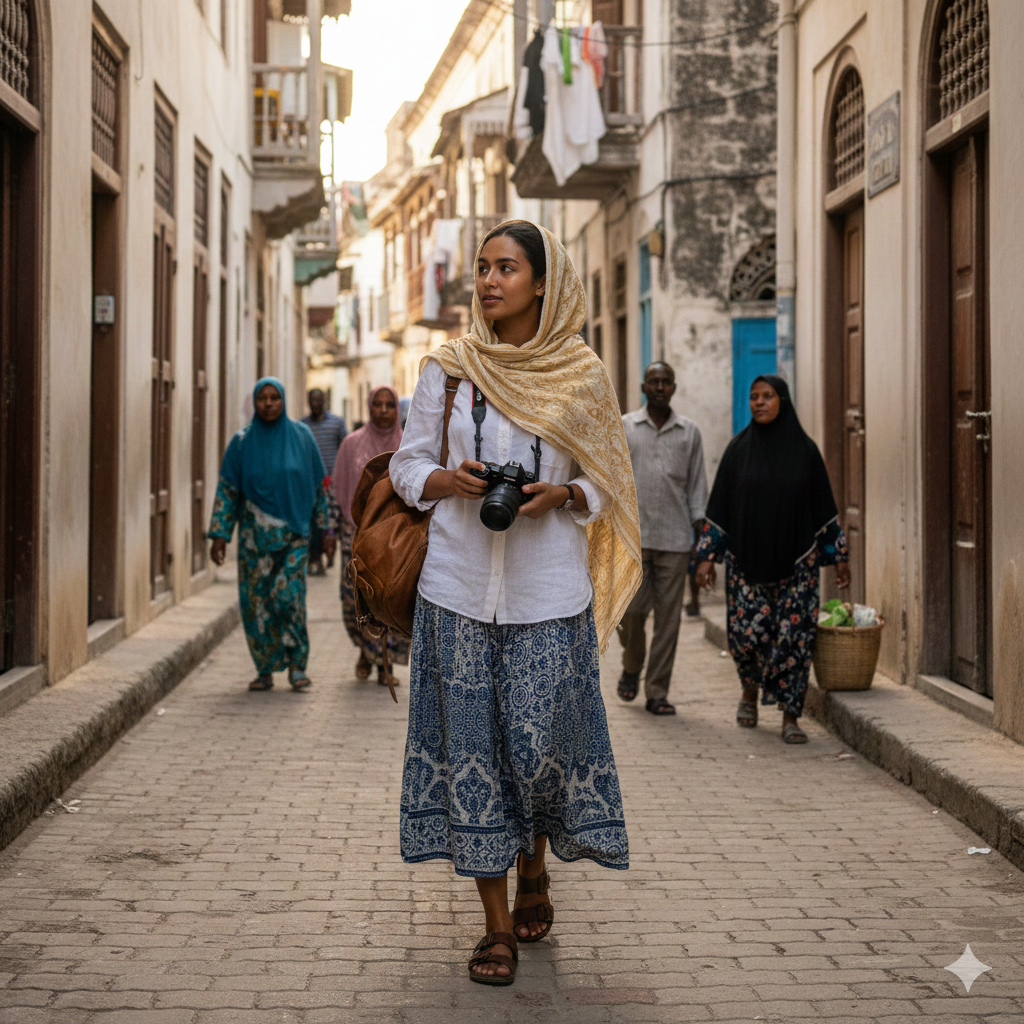
Coastal attire
2. Master the Art of “Modest Chic”
East African society is generally conservative, especially in rural areas and the coastal regions (like Mombasa, Lamu, and Zanzibar).
- Cover Up: Aim to keep your shoulders and knees covered. Loose-fitting linen trousers, midi skirts, and cotton t-shirts are your best friends—they keep you cool and respectful.
- The Multi-Purpose Scarf: Always carry a light scarf or kanga (traditional wrap). It’s perfect for covering up when entering a village, visiting a religious site, or shielding yourself from the sun.
- Beachwear Boundaries: Keep bikinis and short shorts for the resort or the beach. Walking through Stone Town or a local village in swimwear is considered highly disrespectful.
3. Safety & “Street Smarts”
While East Africans are famously hospitable, petty crime exists in major cities.
- Ditch the “Bling”: Leave expensive jewelry and flashy watches at home. Keep your smartphone tucked away when walking on busy streets; “phone snatching” is a common opportunistic crime.
- The “Wedding Ring” Trick: Many solo travelers wear a simple band on their ring finger. If asked if you’re married, a “yes” (even if white-lie) can often deter unwanted persistence or “marriage proposals.”
- No Solo Night Walks: This is a hard rule for most cities. Even if your destination is only a few blocks away, take a taxi or an Uber after dark.
- Avoid “The Hustle”: In tourist hubs, you’ll encounter “street guides” or “flycatchers” who are overly friendly. A polite but firm “Hapana, asante” (No, thank you) while continuing to walk is the best defense.
- The “No-Go” Zones: Be aware of specific neighborhoods. In Nairobi, be extra vigilant in the Central Business District (CBD), and if you must visit the slums, do so on a reputable guided tour.
4. Tech & Connectivity
Staying connected is your primary safety net.
- Get a Local SIM: Don’t rely solely on hotel Wi-Fi. In Kenya, Safaricom has the best coverage (and allows you to use M-Pesa, the ubiquitous mobile money system). In Tanzania, Vodacom or Airtel are top choices.
- Download Offline Maps: Apps like Google Maps or Maps.me are vital for tracking your route in a taxi to ensure the driver is heading the right way.
5. Socializing Without the Stress
- Communal Dining: When booking safaris or lodges, look for “eco-camps” or “boutique hostels” that offer communal dining. It’s the easiest way to meet other travelers and share a game drive without paying a “single supplement” fee.
- Join Group Tours: For big-ticket items like the Maasai Mara or the Serengeti, joining a small group tour is often safer and more cost-effective than trying to hire a private 4×4 alone.
Emergency Contacts (2026 Update)
Save these numbers in your phone before you land. Most are toll-free from a local SIM.
| Service | Kenya | Tanzania |
| General Emergency | 999 / 112 / 911 | 112 / 999 |
| Police | 999 | 999 |
| Ambulance/Medical | 999 / 112 | 112 |
| Flying Doctors (AMREF) | +254 20 699 2299 | +254 20 699 2299 (Regional) |
Pro Tip: Download the “MySOS” or a similar safety app. Many safari operators also provide a “Flying Doctors” insurance add-on for a few dollars—it is worth every penny for emergency bush evacuations.
3. Travel Insurance Essentials
Go for the comprehensive cover. For East Africa, your policy should specifically include:
- Medical Evacuation: This is critical. If you are on safari in the Serengeti and have a medical emergency, you need coverage that will fly you to a high-quality hospital in Nairobi or even back to your home country.
- Adventure Activity Coverage: Ensure your policy covers the specific things you’ll be doing, such as hot air ballooning, scuba diving in Zanzibar, or hiking Mt. Kenya.
- Theft of Tech: Check the “single item limit.” If your laptop or professional camera is stolen, a standard $500 limit won’t cover it.
4. What to Do in Case of an Accident
If you are involved in a road accident, whether in a taxi or a rental:
- Do Not Admit Fault: Even if you feel responsible, wait for the police. Liability is determined later by officials.
- Request a “Police Abstract”: This is a mandatory document for any insurance claim in Kenya and Tanzania. You must visit the nearest police station to obtain it.
- The “OB” Number: In Kenya, ensure the incident is entered into the Occurrence Book (OB) and get the OB number—this is your proof that the report was filed.
- Stay Calm & Professional: Accidents often draw a crowd. If you feel unsafe or the crowd becomes aggressive, stay inside the vehicle with doors locked until the police arrive.
5. Health & First Aid
- Yellow Fever: You must carry your “Yellow Book” (vaccination certificate), especially when crossing from Kenya into Tanzania.
- Malaria: Both countries are high-risk zones. Solo travelers should stay diligent with their prophylaxis and use repellent every evening, even if “the locals aren’t using it.”
Moving between cities and towns in Kenya and Tanzania
1. Domestic “Bush” Flights (Best for Speed & Safety)
If your budget allows, flying is the gold standard for solo travelers. It saves you from 8-10 hour drives on bumpy roads.
- The Hubs: Wilson Airport (Nairobi) for Kenya and Arusha or Dar es Salaam for Tanzania.
- Key Airlines: Safarilink and Kenya Airways (Kenya); Coastal Aviation and Precision Air (Tanzania).
- The Solo Perk: You avoid the “bus station hustle” and get incredible aerial views of the Rift Valley or Kilimanjaro.
- Pro Tip: Remember the soft-sided luggage rule mentioned in your packing list; these small planes have tiny cargo pods.
2. The Madaraka Express Train (Kenya’s Highlight)
If you are traveling between Nairobi and Mombasa, the SGR (Standard Gauge Railway) is a fantastic, modern option.
- Why it works: It’s safe, clean, and has a dedicated “First Class” which is very affordable and comfortable for a solo woman.
- The View: The track runs through Tsavo National Park, so you can actually spot elephants and giraffes from your window for the price of a train ticket.
3. Long-Distance Buses (The Budget Choice)
Buses are ubiquitous, but quality varies wildly.
- Recommended Companies: * Kenya: Easy Coach (known for safety and speed governors)
- Tanzania: Kilimanjaro Express
- Solo Strategy: Always book a “Luxury” or “Executive” seat. These are usually 2×1 seating arrangements, giving you more personal space.
- Safety Tip: Try to book the seat directly behind the driver or in the front rows. Avoid night buses; road safety is significantly lower after dark due to poor lighting and fatigue.
4. Private or Shared Shuttles
For the popular route between Nairobi and Arusha/Moshi, dedicated tourist shuttles (like Riverside Shuttle) are much better than public buses.
- The Benefit: They handle the border crossing at Namanga smoothly and are filled with other travelers, making it easy to make “bus friends” in a safe environment.
5. Ride-Hailing & Taxis (Intra-City)
- Apps: Stick to Uber or Bolt. They provide a digital trail of your journey and a fixed price.
- The “Trusted Driver” Method: If you find an Uber driver you feel safe with, ask for their number. Many solo travelers build a “roster” of 2 or 3 trusted drivers in a city like Nairobi to call for all their pickups.
6. What to Avoid: Matatus & Dala-Dalas
These are the local minibuses. While they are a quintessential East African experience and very cheap:
- The Reality: They are often overcrowded, driven aggressively, and are prime spots for pickpocketing.
- The Verdict: Great for a short 10-minute hop during the day if you want the “local experience,” but avoid them for long distances or if you have all your luggage with you.
Solo packing for East Africa
The goal is “versatile and lightweight.” Between the dusty savannahs, humid coastlines, and bumpy safari tracks, your wardrobe needs to work hard while fitting into the strict weight limits (usually 15kg/33lbs) of small bush planes.
Here is a comprehensive packing list tailored for a solo female traveler in Kenya and Tanzania.
1. The “Safari Chic” Wardrobe
- Neutral Colors: Stick to khaki, tan, olive, and beige.
- Why? White gets dirty instantly, and bright colors can spook wildlife. Avoid Dark Blue and Black, as they attract tsetse flies (which have a painful bite).
- Layering Essentials:
- 3–4 Lightweight T-shirts: Cotton or linen are best.
- 2 Long-Sleeve Breathable Shirts: Essential for sun protection and evening mosquito defense.
- 1 Warm Fleece or Utility Jacket: Early morning game drives are surprisingly freezing until the sun comes up.
- Bottoms:
- 2 Pairs of Long Trousers: Loose-fitting linen or hiking pants.
- 1 Pair of Shorts: For lounging at the lodge.
- 1 Maxi Skirt or Dress: Perfect for cultural respect in towns and dinner at the lodge.
- The MVP — A Large Scarf or Sarong: Use it as a dust mask on safari, a modesty wrap in villages, or a light blanket on a plane.
2. Footwear & Undergarments
- Walking Shoes/Sneakers: Unless you’re doing heavy trekking, a pair of worn-in, sturdy sneakers or trail runners is sufficient.
- Comfortable Sandals: For the beach and evenings at the lodge.
- Sports Bras: Highly recommended for the “African Massage”—the local term for driving over extremely bumpy, unpaved safari roads.
- Moisture-Wicking Socks: To keep feet dry and prevent blisters.
3. Health & Personal Care
- Sun Protection: A wide-brimmed hat with a chin strap (so it doesn’t fly off the safari vehicle), polarized sunglasses, and high-SPF sunscreen.
- Bug Defense: Repellent with DEET or Picaridin.
- Medication Kit:
- Anti-malarial tablets (as prescribed).
- Anti-diarrheal medication (Imodium) and Rehydration salts.
- Antihistamines for insect bites.
- Feminine Hygiene: Tampons can be difficult to find in remote areas; consider a menstrual cup or bring an ample supply of your preferred brand.
- Biodegradable Wet Wipes: Your “bush shower” for when you feel covered in savannah dust.
4. Tech & Gear
- Power Bank: Vital for long days in the bush where charging ports are scarce.
- Universal Adapter: Both Kenya and Tanzania primarily use Type G (the British three-pin plug).
- Binoculars: Don’t rely on the guide’s pair; having your own (8×42 is a good standard) makes a world of difference.
- Headlamp/Flashlight: Essential for walking around tented camps at night.
Solo Traveler Pro-Tip: Use a soft-sided duffel bag rather than a hard-shell suitcase. Safari vehicles and bush planes have oddly shaped luggage compartments where rigid bags simply won’t fit.
The Magic of East Africa
As a solo woman, I arrived with careful plans and cautious optimism. I left with dusty boots, a heart full of lion roars and ocean sunsets. And the unshakable knowledge that the world is far kinder—and I am far braver—than I ever imagined.
There’s magic in the Maasai woman who teaches you to bead jewelry, the safari guide who spots a leopard you’d never have seen, the fellow travelers who become friends over campfire stories, and the locals who invite you to their table without hesitation.
So pack your neutral-colored clothes, download your offline maps, book that safari, and go.
Kwaheri and safe travels.
About the Author
I’ve traveled solo through 47 countries across Europe, Asia, the Americas, and Africa, often for weeks at a time. My adventure focuses on cultural immersion, safety tips, accommodation, solo dining, and independent travel for women. Everything in this guide comes from personal experience—navigating cities alone, asking questions, making mistakes, and learning what truly works for women traveling solo.