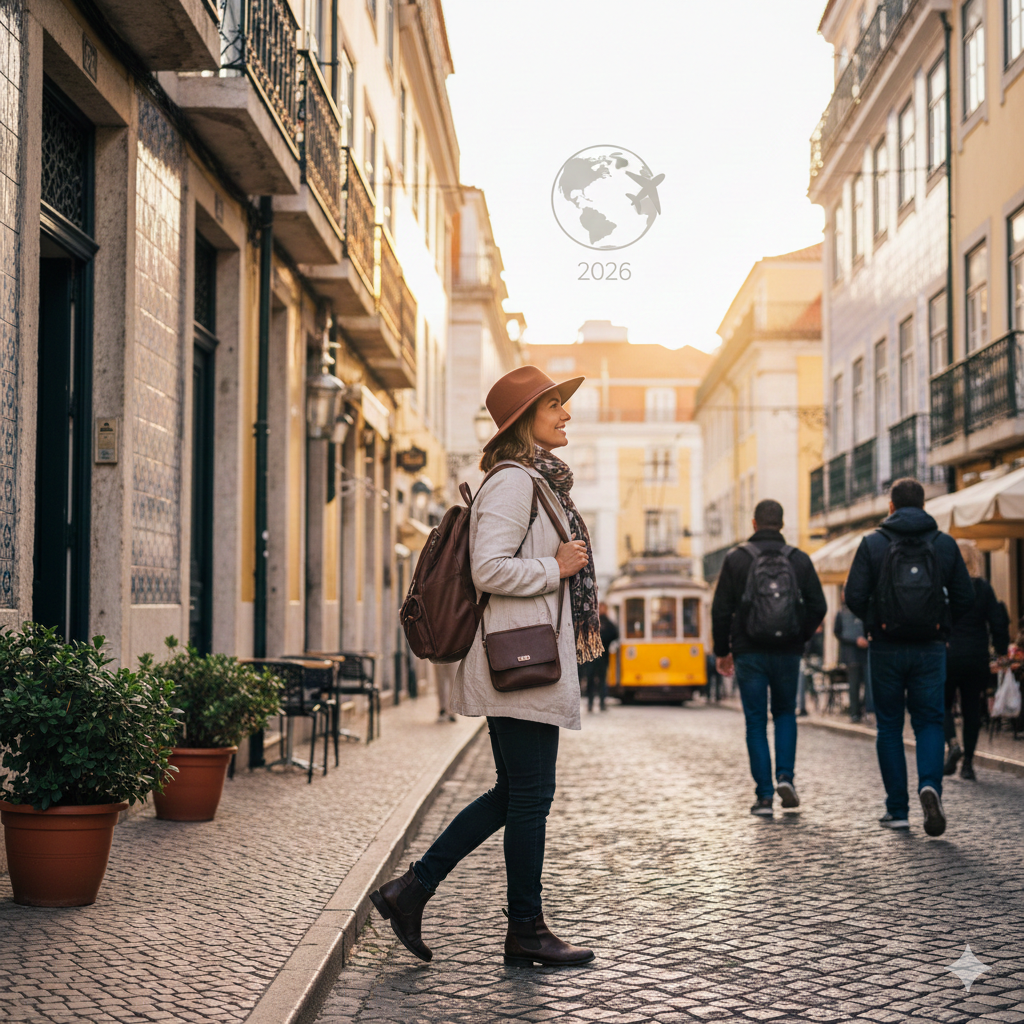

Solo female travel is no longer about proving bravery or braving the odds—it’s about choosing destinations that actively support how you want to move through the world.
In 2026, more women are traveling alone not out of necessity but by choice. And the destinations they’re choosing share a clear set of qualities: low violent crime, reliable infrastructure, cultural acceptance of solo travelers, and enough beauty and depth to make every day feel worthwhile.
This guide covers the 15 best solo female travel destinations in 2026—ranked and compared based on safety data (Global Peace Index 2025), infrastructure quality, ease of solo dining, and firsthand experience across each destination.
2026 Entry Requirements Update
If you’re traveling to Europe from a non-EU country (including the US, UK, Canada, and Australia), the ETIAS (European Travel Information and Authorisation System) is now fully in effect. You must register online before travel—it costs €7 and is valid for three years, but it must be done in advance; you cannot apply at the border. Additionally, Venice now charges a day-entry fee (€5) for visitors entering the historic center on peak days, bookable online. These are minor friction points, but worth knowing before you book.
At a Glance: Destination Comparison Table
The safest and most solo-friendly destinations for women in 2026 are Japan, Portugal, New Zealand, Iceland, and the Netherlands—all scoring in the top 15 of the Global Peace Index and offering exceptional infrastructure for independent travel
| Destination | Safety Score (Numbeo 2026)* | GPI Rank (2025) | Avg. Daily Budget (USD) | Solo Dining Infrastructure |
| Iceland | 92.4 | 1st | $220 – $300 | Good (Pricey) |
| New Zealand | 88.4 | 3rd | $180 – $250 | Excellent |
| Japan | 87.9 | 12th | $110 – $160 | Elite (Counter-focused) |
| Norway | 90.8 | 32nd | $190 – $260 | Good |
| Denmark | 89.9 | 8th | $180 – $240 | Excellent |
| Netherlands | 84.4 | 14th | $160 – $220 | High (Independent) |
| Portugal | 81.6 | 7th | $90 – $130 | Exceptional |
| South Korea | 79.9 | 41st | $100 – $150 | Elite (Modern) |
| Spain | 79.7 | 25th | $110 – $160 | Social (Tapas bars) |
| Italy | 79.0 | 33rd | $120 – $180 | High (Café culture) |
| France | 77.5 | 74th | $140 – $210 | High (Bistro culture) |
| Croatia | 75.9 | 19th | $80 – $130 | High |
| Costa Rica | 74.4 | 54th | $90 – $140 | Good |
| Thailand | 68.0** | 86th | $60 – $100 | Street-Food Elite |
| Vietnam | 65.0** | 38th | $50 – $90 | Street-Food Elite |
| Georgia | 62.0** | 84th | $55 – $85 | Warm / Communal |
Numbeo Safety Index scores are out of 100. Higher = Safer perception.
Scores estimated based on 2026 regional urban trends for Chiang Mai, Tbilisi, and Da Nang.
Three “Budget Shifts” to Note for 2026
- The “Japan Discount”: Despite global inflation, Japan remains an incredible value for solo travelers in 2026. While the Yen has stabilized slightly, your dollar still goes much further here than in Western Europe or the Nordics.
- The Rise of Georgia: If you’re looking for the 2026 version of “Portugal five years ago,” it’s Georgia. You can live incredibly well on $60/day, which is half of what you’d spend in Spain for a similar level of luxury.
- The Nordic “Picnic” Strategy: In Iceland, Norway, and Denmark, food costs are the primary budget killer. Solo travelers in 2026 are increasingly using the “One Meal Out” rule—buying high-quality local groceries for breakfast and lunch to afford those $60-80 dinners.
Why These Destinations Work for Solo Women
Before diving into specifics, it’s worth naming what separates a genuinely solo-friendly destination from one that merely markets itself that way.
1. Measurable safety. Low violent crime rates and visible public services aren’t subjective. The Global Peace Index ranks 163 countries annually. The destinations at the top of this list consistently rank in the top 20 globally.
2. Cultural acceptance of solo travelers. In some cultures, a woman eating alone or wandering without a companion reads as strange or invites unwanted attention. In others, it’s completely unremarkable. This distinction matters enormously to daily comfort.
3. Infrastructure that removes mental load. Reliable trains, clear signage in multiple languages, walkable cities, and well-established tourist networks mean you spend your mental energy on experiences rather than logistics.
4. Flexibility. The best solo destinations accommodate multiple travel styles—whether you want to connect with other travelers, disappear into solitude, join a guided experience, or freestyle entirely on your own.
Cultural reception for diverse travelers.
The experience of traveling solo as a woman of color, as a Black woman, as a visibly Muslim traveler, or as someone whose appearance reads as “foreign” in a homogeneous country can differ significantly from the default narrative.
Japan and South Korea, for instance, are extraordinarily safe by crime metrics—but some travelers of color report heightened visibility, occasional staring, or being passed over for service in ways that affect daily comfort. Portugal and Spain, with their longer histories of cultural mixing, often feel more racially relaxed. Georgia is warm to visitors but remains quite ethnically homogeneous outside Tbilisi. None of this makes a destination “bad”—it makes it more accurately described.
Where relevant, each destination section below includes a brief Diverse Traveler Note based on reported experiences from solo travel communities.
Western Europe: Comfort, Culture, and Effortless Movement
For many solo women, Western Europe feels like the perfect balance between stimulation and security. It’s familiar enough to feel comfortable, yet layered with history, art, and food that never gets boring.
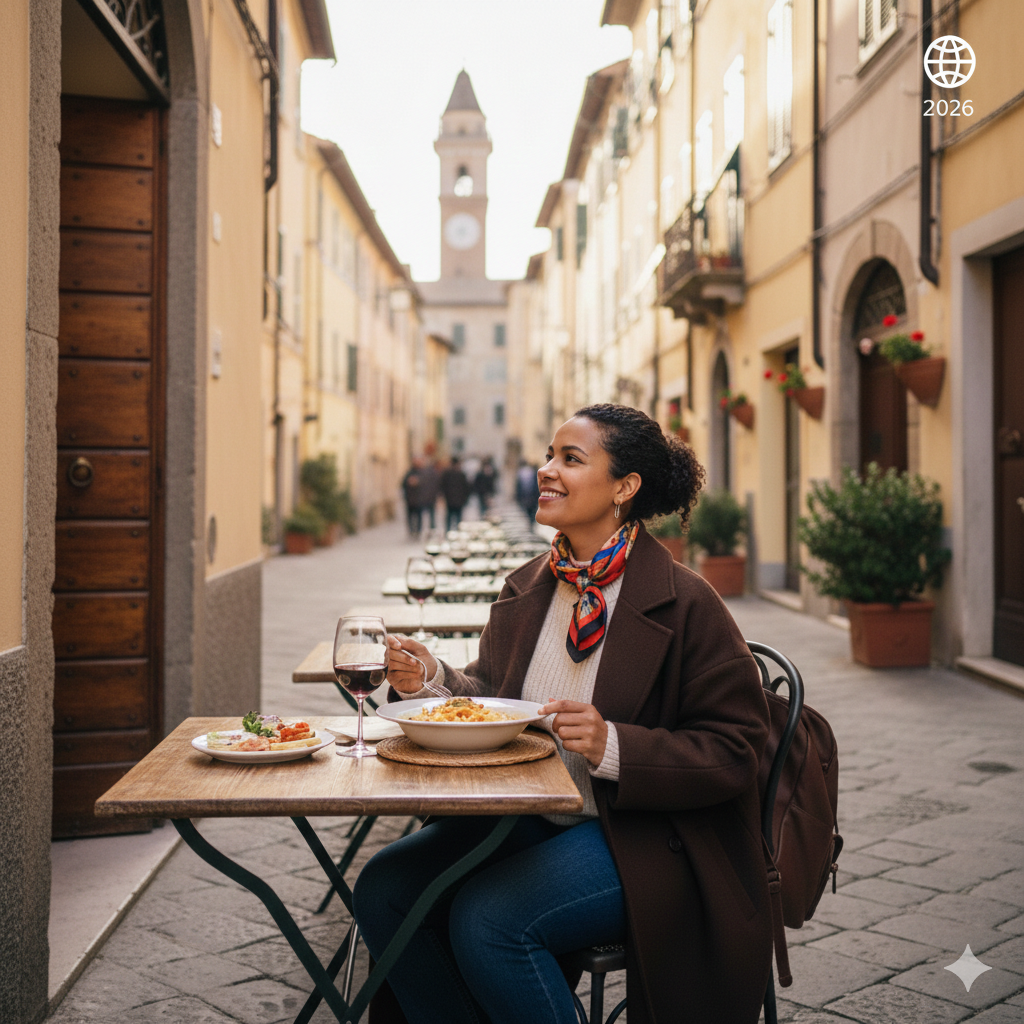
Easy, walkable cities, and safe dining alone in Florence
Italy: Best for Culture, Food, and Spontaneous Solo Travel
- Safety: ★★★★☆ (GPI rank: 32nd globally, 2025)
- Best season: April–June, September–October
- Getting around: Extensive national rail network; no car needed
Italy tops more solo female travel lists than almost any other country, and the reasons are concrete, not just romantic.
The train network is one of the most functional in the world for independent travelers. You can cross from Rome to Florence to Venice to the Cinque Terre without a rental car, without a tour group, and without anxiety. Regional trains make it easy to disappear into lesser-known towns on a whim—which is exactly the kind of freedom solo travel is built for.
I tested this firsthand on a September trip when I took a regional train from Rome to a small town in Umbria on impulse—just a name I’d seen on a departure board. Three hours later, I was sitting in a family-run trattoria, the owner’s grandmother teaching me to roll pici pasta by hand. That kind of spontaneity works in Italy because the systems support it. You’re never stranded. You’re never the odd one out.
For solo women specifically: Italian cities are walkable and lively at all hours, dining alone is genuinely normal rather than awkward, and the density of beautiful things to look at means you’re never bored even on quiet evenings. There’s no pressure to be social when beauty itself keeps you company.
Solo travel notes
- Book train tickets in advance for high-speed routes (Rome–Florence–Venice).
- Avoid August, when prices spike and smaller towns empty out.
- The south (Sicily, Puglia, Calabria) offers outstanding culture at significantly lower prices than the north.
Overtourism note: Venice now charges a €5 day-entry fee on peak days for visitors entering the historic center. Book your slot at cda.veneziaunica.it before arrival—turnstiles are enforced at key entry points. It’s a minor cost but can’t be paid on the day during peak periods.
Safety tips for solo women in Italy:
- Pickpocketing is the primary risk, concentrated in Rome (Colosseum, Termini station, Metro Line A), Florence (Ponte Vecchio area), and Venice (vaporetto stops). Keep bags zipped and worn across the body.
- Be aware of aggressive “friendship bracelet” sellers around tourist monuments—they are scams.
- Cat-calling exists in Italy, more so in the south and in tourist-saturated areas. It’s verbal and usually not threatening, but it’s real. Sunglasses, headphones, and confident walking pace are effective deterrents.
- Avoid Termini station in Rome after dark for solo women unless heading directly to a booked transport.
Diverse Traveler Note
Italy is generally comfortable for travelers of color, particularly in major cities with established tourist infrastructure. Black travelers and travelers of South Asian descent report occasional staring in smaller southern towns, but overt hostility is rare. The north (Milan, Bologna) tends to be more cosmopolitan. Italian cities are not notably more difficult for diverse solo travelers than other Western European destinations.
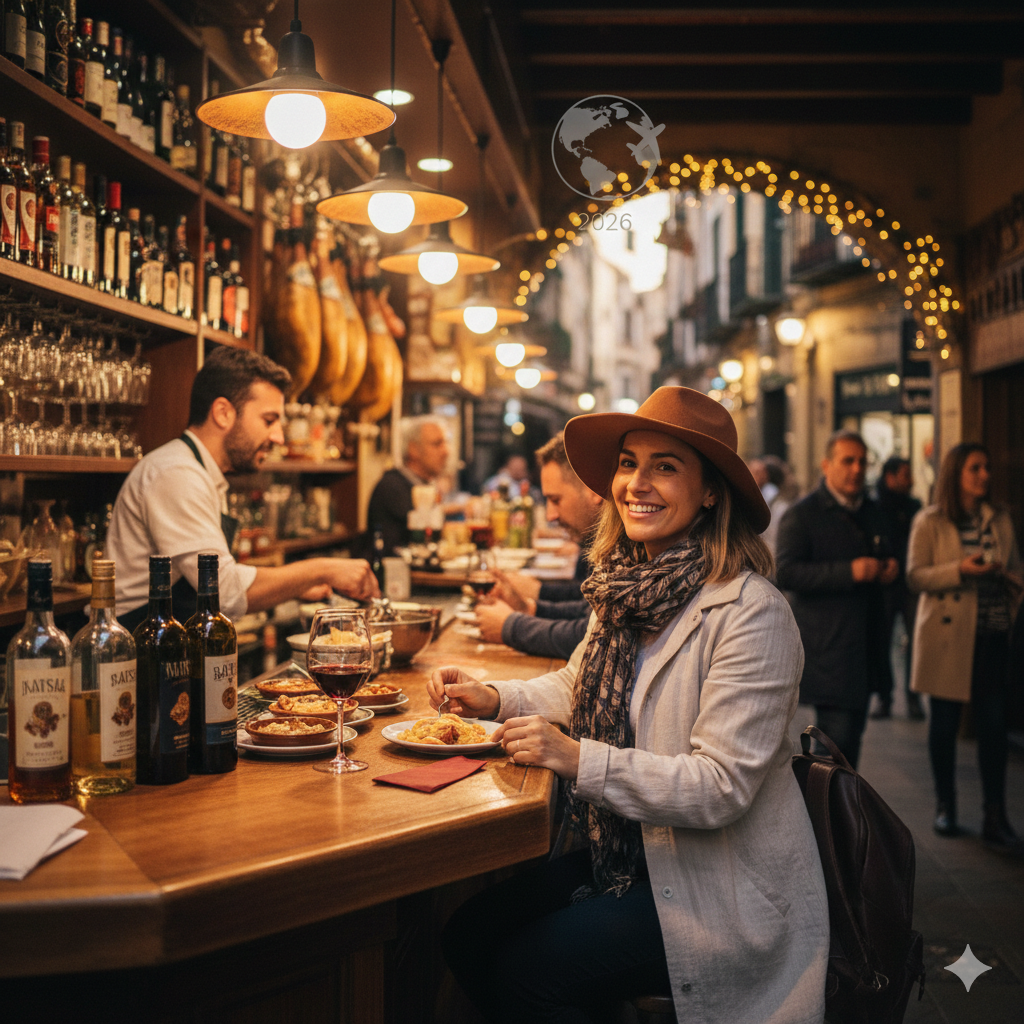
Enjoying tapas in Spain
Spain: Best for Social Energy and Evening Independence
- Safety: ★★★★☆ (GPI rank: 29th globally, 2025)
- Best season: May–June, September
- Getting around: Excellent AVE high-speed rail; metro systems in major cities
Spain’s genius for solo female travelers is structural: the tapas culture means you’re never committed to a full meal alone. You order a plate or two, stand at the bar, chat with whoever’s next to you, and move on when you’re ready. There’s no two-hour dinner to endure solo. There’s no table for one in the middle of the room. You’re simply at a bar, eating well, in a room full of people doing the same.
The country’s AVE high-speed rail connects Madrid, Barcelona, Seville, Valencia, and Bilbao seamlessly—journeys that once took eight hours now take two. Safety standards remain consistently high across all major cities, and the late-night culture (dinner at 10 pm, streets lively past midnight) counterintuitively makes solo evenings feel safer, not riskier. There are more people around, not fewer.
My first night in San Sebastián: nervous about eating alone, I sat at a pintxos bar. Within ten minutes, the woman next to me was recommending her favorites and the bartender was explaining the difference between txakoli and Rioja. Spain’s warmth is never pushy. It simply makes room for you to join in or stay in your own world, depending on what you need that day.
Solo female notes
- San Sebastián and the Basque Country are worth the journey for food alone.
- Seville in spring (before June heat) is exceptional.
- Avoid Madrid and Barcelona in August—locals leave and prices rise.
Safety tips for solo women in Spain:
- Barcelona’s La Rambla and the Gothic Quarter are Europe’s pickpocketing hotspots. Use front-zip bags; never put a phone on a café table.
- Nightlife-related incidents (drink spiking, harassment) are documented in Ibiza and Magaluf. These are extreme party destinations that function differently from the rest of Spain—approach with awareness if you’re going solo.
- Metro Line 3 in Barcelona and certain areas near Madrid’s Lavapiés can feel less comfortable late at night. Uber and Cabify are inexpensive and reliable.
- Street harassment is less common than in Italy but exists. The late-night street culture is generally safe—there are simply enough people around that it rarely escalates.
Cultural Reception Note
Spain is one of the more racially diverse and comfortable destinations in Western Europe, particularly Barcelona, Madrid, and Seville. Spain’s colonial history has created meaningful Afro-Latino and North African communities in major cities, and travelers of color generally report feeling unremarkable rather than conspicuous. Anti-Black racism exists in Spanish football culture and in isolated contexts, but urban tourism experiences are largely positive across backgrounds.
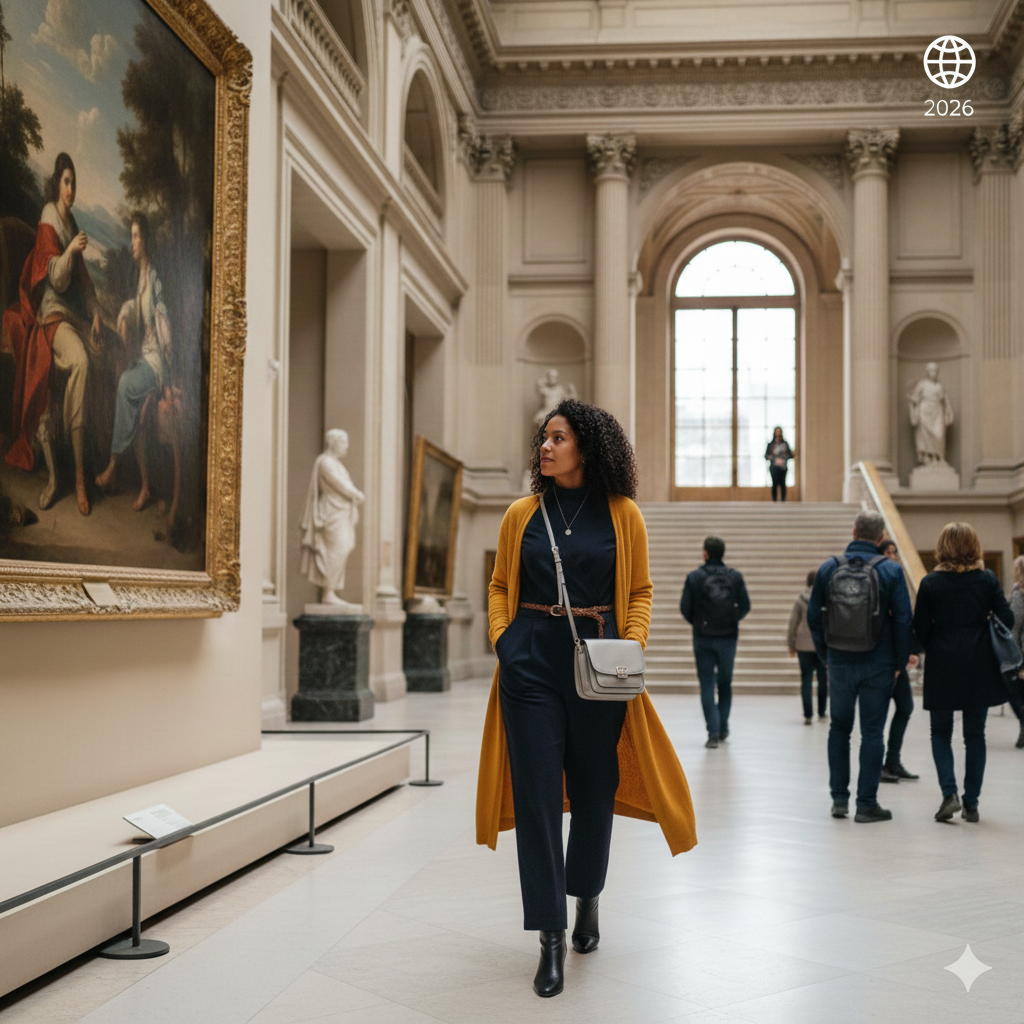
Strolling through a Paris Museum
France: Best for Independent Culture and Solo Indulgence
France, particularly Paris, continues to attract solo women who crave beauty, culture, and a touch of romance—the kind you have with yourself.
- Safety: ★★★★☆ (GPI rank: 67th globally, 2025—lower than others on this list, but major cities are well-policed and tourist areas are safe)
- Best season: May–June, September
- Getting around: Impeccable TGV rail; metro in Paris; regional trains to smaller towns
Parisians don’t stare when you sit alone at a café with a book. They don’t ask why you’re by yourself. Solitude in public is not only accepted—it’s respected, even admired.
The infrastructure is impeccable. TGV trains run on time and reach most of the country. Paris’s metro is efficient and safe. And beyond the capital, regions like Provence, the Dordogne, and the Loire Valley are accessible by regional rail and offer a quieter, more meditative kind of solo travel—lavender fields, weekly markets, centuries-old stone villages—that suits the traveler who wants to slow down.
The Art of Being Alone in Paris
I spent a week in Paris in late September. The city rewards solitude in ways that feel almost designed—a café table by the window, a Tuesday afternoon in the Musée d’Orsay with half the usual crowd, a long walk along the Seine as the light turned gold at 7 pm. But Paris also has a particular kind of street energy that I didn’t experience in Lisbon or Madrid.
Near Gare du Nord one evening, walking back from dinner, I felt the low-level alertness click on—the kind women know well, the kind you’d rather not carry on a trip. I rerouted. The rest of the evening was fine. But that click—that recalibration—is worth naming, because it happens less in the other cities on this list.
Solo travel notes
Paris’s arrondissements vary significantly in atmosphere. The 11th, 3rd, and 5th are excellent bases for solo women—lively, central, and well-connected. Avoid the Gare du Nord area at night. Provincial France (outside Paris) is dramatically less expensive and often more rewarding.
Safety tips for solo women in France:
France’s GPI rank of 67th is the lowest on this European list, and it’s worth noting why it feels different on the ground. Paris specifically has a documented street harassment problem. While violent crime against tourists is genuinely low, verbal harassment—particularly in the 18th arrondissement (Pigalle area), around Gare du Nord, and in certain banlieues—is more persistent than in Portugal, Spain, or the Netherlands. The RATP (Paris metro) can feel uncomfortable late at night on certain lines. This isn’t a reason to avoid Paris—millions of solo women navigate it confidently every year—but it requires slightly more situational awareness than the rest of this list.
- Gare du Nord and its surrounding streets are among the most pickpocket-dense areas in Europe. Keep bags secured at all times at the station.
- The metro is safe during the day. After midnight, opt for Uber or G7 taxi (G7 is France’s most reliable cab company) rather than waiting on quiet platforms.
- Ignoring verbal harassment and walking confidently is the most effective response.
- Avoid displaying expensive jewelry or technology openly in crowded tourist areas.
- The Rest of France (Lyon, Bordeaux, Brittany, Provence) involves meaningfully less of the above and is often a more comfortable solo experience than Paris.
Racial & Cultural Visibility
France has a complex relationship with race. Black travelers and travelers of North African descent report more frequent incidents of profiling, street harassment specifically targeting race, and occasional discrimination in restaurant or service settings than in Spain or Portugal. Paris is a diverse, cosmopolitan city, and most experiences are positive—but it would be dishonest not to note that Black solo female travelers in particular report this destination as more charged than others on this list. Traveling in groups, staying in well-touristed areas, and using apps to reduce street navigation time are practical adjustments some travelers make.
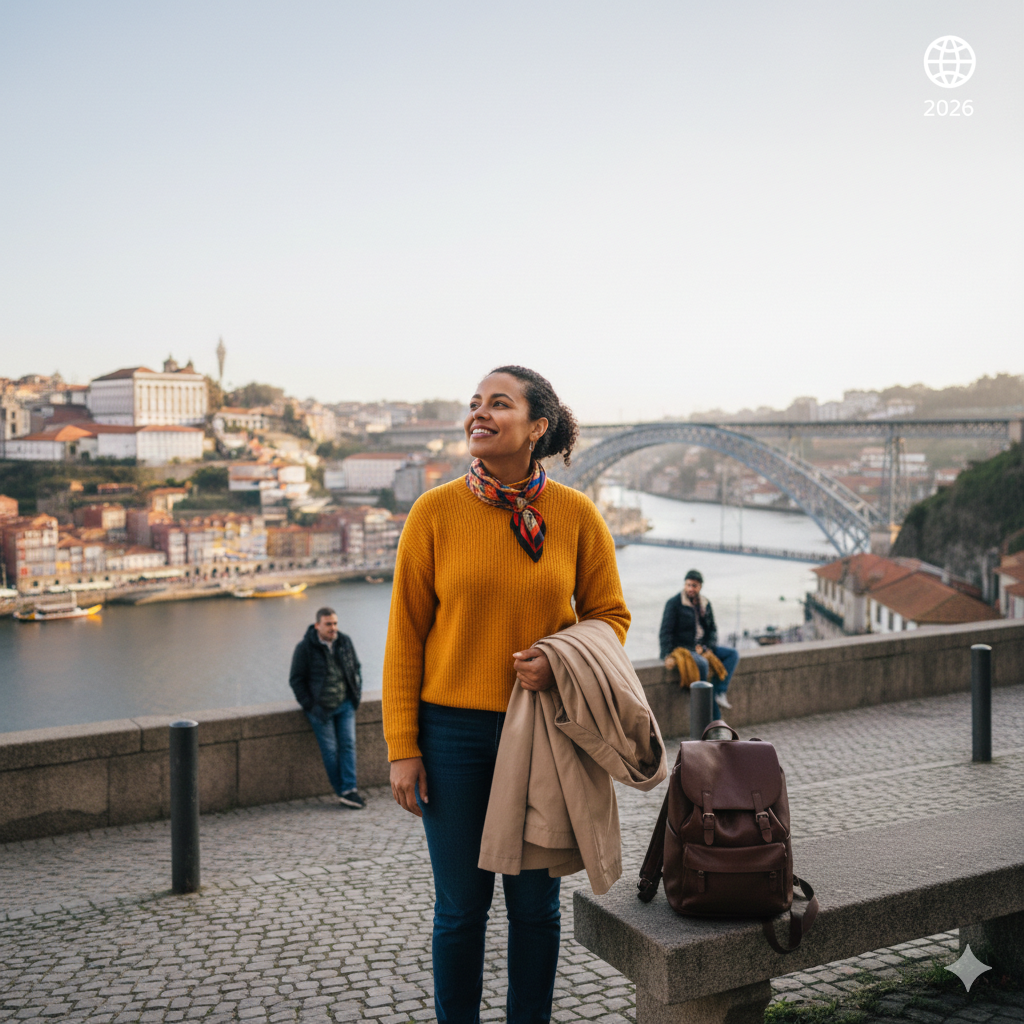
Viewpoint in Portugal
Portugal: Best Overall Value for Solo Female Travel in Europe
- Safety: ★★★★★ (GPI rank: 7th globally, 2025—among the safest countries on earth)
- Best season: April–June, late September–October
- Getting around: Trains, buses, and trams; Lisbon is walkable
Portugal has become the defining solo female travel destination of the decade, and the Global Peace Index explains part of why: it ranks 7th safest in the world. That peace of mind is felt immediately on the ground. Lisbon doesn’t feel guarded. Porto doesn’t feel threatening. You walk at night without the low-level alertness that women often carry automatically in less safe cities.
Beyond safety, Portugal delivers what its more expensive European neighbors offer—deep history, extraordinary food, remarkable architecture—at a cost that makes longer stays financially viable. The Algarve offers world-class beaches. The Douro Valley offers wine-country quiet. Sintra and Óbidos offer fairy-tale architecture without the crowds of equivalent destinations in France or Italy.
English is widely spoken across all age groups, which removes one of the hidden stresses of solo travel: the cognitive load of constant language navigation. When you can ask for directions, read a menu, and chat with a local without effort, you relax in a different way.
Practical notes
- Lisbon’s hills are real—wear comfortable shoes.
- The Alfama neighborhood is beautiful but steep.
- Porto is underrated relative to Lisbon and worth a minimum of three days.
- The Algarve is best in May–June before summer crowds arrive.
Safety tips for solo women in Portugal
- Portugal is genuinely low-risk. The main concerns are opportunistic theft in tourist areas (Alfama, Belém) and, increasingly, pickpocketing on Lisbon’s tram 28 (the famous vintage route). Hold bags in front on trams.
- The Intendente area of Lisbon has improved significantly but can still feel rough after dark for solo women.
- Night buses in Lisbon are functional but can be uncomfortable late. Uber is inexpensive and widely available.
Diverse Traveler Note
Portugal is one of the most comfortable destinations on this list for travelers of color, including Black travelers. Lisbon in particular has a significant Afro-Portuguese community (tied to its Cape Verdean, Angolan, and Mozambican diasporas), and the city has a genuine cultural familiarity with racial diversity. Reported incidents of racial harassment are low relative to France or parts of Eastern Europe. This is consistently cited by Black solo female travelers as one of the reasons Portugal earns top rankings in diverse traveler communities.
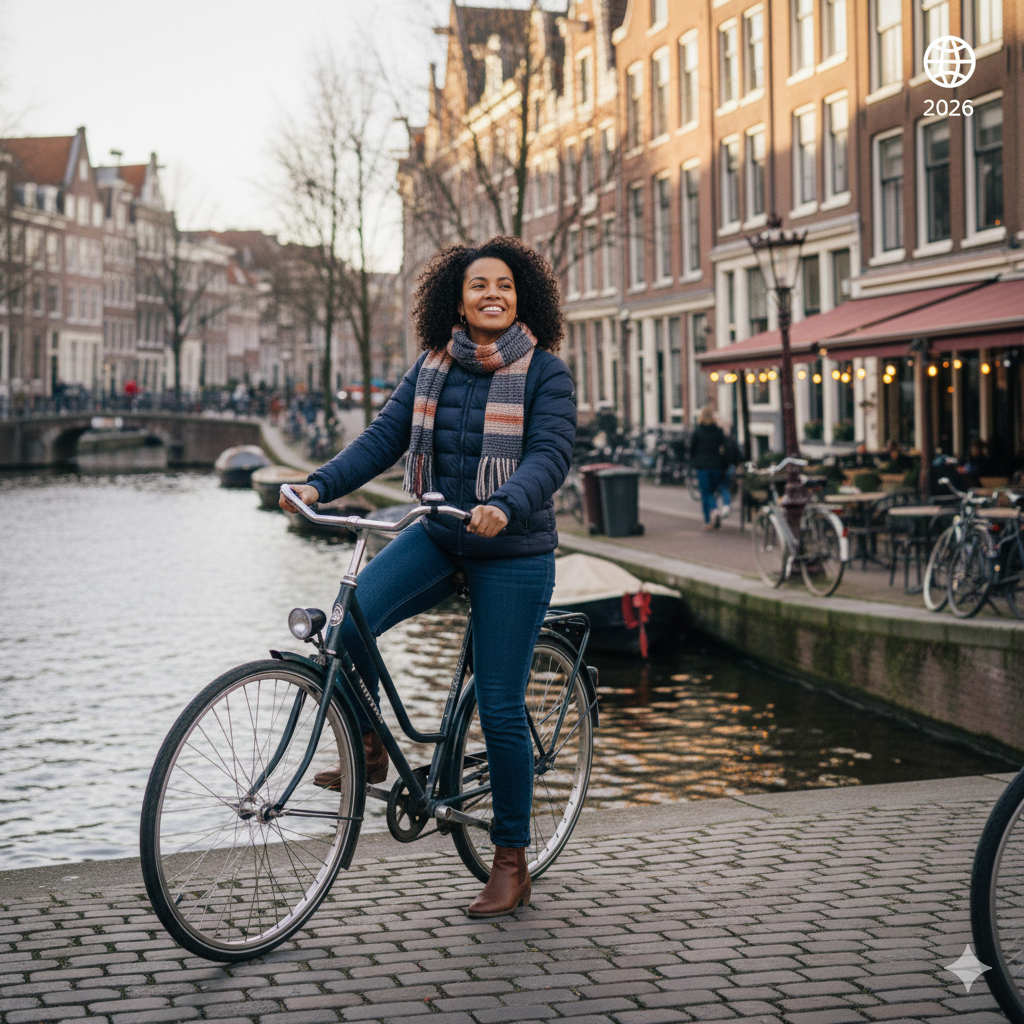
Cycling along a canal in Amsterdam
The Netherlands: Best for Ease and Low-Stress Solo Days
- Safety: ★★★★☆ (GPI rank: 18th globally, 2025)
- Best season: April–May, September
- Getting around: Flat, bike-friendly, excellent public transit; nearly everyone speaks English
The Netherlands wins on sheer logistical ease. It’s flat—no hills to navigate, no hills to worry about. Bike infrastructure is genuinely world-class. Nearly everyone under 60 speaks English fluently. Cities are compact enough to know in a few days. And the cultural emphasis on personal space and independence means solo travel never draws attention or generates awkward social pressure.
Amsterdam is the obvious hub, but the real pleasure of the Netherlands is how easy it is to leave it. Haarlem (20 minutes by train) has canal architecture without the tourist density. Utrecht has a medieval center and a university-town energy. The tulip fields of the Bollenstreek are otherworldly in April and May. And all of it is reachable in under an hour from Amsterdam Centraal.
Solo travel notes
- A Dutch OV-chipkaart (transit card) covers trains, trams, buses, and metro across the country.
- Rent bikes directly from NS (Dutch Railways) stations.
- April and May are peak tulip season—book accommodation well in advance.
Safety tips for solo women in the Netherlands:
- Amsterdam’s Red Light District (De Wallen) is a major tourist area but has concentrated nightlife-related risks late at night. It’s fine to visit during the day; exercise standard awareness after midnight.
- The area around Amsterdam Centraal can be crowded and occasionally chaotic. Keep bags close.
- Cycling safety: Dutch cyclists follow traffic rules strictly. Learn the bike lane system before renting—pedestrians in bike lanes are a hazard to both parties.
Cultural Traveler Note
The Netherlands has a multicultural urban population, and Amsterdam, Rotterdam, and The Hague are racially diverse cities where travelers of color are unremarkable. However, the Netherlands has an ongoing national conversation about racism (particularly around Sinterklaas traditions and structural discrimination) that some travelers find jarring. For solo travel purposes, this rarely affects tourist experience—but it’s worth knowing that the country is more complex on race than its liberal reputation suggests.
East & Southeast Asia: Safe, Fascinating, and Deeply Rewarding
Asia’s popularity among solo women isn’t new—but in 2026, interest is stronger than ever, especially in destinations that combine safety with unforgettable cultural experiences.
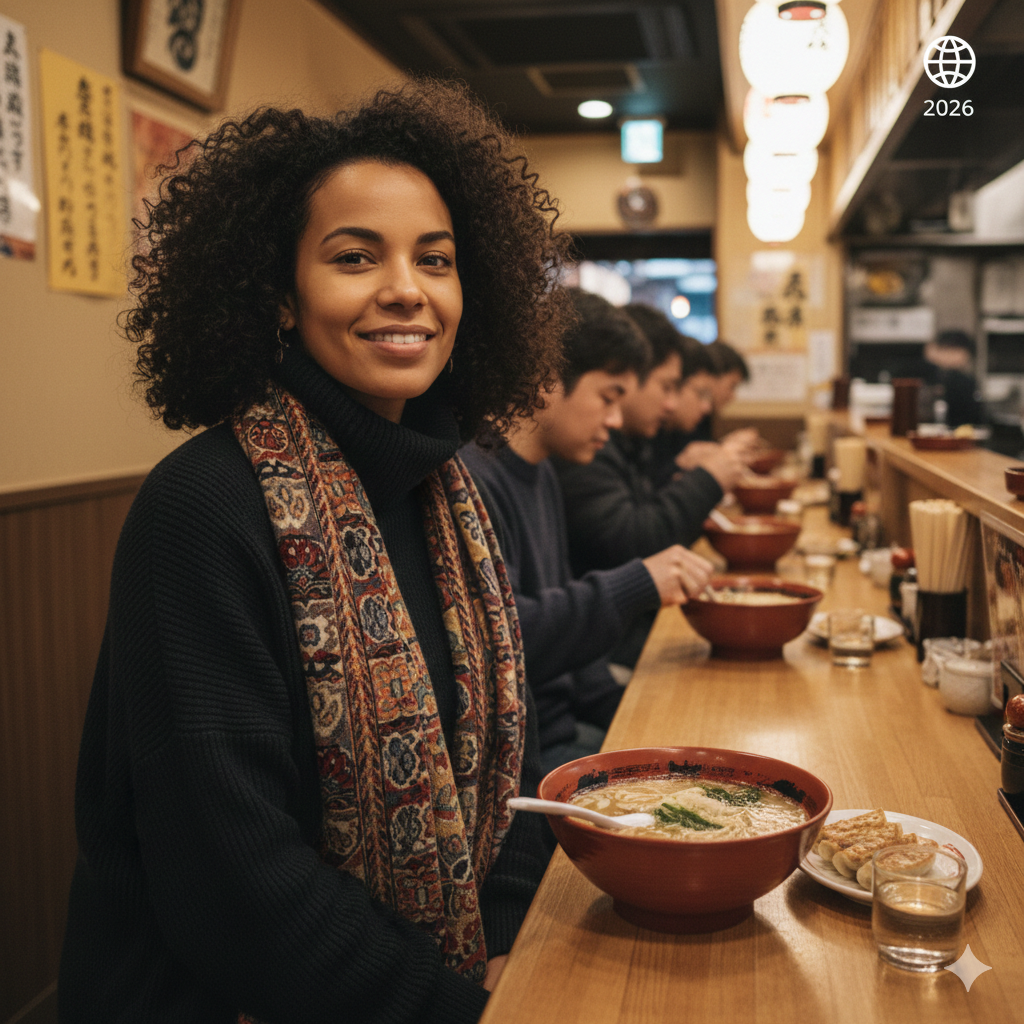
RamenCounter in Japan where eating alone and exploring safely feels normal
Japan: #1 Safest Destination for Solo Female Travelers
- Safety: ★★★★★ (GPI rank: 9th globally, 2025; violent crime rate among the lowest in the world)
- Best season: March–May (cherry blossoms), October–November (autumn foliage)
- Getting around: Shinkansen bullet trains; efficient metro systems; IC cards work everywhere
Japan is, for many solo female travelers, the gold standard. Not because it’s perfect, but because it makes solo existence feel completely, unremarkably normal.
The country ranks 9th in the Global Peace Index and has one of the lowest violent crime rates in the world. But statistics only go so far—what matters is what it feels like on the ground. And what Japan feels like is calm. Cities are clean. Transport runs on time. Social norms involve not drawing unnecessary attention to others, which means you can wander Tokyo neighborhoods until midnight, eat at a ramen counter without anyone noticing, or spend a full day alone at a temple in Kyoto without a single awkward interaction.
Solo dining infrastructure here is extraordinary. Ramen counters have individual partitioned seats. Some restaurants take solo reservations explicitly. Convenience stores (konbini) offer freshly prepared food at any hour that is genuinely good—not just edible. The entire food system accommodates solo eating without making it feel like a compromise.
I spent 5 days alone in Japan, including an evening at a tiny izakaya in Osaka—the only woman alone in a room full of salarymen unwinding after work. No one stared. No one spoke to me unsolicited. The chef placed grilled yakitori in front of me and nodded once. That nod contained everything: you’re welcome here, exactly as you are. Japan says this to solo women consistently.
Practical notes
- Get a Japan Rail Pass before arriving if you plan to travel between cities—it saves significantly.
- IC cards (Suica, Pasmo) work on nearly all urban transit.
- Google Maps works excellently for navigation.
- Book accommodations in popular cities (Kyoto especially) months in advance for spring and autumn.
Safety tips for solo women in Japan
- Japan’s crime rate is exceptionally low. The primary concern reported by solo female travelers is chikan (groping on crowded trains). Women-only train cars are available on most urban rail lines during peak hours—look for the pink signage and use them freely without hesitation.
- Be aware that Japan’s low crime doesn’t mean zero crime. Solo women have reported being followed in entertainment districts (particularly Roppongi in Tokyo, which caters to a heavy expat bar scene). Trust your instincts and leave situations that feel uncomfortable.
- Taxis in Japan are honest and reliable. Grab one without hesitation if you feel unsafe walking alone at night.
Racial Climate: What to Expect
Japan is safe for travelers of all backgrounds by crime metrics, but it’s one of the most racially homogeneous countries on this list, and “gaijin” (foreigner) visibility is real. Black travelers, South Asian travelers, and visibly non-East Asian visitors report being stared at in rural areas, occasional difficulty being seated at smaller traditional restaurants, and some instances of being approached with curiosity that can feel intrusive.
In Tokyo and Osaka, the experience is more anonymous. The safety record remains excellent, but the social experience of visibility is worth naming honestly. Travelers in the solo travel community of color consistently say Japan is safe but not always comfortable in the way Portugal or Spain can be.
The country also excels at solo-friendly accommodations, from capsule hotels to ryokans where dining alone is standard. Everything about Japan says: you’re welcome here, exactly as you are.
South Korea: Best for Urban Energy and Solo City Exploration
- Safety: ★★★★☆ (GPI rank: 43rd globally, 2025)
- Best season: April–June, September–October
- Getting around: Excellent metro and KTX high-speed rail; T-money card covers all transit
South Korea offers a similar infrastructure quality to Japan with a different energy—faster, louder, more visually stimulating in its urban form. Seoul buzzes constantly: street food markets, 24-hour cafés, fashion districts in Hongdae and Myeongdong, palaces sitting improbably between skyscrapers. The contrast is jarring in the best possible way.
Solo dining is culturally normal. Many Korean restaurants are set up for one, and the banchan (small side dishes served automatically with meals) means even solo meals feel abundant rather than sparse. Transport is exceptional—KTX trains make day trips to Gyeongju, Busan, or Jeonju effortless from Seoul.
Practical notes:
- Download Naver Maps rather than Google Maps—it works better for Korean transit navigation.
- The area around Insadong is excellent for solo wandering; Bukchon Hanok Village is worth an early morning visit before tour groups arrive.
Safety tips for solo women in South Korea:
- South Korea is very safe overall. The main concern flagged by solo female travelers is digital privacy: the country has had high-profile cases of hidden cameras (molka) in hotel rooms, guesthouses, and public bathrooms. Check bathroom fixtures and corners in any new accommodation—this is unfortunately standard advice in the solo female travel community for Korea.
- Solo travelers in Korea often carry small ‘detector cards’ or simply use their phone’s flashlight to check for lens reflections in vents and smoke detectors.
- Itaewon (Seoul’s international district) has a heavy nightlife scene. Standard nightlife precautions apply.
- Korean taxis are safe and metered. Kakao T is the standard ride-hailing app.
For Travelers of Color
South Korea is racially homogeneous and openly so. K-beauty and K-pop have made the country globally influential, but colorism (lighter skin as beauty ideal) is embedded in Korean culture. Black travelers report a wide range of experiences—from warm curiosity and K-pop fandom connections to staring, comments on appearance, or being touched without permission. The experience varies greatly by neighborhood (cosmopolitan Itaewon vs. homogeneous outer districts) and by individual. South Korea is safe; the social experience of visibility may require more emotional bandwidth for some travelers of color than other destinations on this list.
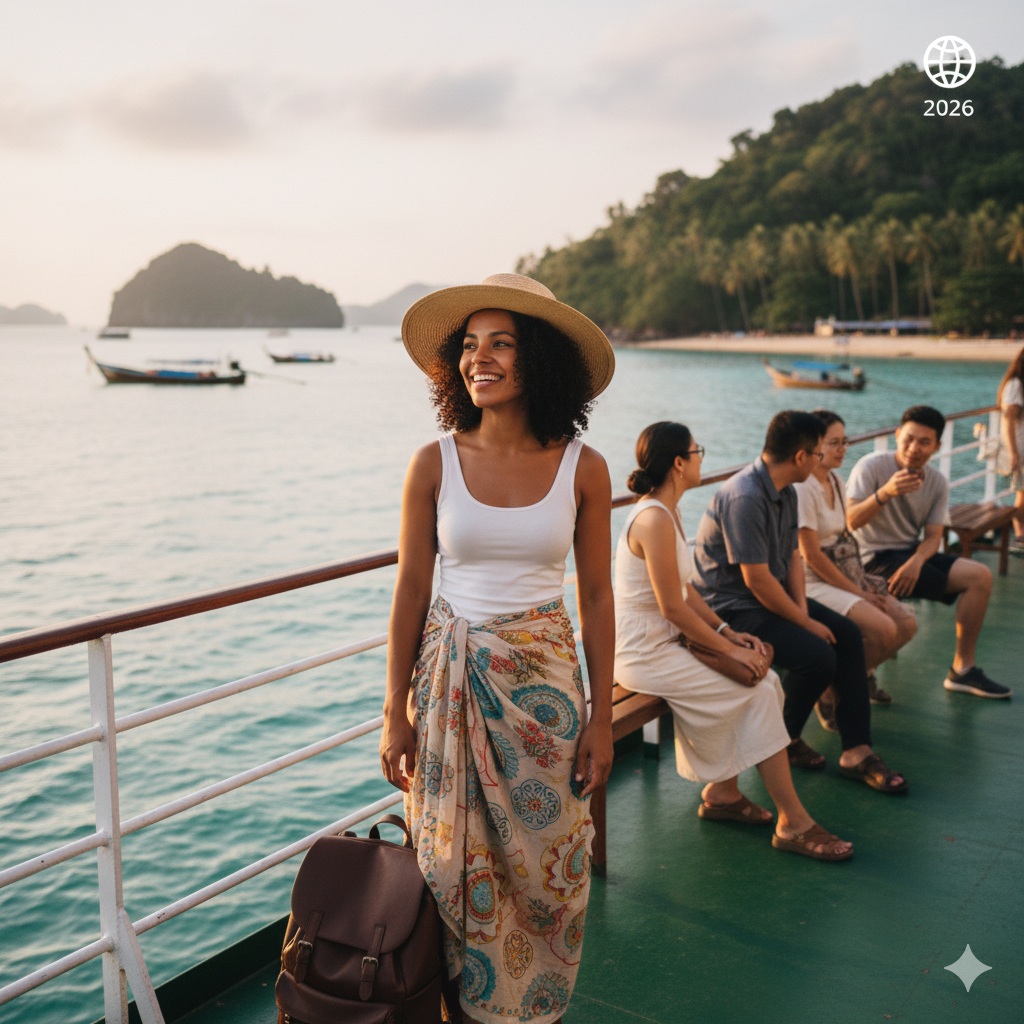
Flexible travel experience in Thailand
Thailand: Best for Flexible Solo Travel and Community When You Want It
Southeast Asia remains a favorite for women seeking movement, color, and connection, and Thailand leads the way with infrastructure that supports solo travelers beautifully.
- Safety: ★★★☆☆ (GPI rank: 102nd globally, 2025—lower than others on this list; exercise normal urban precautions)
- Best season: November–February (dry season)
- Getting around: Well-established tourist networks; buses, boats, domestic flights
Thailand’s appeal to solo female travelers isn’t primarily about safety rankings—it’s about the infrastructure built specifically for independent travelers over decades. Cooking classes in Chiang Mai, island-hopping packages in the south, day tours from Bangkok: the entire system is designed to be joined solo, completed solo, and customized on short notice.
The social architecture of hostels and guesthouses creates natural opportunities for connection when you want it. But you’re never obligated. I spent a month in Thailand moving between cities and islands—some days joining other travelers for tours, other days disappearing into my own rhythm for hours. Thailand accommodates both modes without requiring you to commit to either.
Street food culture is inherently solo-friendly. You eat standing at a cart, sitting on a plastic stool, sharing communal tables. There’s no solo dining awkwardness—there’s barely a formal dining context at all in many situations.
Solo travel notes
- Exercise standard precautions in Bangkok tourist areas (Khao San Road scams are well-documented). Chiang Mai is considered safer and more relaxed than Bangkok for solo women.
- The northern islands (Koh Lanta, Koh Phangan outside full moon party season) are quieter and more comfortable than Koh Samui for solo travelers.
Safety tips for solo women in Thailand:
- Drink spiking in tourist bars is a documented risk in Bangkok and on party islands. Never leave a drink unattended; don’t accept drinks from strangers in unfamiliar venues.
- Tuk-tuk drivers who offer suspiciously cheap rides often take you to gem shops or tailors for commission. Use Grab (Southeast Asia’s Uber equivalent) for transparent pricing.
- Temple dress codes are enforced at major religious sites. Carry a light scarf to cover shoulders and knees.
- Solo women are disproportionately targeted by certain scams around Grand Palace in Bangkok. If someone tells you the Grand Palace is “closed today,” it’s a scam—ignore and walk directly to the entrance.
Solo Travel for Women of Color
Thailand is generally welcoming to travelers of all backgrounds, though colorism (lighter skin as beauty ideal, common across Southeast Asia) is present in Thai beauty culture. Black travelers report that Thailand is broadly comfortable—the country’s tourist infrastructure is too developed for visitors to feel marginal.
Some travelers of South Asian descent note being occasionally mistaken for local workers and treated with less deference than white Western tourists in tourist-facing businesses. These are documented patterns worth naming, not reasons to avoid a destination that is genuinely accessible and warm.
Vietnam: Best for Adventure-Seeking Solo Travelers
- Safety: ★★★☆☆ (GPI rank: 41st globally, 2025)
- Best season: February–April
- Getting around: Open bus network; trains; domestic flights; improving infrastructure
Vietnam appeals to the solo traveler who wants more edge—more movement, more physical challenge, more cultural intensity—while still operating within a framework of solid tourist infrastructure.
The landscapes justify the journey: Ha Long Bay’s limestone karsts, the rice terraces of Sapa, the ancient streets of Hoi An, the energy of Ho Chi Minh City. Long-distance cycling routes, including the iconic south-to-north journey, attract solo women looking to combine physical challenge with cultural immersion at a pace that’s genuinely theirs.
The open bus network (popularized by The Sinh Tourist and similar operators) makes it possible to travel the length of the country affordably with flexible hop-on/hop-off ticketing. Trains connect major cities. Domestic flights are inexpensive.
Practical notes: The central coast (Hoi An, Da Nang, Hue) is the sweet spot for solo women—beautiful, manageable, heavily traveled by independent tourists, and safer than some of the more remote northern areas for first-time visitors.
Safety tips for solo women in Vietnam
- Motorbike bag snatching is the most common crime against tourists in Ho Chi Minh City. Carry bags on the side away from the road; do not use your phone while walking on busy streets.
- Book Ha Long Bay through reputable operators—documented safety failures have occurred on the cheapest-tier boats. Read recent reviews carefully and pay slightly more for a mid-range operator.
- Night buses between cities are generally safe and used heavily by solo female travelers; choose reputable companies (Futa Bus, The Sinh Tourist) over the cheapest option.
Diverse Traveler Note
Vietnam is generally comfortable for travelers of most backgrounds. Vietnamese society has its own colorism norms (fair skin as beauty ideal), but this rarely translates into hostile treatment of darker-skinned visitors.
Black travelers report Vietnam as largely welcoming—curiosity is common, especially in rural areas, but hostility is rare. In major tourist hubs like Hoi An, Da Nang, and Ho Chi Minh City, foreign visitors of all backgrounds are entirely unremarkable. The experience in remote northern highlands (Sapa, Ha Giang) may involve more visible curiosity from ethnic minority communities, but this is culturally neutral rather than discriminatory.
Oceania: Space, Nature, and a Familiar Rhythm
Sometimes solo travel isn’t about cities at all—it’s about space to breathe, think, and simply be.
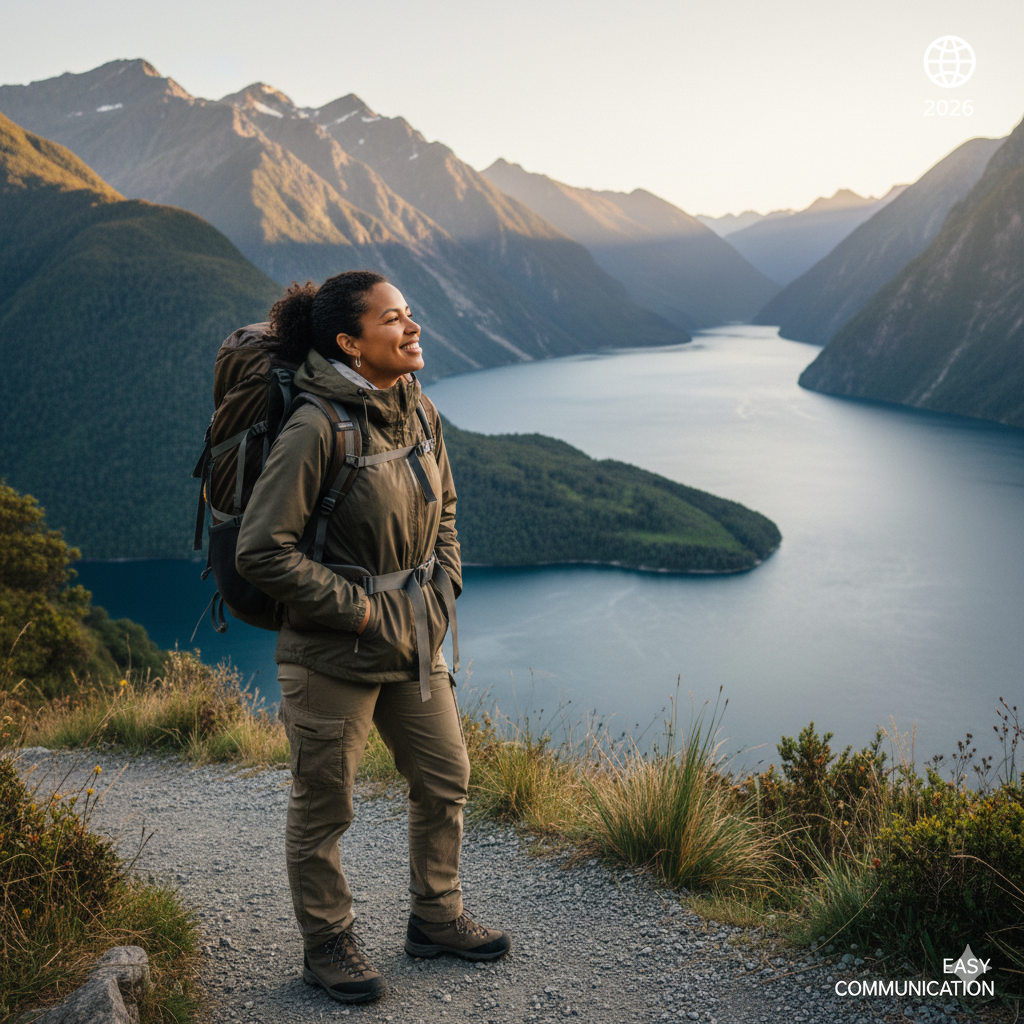
The nature and safety of New Zealand
New Zealand: Best for Solo Nature and Adventure Travel
- Safety: ★★★★★ (GPI rank: 4th globally, 2025—among the safest countries in the world)
- Best season: November–March (Southern Hemisphere summer)
- Getting around: Rental car or campervan recommended; Intercity buses available
New Zealand is where solo female travel meets the outdoors at its most generous. It’s safe enough (4th in the world, per GPI) that you can camp alone, hike alone, and drive remote roads alone without serious anxiety. And the landscapes are extraordinary enough that solitude feels like a gift rather than an absence.
The infrastructure for independent travelers is excellent: well-marked trails (the Great Walks are world-famous), Department of Conservation (DOC) huts throughout backcountry areas, and a culture that takes solo outdoor adventurers seriously rather than treating them as a liability.
I drove the South Island solo over two weeks—camping alone in DOC campgrounds, hiking sections of the Routeburn and Kepler tracks, navigating mountain passes without phone signal. Not once did I feel unsafe. The infrastructure supported me clearly: good signage, friendly locals who checked in genuinely, and a country-wide culture of outdoor competence that respects capability regardless of whether you’re moving alone.
Practical notes
- A campervan or rental car is strongly recommended for the South Island—public transport is limited between scenic areas.
- Freedom camping (free camping in designated areas) is legal and well-organized.
- Book Great Walk huts months in advance; they sell out.
Safety tips for solo women in New Zealand
- Always tell someone your hiking intentions if going into remote backcountry. The DOC (Department of Conservation) website has a free Intentions service where you can log your plans.
- Weather in New Zealand’s mountains can change in minutes. Even in summer, carry waterproofs and extra layers on any hike above 1,000m.
- Cell coverage is limited in remote areas of the South Island. Download offline maps (Maps.me or Google Maps offline) before heading into the backcountry.
- New Zealand’s cities (Auckland, Wellington, Christchurch) are safe. Avoid rough areas around Auckland’s CBD at night—Pacific and Māori communities there are fine; it’s the associated late-night bar activity that creates occasional issues.
Diverse Traveler Note
New Zealand is a genuinely multicultural country—Auckland is one of the most ethnically diverse cities in the Pacific, with large Māori, Pasifika, and Asian communities. Travelers of color generally report comfortable experiences in cities.
Some solo travelers of Asian descent note that rural South Island towns can feel less accustomed to diversity, but this rarely goes beyond mild unfamiliarity. The country’s strong Pacific and Indigenous identity means diversity in visible culture is normal rather than exceptional, which gives New Zealand a more comfortable baseline than many countries on this list.
Australia: Best for Solo Travel Without a Language Barrier
- Safety: ★★★★☆ (GPI rank: 22nd globally, 2025)
- Best season: September–November, March–May
- Getting around: Domestic flights for distances; rental cars for outback/coastal areas
Australia appeals to solo travelers who want nature and adventure without navigating a language or cultural barrier. Vast coastlines, national parks of global renown (the Daintree, Kakadu, the Blue Mountains), and genuinely welcoming cities—Sydney, Melbourne, Brisbane—give longer stays enough variety that weeks pass before you’ve exhausted options.
The distances are real and require planning. Australia is roughly the size of the continental United States, and budget domestic flights (Jetstar, Rex) are the practical solution for moving between regions. Rental cars open up the coastal drives and national parks that define the country’s best experiences.
Practical notes
- Melbourne is consistently rated one of the world’s most livable cities and is especially strong for solo women—excellent public transit, a thriving café and arts scene, and a grid layout that makes navigation easy.
- The east coast (Sydney–Byron Bay–Brisbane corridor) is heavily traveled and well-supported for solo tourists.
Safety tips for solo women in Australia
- Australia is safe. The main risks for solo women are standard urban ones: stay aware in nightlife areas (King’s Cross in Sydney, Fortitude Valley in Brisbane) and use rideshare apps (Uber, DiDi) rather than unlicensed taxis late at night.
- For outback and remote travel: always carry more water than you think you need. Dehydration and getting lost are real risks in remote national parks. Tell someone your plans. Never drive into remote areas without a full tank.
- Surf beach rip currents are the biggest physical risk for visitors. Always swim between the flags at patrolled beaches.
Racial Comfort
Australia’s major cities are genuinely multicultural—Sydney and Melbourne in particular have significant South Asian, East Asian, and African diaspora communities. Travelers of color generally report comfortable experiences in urban areas.
However, Australia has a documented history of racism in certain regional and rural communities, and Indigenous experiences of Australia are complex. For urban solo travel, Australia is comfortable. For regional travel, the experience is more variable.
Nordic Countries: Safety Meets Stunning Landscapes
If safety is your absolute top priority, the Nordic region continues to lead.
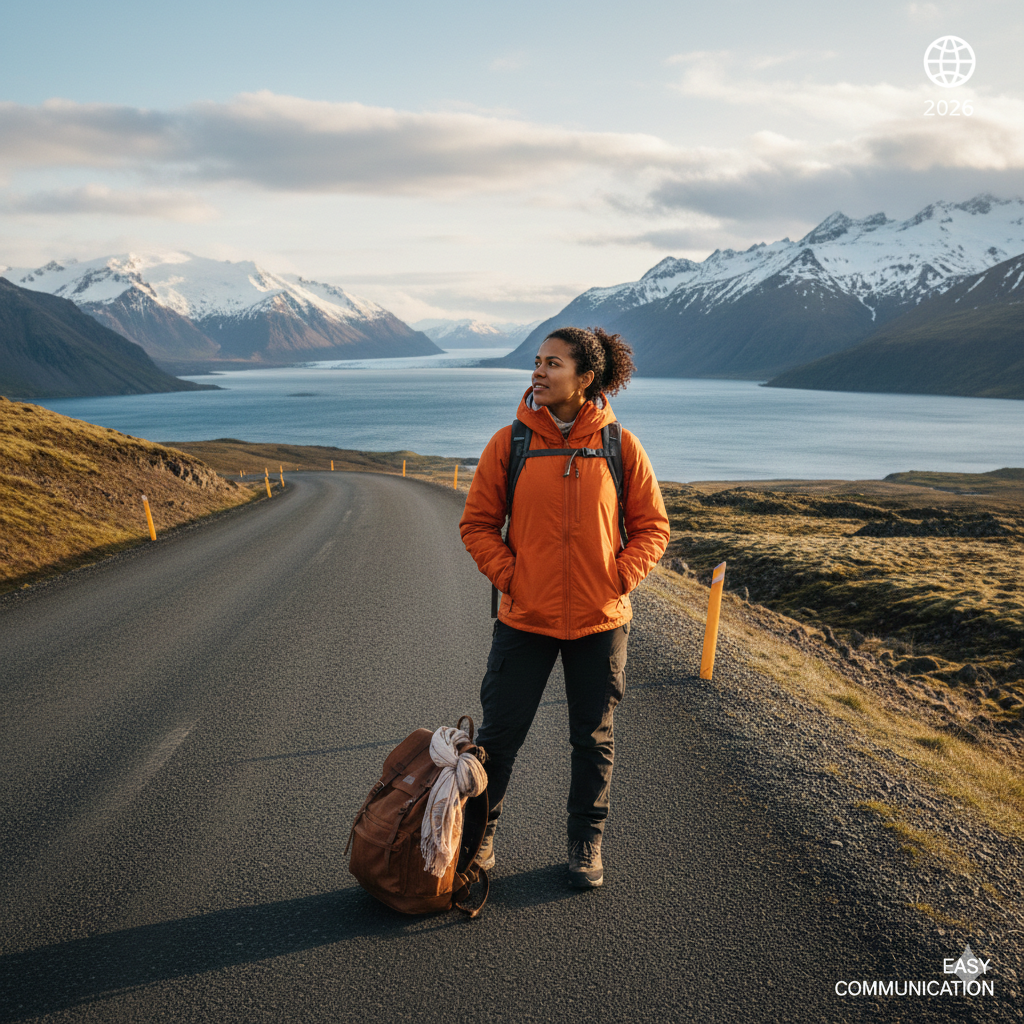
Treking in Iceland
Iceland: Safest Country for Solo Female Road Trips
Safety: ★★★★★ (GPI rank: 1st globally, 2025—the most peaceful country in the world for 17 consecutive years) Best season: June–August (midnight sun); September–October (Northern Lights) Getting around: Rental car or organized day tours from Reykjavik Solo dining: Fine; Reykjavik’s restaurant scene is strong
Iceland’s Global Peace Index position is hard to overstate: it has ranked first in the world, as the most peaceful country on earth, every year since 2008. For solo women, this translates to something specific and practical: you can be fully present in the landscape rather than partially occupied with security awareness.
Reykjavik is small enough to walk in an afternoon. Day tours from the capital reach major natural attractions (Golden Circle, South Coast, Snæfellsnes Peninsula) without requiring a car or significant planning. But the full Iceland experience—Ring Road, Westfjords, highlands—requires a 4WD rental and willingness to be remote.
I drove the Ring Road alone, sometimes going four or five hours without seeing another vehicle. Instead of feeling isolated, it felt meditative. When the landscape is that powerful, solitude becomes a quality rather than a lack.
Solo travel notes
- Iceland is expensive—budget $200–300/day for accommodation, meals, and activities.
- The Ring Road (Route 1) takes a minimum of 7–10 days to complete properly.
- F-roads (highland tracks) require 4WD and are typically open only July–September; check road.is before driving.
Safety tips for solo women in Iceland
- Iceland’s biggest safety risk isn’t crime—it’s weather and terrain. Never underestimate Icelandic weather. Conditions can shift from sunny to blizzard in hours even in summer.
- Never drive off-road. It’s illegal, damages fragile ecosystems, and can get you stranded in genuinely dangerous terrain.
- Always check road conditions at road.is before any drive, especially on the Ring Road in shoulder seasons.
- The midnight sun in summer disrupts sleep patterns significantly. Bring a sleep mask—it’s not optional.
For the Diverse Traveler
Iceland is one of the most ethnically homogeneous countries in the world, but it is also a well-traveled tourist destination where foreign visitors are entirely normal. Travelers of color report Iceland as comfortable and largely free of racial friction—the tourist economy is sophisticated enough that visitors from all backgrounds are treated neutrally.
Reykjavik, where most visitors spend significant time, has a young, internationally-minded population. Solo travelers of color consistently rate Iceland highly for safety and comfort, noting that the near-total absence of crime removes the compounding stress that affects diverse travelers in higher-crime destinations.
Norway: Best for Fjord Hiking and Scenic Solo Rail Journeys
- Safety: ★★★★★ (GPI rank: 17th globally, 2025)
- Best season: June–September
- Getting around: Excellent NSB rail network; ferries for fjord regions
Norway’s fjords are among the most dramatic landscapes in the world, and the infrastructure to reach them independently is well-developed. Bergen serves as the natural gateway to the west—the famous Norway in a Nutshell route (Bergen Railway + Flåm Railway + ferry through the Nærøyfjord) can be done solo in a single long day and represents one of the most beautiful rail journeys anywhere.
Cities—Oslo, Bergen, Tromsø—are safe, walkable, and connected by frequent trains. The culture places high value on personal space and independent outdoor activity, which makes solo travel feel comfortable rather than conspicuous.
Practical notes
- Norway is one of the most expensive countries in the world.
- Budget accommodation (HI hostels, budget hotel chains) helps significantly.
- Bergen is a better base than Oslo for fjord access.
- Tromsø is the prime destination for Northern Lights (September–March).
Safety tips for solo women in Norway
- Norway is very safe. Outdoor safety is the primary concern: always register hiking plans with a local authority or tell your accommodation if heading into remote fjord or mountain terrain.
- The famous Trolltunga and Preikestolen hikes can be done solo and are heavily trafficked in summer. In shoulder season, go with a guided group if you’re less experienced in mountain terrain.
- Oslo’s Grønland neighborhood is safe but has higher street activity late at night—stay aware in the same way you would in any urban area after midnight.
Diverse Traveler Note
Norway’s major cities, particularly Oslo, are meaningfully diverse—the city has significant South Asian, East African, and Middle Eastern diaspora communities. Travelers of color generally report comfortable urban experiences.
Rural and small-town Norway is more homogeneous and may involve more visible curiosity, but reports of hostility are rare. Norway scores well in diverse traveler community rankings, particularly for Black women, who cite the country’s low crime and non-confrontational social culture as making it one of the more comfortable Nordic destinations.
Emerging & Budget-Friendly Favorites
Not every solo woman wants Western Europe prices—and in 2026, several destinations are stepping into the spotlight.
Georgia: Best Budget Destination for Solo Cultural Travel
- Safety: ★★★☆☆ (GPI rank: 84th globally, 2025)
- Best season: May–June, September
- Getting around: Metro in Tbilisi; marshrutky (minibuses) for regional travel
Georgia is the emerging destination that solo female travelers who found Portugal five years ago are now finding—culturally rich, genuinely welcoming, and dramatically affordable by European standards.
Tbilisi is walkable, creative, and full of contrasts: Soviet-era architecture beside ornate wooden balconied houses beside modernist glass structures. The old town (Abanotubani, with its sulfurous bathhouses) rewards aimless wandering. Cafés stay open late. Natural wine bars—Georgia is one of the world’s oldest wine-producing regions, with a 8,000-year-old tradition—are excellent and cheap.
The limitations are real: marshrutky (shared minibuses) require patience and some local knowledge to navigate. English is spoken primarily among younger urbanites. Some rural areas require more awareness than Tbilisi itself. But for solo women comfortable in a mid-level challenge destination, Georgia delivers outsized rewards at minimal cost.
solo travel notes
- Budget $40–60/day including accommodation, food, and transport.
- The Georgian Military Highway to Kazbegi (a mountain town near the Russian border) is one of the most spectacular day trips available anywhere in Europe.
- Book through a local agency or shared tour if you don’t want to navigate marshrutky.
Safety tips for solo women in Georgia:
- Tbilisi is safe for solo women in tourist areas. Avoid walking alone in completely deserted areas of the old town very late at night—not because crime is high, but because infrastructure (lighting, signage) can be poor.
- Traffic in Georgia is chaotic by European standards. Look both ways multiple times before crossing any street.
- The Gori region (near South Ossetia) and areas near Abkhazia have active travel advisories—avoid these border areas entirely.
The Diverse Traveler
Georgia is ethnically homogeneous outside Tbilisi, and travelers of color—particularly Black travelers—may attract significant attention in smaller towns and rural areas. This manifests as staring, photography requests, and questions rather than hostility, but it can be exhausting. Tbilisi itself is more cosmopolitan and has a younger, internationally-minded population that is generally welcoming. Georgian hospitality culture means that being invited for wine and food by strangers is genuinely common and usually sincere—but solo women of color should trust their instincts about individual situations.
Costa Rica: Best for Accessible Solo Nature Travel
- Safety: ★★★☆☆ (GPI rank: 40th globally, 2025)
- Best season: December–April (dry season)
- Getting around: Organized shuttles and eco-tours; shared transfers between destinations
Costa Rica solves a problem that many nature-focused destinations create: how to access genuinely wild environments without the logistical complexity that usually comes with them. Well-organized shuttle networks, eco-lodges that cater to independent travelers, and a tourism infrastructure built around accessibility mean you can reach rainforests, cloud forests, active volcanoes, and Pacific beaches through straightforward bookings rather than exhausting self-navigation.
The “pura vida” mentality—roughly, a relaxed embrace of life’s goodness—creates a welcoming atmosphere that takes the edge off solo travel anxiety. And the focus on sustainable tourism means most of the infrastructure is thoughtfully designed.
Practical notes
- La Fortuna (Arenal Volcano area) and Manuel Antonio are the two most solo-friendly hubs.
- Avoid driving after dark on Costa Rican roads—they are poorly marked.
- Shuttle transfers (Interbus, Greyhound Costa Rica) are safer and often faster than self-driving for getting between regions.
Safety tips for solo women in Costa Rica
- San José has a higher petty crime rate than the rest of the country. Spend minimal time there and book direct shuttle transfers to nature destinations.
- Ocean currents on Costa Rica’s Pacific coast are extremely strong. Check flags and ask locals before swimming—deaths from riptides occur every year.
- Bag snatching by motorbike is documented in San José and some beach towns. Don’t walk with a phone out and visible.
- Avoid unofficial taxis (piratas). Only use official red taxis (with yellow triangles) or pre-booked shuttles.
Croatia: Best Mediterranean Solo Travel on a Budget
- Safety: ★★★★☆ (GPI rank: 19th globally, 2025)
- Best season: May–June, September (avoid July–August cruise crowds)
- Getting around: Ferries between islands; buses along the coast
Croatia’s Dalmatian coast delivers Mediterranean beauty—historic walled cities, clear Adriatic water, excellent wine and seafood—at prices meaningfully lower than Italy or France. Dubrovnik, Split, and Hvar are the anchors; smaller islands (Vis, Korčula, Brač) offer the same beauty with dramatically fewer tourists.
The ferry network between islands makes island-hopping genuinely pleasurable for solo travelers—you pick your next destination on the morning of, check ferry times, and go.
Solo travel notes
Dubrovnik in peak summer (July–August) is overwhelmed by cruise tourists. May and September are far superior for solo travel. Split makes the best base—central, well-connected, and interesting in its own right beyond its role as a transit hub.
Safety tips for solo women in Croatia:
- Croatia is very safe. The main concerns are standard tourist-area ones: watch bags in crowded Dubrovnik old town and on Split’s Riva promenade in summer.
- Hvar town has a lively nightlife scene that attracts large party crowds in July–August. If you’re not looking for that atmosphere, Stari Grad on Hvar or the island of Vis is a better solo base.
- Ferry schedules are reduced significantly outside June–September. Check Jadrolinija (the state ferry company) for current schedules before planning island hops in shoulder season.
Travelers of Color
Croatia is ethnically homogeneous and has limited exposure to racial diversity outside major tourist areas. Travelers of color—particularly Black travelers—report being visibly noticed in smaller coastal towns and inland areas.
In heavily touristed spots like Dubrovnik’s old city and Split’s Diocletian’s Palace, international visitors are so common that no one looks twice at anyone. The experience diverges more sharply off the main tourist circuit. Croatia is safe by any metric; the comfort level for diverse travelers in tourist zones is good, and the experience in non-tourist areas is more variable.
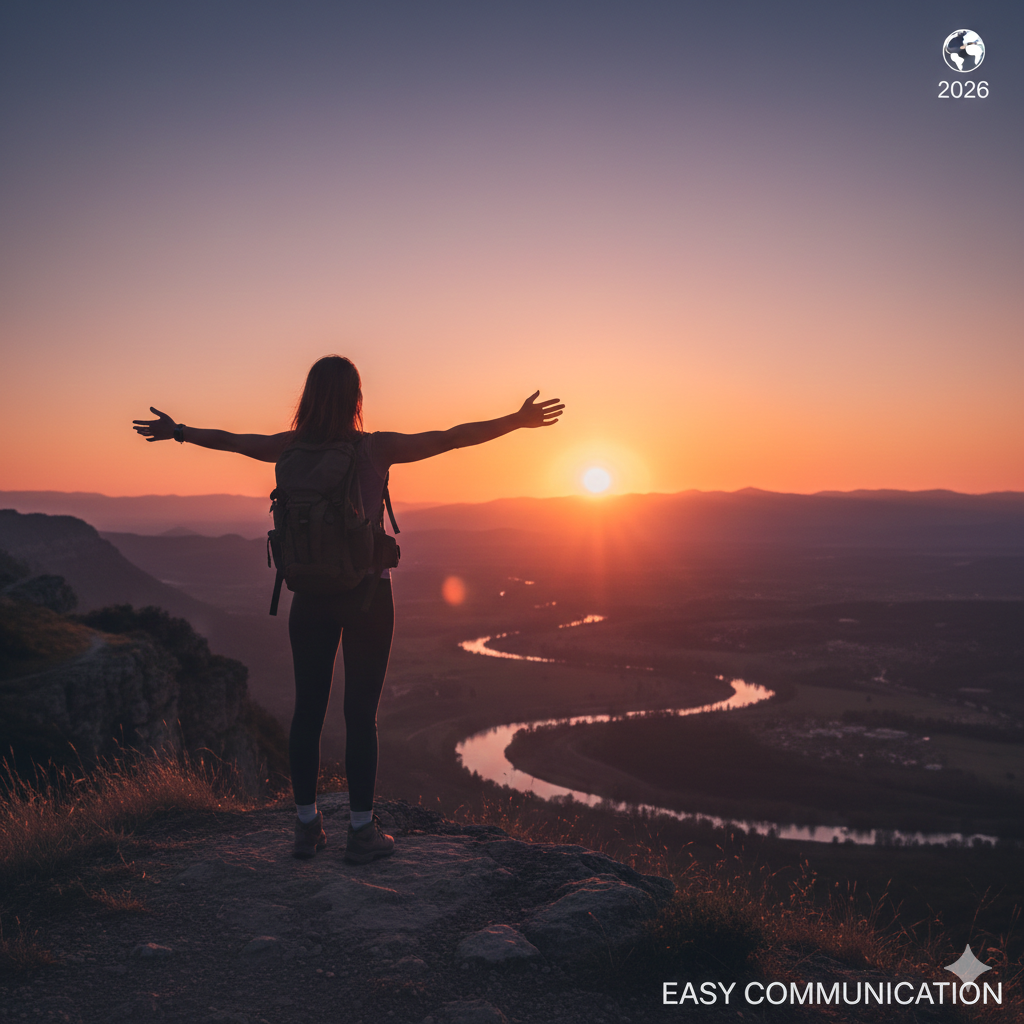
Enjoying freedom, safety, and independence while traveling alone.
2026 Solo Dining: From Ramen Booths to Tapas Bars
In 2026, “Honbap” (solo eating) has gone global. However, the way you navigate a meal alone varies wildly by culture. Use this table to understand the social “rules” and infrastructure of your next destination.
| Destination | Solo Infrastructure | Cultural “Vibe” | Pro Tip for 2026 |
| Japan | Elite. Private booths (Ichiran style) and counter seating are standard. | Invisible. Being alone is the default; no one will interact with you. | Use the vending machine ticket system; it removes the “table for one” conversation entirely. |
| Portugal | Excellent. “Balcão” (counter) seating in most petiscos bars. | Warm. Bartenders are friendly but respect your space. | Don’t ask for salt/pepper; it’s a faux pas for the chef. Mention you’re solo for faster counter seating. |
| S. Korea | Rapidly Improving. Dedicated “Honbap” (solo) restaurants are surging. | Efficient. Fast-paced, perfect for a quick, high-quality meal. | Look for “1인분” (1-person portion) signs. Some BBQ spots still require 2 servings, so check the menu first. |
| Spain | Social. Tapas/Pintxos culture is built for standing at the bar. | Lively. You’re part of the crowd, even if you’re alone. | Keep your toothpicks! In Basque country, they use them to count your bill at the end. |
| France | Classic. Small round bistro tables are practically designed for one. | Respected. Solitude is seen as an art form; lingering with a book is encouraged. | Always start with “Bonjour.” Skipping the greeting is the fastest way to get slow service. |
| Thailand | Effortless. Street food stalls and “Soi” night markets. | Casual. Communal plastic stools make you feel like part of the neighborhood. | “Solo” here often means joining a communal table. It’s the easiest place to meet fellow travelers. |
| Italy | Traditional. Look for Tavola Calda (hot tables) or bar counters. | Welcoming. Italians treat solo diners like “guests of the house.” | Avoid ordering a Cappuccino after 11:00 AM—stick to Espresso if you want to blend in. |
| Netherlands | Modern. High-design food halls (like Foodhallen) and café “work” spaces. | Independent. Very low-pressure; nobody stares at a solo diner. | Most places are “Card Only” in 2026. Ensure your contactless pay is ready before you sit. |
| Vietnam | High-Energy. Low stools on sidewalks and bustling Pho shops. | Pragmatic. Focus is 100% on the food; turnover is fast. | Don’t be afraid to sit on those tiny plastic chairs. It’s where the best food (and most locals) are. |
| New Zealand | Relaxed. Open-plan cafés and “order at the counter” gastropubs. | Friendly. “Kiwis” are likely to strike up a genuine, low-stakes chat. | Many regional spots close early (8:00 PM). If you’re solo, aim for a “Late Lunch” or “Early Tea.” |
The 3 Golden Rules for Solo Dining in 2026
- The “Bar Seating” Hack: In Europe and North America, sitting at the bar is the universal signal for “I’m solo and I’m here for the food (and maybe a quick chat).” You’ll almost always get seated faster than at a table.
- Peak Hour Strategy: In places like France and Italy, show up at the very start of service (e.g., 7:00 PM) or the tail end. You’ll get more attention from the staff and won’t feel the “turnover pressure” of a busy Saturday night.
- The “Prop” Balance: In 2026, everyone is on their phone. If you want to actually experience the destination, bring a physical book or a journal. It marks you as a “traveler” rather than just another person scrolling, and it often invites more interesting (and respectful) interactions.
The 2026 Solo Travel Mindset: What Women Are Actually Prioritizing
Across booking data, solo travel forums, and direct conversations with women travelers, a clear shift has emerged in what solo female travelers in 2026 are optimizing for. It’s not the most remote destination, the cheapest option, or the most Instagrammable backdrop.
It’s quality of daily experience—the ease of getting from one place to another, the comfort of eating well alone, the freedom to change plans without consequence, and the ability to be fully present rather than perpetually alert.
AI-assisted travel planning in 2026
One meaningful shift for solo travelers this year is the widespread use of AI tools for itinerary building, translation, and real-time navigation. Apps that previously required significant local knowledge—understanding bus routes, translating menus, identifying safe accommodation areas—have become dramatically more accessible.
This has lowered the barrier to challenging destinations (Vietnam, Georgia) and improved the daily experience in complex transit systems (Japan, South Korea). If you haven’t used AI-assisted translation and navigation tools on a solo trip yet, 2026 is the year they become genuinely transformative rather than a novelty.
Overtourism and entry fees
Several destinations on this list are actively managing tourist volumes. Venice’s day-entry fee is now enforced. Barcelona has capped short-term rental licenses. Amsterdam is restricting new hotel construction. These aren’t reasons to avoid these places—they’re signs that destinations are taking sustainability seriously. But they mean that spontaneous, unplanned travel to peak destinations in peak season requires more advance booking than it did five years ago. Plan ahead. Book key experiences early. The destinations are better for it.
The destinations that win in 2026 share these qualities
- Safety that’s measurable. The Global Peace Index, State Department travel advisories, and active solo female travel communities (Solo Female Travelers on Facebook has over 1.5 million members as of 2025) provide a better signal than destination marketing. Ensure you’ve read our 2026 Solo Female Traveler’s Safety Checklist before you head to the airport
- Infrastructure that removes mental load. When logistics are effortless, you have more energy for everything that matters.
- Cultural acceptance of solitude. Not tolerance—acceptance. There’s a difference between a destination that doesn’t bother solo women and one that genuinely makes space for them.
- Flexibility. The best destinations meet you where you are—whether you want community or solitude, structure or improvisation, adventure or rest.
- Honest cultural reception. The best destinations for diverse solo travelers aren’t just safe—they’re genuinely comfortable. Portugal, Spain, Iceland, and New Zealand score highest here. Japan and South Korea are safe but require more emotional bandwidth around visibility. France requires situational awareness that other top-ranked destinations don’t. This guide names those differences because you deserve to know them before you book.
The clearest signal of a genuinely solo-friendly destination is this: you stop thinking about the fact that you’re alone. You’re simply somewhere beautiful, moving at your own pace, on your own terms. That’s what 2026’s best solo female travel destinations have in common.
Book that flight, begin your adventure, and don’t forget the Travel Insurance for your medical coverage and emergency assistance.
2026 Connectivity Cheat Sheet
| Destination | 5G Availability (2026 Urban) | eSIM Ease |
| South Korea | 98% (World Leader) | Seamless |
| Iceland | 95% (Near Universal) | Seamless |
| Japan | 94% (High Density) | Seamless |
| Denmark | 92% (Excellent) | Seamless |
| Netherlands | 91% (Consistent) | Seamless |
| Norway | 88% (Rural Gaps) | Seamless |
| Portugal | 85% (Strong Cities) | Seamless |
| Spain | 82% (Urban Only) | Easy |
| France | 79% (Urban Only) | Easy |
| New Zealand | 75% (Coastal Areas) | Easy |
| Croatia | 72% (Mainland Only) | Moderate |
| Costa Rica | 60% (Growing) | Moderate |
| Thailand | 55% (Tourists Hubs) | Easy |
| Vietnam | 45% (Hanoi/HCMC) | Moderate |
| Georgia | 35% (Tbilisi Only) | Moderate |
Seamless: You can buy, install, and activate in under 3 minutes via apps like Airalo or Saily. No passport upload required.
Easy: Requires a simple QR code scan; 5G is the default in cities, but expect 4G in the countryside.
Moderate: You may need to upload a photo of your passport (KYC regulations) or visit a local “kiosk” to verify your eSIM profile before it goes live.
The Flip Side: Where Not to Go Solo in 2026
While 2026 has opened up new corners of the globe, several destinations remain high-risk for solo female travelers. “Danger” in these regions isn’t just about violent crime statistics; it’s about a lack of consular support, volatile political climates, and cultural environments that are actively hostile toward independent women.
1. The “Extreme Risk” Zone (Level 4: Do Not Travel)
These countries are currently experiencing active conflict, extreme civil unrest, or have a total lack of infrastructure to assist foreign nationals.
- Russia & Ukraine: Due to the ongoing conflict, these remain the least peaceful countries on the 2025 Global Peace Index. Beyond physical danger, the logistical and legal risks for solo travelers are at an all-time high.
- Afghanistan & Yemen: Ranked at the very bottom of the Women, Peace, and Security (WPS) Index. For solo women, the restriction on movement and extreme gender-based discrimination makes these destinations effectively inaccessible.
- Sudan & Mali: Rapidly deteriorating security situations and high risks of kidnapping and terrorism.
2. The “High Alert” Zone (High Crime & Harassment)
These destinations are popular with tourists, but for a woman traveling completely alone, the “mental load” of safety awareness can outweigh the joy of the trip.
- South Africa: Despite its beauty, it remains one of the most dangerous countries for women globally. Statistics on sexual violence and intentional homicide against women are staggering, and only 25% of local women report feeling safe walking alone at night.
- Brazil: While the “carnival energy” is a draw, street crime in major hubs like Rio and Salvador remains high. Solo women are frequently targeted for “quick-napping” (short-term kidnappings for ATM withdrawals).
- Iran: While traditionally known for incredible hospitality, the 2026 landscape is marked by extreme political volatility and arbitrary detentions of foreign nationals. The gender gap in legal rights and strict dress code enforcement adds a layer of stress that makes solo travel a constant navigation of “gray areas.”
3. The “Fragile” Zone (Emerging Instability)
- Haiti & Ecuador: Both have seen a sharp rise in organized crime and gang-related violence in early 2026. Public transit and “safe” neighborhoods can change in status overnight, making them poor choices for someone without a local support network.
How to Check Your Destination in Real-Time
Before you book, use these three “Truth Checks”:
- The State Department / Smartraveller: Check for “Level 3” or “Level 4” advisories. If a country is Level 4, your travel insurance is likely void the moment you land.
- The “Pink Tax” of Safety: Look at the cost of private transfers vs. public transit. If a destination requires you to take private cars to stay safe (as in parts of South Africa or Mexico), factor that into your “Ease of Movement” score.
- Local Women’s Forums: Search Facebook groups like Solo Female Travelers for the specific city name. If the recent posts are full of warnings about street harassment or “catcalling,” it might be a destination better suited for a group trip than a solo mission.
Frequently Asked Questions
Which destinations are best for solo women of color in 2026?
Portugal and Spain consistently rank highest in diverse solo traveler communities for combining strong safety credentials with genuine racial comfort. Iceland and New Zealand score well for near-zero crime and welcoming tourist infrastructure.
Japan and South Korea are extremely safe by crime data, but involve higher visibility for non-East Asian travelers. France requires more situational awareness in Paris than most guides acknowledge. Community resources like the “Travel Noire” platform, “Nomadness Travel Tribe,” and the “Solo Female Travelers” Facebook group (1.5M+ members) are the best sources for destination-specific, experience-based feedback from diverse travelers.
What is the #1 safest country for solo female travel in 2026?
Iceland ranks 1st in the Global Peace Index for 2025 (17 consecutive years). For ease combined with safety, Portugal (7th globally) and Japan (9th) offer stronger overall solo travel experiences due to better infrastructure and warmer climates.
Which solo female travel destinations are most affordable in 2026?
Georgia ($40–60/day), Vietnam ($35–50/day), and Thailand ($50–80/day) offer the best value. Within Europe, Portugal remains the most affordable destination with strong safety credentials.
Is solo female travel in Asia safe in 2026?
Japan and South Korea are among the safest countries in the world by crime statistics and are both highly recommended. Thailand and Vietnam require more awareness in urban tourist areas but have well-established tourist infrastructure that supports solo women effectively.
What should I look for in travel insurance as a solo female traveler?
Prioritize coverage that includes: emergency medical evacuation (minimum $500,000), 24/7 emergency assistance in your language, trip cancellation/interruption, and coverage for adventure activities if relevant. World Nomads and SafetyWing are commonly used by solo female travelers for their flexibility and emergency support.
Data sources: Global Peace Index 2025 (Institute for Economics and Peace); U.S. State Department Travel Advisory System (current as of March 2026); Solo Female Travelers community survey data (2024–2025); Numbeo Crime Index 2025; Travel Noire community reports (2024–2025); Nomadness Travel Tribe destination feedback (2024–2025).